
Hellenistic Astrology Ancient Predictive Techniques Bridging
Hellenistic astrology represents a profound and intricate system of astrological thought that originated in the Hellenistic period, roughly from the 2nd century BCE to the 7th century CE. This era, characterized by the spread of Greek culture and language across the Mediterranean and Near East, saw the synthesis of Babylonian celestial omens with Egyptian decanic astrology and Greek philosophical frameworks. The result was a sophisticated predictive art that laid the foundational principles for much of Western astrology as we know it today.
For centuries, these ancient techniques were largely lost to the Western world, preserved primarily through Arabic translations. However, a modern revival, fueled by dedicated scholars and translators, has brought these invaluable texts back into contemporary study. This re-discovery offers a unique opportunity to bridge the gap between ancient wisdom and modern astrological practice, providing astrologers with a richer vocabulary and a deeper understanding of natal and predictive chart interpretation.

Conceptual rendering of ancient astrological tools and celestial charts, reflecting the depth of Hellenistic wisdom.
The resurgence of Hellenistic astrology is not merely an academic exercise; it provides practical tools and philosophical insights that can significantly enhance our understanding of human experience. By delving into its historical context and core principles, we can appreciate the meticulous methods developed by ancient astrologers to interpret the celestial tapestry of a birth chart.
Historical Context and Origins of Hellenistic Astrology
The birth of Hellenistic astrology is a fascinating tale of cultural amalgamation. It emerged from the intellectual ferment of Alexandria, Egypt, a vibrant center of learning in the Hellenistic world. Here, Babylonian astronomical observations and omens, refined over millennia, met Egyptian calendrical and decanic systems, and were then integrated with Greek philosophical concepts, particularly Neoplatonism and Stoicism.
Key figures like Valens, Dorotheus of Sidon, and most notably, Claudius Ptolemy, whose work Tetrabiblos became a canonical text, systematized these diverse influences into a coherent astrological framework. Their writings, often preserved through later Arabic translations, reveal a highly structured and deterministic approach to astrology, where the celestial configurations at the moment of birth were believed to reveal the entire course of one's life.
This period also saw the development of the tropical zodiac, the concept of planetary rulerships over zodiacal signs, and the system of twelve houses, most notably the Whole Sign House system. The emphasis was on precise mathematical calculation and a rigorous interpretive methodology, aiming for accurate predictions regarding health, wealth, relationships, and destiny.
Core Principles and Techniques
Hellenistic astrology is characterized by several core principles that distinguish it from many modern approaches. Understanding these concepts is crucial for anyone seeking to engage with this ancient tradition.
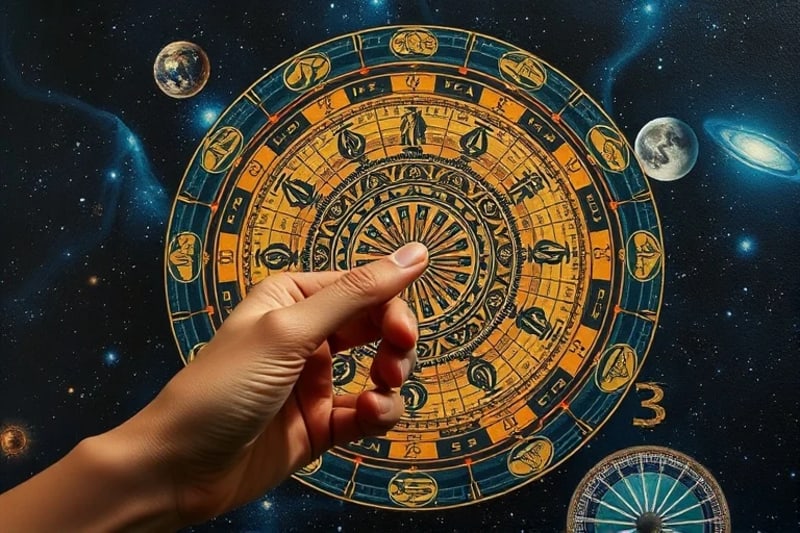
An oil painting depicting a scholar meticulously analyzing an ancient astrological chart, highlighting the precision of predictive methods.
- Sect (Haíresis): This fundamental concept divides the planets into two groups: diurnal (day) and nocturnal (night). Planets in sect (e.g., Sun, Jupiter, Saturn in a day chart) are considered to be operating more effectively and beneficently, while those out of sect (e.g., Moon, Venus, Mars in a day chart) may face more challenges or operate with less ease.
- Whole Sign Houses: Unlike many modern house systems, Whole Sign Houses assign an entire zodiacal sign to each house, starting from the sign of the Ascendant. This system simplifies house delineation and was the predominant method during the Hellenistic period.
- Planetary Condition: This goes beyond modern dignities. Hellenistic astrologers paid close attention to a planet's domicile, exaltation, triplicity, terms, and face, as well as its relationship to the Sun (oriental/occidental) and its speed and direction.
- Lots (Arabic Parts): These are calculated points in the chart derived from the positions of planets and the Ascendant. The Lot of Fortune and the Lot of Spirit are particularly significant, indicating areas of material well-being and spiritual purpose, respectively. The calculation of these lots is a cornerstone of Hellenistic analysis, offering insights into specific life areas.
- Zodiacal Releasing: A powerful timing technique that divides life into periods ruled by different zodiacal signs, activated by planetary rulers. It helps to identify peak periods of activity, challenge, or achievement in various areas of life, offering a dynamic view of one's destiny. For those interested in understanding how planetary influences unfold over time, exploring techniques like Zodiacal Releasing can provide valuable insights into life's cycles, much like understanding the dynamics of Uranus Sign: Innovation, Rebellion, Change Explained.
These principles, when applied rigorously, offer a highly nuanced and often surprisingly accurate interpretation of an individual's life path. The emphasis on specific planetary conditions and timing techniques allows for a level of predictive detail that can be revelatory.
Advanced Predictive Techniques
Hellenistic astrology is renowned for its sophisticated predictive methodologies. These techniques were designed to forecast specific events and periods of life with considerable precision.
- Profections: This annual timing technique advances the Ascendant and other points one sign per year, activating the themes of the house and its ruler. It highlights the primary focus or "lord of the year" for any given period, indicating dominant life themes.
- Primary Directions: Considered the "king of timing techniques" by ancient astrologers, primary directions involve advancing the entire chart by a specific arc, corresponding to years of life. This complex method is used to pinpoint major life events, often with astonishing accuracy.
- Transits: While familiar to modern astrologers, Hellenistic transits were interpreted within the context of other timing techniques, providing a layer of detail to the broader themes indicated by profections and directions.
- Firdaria: A planetary period system that assigns specific planets as rulers of successive periods of life, each bringing its own set of influences and challenges. This technique offers a broad overview of the quality of different life stages.
The combination of these techniques allows for a multi-layered approach to prediction, where different methods can confirm or elaborate on each other's indications. This systematic approach provides a comprehensive view of how one's potential unfolds over time. Understanding these intricate timing mechanisms can provide a deeper appreciation for the cyclical nature of life, much like exploring the concept of Lilith Retrograde: Shadow Feminine & Karmic Healing in a personal context.
Bridging Ancient and Modern Astrology
The revival of Hellenistic astrology offers a unique opportunity to enrich and deepen modern astrological practice. While contemporary astrology often emphasizes psychological interpretation and personal growth, Hellenistic astrology provides a robust framework for understanding concrete life events and the unfolding of destiny.
One of the most significant contributions of Hellenistic astrology is its emphasis on the "condition" of planets and their inherent strengths or weaknesses. Concepts like sect and planetary joys reveal a nuanced understanding of how planets operate, moving beyond simple benefic/malefic classifications. This allows for a more precise assessment of a planet's capacity to deliver on its promises or challenges.
An abstract 3D render illustrating the conceptual bridge between ancient astrological wisdom and modern digital interpretation.
Furthermore, the systematic use of timing techniques such as profections and zodiacal releasing offers a powerful complement to modern transits and progressions. By integrating these methods, astrologers can gain a more comprehensive view of an individual's life trajectory, identifying key periods for action, reflection, or significant change. This integration helps to create a more holistic and predictive approach to chart analysis.
The philosophical underpinnings of Hellenistic astrology also encourage a different perspective on free will and destiny. While it acknowledges predetermined patterns, it also emphasizes the individual's role in navigating these patterns. This nuanced view can provide a more grounded understanding of personal responsibility within a cosmic framework. For a deeper dive into how ancient wisdom can inform modern practices, one might explore the principles of Archetypal Feng Shui: Aligning Space, Inner Harmony, which similarly bridges ancient spatial philosophy with contemporary well-being.
The Enduring Relevance of Hellenistic Astrology Today
In an increasingly complex world, the structured and deterministic nature of Hellenistic astrology offers a unique form of guidance. It provides a framework for understanding the larger patterns at play in our lives, helping us to anticipate challenges and capitalize on opportunities. This perspective can be particularly empowering, as it moves beyond a purely psychological interpretation to offer concrete insights into the unfolding of events.
For astrologers, studying Hellenistic texts expands their interpretive toolkit, allowing for a more precise and historically informed practice. For individuals, it offers a deeper appreciation of their birth chart as a map of their life's journey, filled with specific indications rather than broad generalizations. It can illuminate periods of growth, challenge, success, and transformation, fostering a sense of preparedness and resilience.
The ongoing translation and study of Hellenistic astrological texts continue to reveal new layers of understanding, ensuring that this ancient tradition remains a vibrant and evolving field. By embracing these ancient predictive techniques, we not only honor the wisdom of our ancestors but also enrich our own journey of self-discovery and understanding. The intricate connections between celestial bodies and earthly events, as explored in Hellenistic astrology, resonate deeply with other ancient systems that sought to understand the energetic flows of the world, such as the concept of Ley Lines: Earth's Energetic Grid, Spiritual Significance.
Conclusion
Hellenistic astrology stands as a monumental achievement in the history of astrological thought. Its systematic approach, rigorous techniques, and profound philosophical underpinnings offer a powerful lens through which to view the human experience. The modern revival of this tradition is a testament to its enduring value and its capacity to provide meaningful insights into our lives.
By bridging the ancient predictive techniques with contemporary astrological understanding, we unlock a richer, more comprehensive approach to the birth chart. This synthesis not only deepens our appreciation for the historical evolution of astrology but also equips us with more potent tools for self-knowledge and navigating the intricate patterns of destiny.
Explore Further: Related Astrological Insights
-
Love Horoscope Decan Insights: Zodiac Sub-Divisions
Delve into the subtle nuances of zodiacal decans and their impact on romantic compatibility and personal expression, offering a deeper layer to relationship astrology.
-
Grand Trine: Gifts, Ease, Untapped Potential
Uncover the significance of the Grand Trine aspect in a birth chart, symbolizing innate talents and areas of natural flow, yet sometimes indicating untapped potential.
-
Sacred Space Creation: Altars, Grids, Ritual Areas Guide
Learn how to intentionally create sacred spaces, altars, and energy grids to enhance spiritual practice and align personal energies with cosmic influences.
-
AI Oneiromancy: Decoding Dream Symbols with Algorithms
Discover the cutting-edge intersection of artificial intelligence and ancient dream interpretation, exploring how algorithms can help decipher complex dream symbolism.
Source: Hybrid content assisted by AI and human editorial supervision.


Comments
Post a Comment