
Archetypal Feng Shui: Aligning Space, Inner Harmony
Archetypal Feng Shui: Aligning Your Space with Inner Psychological Landscapes for Holistic Harmony
Archetypal Feng Shui represents a profound evolution in the ancient practice of geomancy, merging traditional principles with contemporary psychological insights. This innovative approach moves beyond mere spatial arrangement to create environments that resonate deeply with an individual's inner psychological landscape. By recognizing the powerful connection between our internal world and external surroundings, Archetypal Feng Shui seeks to foster holistic harmony, well-being, and personal growth.
The core premise is that our homes are not just physical shelters but extensions of our psyche, mirroring our aspirations, challenges, and unconscious patterns. When we intentionally design our spaces to reflect and support our authentic selves, we unlock a potent synergy that can transform our lives. This article explores the foundational concepts of Archetypal Feng Shui, its integration with Jungian archetypes, and how the wisdom of the Chinese Zodiac can further personalize this transformative practice.

A tranquil living area designed to foster inner peace and psychological balance.
Table of Contents
- Foundations of Traditional Feng Shui
- Understanding Jungian Archetypes
- Mapping Archetypes to Your Space: The Bagua Connection
- The Chinese Zodiac: A Complementary Archetypal Layer
- Practical Application: Creating Your Archetypal Sanctuary
- Benefits of Archetypal Feng Shui
- Conclusion
Foundations of Traditional Feng Shui
To appreciate Archetypal Feng Shui, it is essential to understand the bedrock principles of traditional Feng Shui. Originating in ancient China, Feng Shui, which literally translates to "wind-water," is a philosophical system of harmonizing everyone with their surrounding environment. It posits that an invisible life force, known as Chi, flows through everything, influencing health, wealth, and relationships.
The practice involves arranging buildings, objects, and spaces to maximize the flow of beneficial Chi and mitigate negative energies. Key concepts include the balance of Yin and Yang, the dynamic interplay of opposing yet complementary forces, and the Five Elements (Wood, Fire, Earth, Metal, Water), which represent different energies and stages of transformation. These elements interact in both productive and destructive cycles, and their balanced representation is crucial for a harmonious environment.
Another cornerstone is the Bagua map, an octagonal grid that overlays a floor plan, dividing it into nine sectors, each corresponding to a specific life area. These areas include Wealth, Fame, Relationships, Family, Health, Children/Creativity, Knowledge, Career, and Helpful People/Travel. Each sector is associated with an element, color, and direction, providing a framework for analyzing and enhancing different aspects of one's life through spatial adjustments.
Understanding Jungian Archetypes
The concept of archetypes, as popularized by Swiss psychiatrist Carl Jung, forms the psychological backbone of Archetypal Feng Shui. Jung proposed that archetypes are universal, archaic patterns and images that derive from the collective unconscious and are the psychic counterpart of instinct. They are innate, unlearned tendencies that influence human behavior and experience, manifesting in myths, dreams, and cultural symbols across all civilizations.
Common archetypes include The Hero (representing courage, achievement, and transformation), The Sage (wisdom, truth-seeking, and enlightenment), The Lover (passion, connection, and intimacy), and The Caregiver (nurturing, compassion, and service). These archetypes are not fixed roles but dynamic energies that reside within each individual, influencing their personality, motivations, and life path.
In Archetypal Feng Shui, understanding which archetypes are dominant or underdeveloped within an individual is key to designing a space that supports their psychological growth. For instance, someone seeking to embody more of "The Creator" archetype might need a space that inspires innovation and expression, while someone grappling with "The Orphan" might benefit from a sanctuary that promotes safety and belonging. The goal is to consciously invoke and balance these inner patterns through the intentional design of one's environment.
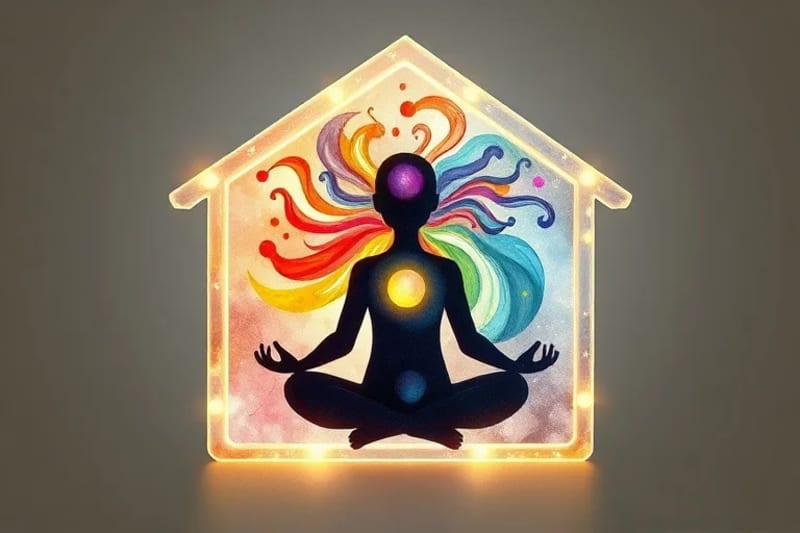
The subtle interplay between our inner psychological landscape and our living environment.
Mapping Archetypes to Your Space: The Bagua Connection
The brilliance of Archetypal Feng Shui lies in its ability to integrate the Bagua map with the rich tapestry of Jungian archetypes. Each of the nine Bagua sectors, traditionally associated with a life aspect, can also be viewed as a canvas for a particular archetypal energy. By consciously aligning specific archetypes with these areas, we can amplify their influence and foster growth in those life domains.
Consider the following correspondences, which serve as a starting point for personal exploration:
- Wealth & Abundance (Southeast): Often resonates with The Creator (innovation, manifestation) or The Ruler (leadership, prosperity). Incorporate elements that symbolize growth and expansion.
- Fame & Reputation (South): Aligns with The Hero (courage, achievement) or The Magician (transformation, influence). Use items that represent your aspirations and public identity.
- Relationships & Love (Southwest): Strongly connected to The Lover (intimacy, passion) and The Caregiver (nurturing, connection). Focus on pairs, soft textures, and images of loving relationships.
- Family & Health (East): Embodies The Innocent (purity, optimism) or The Orphan (seeking belonging, healing). Promote health through natural elements and family photos.
- Health & Well-being (Center): The core of the home, representing overall balance. Can be associated with The Sage (inner wisdom) or The Innocent (wholeness). Keep this area clear and harmonious.
- Children & Creativity (West): Linked to The Creator (artistic expression) or The Jester (playfulness, joy). Encourage creativity with art supplies, inspiring objects, or children's artwork.
- Knowledge & Self-Cultivation (Northeast): The domain of The Sage (learning, introspection) or The Explorer (seeking truth). Create a quiet space for study and reflection.
- Career & Life Path (North): Associated with The Seeker (purpose, journey) or The Hero (overcoming challenges). Use symbols of your career aspirations and path forward.
- Helpful People & Travel (Northwest): Connects with The Caregiver (support, community) or The Explorer (new experiences, guidance). Display mementos from travels or symbols of mentorship.
By identifying which archetypes you wish to strengthen or integrate, you can strategically place objects, colors, and textures within the corresponding Bagua sectors. This creates a powerful energetic feedback loop, where your environment actively supports your psychological evolution.
The Chinese Zodiac: A Complementary Archetypal Layer
The Chinese Zodiac, with its twelve animal signs and associated elemental influences, offers another rich layer of archetypal understanding for personalizing Feng Shui. Each animal sign embodies distinct personality traits, strengths, and challenges, which can be seen as specific archetypal energies. Integrating this ancient wisdom allows for an even deeper alignment between your space and your innate character.
For example, individuals born under the sign of the Dragon (powerful, ambitious, charismatic) might thrive in spaces with bold colors, expansive layouts, and prominent features that reflect their leadership qualities. Conversely, a Rabbit (gentle, cautious, artistic) might prefer a cozy, nurturing environment with soft lighting, natural materials, and spaces for quiet contemplation. The Tiger (courageous, adventurous, impulsive) might benefit from dynamic elements, open spaces, and symbols of exploration.

An archetypal compass guiding the design of a miniature home, symbolizing inner direction.
Beyond the animal signs, the Five Elements (Wood, Fire, Earth, Metal, Water) are also crucial in Chinese Zodiac astrology, influencing the specific characteristics of each animal sign depending on the birth year. For instance, a Wood Dragon might be more creative and flexible, while a Metal Dragon might be more disciplined and assertive. Understanding your elemental animal sign can guide your choices in materials, colors, and overall energy flow within your home.
Here's a simplified overview of how Chinese Zodiac elements might influence spatial needs:
| Chinese Zodiac Element | Associated Archetypal Qualities | Feng Shui Spatial Recommendations |
|---|---|---|
| Wood | Growth, creativity, flexibility, assertiveness (The Creator, The Explorer) | Green plants, wooden furniture, vertical lines, inspiring art, open spaces for expansion. |
| Fire | Passion, energy, leadership, illumination (The Hero, The Ruler) | Red accents, candles, vibrant lighting, triangular shapes, spaces for social interaction. |
| Earth | Stability, nurturing, practicality, grounding (The Caregiver, The Innocent) | Earthy tones, ceramic objects, square shapes, comfortable seating, natural textures. |
| Metal | Structure, precision, clarity, discipline (The Sage, The Warrior) | Metallic accents, white/grey colors, circular shapes, organized spaces, minimalist design. |
| Water | Flow, intuition, wisdom, introspection (The Magician, The Seeker) | Blue/black colors, water features, wavy patterns, reflective surfaces, quiet zones for contemplation. |
By integrating your Chinese Zodiac animal and elemental characteristics, you can fine-tune your Archetypal Feng Shui adjustments, creating a truly personalized and energetically supportive environment that honors your unique essence.
Practical Application: Creating Your Archetypal Sanctuary
Implementing Archetypal Feng Shui involves a thoughtful process of self-reflection and intentional design. It's not about rigid rules but about creating a dialogue between your inner world and your living space. Here are the key steps to creating your archetypal sanctuary:
- 1. Self-Reflection and Archetype Identification: Begin by identifying your dominant archetypes and those you wish to cultivate. Journaling, meditation, or even taking an archetypal quiz can help. Consider your life goals, challenges, and what kind of energy you want to invite into your life.
- 2. Bagua Mapping and Intention Setting: Overlay the Bagua map onto your home's floor plan. For each sector, reflect on its corresponding life area and which archetypes would best support your intentions for that area. For example, if you want to enhance your career (North sector), and you identify with "The Hero" archetype, you might place symbols of achievement or a personal vision board there.
- 3. Elemental Balance and Color Psychology: Ensure a harmonious balance of the Five Elements in each sector, guided by traditional Feng Shui principles and your personal elemental needs from the Chinese Zodiac. Use color psychology to evoke specific archetypal energies; for instance, blues and purples for "The Sage" in the Knowledge area, or reds and oranges for "The Lover" in the Relationship area.
- 4. Symbolic Objects and Imagery: Introduce objects, artwork, and imagery that visually represent your chosen archetypes. A statue of a wise owl for "The Sage," a vibrant painting for "The Creator," or a framed photo of a supportive community for "The Caregiver." Ensure these items hold personal meaning and positive associations for you.
- 5. Decluttering and Energy Flow: A fundamental Feng Shui principle, decluttering is crucial. Clutter can block Chi and represent stagnant psychological energy. Clear out items that no longer serve your archetypal journey, creating space for new energy and intentions to manifest. Ensure clear pathways for Chi to flow freely throughout your home.
- 6. Sensory Engagement: Engage all your senses. Use essential oils or incense for specific moods (e.g., lavender for "The Innocent," frankincense for "The Sage"). Choose textures that align with archetypal qualities (e.g., soft fabrics for "The Lover," sturdy wood for "The Ruler"). Select music or sounds that resonate with the desired atmosphere.
- 7. Regular Review and Adjustment: Your inner landscape evolves, and so should your space. Periodically review your home's alignment with your current archetypal journey. Make adjustments as needed, removing items that no longer resonate and introducing new ones that support your ongoing growth.
By consciously engaging with these steps, you transform your home from a mere dwelling into a dynamic partner in your self-discovery and personal empowerment. This process is deeply personal and intuitive, inviting you to become the architect of your own well-being.
Benefits of Archetypal Feng Shui
The integration of archetypes with Feng Shui offers a multitude of benefits that extend beyond aesthetically pleasing interiors. This holistic approach impacts various facets of life, fostering a deeper sense of self and enhancing overall well-being. The advantages are both subtle and profound, influencing daily experiences and long-term personal development.
One primary benefit is enhanced self-awareness and clarity. By consciously exploring which archetypes are active within you and how they manifest in your space, you gain invaluable insights into your motivations, desires, and challenges. This process encourages introspection and a deeper understanding of your true self, leading to more intentional life choices.
Another significant advantage is the promotion of holistic harmony and emotional balance. When your environment is aligned with your inner psychological needs, it acts as a supportive container, reducing stress and anxiety. A well-designed archetypal space can soothe the soul, inspire creativity, and provide a sanctuary for emotional processing and rejuvenation. This alignment helps in creating a sense of peace and stability in your daily life.
Archetypal Feng Shui also serves as a powerful tool for manifestation and goal achievement. By intentionally placing symbols and energies that represent your aspirations within specific Bagua sectors, you create a constant visual and energetic reminder of your goals. This can reinforce your intentions, attract relevant opportunities, and empower you to take action towards your desired outcomes, whether in career, relationships, or personal growth.
Furthermore, this practice can lead to improved relationships and social connections. By addressing archetypes related to connection and community, such as "The Lover" or "The Caregiver," in your relationship sector, you can foster more loving, supportive, and harmonious interactions with others. Your home becomes a welcoming space that reflects and attracts the quality of relationships you desire, enhancing empathy and understanding.
Finally, Archetypal Feng Shui contributes to a greater sense of personal empowerment and self-expression. Your home becomes a true reflection of who you are and who you are becoming, allowing you to live authentically. This intentional design process empowers you to take control of your environment and, by extension, your life, fostering confidence and a strong sense of personal agency. It allows for a creative outlet that is deeply personal and transformative.
Conclusion
Archetypal Feng Shui offers a sophisticated and deeply personal approach to creating living spaces that nourish both the body and the soul. By weaving together the ancient wisdom of Feng Shui, the profound insights of Jungian archetypes, and the nuanced energies of the Chinese Zodiac, it provides a comprehensive framework for holistic harmony. This practice transcends mere interior decoration, inviting us to engage in a continuous dialogue with our environment, transforming our homes into dynamic partners in our journey of self-discovery and growth.
As we consciously align our physical surroundings with our inner psychological landscapes, we unlock a powerful synergy that can lead to greater clarity, emotional balance, and personal empowerment. The home, reimagined through an archetypal lens, becomes a sacred space where our deepest aspirations are nurtured, and our authentic selves are celebrated. Embracing Archetypal Feng Shui is an invitation to live a more intentional, harmonious, and fulfilling life, one thoughtfully designed space at a time.
Source: Hybrid content assisted by AIs and human editorial supervision.


Comments
Post a Comment