
AI-Assisted Predictive Astrology: Navigating Collective Trends
In an era defined by rapid technological advancement and an insatiable quest for understanding the future, the ancient practice of astrology is undergoing a profound transformation. The integration of Artificial Intelligence (AI) into predictive astrology is not merely an upgrade; it represents a paradigm shift, offering unprecedented capabilities to analyze vast datasets and discern complex patterns that were previously beyond human computational power. This innovative approach moves beyond individual birth chart interpretations to focus on macro-level insights, helping us navigate the intricate currents of collective trends and societal evolution.
AI-assisted predictive astrology is emerging as a powerful tool for understanding the subtle cosmic influences that shape our shared human experience. By leveraging machine learning algorithms and big data analytics, astrologers and researchers can now explore correlations between planetary movements and global events with a precision and scope previously unimaginable. This article delves into how AI is revolutionizing the field, its applications in forecasting collective trends, and the ethical considerations that accompany this exciting frontier.
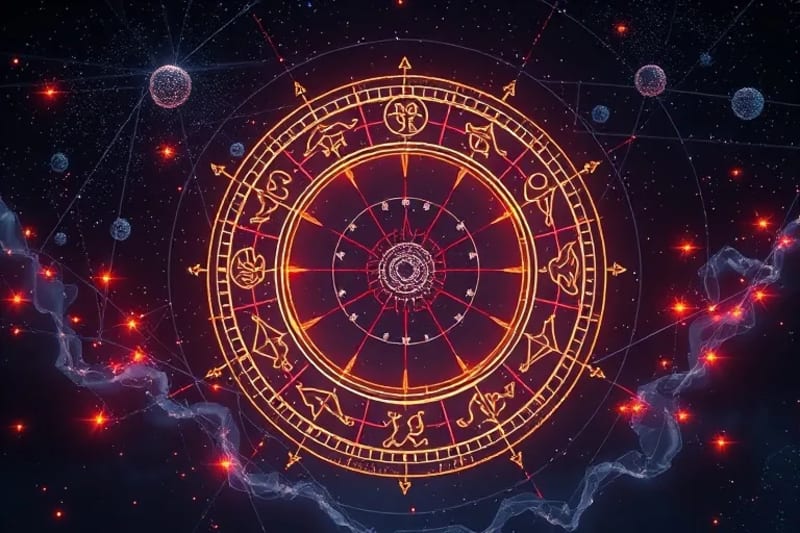
Precursors intellectuales, diagramas fundamentales y representaciones conceptuales que forjaron la visión de la astrología predictiva asistida por IA sobre las tendencias colectivas.
Fuente visual sujeta a disponibilidad del ecosistema: Wikimedia Commons bajo licencia CC BY-SA 4.0 o renderizado conceptual IA.
Understanding AI-Assisted Predictive Astrology
AI-assisted predictive astrology combines traditional astrological principles with advanced computational methods. It's not about replacing human intuition or the depth of symbolic interpretation, but rather augmenting it with the ability to process and analyze vast quantities of data. This includes historical astrological charts, global economic indicators, social media trends, political events, and even environmental data, all correlated with planetary positions and aspects.
The core idea is to identify recurring patterns and correlations that might be too subtle or complex for human observation alone. For instance, an AI can process thousands of historical market crashes and simultaneously analyze the astrological configurations present during those periods, identifying common denominators that might signal future economic shifts. This capability extends to social movements, technological breakthroughs, and even shifts in collective consciousness.
This approach allows for a more empirical and data-driven validation of astrological correlations, moving the field towards a more scientific and verifiable methodology. While traditional astrology relies heavily on interpretation and symbolic understanding, AI introduces a layer of quantitative analysis, bridging the gap between ancient wisdom and modern science.
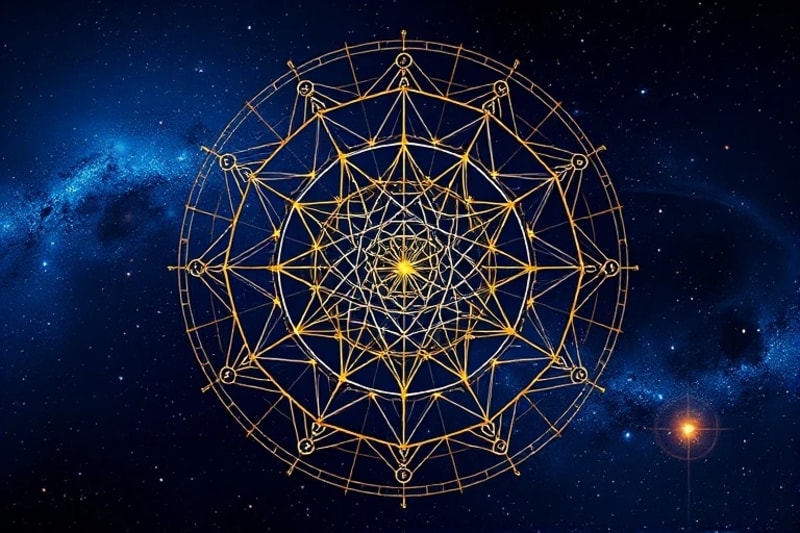
An abstract representation of the intricate data flows and interconnections that AI analyzes to discern collective trends.
The Synergy of Artificial Intelligence and Astrological Data
The power of AI in astrology lies in its ability to handle "big data" – astronomical amounts of information that would overwhelm human analysts. Traditional astrological charts are complex, involving numerous planets, signs, houses, and aspects. When you multiply this complexity by thousands or millions of historical events, the need for computational assistance becomes clear.
Machine learning algorithms can be trained on historical datasets that include both astrological configurations and corresponding real-world events. For example, an AI can learn to identify patterns associated with periods of global innovation, economic recessions, or significant cultural shifts. This process involves:
- Data Collection: Gathering vast amounts of historical astrological data (ephemerides, planetary positions) alongside socio-economic, political, and cultural event data.
- Feature Engineering: Identifying relevant astrological "features" (e.g., specific aspects, planetary ingresses, retrogrades) and correlating them with real-world outcomes.
- Pattern Recognition: Using algorithms to detect non-obvious correlations and recurring patterns within this complex data landscape.
- Predictive Modeling: Developing models that can forecast future trends based on current and upcoming astrological configurations, drawing on learned historical patterns.
This synergy allows for a deeper understanding of cosmic sociology and celestial mechanics, mapping global consciousness with greater accuracy. The AI acts as a sophisticated pattern-recognition engine, sifting through the noise to highlight significant astrological influences on collective human behavior.
Unveiling Collective Trends Through Algorithmic Insight
The primary application of AI in predictive astrology is in identifying and forecasting collective trends. These are not individual predictions but rather broad societal movements, shifts in public sentiment, and major global events. Examples include:
- Economic Cycles: Predicting periods of economic growth or recession by correlating planetary cycles with historical market data.
- Social Movements: Identifying astrological signatures associated with periods of social unrest, activism, or significant cultural shifts.
- Technological Advancements: Correlating specific planetary alignments with historical breakthroughs in science and technology.
- Political Landscapes: Forecasting periods of political instability, major elections, or shifts in international relations.
For instance, an AI might analyze the historical impact of eclipses as portals of change and transformation, identifying patterns in how they correlate with significant global events. This allows for a more nuanced understanding of how cosmic energies manifest on a collective scale, providing valuable foresight for governments, businesses, and individuals alike.
By focusing on collective trends, AI-assisted astrology offers a macro-perspective, helping us anticipate the broader environment in which individual lives unfold. This can be particularly useful for long-term planning and strategic decision-making.
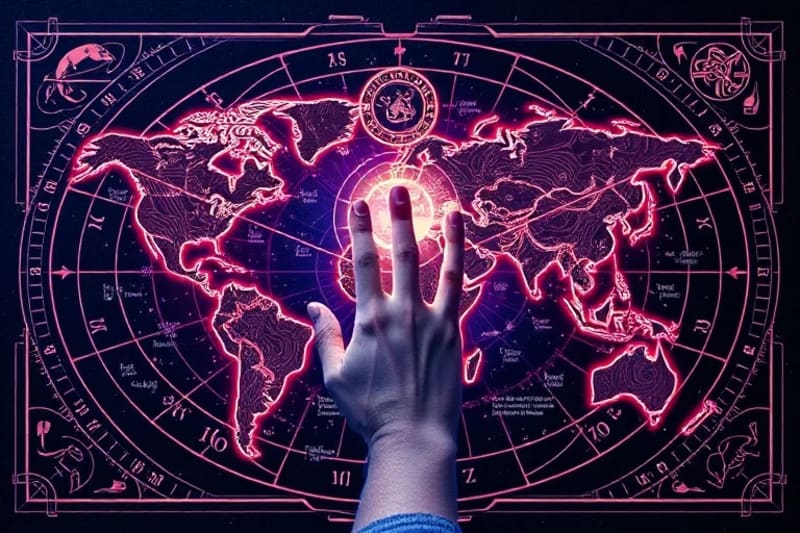
A holographic interface showcasing the integration of astrological charts and global trend analysis through AI.
Practical Applications and Benefits of AI in Astrology
The practical applications of AI-assisted predictive astrology are diverse and extend beyond mere curiosity. From strategic planning to personal development, the insights gained can be invaluable:
- Business Strategy: Companies can use collective trend forecasts to anticipate market shifts, consumer behavior changes, and optimal times for product launches or investments. Understanding the broader 10th House astrology of career and public image can inform strategic decisions.
- Policy Making: Governments and NGOs can leverage these insights to prepare for periods of social change, economic challenges, or environmental shifts, enabling proactive policy development.
- Personal Development: While focused on collective trends, understanding the overarching societal energies can help individuals align their personal goals with the prevailing cosmic climate, fostering better timing for major life decisions.
- Research and Education: AI tools can accelerate astrological research, uncover new correlations, and provide educational platforms for students to explore complex astrological dynamics in a data-rich environment.
The benefit lies in the ability to move from reactive responses to proactive strategies, allowing individuals and institutions to better navigate the complexities of a constantly evolving world. This predictive capability, when combined with human wisdom, offers a powerful framework for foresight.
Ethical Considerations and the Human Element
While the potential of AI in predictive astrology is immense, it also raises important ethical considerations. The primary concern revolves around determinism versus free will. If AI can predict collective trends with high accuracy, does it imply a predetermined future, diminishing the role of human agency?
It is crucial to remember that AI provides probabilities and patterns, not absolute certainties. The human element, including free will, consciousness, and the capacity for unexpected innovation, remains paramount. AI should be viewed as a tool for enhanced understanding and informed decision-making, not as an oracle dictating an unchangeable fate.
Other considerations include:
- Data Privacy: The use of vast datasets, especially those related to human behavior, necessitates strict adherence to data privacy regulations and ethical data handling practices.
- Bias in Algorithms: AI models are only as unbiased as the data they are trained on. Historical data might contain biases that could be inadvertently perpetuated in predictions. Continuous auditing and refinement of algorithms are essential.
- Over-reliance: An over-reliance on AI predictions could stifle human intuition, critical thinking, and the nuanced interpretation that traditional astrology values. The goal is augmentation, not replacement.
Maintaining a balance between technological capabilities and human wisdom is key to harnessing the benefits of AI-assisted astrology responsibly. The insights gained should empower, not constrain, human potential.
The Future Landscape of Predictive Astrology
The future of AI-assisted predictive astrology promises even more sophisticated tools and deeper insights. We can anticipate advancements such as:
- Real-time Trend Analysis: AI systems capable of analyzing astrological configurations and real-world data in real-time, providing immediate updates on emerging collective energies.
- Personalized Collective Impact: While focusing on collective trends, future AI might be able to model how these macro-trends specifically impact different demographic groups or regions, offering more localized insights.
- Integration with Other Disciplines: Further integration with fields like sociology, economics, psychology, and environmental science, creating a truly interdisciplinary approach to understanding global dynamics.
- Interactive Visualization: More intuitive and interactive platforms that allow users to explore complex astrological and trend data through advanced visualizations.
As AI technology continues to evolve, its capacity to process complexity and identify subtle patterns will only grow. This will undoubtedly lead to a richer, more nuanced understanding of the cosmic dance and its profound influence on our collective journey. The blend of ancient wisdom and cutting-edge technology is setting the stage for a new era in astrological exploration.
Frequently Asked Questions
Here are some common questions about AI-assisted predictive astrology:
| Question | Answer |
|---|---|
| What is the main difference between traditional and AI-assisted predictive astrology? | Traditional astrology relies on human interpretation of symbolic meanings. AI-assisted astrology augments this by using algorithms to analyze vast historical datasets, identifying statistical correlations and patterns in collective trends with greater speed and scope. |
| Can AI predict individual destinies? | No, AI-assisted predictive astrology primarily focuses on collective trends, societal shifts, and broad environmental influences. It provides probabilities and patterns for macro-level events, not individual destinies, which remain influenced by personal choices and free will. |
| Is AI-assisted astrology more accurate? | Its strength lies in identifying complex, large-scale patterns and correlations that human analysis might miss due to data volume. This can lead to more empirically supported insights into collective trends, though interpretation still requires human expertise. |
| What kind of data does AI analyze for astrological predictions? | AI processes historical astrological data (planetary positions, aspects), alongside real-world data such as economic indicators, social media trends, political events, technological advancements, and even environmental changes to find correlations. |
AI-assisted predictive astrology represents an exciting frontier, blending ancient wisdom with cutting-edge technology to offer unparalleled insights into the forces shaping our world. By understanding these collective trends, we can better prepare for the future, make more informed decisions, and navigate the complex tapestry of human existence with greater awareness.
Explore Further Insights
- Chiron Astrology: Wounded Healer Journey & Healing Path
Delve into the astrological significance of Chiron and its role in healing and personal growth.
- Scorpio Capricorn Compatibility: Ambition, Power, Emotional Depth
Discover the intricate dynamics between Scorpio and Capricorn in relationships and ambition.
- Saturn Astrology: Discipline, Karma, Structure in Your Chart
Understand the profound influence of Saturn on discipline, karma, and life structure.
- Akashic Records & Natal Chart: Soul's Blueprint
Connect the wisdom of Akashic Records with your natal chart for a deeper understanding of your soul's journey.
- Fixed Cross and T-Square: Navigating Dynamic Chart Patterns
Learn how to interpret and navigate challenging astrological patterns like the Fixed Cross and T-Square.
- Mindfulness & Emotional Regulation: Inner Peace Techniques
Explore techniques for achieving inner peace and emotional balance through mindfulness practices.
- Lilith in Astrological Houses: Hidden Power, Feminine Rebellion
Uncover the hidden power and rebellious feminine energy of Lilith in the astrological houses.
- Zodiacal Modalities: Dynamism, Style of Being
Understand how zodiacal modalities define the dynamism and fundamental style of each sign.
- Gifts of the Holy Spirit: Wisdom, Spiritual Discernment
Explore the spiritual gifts of wisdom and discernment as described in religious traditions.
Source: Hybrid content assisted by AI and human editorial supervision.


Comments
Post a Comment