
AI Predictive Astrology: Navigating Collective Trends Big Data
In an era defined by rapid technological advancement and an insatiable hunger for understanding complex systems, the ancient discipline of astrology is finding an unexpected ally: Artificial Intelligence. AI-assisted predictive astrology represents a fascinating frontier, merging millennia-old cosmic observations with the cutting-edge capabilities of big data analytics and machine learning. This innovative approach aims to decipher collective trends and societal shifts, moving beyond individual horoscopes to paint a broader picture of humanity's trajectory.
This method is not about replacing human intuition or the profound symbolic language of astrology. Instead, it seeks to augment it, providing a robust, data-driven framework for identifying patterns that might otherwise remain hidden within vast datasets. By analyzing planetary transits and their historical correlations with global events, AI can help us navigate the intricate currents of our collective future.
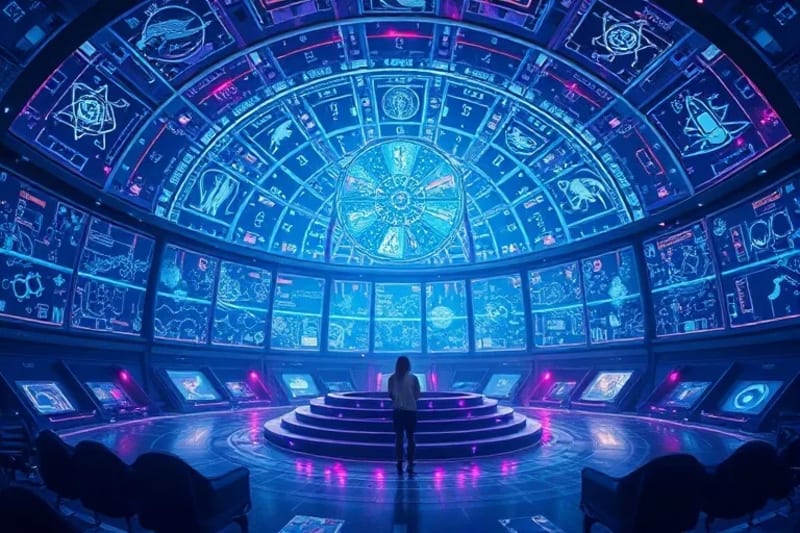
Precursors intellectuales, diagramas fundamentales y representaciones conceptuales que forjaron la visión de la Astrología Predictiva Asistida por IA sobre Tendencias Colectivas.
Fuente visual sujeta a disponibilidad del ecosistema: Wikimedia Commons bajo licencia CC BY-SA 4.0 o renderizado conceptual IA.
The concept of predictive astrology has existed for centuries, with practitioners observing celestial movements and their apparent influence on earthly affairs. However, the sheer volume of variables involved—planetary positions, aspects, houses, signs, and their intricate interactions—has always presented a formidable challenge for comprehensive analysis. This is where artificial intelligence steps in, offering unparalleled computational power to process and interpret these complex relationships.
This article will delve into how AI is being leveraged to enhance astrological predictions, particularly in understanding collective trends. We will explore the methodologies, the benefits, and the ethical considerations of this emerging field, providing an introductory and educational perspective for those new to this fascinating intersection of ancient wisdom and modern technology.
Table of Contents
- The Convergence of Astrology and Big Data
- Machine Learning Algorithms in Astrology
- Understanding Planetary Transits and Collective Trends
- Methodology and Data Sources
- Benefits and Advantages of AI-Assisted Prediction
- Ethical Considerations and Limitations
- Applications and Future Outlook
The Convergence of Astrology and Big Data
The foundation of AI-assisted predictive astrology lies in treating astrological data as a form of "big data." Every planetary position, aspect, and house placement at any given moment constitutes a data point. When these are compiled over centuries, alongside historical records of human events—ranging from economic shifts and political upheavals to cultural revolutions and technological breakthroughs—an immense dataset emerges.
Traditional astrology relies on qualitative interpretation, where a skilled astrologer synthesizes these elements through experience and intuition. Big data analytics, however, offers a quantitative lens. It can identify statistical correlations and recurring patterns between specific astrological configurations and observable societal phenomena that might be too subtle or complex for the human mind to process efficiently.
This approach transforms astrological charts from static symbolic representations into dynamic data streams. For instance, the concept of Mundane Astrology, which focuses on predicting global events and societal trends, is particularly ripe for this kind of AI integration. By feeding historical mundane charts and corresponding global events into an AI model, the system can learn to recognize the astrological signatures preceding significant collective shifts.
Machine Learning Algorithms in Astrology
At the heart of AI-assisted predictive astrology are machine learning (ML) algorithms. These algorithms are designed to learn from data, identify patterns, and make predictions or decisions with minimal human intervention. In this context, ML models can be trained on vast historical datasets comprising:
- Astrological Configurations: Precise planetary longitudes, aspects, midpoints, and house cusps for specific moments in time.
- Historical Events: Timestamps and classifications of major historical occurrences, such as wars, economic booms/busts, scientific discoveries, and cultural movements.
- Societal Metrics: Economic indicators (GDP, inflation), social data (migration patterns, birth rates), and technological advancements.
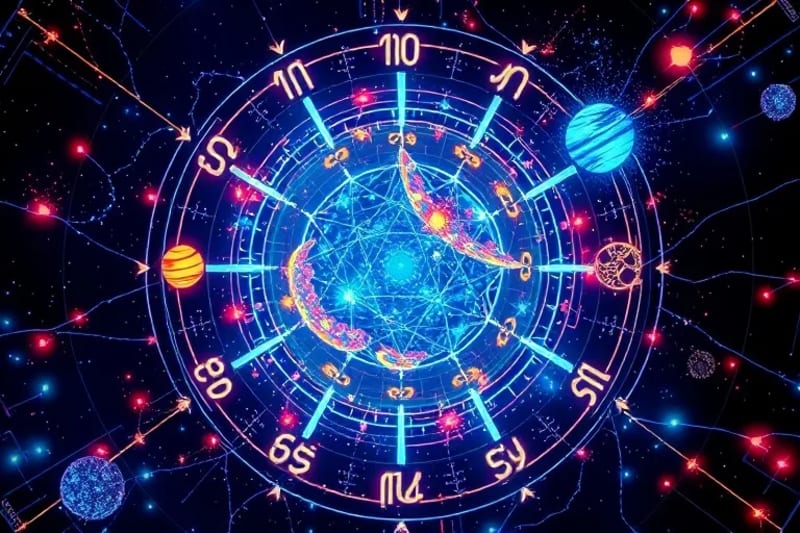
The intricate dance of data streams and cosmic symbols, illustrating the fusion of AI with ancient astrological wisdom.
Various ML techniques can be employed, each suited for different aspects of prediction:
- Classification Algorithms: To predict the type of event (e.g., economic downturn, period of innovation) associated with certain astrological patterns.
- Regression Algorithms: To forecast the magnitude or intensity of a trend.
- Clustering Algorithms: To identify previously unrecognized groupings of astrological configurations that correlate with distinct types of societal phenomena.
- Neural Networks: Particularly deep learning models, capable of identifying highly complex, non-linear relationships within the data, mimicking the intuitive pattern recognition of human astrologers but at an unprecedented scale.
By continuously learning from new data and refining their models, these AI systems can offer increasingly sophisticated insights into the potential trajectory of collective human experience. This iterative learning process is key to the evolving accuracy of AI-assisted astrological predictions.
Understanding Planetary Transits and Collective Trends
Planetary transits are the ongoing movements of planets in the sky relative to a fixed point, typically the Earth, and their relationship to positions in a natal or mundane chart. In traditional astrology, these transits are believed to trigger events or influence conditions. For example, a transit of Saturn might be associated with periods of restriction, discipline, or structural change, while Jupiter transits often correlate with expansion and opportunity.
When applied to collective trends, AI can analyze vast numbers of these transits and their historical outcomes. It can identify which specific planetary alignments, aspects, or ingresses into certain astrological modalities (Cardinal, Fixed, Mutable signs) have historically coincided with periods of significant collective change. This allows for a more nuanced understanding of how cosmic energies manifest on a global scale.
For example, an AI might detect a strong correlation between specific Uranus transits and periods of rapid technological innovation or social disruption. Similarly, it could link certain Neptune aspects to shifts in collective consciousness, artistic movements, or periods of widespread disillusionment. The ability to process these connections quickly and accurately is a hallmark of AI's contribution.
Methodology and Data Sources
The methodology for AI-assisted predictive astrology involves several critical steps:
- Data Collection: Gathering precise ephemeris data (planetary positions) for historical periods, alongside meticulously curated historical records of global events, economic data, social indicators, and cultural phenomena.
- Data Preprocessing: Cleaning, normalizing, and structuring the data to make it suitable for machine learning algorithms. This includes converting qualitative astrological interpretations into quantifiable features.
- Feature Engineering: Creating new variables from existing data that might better capture astrological significance, such as specific aspect patterns, planetary cycles, or the strength of certain planetary influences (e.g., Saturn in Signs).
- Model Training: Using historical data to train various machine learning models. The models learn to identify the relationships between astrological configurations and subsequent collective outcomes.
- Validation and Testing: Evaluating the model's accuracy on unseen historical data to ensure it generalizes well and isn't merely memorizing past events.
- Prediction and Interpretation: Applying the trained model to current and future astrological transits to generate predictions about upcoming collective trends. Human astrologers then interpret these data-driven insights within a broader symbolic context.
The quality and breadth of the data sources are paramount. Access to comprehensive historical databases, both astrological and socio-economic, is crucial for building robust and reliable predictive models.
Benefits and Advantages of AI-Assisted Prediction
The integration of AI into predictive astrology offers several significant benefits:
- Enhanced Accuracy and Nuance: AI can detect subtle, multi-layered patterns that are beyond human capacity, leading to more precise and nuanced predictions about collective trends.
- Objective Analysis: By relying on statistical correlations and algorithms, AI can reduce the potential for subjective bias in astrological interpretation, offering a more objective perspective.
- Speed and Scale: AI systems can process and analyze vast amounts of data almost instantaneously, allowing for real-time monitoring of planetary transits and rapid generation of forecasts.
- Identification of Novel Patterns: Machine learning might uncover previously unrecognized astrological correlations with societal events, expanding our understanding of cosmic influences.
- Support for Human Astrologers: AI serves as a powerful tool, providing data-backed insights that can inform and enrich the interpretations of human astrologers, allowing them to focus on the symbolic and qualitative aspects.
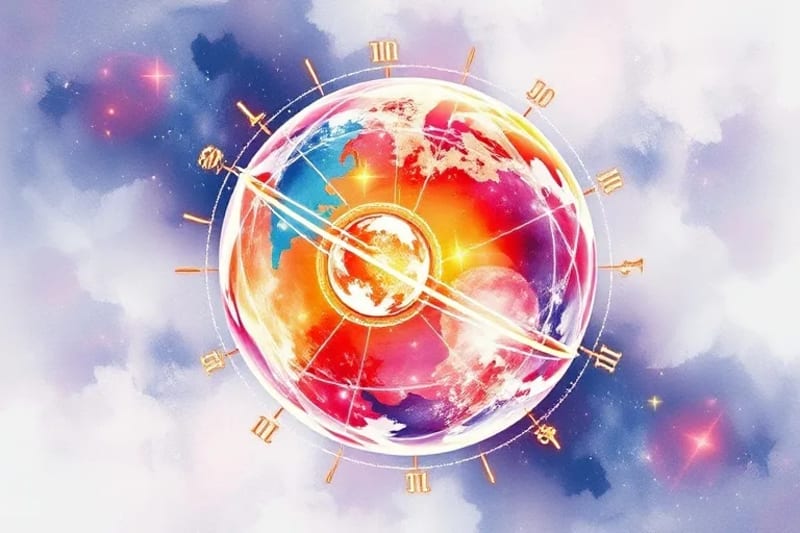
A conceptual visualization of planetary cycles influencing global data points and emerging trends.
This synergy between ancient wisdom and modern technology promises to unlock new dimensions of understanding, allowing us to anticipate and prepare for the ebb and flow of collective human experience with greater foresight.
Ethical Considerations and Limitations
While the potential of AI-assisted predictive astrology is immense, it is crucial to acknowledge its limitations and ethical implications. The "DIVERSIFICACIÓN" approach demands a balanced perspective, ensuring that new audiences understand both the promise and the pitfalls.
- Data Bias: If the historical data used to train the AI contains biases (e.g., underrepresentation of certain cultures or events), the predictions will reflect and perpetuate these biases. Ensuring diverse and comprehensive datasets is critical.
- Deterministic vs. Probabilistic: Astrological predictions, even with AI, should be viewed as probabilistic indicators of potential trends, not deterministic fates. Human free will and collective action always play a role in shaping outcomes.
- The "Black Box" Problem: Complex AI models, particularly deep neural networks, can sometimes be opaque, making it difficult to understand exactly how they arrive at a particular prediction. This can challenge transparency and trust.
- Ethical Use of Predictions: Forecasts about collective trends, especially economic or social ones, could be misused. Responsible dissemination and interpretation are paramount to prevent panic or exploitation.
- The Role of Human Interpretation: AI can identify patterns, but the deeper symbolic meaning, context, and philosophical implications of astrological events still require human insight and wisdom. AI is a tool, not a replacement for the human astrologer.
Addressing these challenges requires a multidisciplinary approach, combining expertise in astrology, data science, ethics, and social sciences to ensure responsible development and application.
Applications and Future Outlook
The potential applications of AI-assisted predictive astrology extend across various domains, offering valuable insights into the rhythms of collective life. From understanding broad Astro-Economics to societal shifts, the scope is vast.
- Socio-Economic Forecasting: Predicting periods of economic growth or recession, shifts in consumer behavior, or the emergence of new market trends.
- Policy and Governance: Informing decision-makers about potential periods of social unrest, demographic changes, or optimal times for launching new initiatives.
- Cultural and Artistic Movements: Anticipating shifts in popular culture, artistic expressions, or the rise of new philosophical paradigms.
- Technological Innovation Cycles: Identifying astrological signatures that precede bursts of scientific discovery or technological adoption.
- Environmental Trends: Correlating planetary cycles with long-term climate patterns or ecological shifts.
The future of this field likely involves more sophisticated AI models, integrating even broader datasets and potentially combining with other predictive methodologies. As AI continues to evolve, its capacity to process and interpret the intricate dance of celestial mechanics and human history will only grow, offering humanity a powerful new lens through which to view its collective journey.
Ultimately, AI-assisted predictive astrology is not about replacing human wisdom but about enhancing it. It provides a scientific framework to explore the ancient hypothesis that celestial movements mirror earthly affairs, offering a data-driven complement to the rich symbolic tradition of astrology. As we navigate an increasingly complex world, this blend of old and new promises invaluable guidance for understanding and shaping our collective future.
Explore Further: Related Astrological Insights
- Manifesting Abundance: Esoteric Secrets & Wealth Attraction
- Lilith, Chiron & Lunar Nodes: Karmic Shadow Integration Astrology
- Horse Chinese Zodiac: Traits, Compatibility, Elements
- Chinese Zodiac Rooster: Traits, Compatibility, 2025 Forecast
- Chinese Zodiac Climate Cycles: Ancient Wisdom & Ecological Foresight
- Mars Astrology: Drive, Passion, Conflict & Chart Guide
- Synastry Attachment Theory Relational Dynamics Soul Contracts
- Astro-Genomics: Unveiling Karmic Health & DNA Blueprints
- Earth Snake Chinese Zodiac: Traits & Years Explained
- Lunar Mansions: Esoteric Magic, Ancient Wisdom & Spellcraft
- Advanced Automatic Writing: Higher Selves & Spirit Guides
Source: Hybrid content assisted by AI and human editorial supervision.


Comments
Post a Comment