
Synastry Attachment Theory Relational Dynamics Soul Contracts
The intricate tapestry of human relationships has long captivated thinkers, mystics, and scientists alike. While psychology offers robust frameworks for understanding interpersonal dynamics, ancient wisdom traditions, particularly astrology, provide a complementary lens through which to explore the deeper, often unseen forces at play. This article delves into the advanced integration of astrological synastry and psychological attachment theory, further enriched by the concept of soul contracts, to unravel the complexities of relational dynamics and foster more conscious, fulfilling connections.
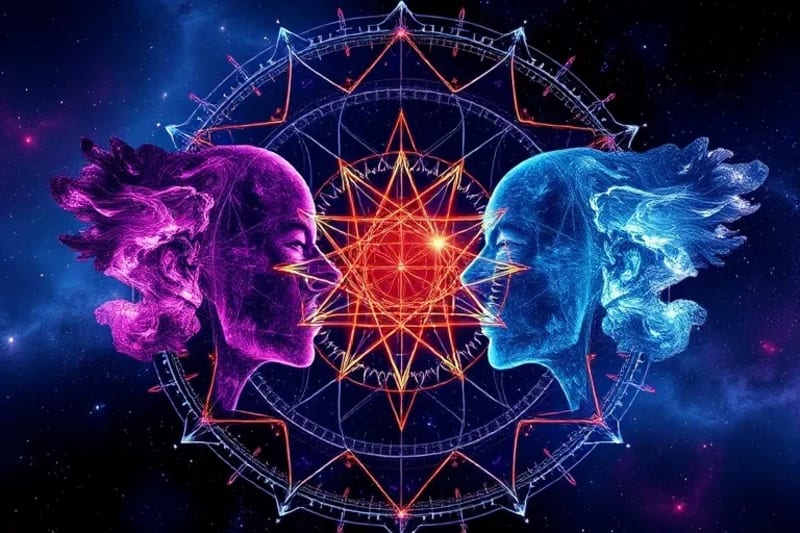
 A cosmic dance where celestial bodies subtly influence human connection, evoking destiny and profound connection.
Synastry, a branch of astrology, meticulously compares two natal charts to reveal the energetic interplay, compatibility, and potential challenges between individuals. It maps out how one person's planetary placements activate or interact with another's, offering insights into attraction, friction, and areas of growth. Concurrently, attachment theory, a cornerstone of developmental psychology, explains how early childhood experiences with caregivers shape our fundamental relational patterns and expectations in adulthood. These patterns, categorized into secure, anxious, avoidant, and disorganized styles, profoundly influence how we seek, maintain, and navigate intimate bonds.
The spiritual concept of soul contracts suggests that certain relationships are pre-ordained, serving a higher purpose for mutual growth and evolution. When these three frameworks—synastry, attachment theory, and soul contracts—are harmonized, they provide an unparalleled depth of understanding, moving beyond superficial compatibility to reveal the karmic, psychological, and cosmic blueprints of our most significant relationships. This integrated approach empowers individuals to transcend reactive patterns and engage in intentional, transformative relating.
Understanding Synastry: The Astrological Blueprint of Relationships
Synastry is far more than a simple compatibility check; it's a profound diagnostic tool that illuminates the energetic currents flowing between two individuals. By superimposing one person's birth chart onto another's, astrologers can identify key planetary aspects and house overlays that describe the nature of their interaction. Each planet represents a different psychological function or life area, and their interconnections reveal specific dynamics.
For instance, strong Venus-Mars aspects often indicate passionate attraction, while Moon-Moon connections speak to emotional resonance and comfort. Sun-Saturn aspects, though potentially challenging, can signify a relationship built on commitment and responsibility, often with a teacher-student dynamic. The houses activated in each chart by the other person's planets show where the relationship's energy is primarily directed, highlighting areas of shared experience or personal impact. For a deeper dive into specific astrological influences, exploring Planetary Dignities Synastry: Relationship Dynamics Power can provide further context.
Key synastry considerations include:
- Conjunctions: Indicate a strong merging of energies, often leading to intense attraction or challenge depending on the planets involved.
- Oppositions: Highlight areas of polarity and balance, where partners may project onto each other or learn to integrate opposing forces.
- Squares: Represent tension and dynamic friction, often leading to growth through overcoming obstacles.
- Trines and Sextiles: Denote ease, harmony, and natural flow, indicating areas where partners support each other effortlessly.
- Quincunxes (Inconjuncts): Suggest an awkward adjustment or a need for conscious effort to bridge disparate energies.
Beyond individual aspects, the overall chart overlay paints a comprehensive picture. For example, a heavy concentration of one person's planets in another's 7th house (relationships) suggests a profound impact on their partnership dynamics, while activation of the 8th house (intimacy, shared resources, transformation) points to deep, transformative bonds. Understanding these intricate astrological blueprints allows individuals to anticipate potential areas of harmony and friction, fostering proactive communication and empathy.
Attachment Theory: The Psychological Roots of Connection
Developed by John Bowlby and Mary Ainsworth, attachment theory posits that humans are biologically wired to seek proximity to significant others for comfort and security, especially in times of distress. The quality of these early attachments, primarily with primary caregivers, forms an "internal working model" that guides our expectations and behaviors in adult relationships. There are four primary attachment styles:
- Secure Attachment: Characterized by comfort with intimacy and independence. Secure individuals trust their partners, communicate needs effectively, and are resilient in the face of conflict. They generally had caregivers who were consistently responsive to their needs.
- Anxious-Preoccupied Attachment: Individuals with this style often crave high levels of intimacy, approval, and responsiveness from partners, becoming overly dependent. They may fear abandonment and be sensitive to perceived slights. This often stems from inconsistent caregiving.
- Dismissive-Avoidant Attachment: These individuals tend to value independence and self-sufficiency above all else, often suppressing emotions and avoiding true intimacy. They may appear emotionally distant or uncomfortable with closeness, often having had caregivers who were rejecting or unresponsive.
- Fearful-Avoidant (Disorganized) Attachment: A complex style marked by a desire for intimacy coupled with a fear of it. Individuals may exhibit unpredictable behavior, pushing partners away while simultaneously craving connection. This often arises from frightening or inconsistent caregiving experiences, such as abuse or neglect.
 A vibrant interplay of fluid colors representing the spectrum of attachment styles and emotional complexity.
Understanding one's own attachment style, and that of a partner, is crucial for navigating relational dynamics. It provides a roadmap for identifying core needs, triggers, and communication patterns. For instance, an anxiously attached individual might find themselves perpetually seeking reassurance, while an avoidant partner might withdraw when intimacy deepens. Recognizing these patterns allows for conscious intervention and the development of more secure relational strategies. This psychological lens offers practical tools for improving communication and fostering emotional safety within relationships.
Bridging Synastry and Attachment: Cosmic Influences on Relational Patterns
The fascinating intersection of synastry and attachment theory suggests that our astrological predispositions might correlate with or influence our attachment patterns. While attachment styles are primarily shaped by early environment, certain planetary placements and aspects in a natal chart could indicate a predisposition towards specific relational needs or challenges that align with attachment behaviors.
Consider the Moon, which governs emotions, security needs, and the subconscious. A challenging Moon placement or aspects to Saturn (restriction) or Pluto (intensity, control) in a natal chart could indicate an individual prone to feelings of insecurity or a fear of abandonment, echoing anxious or disorganized attachment. Conversely, a well-aspected Moon, particularly to Jupiter (expansion) or Venus (harmony), might suggest a more naturally secure emotional foundation. Similarly, Mercury's influence on communication styles, as discussed in Mercury in Astrology: Communication, Intellect, and Learning Styles, can significantly impact how attachment needs are expressed or repressed.
When examining synastry, certain inter-aspects can illuminate potential attachment-related dynamics:
- Moon-Saturn Aspects: One person's Moon conjunct, square, or opposite another's Saturn can create feelings of emotional restriction or criticism. The Moon person might feel stifled, potentially triggering anxious attachment behaviors, while the Saturn person might feel burdened by emotional demands.
- Moon-Pluto Aspects: These intense connections can signify deep emotional bonds but also power struggles, control issues, or fear of betrayal, aligning with disorganized attachment patterns. The Pluto person might unconsciously trigger the Moon person's deepest fears.
- Venus-Uranus Aspects: While exciting, these can indicate instability or a fear of commitment, potentially challenging a partner's need for security and triggering anxious attachment.
- Sun-Nodes or Moon-Nodes: Connections to the Lunar Nodes (Rahu and Ketu) are often considered karmic, suggesting a fated encounter designed for growth. These can bring up deep-seated patterns, including those related to attachment, for resolution. More on these can be found in Karmic Nodes Synastry Composite Charts: Advanced Astrology Guide.
By overlaying these astrological insights with attachment theory, individuals gain a richer understanding of why certain relational patterns manifest. It's not about blaming the stars, but recognizing predispositions and consciously working to evolve beyond them. This integrated perspective offers a powerful tool for self-awareness and relational healing.
Soul Contracts: The Deeper Purpose of Our Connections
The concept of soul contracts, prevalent in various spiritual traditions, posits that we enter into pre-arranged agreements with other souls before incarnating. These contracts are designed to facilitate specific lessons, growth, and the fulfillment of our spiritual purpose. In the context of relationships, a soul contract suggests that certain individuals are destined to cross our paths, not by chance, but by design, to trigger necessary transformations.
Soul contracts are not always about harmonious, easy relationships; often, the most challenging connections serve as potent catalysts for profound personal and spiritual development. These relationships might bring our deepest attachment wounds to the surface, forcing us to confront and heal them. The intensity of these bonds can often be seen in synastry through strong Pluto, Saturn, or nodal aspects, indicating karmic ties and significant life lessons. The idea of fated relationships, often illuminated by Karmic Nodes Vertex Conjunctions Fated Relationships Synastry, resonates deeply with the concept of soul contracts.
 Intricate, glowing energetic pathways connecting two abstract, crystalline forms, symbolizing karmic ties and soul contracts.
Recognizing a relationship as a potential soul contract shifts the perspective from blame to growth. Instead of asking "Why is this happening to me?", one begins to ask "What is this relationship teaching me?" This perspective encourages individuals to embrace challenges as opportunities for healing and evolution, rather than simply escaping discomfort. It implies a deeper, spiritual dimension to our relational dynamics, suggesting that every significant encounter holds a key to unlocking our higher potential.
While the concept of soul contracts is not empirically verifiable in the same way as attachment theory, its integration with synastry provides a compelling narrative for understanding intense, transformative relationships that defy simple explanation. It offers a framework for finding meaning in complex dynamics and approaching relationships with a sense of purpose and spiritual intentionality.
Advanced Relational Dynamics: Integrating the Frameworks
The true power of this integrated approach lies in its ability to offer a multi-dimensional understanding of relationships. By combining the cosmic insights of synastry, the psychological depth of attachment theory, and the spiritual purpose of soul contracts, individuals can navigate their relational landscape with unprecedented clarity and intention. This advanced understanding moves beyond simplistic notions of "good" or "bad" compatibility, embracing the nuanced interplay of energies and lessons.
Consider a scenario where synastry reveals challenging Moon-Saturn aspects, indicating potential emotional constriction. An individual with an anxious attachment style might interpret this as a partner's deliberate withdrawal, triggering their fear of abandonment. However, by understanding the Saturnian influence through synastry, the anxious partner can recognize that their partner's emotional reserve might be a natural predisposition rather than a personal slight. Concurrently, the Saturnian partner, understanding their own avoidant tendencies through attachment theory, can consciously work to offer more emotional reassurance, even if it feels unnatural.
This integrated approach fosters:
- Deeper Empathy: Understanding the underlying astrological predispositions and attachment patterns of both self and partner cultivates profound empathy and reduces projection.
- Conscious Communication: Awareness of triggers and core needs allows for more effective and compassionate communication, moving beyond reactive arguments.
- Growth-Oriented Relationships: Challenges are reframed as opportunities for healing and evolution, aligning with the concept of soul contracts for mutual spiritual development.
- Personal Empowerment: Individuals move from feeling victimized by relational patterns to actively shaping their relational experience.
The journey towards secure attachment can be significantly aided by consciously working with the insights provided by synastry. For example, if synastry highlights a partner's strong Neptune aspects to personal planets, indicating potential for idealization or confusion, an individual can be mindful of their own anxious tendencies to idealize, ensuring they remain grounded in reality. This holistic perspective transforms relationships into powerful vehicles for self-discovery and spiritual awakening.
Practical Applications for Conscious Relating
Applying these advanced frameworks requires introspection, open communication, and a willingness to engage with both psychological and spiritual truths. Here are practical steps to integrate synastry, attachment theory, and soul contracts into your relational journey:
1. Self-Assessment:
- Natal Chart Analysis: Understand your own planetary placements, especially Moon, Venus, Mars, and aspects to outer planets, to identify your innate relational style and emotional needs.
- Attachment Style Identification: Reflect on your past relationships and childhood experiences to determine your predominant attachment style. Numerous online quizzes and psychological resources can assist with this.
2. Partner Assessment (with consent):
- Synastry Reading: Obtain a professional synastry reading or learn to interpret one yourself. Focus on the inter-aspects that highlight both harmony and challenge.
- Discuss Attachment: Openly discuss attachment styles with your partner. This can be a vulnerable conversation but fosters immense understanding and compassion.
3. Integrated Interpretation:
- Connect the Dots: How do your synastry aspects align with your and your partner's attachment styles? For example, does a challenging Moon-Mars aspect in synastry exacerbate an anxious-avoidant dynamic?
- Identify Soul Contract Lessons: What recurring themes or challenges appear in your relationship? Could these be part of a soul contract designed for mutual growth?
4. Conscious Engagement:
- Proactive Communication: Use your insights to communicate needs and boundaries more effectively. For example, an anxiously attached person can learn to self-soothe, while an avoidant person can practice expressing vulnerability.
- Healing and Growth: Engage in practices that promote secure attachment, such as mindfulness, therapy, or self-compassion. Recognize that every challenge is an opportunity to heal old wounds and evolve.
- Spiritual Context: Approach conflicts not as failures, but as spiritual lessons. This can be supported by practices like Guided Meditation for Emotional Well-being, which helps in processing difficult emotions.
By consciously applying these frameworks, individuals can transform their relationships from unconscious reactions to intentional co-creation. It's a journey of profound self-discovery that ultimately leads to more authentic, resilient, and spiritually aligned connections.
In conclusion, the synergy between astrological synastry, psychological attachment theory, and the concept of soul contracts offers a powerful, holistic lens through which to understand and enhance our most significant relationships. This advanced perspective provides not only insights into compatibility but also a roadmap for personal and spiritual growth, empowering us to build connections that are both deeply fulfilling and profoundly transformative.
Frequently Asked Questions about Relational Dynamics
This section addresses common inquiries regarding the interplay of synastry, attachment theory, and soul contracts in relationships.
Q1: Can synastry predict the success or failure of a relationship?
A1: Synastry does not predict success or failure but rather highlights the energetic dynamics and potential challenges within a relationship. It shows areas of ease and friction, indicating where conscious effort may be required. Ultimately, the success of a relationship depends on the individuals' willingness to grow, communicate, and work through their patterns, regardless of astrological predispositions.
Q2: How can I change my attachment style if it's insecure?
A2: Changing an insecure attachment style is a process of self-awareness, healing, and conscious effort. It involves recognizing your patterns, understanding their origins, and practicing new relational behaviors. Therapy, mindfulness, self-compassion, and forming relationships with securely attached individuals (or "earned security") are effective strategies. It's a journey of rewiring your internal working models over time.
Q3: Are soul contracts always romantic?
A3: No, soul contracts are not exclusively romantic. They can manifest in various forms of relationships, including friendships, family bonds, professional partnerships, and even encounters with strangers who significantly impact your life. The defining characteristic of a soul contract is its profound purpose for mutual growth and spiritual evolution, regardless of the relational category.
Q4: How does understanding these concepts help in conflict resolution?
A4: Understanding synastry, attachment theory, and soul contracts provides a deeper context for conflicts. Instead of seeing conflict as a personal attack, you can recognize it as a manifestation of underlying attachment wounds, astrological dynamics, or a soul lesson. This fosters empathy, reduces defensiveness, and allows for more constructive, growth-oriented communication, shifting the focus from blame to understanding and resolution.
Q5: Can I use AI tools for birth chart analysis in this context?
A5: Yes, AI tools can assist in preliminary birth chart analysis and provide interpretations of various astrological placements and aspects. However, for nuanced synastry readings and the integration with complex psychological concepts like attachment theory and spiritual ideas like soul contracts, human expertise and intuitive interpretation remain invaluable. AI can be a powerful aid, but should ideally be complemented by expert guidance, as discussed in Birth Chart Analysis AI Era Ethics Future Cosmic Readings.
Q6: Is there a specific astrological indicator for soulmates or twin flames?
A6: While astrology offers several indicators for deep, fated connections (e.g., strong nodal connections, Vertex conjunctions, or intense Pluto aspects), there isn't one single "soulmate" aspect. The concept of soulmates or twin flames is often understood through a combination of intense synastry, karmic indicators, and a profound sense of recognition and purpose within the relationship, aligning with the idea of a soul contract for significant growth and evolution.
Explore More on StarPluto:
- Mercury in Astrology: Communication, Intellect, and Learning Styles
- Modern Spirituality AI Ethics Divination Tools Future Readings
- Guided Meditation Emotional Well-being Moon Phases
- The 12-Year Chinese Zodiac Cycle: Influence on Generations and Collective Trends
- Urban Divination: Omens for Modern Guidance
- Techno-Shamanism Digital Healing Ancient Rituals Bridged
- Automatic Writing Techniques: Spiritual Channeling Enhanced
- Karmic Nodes Synastry Composite Charts: Advanced Astrology Guide
- Modern Spirituality Celestial Mechanics Cosmic Order Guide
- Horse Personalities: Zodiac Traits in Celebrities
- Karmic Nodes Vertex Conjunctions Fated Relationships Synastry
- Scrying Art: Gazing Future Mirrors Crystals Guide
- Birth Chart Analysis AI Era Ethics Future Cosmic Readings
- Reiki Healing Universal Life Force Energy Explained Practice
- Planetary Dignities Synastry: Relationship Dynamics Power
Source: Hybrid content assisted by AI and human editorial supervision.


Comments
Post a Comment