
Mesoamerican Lunar Mansions: Ancient Calendars, Modern Predictions
Mesoamerican Lunar Mansions: Bridging Ancient Calendars and Modern Predictions
The concept of lunar mansions, or divisions of the moon's path across the sky, has been a cornerstone of astrological and calendrical systems across numerous ancient cultures. While often associated with Arabic, Indian, and Chinese traditions, the sophisticated astronomical observations and calendrical practices of Mesoamerican civilizations, such as the Maya and Aztec, also reveal a profound understanding of lunar cycles and their influence. This article delves into how these ancient cultures perceived and integrated lunar rhythms, exploring the potential for bridging their wisdom with modern predictive insights.
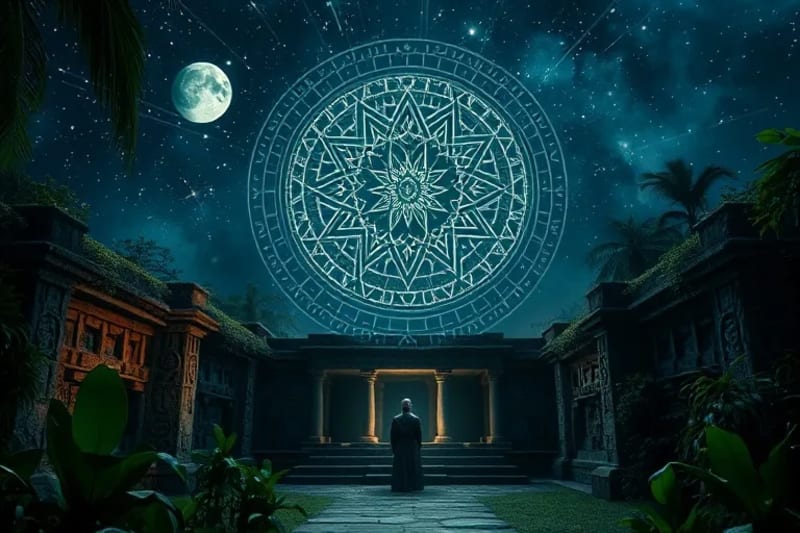 Architectural remnants, celestial charts, and the profound wisdom of ancient observers converge, illuminating the enduring legacy of Mesoamerican astronomical prowess and its connection to cosmic rhythms.
Conceptual AI render inspired by historical accounts and archaeological findings, offering a glimpse into the observational practices of ancient civilizations.
Unlike the fixed 27 or 28 lunar mansions found in other traditions, Mesoamerican astrology, particularly Mayan, focused on intricate calendrical systems that tracked lunar phases, eclipses, and the moon's position relative to other celestial bodies. These systems were not merely time-keeping devices; they were complex cosmological frameworks that informed every aspect of life, from agriculture and ceremonies to political decisions and personal destiny.
Understanding these ancient approaches requires a shift from a linear, Western perspective to a cyclical, interconnected worldview. The moon, as a powerful celestial body, was seen as a mediator between the divine and the terrestrial, its cycles reflecting the ebb and flow of cosmic energy that permeated existence.
Table of Contents
- Historical Context: The Foundations of Mesoamerican Calendars
- The Sacred Tzolkin and the Haab' Calendar
- Lunar Observations and Their Significance
- Mesoamerican Lunar Divisions: A Unique Perspective
- Comparative Astrology: Mesoamerican vs. Other Lunar Systems
- Modern Applications and Predictive Insights
- Integrating Ancient Wisdom for Personal Growth
Historical Context: The Foundations of Mesoamerican Calendars
Mesoamerican civilizations, particularly the Maya, developed some of the most sophisticated calendrical systems in human history. These systems were not isolated but deeply interconnected, reflecting a holistic understanding of time, cosmology, and human experience. The Long Count calendar, for instance, tracked vast cosmic cycles, while the Tzolkin and Haab' calendars governed daily life and agricultural rhythms.
The Maya, renowned for their advanced astronomy, meticulously observed celestial phenomena. Their priests and astronomers were adept at tracking the movements of the sun, moon, and planets, integrating these observations into their complex calendrical calculations. This allowed them to predict astronomical events with remarkable accuracy, influencing their rituals and societal structures.
These calendars were not merely tools for measuring time; they were living entities imbued with divine power and meaning. Each day, month, and cycle carried specific energies and influences, which were understood and interpreted by trained specialists. The lunar cycles played a crucial role in this intricate web of cosmic forces, dictating agricultural practices and ceremonial timings.
The Sacred Tzolkin and the Haab' Calendar
Central to Mesoamerican calendrical astrology were the Tzolkin (Sacred Round) and the Haab' (Civil Calendar). The Tzolkin is a 260-day cycle, formed by the permutation of 20 day-signs with 13 numbers. This cycle is believed to represent the human gestation period and is deeply tied to personal destiny and spiritual growth.
The Haab' is a 365-day solar calendar, similar to our Gregorian calendar, consisting of 18 months of 20 days each, plus a 5-day period known as the Wayeb'. While the Haab' tracked the solar year, its interaction with the Tzolkin created a 52-year cycle, known as the Calendar Round, which was a significant period of renewal and transformation.
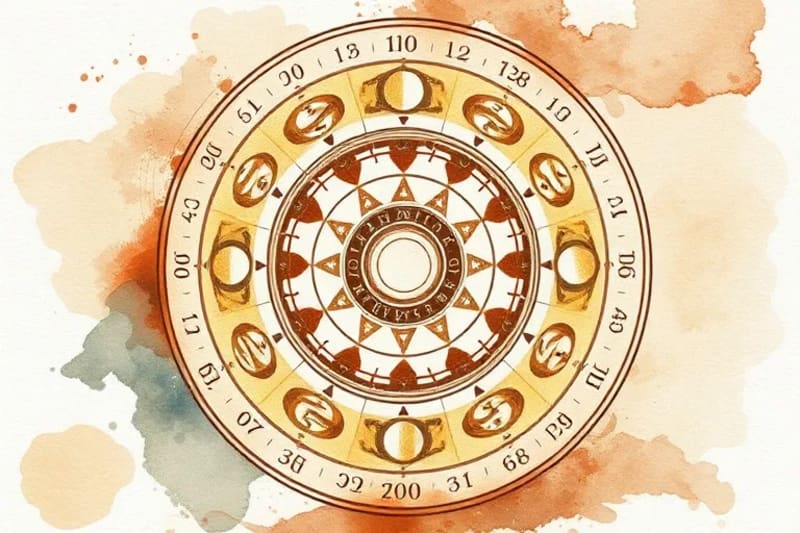 The intricate design of a Mesoamerican calendar wheel, illustrating the cyclical nature of time and the integration of lunar phases into ancient wisdom.
The moon's influence was not explicitly delineated into "mansions" as in other cultures but was rather integrated into the broader understanding of these cycles. Lunar phases, eclipses, and the moon's position within the zodiacal band (as understood by Mesoamerican astronomers) were considered crucial for timing events and understanding underlying energies. For instance, the timing of agricultural activities, religious ceremonies, and even warfare was often determined by the moon's current phase and its perceived energetic qualities.
The interplay between these calendars provided a multi-layered framework for understanding cosmic influences, including those of the moon. Each day possessed a unique energetic signature derived from its position within both the Tzolkin and the Haab', creating a rich tapestry of meaning.
Lunar Observations and Their Significance
Mesoamerican astronomers were masters of lunar observation. They developed sophisticated methods for tracking lunar cycles, including the synodic month (new moon to new moon) and the draconitic month (the time it takes for the moon to return to the same node). These observations were vital for predicting eclipses, which were often seen as powerful omens or periods of significant transformation.
The Dresden Codex, one of the few surviving Mayan books, contains detailed tables for predicting lunar and solar eclipses, demonstrating an astonishing level of astronomical knowledge. This precision highlights the importance placed on lunar phenomena within their cosmology. The moon was not just a light in the night sky; it was a cosmic clock and a source of profound spiritual energy.
The lunar cycle was intrinsically linked to agricultural fertility, the tides, and even human emotions, much like in other ancient cultures. However, the Mesoamerican interpretation wove these influences into a complex tapestry of interconnected cycles, where the moon's energy was always considered in conjunction with other celestial bodies and calendrical permutations.
Mesoamerican Lunar Divisions: A Unique Perspective
While the term "lunar mansions" might not directly translate to Mesoamerican concepts, the idea of dividing the moon's journey into distinct energetic segments was undoubtedly present. Instead of fixed mansions, the Mesoamerican approach often involved understanding the moon's influence through its position within the 20 day-signs of the Tzolkin and its phases within the Haab' calendar.
Each of the 20 day-signs, such as Imix (Dragon), Ik' (Wind), Ak'bal (Night), and Kan (Maize), carried specific symbolic meanings and energetic qualities. When the moon was in a particular phase or aligned with certain day-signs, its influence was interpreted through the lens of that sign's symbolism. This created a dynamic system of lunar divination and timing, where the moon's energy was constantly shifting and interacting with other cosmic forces.
For example, a new moon occurring on a day-sign associated with creation and new beginnings would be considered particularly potent for initiating new projects. Conversely, a full moon on a day-sign linked to completion or introspection would be ideal for reflection and culmination. This nuanced approach allowed for a highly specific understanding of lunar influences.
Comparative Astrology: Mesoamerican vs. Other Lunar Systems
Comparing Mesoamerican lunar interpretations with other traditions, such as the Lunar Mansions in Arabic Astrology or the Chinese Lunar Calendar Traditions, reveals both commonalities and distinct differences. While all acknowledge the moon's profound impact, the methodologies for dividing and interpreting its path vary significantly.
 An abstract visualization of cosmic energy and geometric patterns, symbolizing the intricate and interconnected influences of lunar cycles on universal principles.
Arabic and Indian systems define specific constellations or asterisms through which the moon passes, assigning distinct qualities to each mansion. These are often used for electional astrology, determining auspicious times for actions. Chinese lunar astrology, intertwined with the Chinese Zodiac and Five Elements, focuses on a lunisolar calendar that dictates festivals and personal characteristics.
Mesoamerican systems, while equally precise, integrated lunar movements into a more complex, interwoven calendrical structure. The emphasis was less on static "mansions" and more on the dynamic interplay of lunar phases, day-signs, and numerical coefficients. This holistic approach meant that the moon's influence was always contextualized within a larger cosmic narrative, rather than being isolated into discrete divisions.
Despite these differences, the underlying reverence for the moon's power and its role in shaping earthly events remains a universal theme. All these traditions highlight the importance of aligning human activities with celestial rhythms for harmony and success.
Modern Applications and Predictive Insights
Bridging ancient Mesoamerican lunar wisdom with modern predictive insights offers a unique lens through which to view current trends and personal development. While we may not have direct translations of "lunar mansions" in the Mesoamerican context, understanding their calendrical philosophy can enrich our contemporary astrological practices.
Modern astrologers can draw parallels by observing the moon's transit through the zodiacal signs and its aspects to other planets, interpreting these in conjunction with the energetic qualities of the Mayan day-signs. For example, a new moon in Aries (a sign of initiation) occurring on a Mayan day-sign like Imix (Dragon, associated with new beginnings and primal force) would amplify themes of bold creation and fresh starts.
This approach encourages a deeper, more nuanced understanding of lunar influences beyond simple phase interpretations. It invites us to consider the underlying archetypal energies that Mesoamerican cultures so meticulously charted, providing a richer context for personal and collective predictions. Understanding these ancient systems can also offer insights into Lunar Nodes Aspects and their karmic connections, as both systems delve into cycles of destiny.
Furthermore, the emphasis on cycles and interconnectedness in Mesoamerican thought can inform our understanding of global trends. Just as ancient civilizations tracked cycles of growth and decline, we can use these frameworks to interpret societal shifts and plan for the future. The holistic nature of their astrology encourages us to look beyond isolated events and see the larger patterns at play.
Integrating Ancient Wisdom for Personal Growth
For individuals seeking personal growth, the principles derived from Mesoamerican lunar astrology can be incredibly empowering. By tuning into the moon's phases and their interaction with the energetic qualities of the Mayan day-signs, one can gain a deeper understanding of optimal timing for various activities.
- Timing Intentions: Use the new moon in conjunction with day-signs associated with initiation (e.g., Imix, Manik) for setting new goals and planting seeds for the future.
- Energy Management: Align activities requiring high energy and outward expression with the waxing moon and dynamic day-signs (e.g., Lamat, Eb).
- Reflection and Release: Utilize the waning moon and day-signs of introspection or transformation (e.g., Ak'bal, Cimi) for self-reflection, letting go, and healing.
- Culmination and Harvest: Plan important presentations, celebrations, or harvesting efforts around the full moon and day-signs of completion or abundance (e.g., Ahau, Kan).
This practice fosters a greater connection to natural rhythms and the cosmic flow, moving away from arbitrary schedules towards a more intuitive and energetically aligned way of living. It's a powerful way to engage in Quantum Manifestation by consciously co-creating with universal energies.
The enduring legacy of Mesoamerican civilizations reminds us that celestial observation is not just about prediction but about understanding our place within a vast, interconnected cosmos. By exploring their unique interpretation of lunar cycles, we can unlock new dimensions of astrological insight and personal empowerment, bridging the wisdom of the ancients with the challenges and opportunities of the modern world.
Explore More Cosmic Insights
- Sacred Geometry Manifestation: Vibrational Linguistics & Sound Sigils
- Sabian Symbols Astrology: Esoteric Meanings Degrees
- 9th House Astrology: Higher Education, Travel, Philosophy Guide
- Horary Astrology Career Decisions: Timing Professional Moves
- Psycho-Astrology Jungian Archetypes Shadow Work Dream Interpretation
- Digital Cryptozoology Exploring Online Anomalies Cybersecurity
- Nodos Lunares Karma Transgeneracional Sanando Heridas
Source: Hybrid content assisted by AI and human editorial supervision.


Comments
Post a Comment