
Ethics AI Predictive Astrology Big Data
The convergence of artificial intelligence (AI) and predictive astrology marks a fascinating, yet complex, frontier. As AI technologies advance, their application extends beyond traditional fields, venturing into areas once considered purely intuitive or spiritual. Predictive astrology, with its ancient roots in charting celestial movements to understand earthly events and human destinies, now faces the transformative, and sometimes challenging, influence of big data and sophisticated algorithms. This exploration delves into the ethical considerations that arise when cutting-edge technology meets the cosmic art of prediction, particularly concerning data privacy, algorithmic bias, and the profound implications for human agency and collective societal trends.
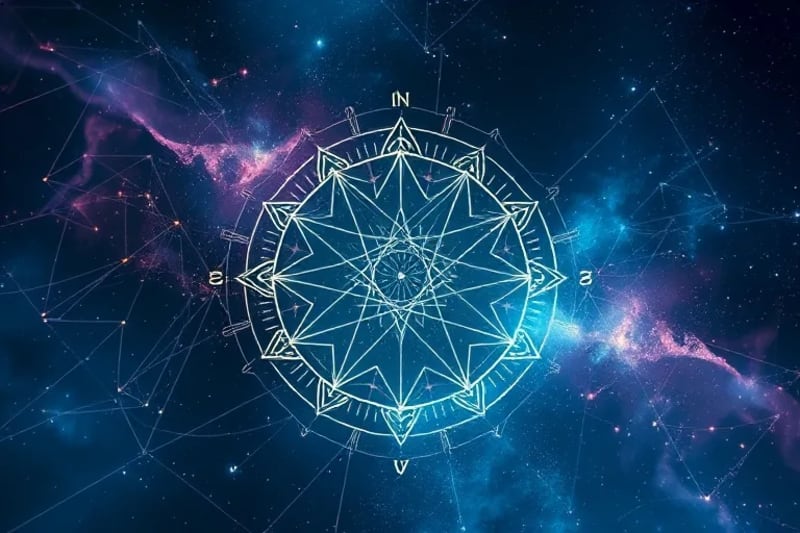
The intricate dance between artificial intelligence and the cosmos, where data streams illuminate ancient astrological patterns.
Conceptual render created with AI, blending technological and celestial motifs.The promise of AI in predictive astrology is compelling: the ability to process vast amounts of historical astrological data, planetary positions, and corresponding earthly events, identifying patterns that might elude human analysis. This could lead to more nuanced, accurate, and personalized astrological interpretations. However, this power comes with significant ethical responsibilities that demand careful consideration from developers, practitioners, and users alike. Understanding these ethical dimensions is crucial for navigating this evolving landscape responsibly.
Table of Contents
- AI, Astrology, and Big Data: A New Paradigm
- Data Privacy and Confidentiality Concerns
- Algorithmic Bias and the Amplification of Stereotypes
- Human Agency vs. Algorithmic Determinism
- Risks of Misuse and Manipulation
- Establishing Ethical Guidelines and Best Practices
- The Future of Responsible AI Integration in Astrology
AI, Astrology, and Big Data: A New Paradigm
Artificial intelligence, particularly machine learning, excels at identifying correlations and patterns within massive datasets. When applied to astrology, this means feeding algorithms with birth chart data, life events, psychological profiles, and even collective historical occurrences, alongside corresponding planetary transits and aspects. The goal is to uncover statistical relationships that might inform more precise predictive models or offer deeper insights into astrological influences. This approach moves beyond traditional interpretive methods, introducing a quantitative dimension to an inherently qualitative field.
Big data plays a pivotal role here. The effectiveness of AI models is directly proportional to the volume and quality of data they can access. For predictive astrology, this could involve compiling millions of birth charts, personal narratives, and public records, all cross-referenced with astronomical data. This unprecedented scale of data processing promises to elevate astrological analysis, potentially revealing previously unseen patterns in astrological transits and their correlation with human experience. However, the very nature of this data collection and analysis raises the first critical ethical questions.
Data Privacy and Confidentiality Concerns
The core of predictive astrology often relies on highly personal information: birth dates, times, and locations, which can be linked to individuals. When combined with other data points—such as health records, career paths, relationship histories, or even psychological assessments—the potential for privacy breaches becomes significant. AI systems, by their nature, seek to connect disparate pieces of information, potentially creating comprehensive profiles of individuals without their explicit, informed consent for such extensive use.
- Consent and Anonymization: Users must be fully aware of what data is being collected, how it's being used, and with whom it might be shared. Strong anonymization techniques are essential, but even anonymized data can sometimes be re-identified when combined with other public datasets.
- Data Security: The storage of such sensitive personal and astrological data requires robust cybersecurity measures to protect against hacking and unauthorized access. A breach could expose intimate details of individuals' lives, leading to reputational damage, discrimination, or even identity theft.
- Purpose Limitation: Data collected for astrological predictions should ideally not be repurposed for other uses without renewed consent. The ethical framework should clearly define the boundaries of data utilization.
The ethical imperative here is to prioritize user trust and data protection above all else. Without clear, transparent practices, the integration of AI into astrology risks eroding the confidence of its users and violating fundamental rights to privacy.
Algorithmic Bias and the Amplification of Stereotypes
AI systems are only as unbiased as the data they are trained on. If the historical astrological data fed into an algorithm reflects societal biases—whether related to gender, race, socioeconomic status, or any other demographic—the AI will learn and perpetuate these biases. For example, if historical astrological interpretations disproportionately associate certain planetary configurations with specific gender roles or life outcomes, an AI might inadvertently reinforce these stereotypes in its predictions.
The delicate equilibrium required when integrating advanced AI with sensitive personal and collective data.
A conceptual digital painting exploring the ethical considerations of AI in predictive analytics.This algorithmic bias can lead to several problems:
- Reinforcement of Harmful Stereotypes: AI-driven astrological predictions could inadvertently reinforce outdated or harmful societal norms, limiting individual potential or promoting discriminatory views.
- Lack of Inclusivity: If the training data lacks diversity, the AI's predictions might be less accurate or relevant for individuals from underrepresented groups, creating an uneven playing field for astrological insights.
- Erosion of Nuance: Astrology is rich in symbolic meaning and personal interpretation. An AI focused solely on statistical correlations might miss the subtle, nuanced, and often contradictory aspects of a birth chart, reducing it to a deterministic output.
Addressing algorithmic bias requires meticulous data curation, diverse training datasets, and continuous auditing of AI models to ensure fairness and inclusivity. This is particularly important for fields like astrology that touch upon personal identity and life paths.
Human Agency vs. Algorithmic Determinism
Perhaps one of the most profound ethical dilemmas is the tension between astrological predictions (whether AI-driven or traditional) and the concept of human agency. Astrology traditionally offers insights into potentials, challenges, and timing, but generally emphasizes free will and choice. An AI system, however, might present predictions with a higher degree of certainty, potentially leading users to feel their future is predetermined, undermining their sense of personal responsibility and the power to shape their own lives.
The psychological impact of highly deterministic AI-driven predictions could be significant. Individuals might become overly reliant on these predictions, making decisions based solely on algorithmic output rather than intuition, personal values, or critical thinking. This could diminish personal growth, resilience, and the capacity to navigate life's uncertainties with self-reliance. It also raises questions about the definition of destiny itself. Are these AI predictions merely revealing a path, or are they inadvertently creating one by influencing human behavior?
The ethical responsibility of AI developers and astrological practitioners is to frame predictions as probabilities and potentials, not as immutable fates.
Emphasis should always be placed on empowering individuals to use these insights as tools for self-awareness and conscious decision-making, rather than as rigid directives.
This balance is crucial for maintaining the empowering aspect of astrology while leveraging the analytical power of AI. Understanding psycho-astrology and Jungian archetypes can help in presenting these insights in a way that fosters personal development rather than fatalism.
Risks of Misuse and Manipulation
The power to predict collective trends, even if based on astrological data, carries significant risks if misused. Imagine an AI capable of identifying optimal timing for market shifts, political movements, or even social unrest based on celestial patterns. Such information, in the wrong hands, could be exploited for financial gain, political manipulation, or to sow discord.
- Market Manipulation: If AI can predict periods of economic volatility or growth based on astrological cycles, this could be used by powerful entities to gain an unfair advantage, exacerbating inequalities.
- Political Influence: Predicting collective moods or societal receptiveness to certain ideas based on astrological trends could be used to time political campaigns or propaganda, influencing public opinion without transparency.
- Social Engineering: Detailed astrological profiles, combined with other personal data, could be used to target individuals with highly personalized, manipulative messages, exploiting their vulnerabilities.
Conceptual art depicting the subtle yet profound influence of unseen forces on societal patterns and collective consciousness.
3D rendered artwork, highlighting the abstract nature of collective trends and their potential manipulation.The ethical responsibility extends to preventing such misuse through robust regulatory frameworks, transparent AI development, and a strong commitment to ethical principles by those who develop and deploy these technologies. The potential for harm necessitates a proactive approach to governance and oversight.
Establishing Ethical Guidelines and Best Practices
To harness the potential of AI in predictive astrology while mitigating its risks, a clear set of ethical guidelines and best practices is essential. These should be developed collaboratively by AI ethicists, astrologers, data scientists, and legal experts.
Key areas for development include:
- Transparency and Explainability: AI models should be as transparent as possible, allowing users and experts to understand how predictions are generated. This "explainable AI" (XAI) helps build trust and identify potential biases.
- Human Oversight: AI should function as a tool to augment human astrological expertise, not replace it. Human astrologers should retain the final interpretive authority, providing context, nuance, and ethical guidance.
- Regular Auditing: AI systems and their datasets must undergo regular, independent audits for bias, accuracy, and compliance with privacy regulations.
- Education and Literacy: Users need to be educated about the capabilities and limitations of AI in astrology, fostering critical thinking rather than blind acceptance of predictions. This includes understanding the difference between AI-driven insights and traditional divination practices.
- Ethical Design: AI applications should be designed with ethical principles embedded from the outset, focusing on user well-being, empowerment, and respect for individual autonomy.
These guidelines would serve as a framework for responsible innovation, ensuring that AI's power is used for positive, constructive purposes within the astrological community and beyond.
The Future of Responsible AI Integration in Astrology
The integration of AI into predictive astrology is still in its nascent stages, but its trajectory suggests a future where technology and ancient wisdom intertwine more deeply. The ethical challenges are not insurmountable, but they require proactive engagement and a commitment to human-centric design. By prioritizing data privacy, actively combating algorithmic bias, promoting human agency, and guarding against misuse, the astrological community can leverage AI to unlock new levels of insight without compromising ethical integrity.
Ultimately, the goal should be to create AI tools that enhance understanding, foster self-awareness, and support personal growth, rather than creating a deterministic future dictated by algorithms. The ethical development of AI in astrology is not just about technological advancement; it's about preserving the human spirit of inquiry, free will, and the nuanced understanding of our place in the cosmos. This responsible approach will ensure that AI serves humanity, rather than the other way around, fostering a future where cosmic insights are both profound and ethically sound.
Explore More Insights
- Biofeedback Meditation Manifestation: Science Spirituality Merging
- Chinese Zodiac Elements: Navigating Clashes Resolutions
- Western vs. Chinese Zodiac: A Cross-Cultural Guide
- Ox Chinese Zodiac: 2025 Forecast, Love, Career, Health
- Astro-Genomics: Karmic Health Blueprints DNA
- Lilith Astrology: Primal Instincts, Shadow Feminine
- Guided Meditation Planetary Transits: Aligning Inner Harmony
- Medical Astrology Elemental Balance Wellness Regimens
- Aura Photography: Energetic Signature, Modern Interpretation
- Neuroarquitectura Inmersiva: Diseño Bienestar Mental
- Permacultura Astrológica Kármica: Cultivando Conciencia Tierra
- Oráculos Arcaicos: Desenterrando Prácticas Esotéricas Civilizaciones Perdidas
- Danza Cósmica Serafines: Armonía Universal, Patrones Divinos
Source: Hybrid content assisted by AI and human editorial supervision.


Comments
Post a Comment