
Astro-Botany: Celestial Influences on Plant Growth
Astro-Botany is an intriguing field that explores the profound connections between celestial bodies and plant life on Earth. This discipline posits that the rhythmic movements and energetic influences of the Sun, Moon, and planets play a significant role in plant growth, development, and overall vitality. Far from being a mere esoteric concept, historical practices and emerging scientific inquiries suggest a deeper, often overlooked, interaction between the cosmos and our botanical world.
Understanding Astro-Botany involves delving into ancient agricultural wisdom, biodynamic farming principles, and modern research into subtle energy fields. It offers a complementary perspective to conventional botany, inviting us to consider plants not just as terrestrial organisms but as sensitive receivers of cosmic energies. This introductory exploration aims to shed light on the core tenets of Astro-Botany and its practical applications.
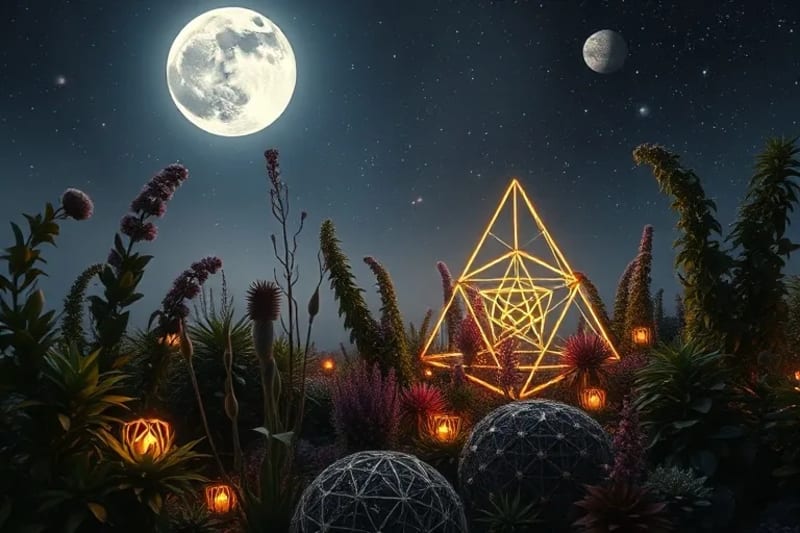
Visualizing the intricate dance between cosmic energies and terrestrial life, where celestial patterns shape botanical vitality and growth cycles.
Conceptual AI rendering, exploring the profound influence of celestial bodies on botanical development and energetic harmony.
Table of Contents
- Historical Roots of Astro-Botany
- Lunar Gardening: The Moon's Rhythmic Influence
- Planetary Aspects and Plant Energetics
- Biodynamic Agriculture and Cosmic Rhythms
- Practical Applications and Modern Perspectives
- Scientific Inquiry and Future Directions
Historical Roots of Astro-Botany
The concept of celestial influences on plant life is not new; it has deep roots in ancient civilizations and traditional agricultural practices worldwide. Cultures from Mesopotamia to ancient Egypt, and from indigenous American tribes to classical European societies, observed and documented the correlation between astronomical events and the vitality of their crops. These observations formed the basis of early calendars and planting guides, often intertwining with spiritual beliefs and astrological interpretations.
For instance, the Babylonians and Egyptians meticulously tracked the cycles of the Moon and specific stars to determine optimal times for sowing and harvesting. Similarly, Roman agricultural writers like Pliny the Elder and Varro discussed the importance of lunar phases for various farming tasks. These historical records provide compelling evidence that humanity has long recognized a subtle, yet powerful, connection between the heavens and the Earth's flora.
The practice of aligning agricultural activities with celestial rhythms continued through the Middle Ages and into the Renaissance, often integrated with alchemical and hermetic traditions. While modern science initially dismissed these practices as superstition, a renewed interest in holistic and sustainable agriculture has led to a re-evaluation of these ancient wisdoms.
Lunar Gardening: The Moon's Rhythmic Influence
One of the most widely recognized aspects of Astro-Botany is lunar gardening, which involves timing planting, pruning, and harvesting according to the Moon's phases and its position in the zodiac. The Moon's gravitational pull is known to affect tides, and proponents of lunar gardening suggest it also influences the moisture content in soil and plants, as well as sap flow and seed germination.
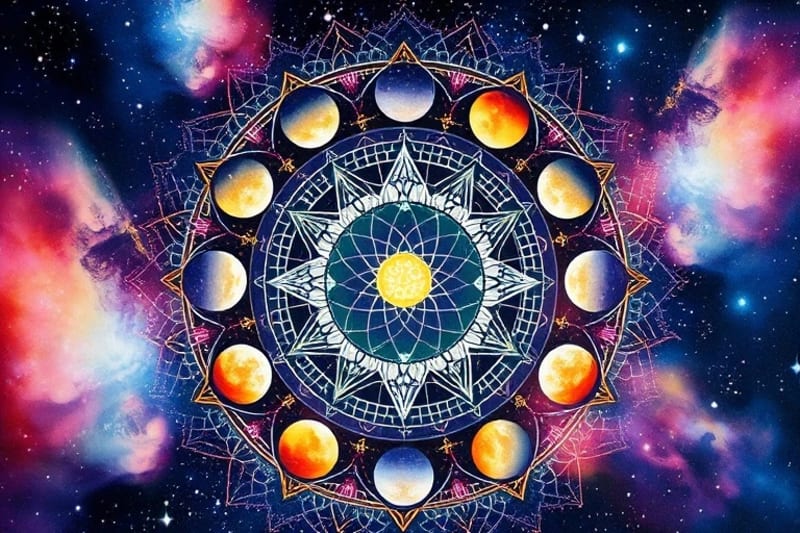
Depicting the subtle yet profound influence of the lunar cycle on the various stages of plant development and vitality.
Artistic interpretation generated by AI, illustrating the rhythmic connection between celestial bodies and botanical life.
The lunar cycle is typically divided into four main phases, each associated with different gardening activities:
- New Moon to First Quarter (Waxing Crescent): This period is considered ideal for planting leafy vegetables, annual flowers, and crops that produce above-ground growth. The increasing moonlight and gravitational pull are thought to encourage strong stem and leaf development.
- First Quarter to Full Moon (Waxing Gibbous): As the Moon approaches fullness, its gravitational pull is at its strongest, promoting robust root growth and fruit development. This phase is often recommended for planting fruiting plants, trees, and shrubs.
- Full Moon to Last Quarter (Waning Gibbous): During this phase, the Moon's light decreases, and energy is believed to be drawn downwards into the roots. It's considered a good time for planting root crops, pruning, transplanting, and cultivating the soil.
- Last Quarter to New Moon (Waning Crescent): This is a resting period for plants. Activities like weeding, pest control, and soil preparation are favored, as plant growth is thought to be slower, making them less susceptible to disturbance.
Beyond the phases, the Moon's passage through different zodiac signs is also considered. For example, planting in "water" signs (Cancer, Scorpio, Pisces) is believed to enhance moisture absorption and growth, while "earth" signs (Taurus, Virgo, Capricorn) favor root development. This intricate system highlights the multifaceted approach of astrological houses in understanding earthly phenomena.
Planetary Aspects and Plant Energetics
While lunar cycles are central, Astro-Botany also considers the influences of other planets. Each planet is associated with specific energies and qualities that are believed to resonate with particular types of plants or aspects of plant growth. This concept aligns with ancient astrological principles where planets govern different life spheres.
For example, Mars is often associated with stimulating growth and vitality, while Venus is linked to beauty, flowering, and fruitfulness. Saturn, conversely, might be associated with structure, roots, and slower, more enduring growth. The positions and planetary ingresses of these celestial bodies are thought to create energetic fields that can be harnessed for specific horticultural outcomes.
This approach suggests that understanding the energetic signatures of planets can inform decisions about when to plant certain herbs for medicinal properties, or when to cultivate flowers for their aesthetic appeal. It's a holistic view that sees the garden as a microcosm reflecting the larger cosmic order, where each plant is attuned to specific celestial frequencies.
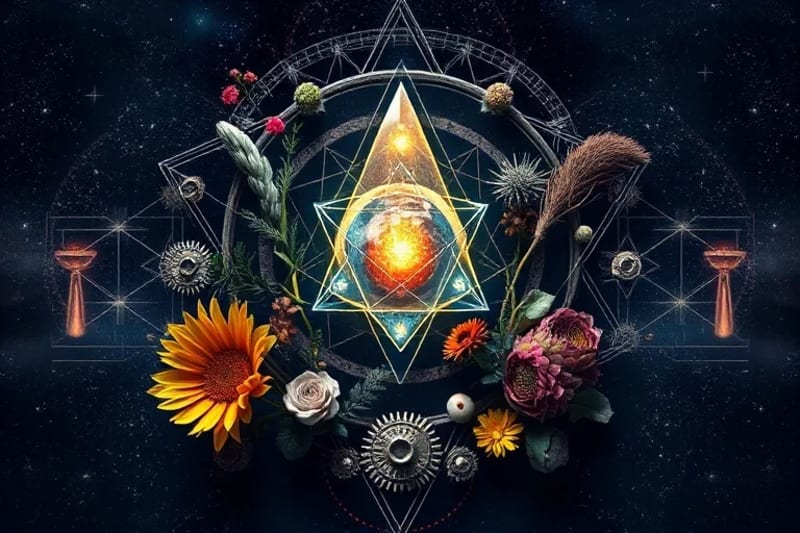
An intricate conceptual still-life illustrating the subtle energetic interplay between planetary forces and botanical vitality.
AI-generated artistic rendering, capturing the essence of cosmic influences on plant life and their energetic properties.
Biodynamic Agriculture and Cosmic Rhythms
Rudolf Steiner's biodynamic agriculture, developed in the early 20th century, is perhaps the most well-known modern system that explicitly integrates Astro-Botany. Biodynamic farming views the farm as a self-sustaining organism, deeply connected to cosmic rhythms. It emphasizes the use of specific preparations and precise timing of agricultural activities based on lunar and planetary cycles.
Biodynamic calendars, such as Maria Thun's planting calendar, provide detailed guidance on optimal days for planting, cultivating, and harvesting different types of crops (root, leaf, flower, fruit) based on the Moon's position relative to the zodiac constellations. This goes beyond simple lunar phases, considering more complex astrological configurations and dwarf planets astrology for a comprehensive approach.
The core philosophy is that these celestial forces imbue plants with specific vital energies, influencing their nutritional value, flavor, and resistance to pests and diseases. While often seen as an alternative practice, biodynamic agriculture has gained significant traction among those seeking sustainable and ecologically sound farming methods, with many certified biodynamic farms reporting enhanced crop quality and soil health.
Practical Applications and Modern Perspectives
For the home gardener or large-scale farmer, integrating Astro-Botany principles can be a fascinating experiment. Starting with lunar gardening is often the easiest entry point. Observing how different planting times affect germination rates, growth vigor, and yield can provide firsthand insights into these subtle influences. Keeping a detailed garden journal, noting planting dates, lunar phases, and planetary positions, can help identify patterns over time.
Beyond direct cultivation, Astro-Botany also informs the timing of harvesting medicinal herbs for optimal potency, or flowers for their fragrance and longevity. The belief is that the energetic peak of a plant, influenced by celestial alignments, corresponds to its highest therapeutic or aesthetic value. This resonates with ancient traditions of herbalism and folk medicine, where the timing of collection was as crucial as the plant itself.
Furthermore, the principles of Astro-Botany can be extended to indoor gardening and even the placement of plants within a home or office, aligning with concepts found in Feng Shui Basics. The idea is to create an environment where plants can thrive by harmonizing with both terrestrial and celestial energies, fostering not only healthy plants but also a more balanced living space.
Scientific Inquiry and Future Directions
While Astro-Botany and biodynamic agriculture have a strong experiential basis, rigorous scientific validation remains a complex challenge. The subtle nature of celestial influences and the multitude of variables in plant growth make controlled experiments difficult. However, some studies have attempted to quantify the effects of lunar phases on seed germination, crop yield, and plant physiology, with mixed but often promising results.
For instance, research into the effects of weak electromagnetic fields, which could potentially be influenced by cosmic radiation or planetary alignments, on plant growth is an emerging area. The concept of "vibrational linguistics" and "cellular regeneration" through specific frequencies also offers a potential avenue for understanding how subtle energies might impact biological systems, including plants. This aligns with modern inquiries into bio-acoustics and other fields.
The future of Astro-Botany likely lies in interdisciplinary research, combining traditional knowledge with advanced instrumentation and analytical techniques. As our understanding of subtle energy fields and the complex interplay between living organisms and their environment expands, the insights offered by Astro-Botany may gain further scientific recognition, bridging the gap between ancient wisdom and contemporary science.
Explore More Cosmic Connections
Chinese Zodiac Feng Shui Harmony: Advanced Elemental Compatibility
Vibrational Linguistics: Sigil Magic and Reality Shaping through Sound
Spirit Guides Animal Totems: Connecting Spiritual Allies
Bio-Acoustic Therapy: Cellular Regeneration Sound Frequencies
Source: Hybrid content assisted by AI and human editorial supervision.


Comments
Post a Comment