
Cosmic Ecology: Celestial Mechanics, Environmental Shifts
Cosmic ecology explores the profound and intricate relationships between celestial phenomena and the environmental dynamics of Earth. It delves into how the movements, positions, and energetic outputs of planets, stars, and other cosmic bodies influence everything from our planet's climate and geological activity to the very rhythms of life. This interdisciplinary field bridges astronomy, environmental science, geology, and even ancient wisdom traditions like astrology, offering a holistic perspective on our place within the vast cosmic tapestry.
Table of Contents
- Introduction to Cosmic Ecology
- Fundamentals of Celestial Mechanics
- Earth's Environmental Responses to Celestial Influences
- The Sun: Our Primary Cosmic Driver
- Planetary Alignments and Gravitational Effects
- Astrological Perspectives on Cosmic Ecology
- Humanity's Role and Awareness
- Future Research and Interdisciplinary Approaches
- Conclusion: The Interconnected Web of Life
Introduction to Cosmic Ecology
The concept of cosmic ecology posits that Earth is not an isolated entity but an integral part of a larger cosmic system. Every celestial body, from the nearest Moon to the most distant galaxy, exerts some form of influence, whether gravitational, electromagnetic, or energetic, that can subtly or profoundly affect our planet. Understanding these interactions is crucial for a comprehensive view of Earth's past, present, and future environmental shifts.
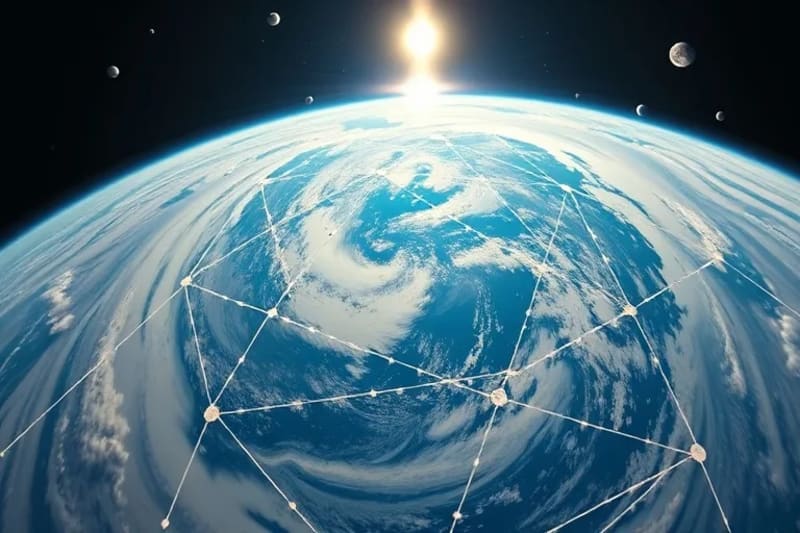
A panoramic view of Earth's intricate dance within the cosmic ballet, illustrating the subtle yet profound influences of celestial mechanics on our planetary environment.
This field moves beyond the traditional Earth-centric view of environmental studies, recognizing that external cosmic forces are fundamental drivers of many terrestrial processes. From the rhythmic ebb and flow of tides to long-term climate cycles, the cosmos plays an undeniable role. By exploring cosmic ecology, we gain a deeper appreciation for the delicate balance that sustains life on Earth and the universal laws that govern it.
Fundamentals of Celestial Mechanics
Celestial mechanics is the branch of astronomy that deals with the motions of celestial objects. It is primarily governed by the laws of gravity, as articulated by Isaac Newton and later refined by Albert Einstein. These laws dictate the orbits of planets around stars, moons around planets, and the interactions between all bodies in a gravitational system.
Key concepts include:
- Gravitational Force: The attractive force between any two objects with mass. The strength of this force depends on the masses of the objects and the distance between them.
- Orbits: The curved paths that celestial objects follow around another object due to gravity. These are typically elliptical, as described by Kepler's Laws.
- Precession and Nutation: Subtle wobbles and nods in Earth's axial tilt over long periods, influenced by the gravitational pull of the Sun and Moon.
- Resonances: When the orbital periods of two celestial bodies are related by a simple ratio, leading to stable or unstable interactions.
These fundamental principles form the basis for understanding how cosmic bodies interact and how these interactions can propagate effects across vast distances, eventually reaching our home planet. For a deeper dive into planetary movements, exploring topics like Planetary Declinations in Astrology can provide further insights into their complex paths.
Earth's Environmental Responses to Celestial Influences
Earth's environment is constantly responding to the subtle and not-so-subtle cues from the cosmos. These responses manifest in various ways, from daily phenomena to cycles spanning millennia.

A visual representation of Earth's dynamic environmental responses, from tidal forces to geomagnetic activity, all intricately linked to celestial mechanics.
Tidal Forces
The most evident influence is the tide. The gravitational pull of the Moon, and to a lesser extent the Sun, creates bulges of water on Earth's surface, leading to the rhythmic rise and fall of ocean levels. This constant movement plays a critical role in marine ecosystems, coastal erosion, and even the slight slowing of Earth's rotation over geological timescales.
Climate Cycles (Milankovitch Cycles)
On longer timescales, Earth's climate is significantly influenced by variations in its orbit and axial tilt, known as Milankovitch cycles. These cycles affect the amount and distribution of solar radiation reaching Earth, driving glacial and interglacial periods:
- Eccentricity: The shape of Earth's orbit around the Sun, varying from nearly circular to more elliptical over a cycle of about 100,000 years.
- Obliquity (Axial Tilt): The tilt of Earth's axis relative to its orbital plane, varying between 22.1 and 24.5 degrees over approximately 41,000 years. This influences the intensity of seasons.
- Precession: The wobble of Earth's axis, similar to a spinning top, which changes the timing of the solstices and equinoxes in relation to Earth's position in its orbit. This cycle occurs over roughly 26,000 years.
These cycles are crucial for understanding natural climate variability over hundreds of thousands of years, providing a baseline against which current climate changes can be assessed.
The Sun: Our Primary Cosmic Driver
The Sun is the most significant celestial body influencing Earth's environment. Its energy output drives weather patterns, powers photosynthesis, and maintains Earth's temperature within a habitable range. However, the Sun's activity is not constant.
Solar Cycles and Geomagnetic Activity
The Sun undergoes an approximately 11-year cycle of activity, characterized by the rise and fall of sunspots, solar flares, and coronal mass ejections (CMEs). These events release massive amounts of energy and charged particles into space. When these particles interact with Earth's magnetosphere, they can cause:
- Auroras: Stunning light displays in the polar regions.
- Geomagnetic Storms: Disturbances in Earth's magnetic field that can disrupt power grids, satellite communications, and navigation systems.
- Atmospheric Changes: Some research suggests links between solar activity and stratospheric ozone depletion or regional weather patterns, though these connections are complex and still under investigation.
The Sun's influence extends beyond mere warmth; its dynamic nature directly impacts Earth's protective magnetic shield and upper atmosphere, highlighting the intricate connection between solar physics and terrestrial conditions.
Planetary Alignments and Gravitational Effects
While the Moon and Sun exert the most direct gravitational influence on Earth, the combined gravitational pull of other planets, especially the gas giants, also plays a role. Although their individual gravitational forces are minute compared to the Moon or Sun, their collective alignment can create subtle tidal stresses on the Sun itself, potentially influencing solar activity.
Some theories propose that specific planetary alignments might correlate with periods of increased seismic activity or volcanic eruptions on Earth, though this remains a subject of scientific debate and ongoing research. The idea is that the combined gravitational stresses could act as a subtle trigger on an already stressed Earth crust. For those interested in how these celestial positions are interpreted in a personal context, understanding your Natal Chart Explained offers a fascinating parallel.
Astrological Perspectives on Cosmic Ecology
Ancient civilizations, lacking modern scientific instruments, observed the heavens and developed sophisticated systems to understand cosmic influences on Earth and human life. Astrology, in its various forms, is one such system. It posits that the positions and movements of celestial bodies correlate with events on Earth and human psychological tendencies.
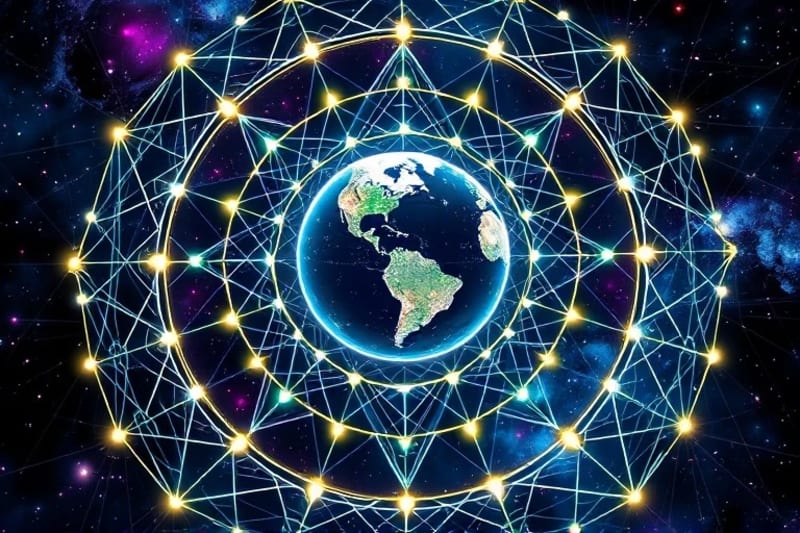
An abstract visualization highlighting the intricate, energetic network of cosmic influences that subtly shape our planet and its environment.
From an astrological perspective, cosmic ecology extends beyond physical forces to include energetic and symbolic influences. For instance, the Moon's phases are not only linked to tides but also to emotional cycles and growth patterns, as explored in Lunar Astrology for Emotional Well-being. Planetary positions are believed to signify specific energies that can influence collective moods, natural events, and societal trends.
While modern science often separates itself from astrological interpretations, both fields acknowledge the fundamental interconnectedness of the cosmos. Astrology offers a framework for understanding these connections in a qualitative, symbolic manner, complementing the quantitative approaches of science. It encourages a holistic view where Earth's environment is seen as a living system, responsive to the broader cosmic environment.
Humanity's Role and Awareness
Understanding cosmic ecology can profoundly shift humanity's perspective on environmental stewardship. Recognizing that Earth is part of a larger, interconnected cosmic system fosters a sense of responsibility and humility. It moves us away from an anthropocentric view, where humans are seen as separate from nature, towards an ecocentric or cosmocentric view, where we are an integral part of a grander design.
This awareness can inspire more sustainable practices, as we realize that disrupting Earth's delicate balance has ripple effects within the cosmic order. It encourages us to observe natural cycles, both terrestrial and celestial, and to live in greater harmony with them. By studying these vast influences, humanity gains a deeper appreciation for the fragility and resilience of life on Earth.
Future Research and Interdisciplinary Approaches
The field of cosmic ecology is ripe for further interdisciplinary research. Integrating data and methodologies from various scientific disciplines can unlock deeper insights:
- Astronomy and Climatology: Further research into solar activity cycles, cosmic ray flux, and their precise mechanisms of influence on Earth's atmosphere and climate.
- Geology and Planetary Science: Investigating potential correlations between planetary alignments, tidal stresses, and seismic/volcanic activity, using advanced geophysical models.
- Biology and Astrobiology: Exploring how cosmic radiation or subtle electromagnetic fields might influence biological processes, evolution, and even consciousness.
- Environmental Science and Space Weather: Developing better predictive models for space weather events and their environmental impacts, from geomagnetic storms to potential effects on biodiversity.
The synergy between these fields promises to reveal a more complete picture of Earth's environmental systems, leading to a more informed approach to planetary management and our understanding of life itself.
Conclusion: The Interconnected Web of Life
Cosmic ecology offers a compelling framework for understanding our planet as a dynamic component of the larger universe. The intricate dance of celestial mechanics, from the gravitational pull of the Moon to the energetic outbursts of the Sun, undeniably shapes Earth's environment. By embracing this holistic perspective, we can foster a deeper appreciation for the interconnectedness of all things and inspire a more profound sense of responsibility towards our planet.
As we continue to explore the cosmos and our place within it, the insights gained from cosmic ecology will be invaluable in navigating the challenges and opportunities of our shared future, reminding us that we are truly stardust, intimately linked to the grand cosmic ballet.
Explore Further: Related Cosmic Insights
- Minor Astrological Aspects: Quintiles, Septiles, Noviles
- Astrological Modalities: Cardinal, Fixed, Mutable Signs Explained
- Planetary Rulers Houses: Deep Insights Birth Chart
- Synodic Cycles Inner Planets: Growth & Relationships
- Cosmic Sociology AI Global Consciousness Digital Trends
- Nodes of the Moon: Karmic Path & Destiny
- Intercepted Houses Synastry Hidden Relationship Dynamics
- Sanación Energética Onírica: Chakras, Sueños Lúcidos, Guías Astrales
- Metaverso Astral Realidad Virtual Viajes Conscientes Holográficas
Source: Hybrid content assisted by AI and human editorial supervision.


Comments
Post a Comment