
Planetary Rulers Houses: Deep Insights Birth Chart | StarPluto
In the intricate tapestry of astrological analysis, understanding the concept of planetary rulers of houses is paramount for a truly profound birth chart interpretation. This advanced technique moves beyond the basic placement of planets within houses and signs, delving into the deeper layers of how each life area is governed and influenced by specific planetary energies. It reveals a dynamic interplay, offering nuanced insights into an individual's motivations, challenges, and potentials.
The birth chart, a snapshot of the cosmos at the moment of birth, is divided into twelve houses, each representing a distinct sphere of life. While a planet residing in a house certainly impacts that area, the planetary ruler of that house provides an additional, often more foundational, layer of meaning. This ruler indicates which planet holds the ultimate sway over the house's affairs, dictating its themes and how they manifest in the individual's life.
To grasp this concept fully, one must first be familiar with the natural rulerships of signs by planets. Each zodiac sign has a traditional ruling planet (and sometimes a modern co-ruler). For example, Aries is ruled by Mars, Taurus by Venus, Gemini by Mercury, and so forth. The sign on the cusp (the beginning) of each house determines its planetary ruler. By identifying this ruler and then examining its sign, house, and aspects elsewhere in the chart, astrologers can unlock a wealth of interpretive detail.
Table of Contents
- Foundations of Planetary Rulership
- Calculating House Rulers: A Step-by-Step Guide
- Interpreting House Rulers: The Core Principles
- Planetary Rulers in Each House: Deeper Meanings
- Advanced Interpretive Techniques
- Practical Application in Chart Reading
- Conclusion: Unlocking Chart Potential
Foundations of Planetary Rulership
The concept of planetary rulership is rooted in ancient astrological traditions, where each planet was assigned dominion over one or two zodiac signs. This assignment is not arbitrary but based on the energetic resonance between the planet and the sign's characteristics. For instance, fiery Mars rules assertive Aries, while nurturing Venus governs sensual Taurus and harmonious Libra.
Understanding these fundamental associations is the first step. The traditional rulers are often emphasized in this technique, though modern rulers (Uranus, Neptune, Pluto) can add further layers of psychological depth and collective influence. However, for foundational analysis, the traditional rulers provide a robust framework.
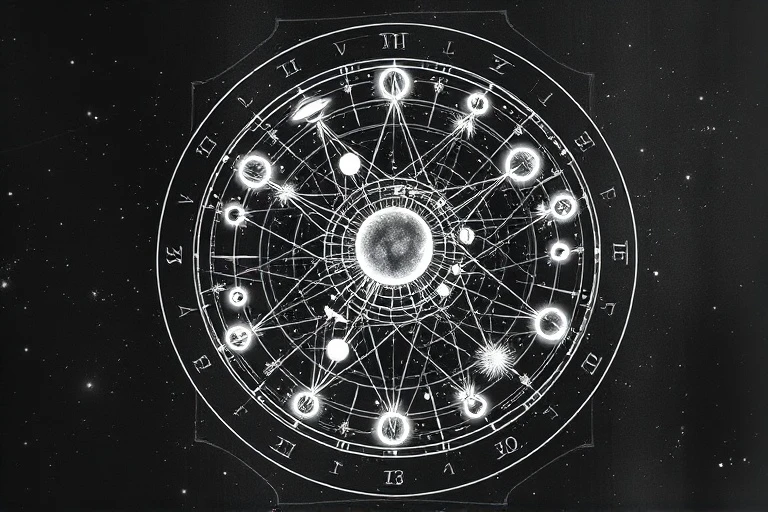
A digital illustration of a complex holographic celestial sphere, depicting the intricate connections and energetic flows between planets and astrological houses, symbolizing their profound influence.
The twelve houses of the birth chart represent different departments of life. The First House, for example, relates to identity and self-image, while the Seventh House pertains to partnerships and open enemies. When a specific sign falls on the cusp of a house, that sign's ruling planet becomes the "lord" or "ruler" of that house, indicating where the energy of that life area is directed and how it is managed within the individual's psyche and external life.
For example, if the cusp of your Second House (finances, values, possessions) is in Gemini, then Mercury is the ruler of your Second House. The position of Mercury elsewhere in your chart will then describe how you approach and manage your financial resources and values. If Mercury is in the Tenth House, your finances might be linked to your career or public image. If it's in the Fifth House, you might find financial success through creative endeavors or speculation.
Calculating House Rulers: A Step-by-Step Guide
Determining the planetary ruler for each house is a straightforward process once the basic principles are understood. It requires an accurate birth chart, which can be generated using various astrological software or online tools. The key information needed is the zodiac sign on the cusp of each house.
- Step 1: Obtain Your Birth Chart. Ensure it includes house cusps (often listed as "House 1 Cusp," "House 2 Cusp," etc.).
- Step 2: Identify the Sign on Each House Cusp. Look at the zodiac sign located at the beginning of each of the twelve houses.
- Step 3: Determine the Traditional Ruler of Each Sign. Refer to the table below for the traditional planetary rulers of each zodiac sign.
| Zodiac Sign | Traditional Ruling Planet | Modern Co-Ruler (if any) |
|---|---|---|
| Aries | Mars | - |
| Taurus | Venus | - |
| Gemini | Mercury | - |
| Cancer | Moon | - |
| Leo | Sun | - |
| Virgo | Mercury | - |
| Libra | Venus | - |
| Scorpio | Mars | Pluto |
| Sagittarius | Jupiter | - |
| Capricorn | Saturn | - |
| Aquarius | Saturn | Uranus |
| Pisces | Jupiter | Neptune |
Once you have identified the ruling planet for each house, you then locate that ruling planet within your birth chart. Its sign, house placement, and aspects to other planets will provide the deeper insights into the affairs of the house it rules. This method creates a complex web of interconnections, showing how different areas of life are intrinsically linked.
Interpreting House Rulers: The Core Principles
The interpretation of house rulers involves understanding three primary factors: the ruling planet itself, the sign it occupies, and the house it is placed in. Each of these layers adds significant detail to the overall narrative of the ruled house.
- The Ruling Planet: The nature of the planet describes the fundamental energy and approach to the ruled house's affairs. For example, Mars as a ruler indicates an assertive, energetic, or combative approach, while Venus suggests a desire for harmony, beauty, or pleasure.
- The Sign of the Ruling Planet: The sign modifies the expression of the ruling planet. If the ruler of the First House (self) is Mars in Taurus, the individual's assertiveness (Mars) will be expressed in a grounded, persistent, and perhaps stubborn manner (Taurus).
- The House of the Ruling Planet: This is arguably the most crucial piece of information. It shows where the energy of the ruled house is directed or where its themes will play out most prominently. If the ruler of the Tenth House (career) is in the Fifth House (creativity, children, speculation), the individual's career path might involve creative projects, working with children, or taking calculated risks.

A cinematic still life featuring an open, antique astrological text and polished planetary models, symbolizing the timeless pursuit of cosmic understanding.
Consider the example of the First House ruler. The First House represents the self, physical body, and how one presents to the world. If its ruler is Jupiter, the individual might have an expansive, optimistic, and philosophical approach to life. If this Jupiter is placed in the Ninth House, their identity might be strongly tied to higher education, foreign cultures, or spiritual pursuits. This creates a clear narrative: "My sense of self (First House) is expressed through (Jupiter) my pursuit of knowledge and understanding (Ninth House)."
Furthermore, aspects made by the ruling planet to other planets in the chart add further layers of complexity. A challenging aspect (square, opposition) might indicate struggles or lessons related to the ruled house's affairs, while harmonious aspects (trine, sextile) suggest ease or natural talent. For a deeper dive into planetary influences, consider exploring Tarot Quantum Mechanics Intersecting Divination Reality.
Planetary Rulers in Each House: Deeper Meanings
Let's explore the implications of a house ruler being placed in each of the twelve houses. This offers a general framework for interpretation, which must always be refined by the specific planet and sign involved.
- Ruler of House X in House 1 (Self, Identity): The affairs of House X are deeply integrated into the individual's identity and self-expression. They may define themselves through these themes.
- Ruler of House X in House 2 (Resources, Values): The themes of House X are linked to personal finances, values, and material security. Financial decisions may be driven by House X matters.
- Ruler of House X in House 3 (Communication, Siblings, Local Environment): House X matters are expressed through communication, learning, short journeys, or interactions with siblings and the immediate community.
- Ruler of House X in House 4 (Home, Family, Roots): The affairs of House X are deeply connected to one's home life, family lineage, emotional foundations, and private self.
- Ruler of House X in House 5 (Creativity, Romance, Children, Speculation): House X themes are expressed through creative pursuits, romantic relationships, children, hobbies, or speculative ventures.
- Ruler of House X in House 6 (Work, Health, Service, Daily Routine): The matters of House X are integrated into daily work, health routines, service to others, or practical responsibilities.
- Ruler of House X in House 7 (Partnerships, Open Enemies): House X affairs are significantly influenced by partnerships (marriage, business), collaborations, or public interactions.
- Ruler of House X in House 8 (Transformation, Shared Resources, Intimacy, Death/Rebirth): The themes of House X involve deep transformation, shared resources (inheritance, taxes), intimacy, or psychological exploration.
- Ruler of House X in House 9 (Higher Education, Philosophy, Travel, Spirituality): House X matters are linked to higher learning, philosophical beliefs, long-distance travel, or spiritual quests.
- Ruler of House X in House 10 (Career, Public Image, Reputation): The affairs of House X play a crucial role in one's career, public standing, reputation, and life direction.
- Ruler of House X in House 11 (Friends, Groups, Hopes, Wishes): House X themes are expressed through friendships, group associations, social networks, or the pursuit of long-term goals and aspirations.
- Ruler of House X in House 12 (Subconscious, Spirituality, Isolation, Hidden Matters): The matters of House X are often hidden, subconscious, spiritual, or involve periods of isolation, self-undoing, or working behind the scenes.
This framework provides a starting point. For instance, if the ruler of your First House (self) is in the Twelfth House, your identity might be somewhat elusive, private, or deeply spiritual. You might find yourself drawn to solitude or working in fields that involve service or hidden aspects of life. This placement can also indicate a strong connection to the subconscious or a tendency towards self-sabotage if not consciously managed.
Advanced Interpretive Techniques
Beyond the basic placement, advanced techniques further refine the understanding of planetary rulers. These include considering dispositors, mutual reception, and final dispositors.
- Dispositors: A planet's dispositor is the ruler of the sign it occupies. For example, if Mars is in Taurus, its dispositor is Venus (because Venus rules Taurus). The dispositor chain can show how planets are interconnected and which planet ultimately "calls the shots" in a particular chain of command.
- Mutual Reception: This occurs when two planets are in each other's signs of rulership. For instance, Mars in Libra and Venus in Aries. This creates a powerful symbiotic relationship where the two planets support and empower each other, blending their energies effectively.
- Final Dispositor: This is a planet that rules itself (is in its own sign) and is the end of a dispositor chain, meaning it doesn't answer to any other planet in the chain. A final dispositor acts as a central organizing principle in the chart, often indicating a core motivation or a powerful, independent area of life.

A conceptual art piece illustrating golden threads weaving through translucent geometric shapes, symbolizing the intricate and interconnected nature of life areas within a cosmic blueprint.
These advanced techniques provide a more holistic view of the chart, revealing the underlying mechanics of how different life areas influence one another. They help to identify patterns of behavior, areas of strength, and potential points of friction or growth. For example, if the ruler of your Seventh House (partnerships) is in mutual reception with the ruler of your Second House (finances), it suggests that partnerships and financial matters are deeply intertwined and mutually supportive in your life.
Furthermore, understanding the concept of retrograde planets can add another layer of complexity. If a house ruler is retrograde, its influence on the house it rules might be internalized, delayed, or expressed in unconventional ways, requiring a more reflective approach to those life areas.
Practical Application in Chart Reading
Applying the knowledge of planetary rulers of houses transforms a basic chart reading into a deeply insightful exploration of an individual's life. It helps to answer "why" and "how" questions related to specific life areas, providing actionable understanding.
- Career Guidance (Tenth House): By examining the ruler of the Tenth House, its sign, and its house placement, astrologers can pinpoint the most fulfilling career paths and the energies that drive professional success. Is the ruler in the Third House? Perhaps communication or writing is key. In the Eleventh? Group work or humanitarian causes.
- Relationship Dynamics (Seventh House): The ruler of the Seventh House reveals the type of partners one attracts and the nature of significant relationships. Its placement can indicate where one seeks partnership or how partnership issues manifest. A Seventh House ruler in the Eighth House might suggest intense, transformative relationships or those involving shared resources.
- Financial Patterns (Second House): The ruler of the Second House offers clues about earning potential, spending habits, and values. Its placement in the Sixth House could mean income is tied to daily work or health services, while in the Twelfth, it might involve hidden income or spiritual values.
- Health Insights (Sixth House): The ruler of the Sixth House can point to potential health vulnerabilities or the approach to well-being. If its ruler is in the First House, personal habits deeply impact health. If in the Fourth, family history or home environment may play a role.
This technique is particularly powerful when combined with other astrological tools, such as transits and progressions. When a transiting planet aspects a house ruler, it activates the themes of the ruled house in a very specific way, offering predictive insights into periods of significant change or development. For a broader understanding of astrological timing, consider exploring electional astrology.
The interaction between house rulers creates a narrative that is uniquely personal. It moves beyond generic interpretations, allowing for a highly individualized understanding of the birth chart. This deep dive into the cosmic blueprint empowers individuals to make more informed choices, leverage their strengths, and navigate challenges with greater awareness.
Conclusion: Unlocking Chart Potential
The study of planetary rulers of houses is an indispensable tool for any serious astrologer or enthusiast seeking to unlock the full potential of a birth chart. It transforms a static map into a dynamic story, revealing the intricate connections between different facets of life and the planetary forces that govern them. By meticulously tracing the journey of each house ruler, one gains unparalleled clarity into the underlying mechanisms of personality, destiny, and personal growth.
This advanced technique encourages a holistic view, where no single placement is isolated, but rather part of an interconnected cosmic dance. It provides a framework for understanding not just what happens in life, but why and how it happens, offering profound insights for self-discovery and personal development. Embracing this method allows for a richer, more nuanced, and ultimately more empowering astrological interpretation, moving beyond surface-level readings to grasp the true depth of the celestial wisdom embedded in every birth chart.
For those looking to deepen their astrological knowledge, exploring the planetary rulers of houses is a rewarding endeavor that promises to illuminate the most subtle yet significant influences shaping our existence. It is a testament to the enduring complexity and predictive power of astrology, guiding us towards a more informed and conscious life journey. Further exploration into topics like can complement this understanding, providing context for the soul's evolutionary path.
Fuente: Contenido híbrido asistido por IAs y supervisión editorial humana.


Comments
Post a Comment