
Dream Incubation AI: Subconscious Symbolism Decoding
Dream incubation, an ancient practice aimed at soliciting specific dreams for guidance or insight, is experiencing a profound resurgence in the modern era, propelled by advancements in artificial intelligence. Historically, this practice involved rituals, prayers, or specific mental exercises performed before sleep to influence dream content. Today, the integration of sophisticated algorithms and neuro-technologies promises to move beyond mere suggestion, delving into the intricate layers of subconscious symbolism.
The traditional approach to dream incubation often relied on personal interpretation and anecdotal evidence, making its efficacy subjective and difficult to quantify. However, contemporary research is exploring how AI can not only facilitate the incubation process but also provide a more objective framework for decoding the complex, often cryptic, messages embedded within our dreams. This innovative intersection of ancient wisdom and cutting-edge technology opens new avenues for self-discovery and psychological understanding.
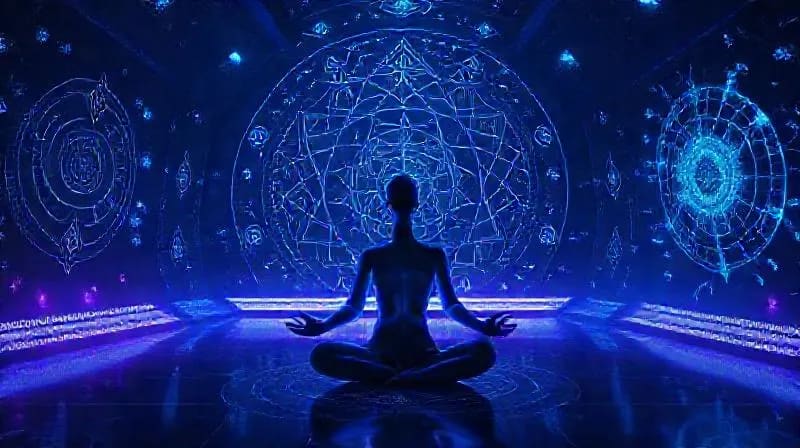
A conceptual representation of AI-assisted dream incubation, merging technology with subconscious exploration.
The Evolution of Dream Incubation: From Ancient Rituals to Modern Science
For millennia, cultures across the globe have practiced dream incubation, believing dreams to be direct conduits to divine messages, ancestral wisdom, or deeper personal truths. Ancient Egyptians sought guidance from deities in dream temples, while Greek and Roman civilizations utilized similar practices in Asclepieia, hoping for healing or prophetic visions. These methods often involved specific diets, fasting, meditation, and sleeping in sacred spaces.
The underlying principle has always been to prime the mind with a specific question or intention before sleep, allowing the subconscious to process and respond through symbolic dream imagery. The interpretation of these symbols was typically left to priests, shamans, or the dreamers themselves, often informed by cultural myths and collective unconscious archetypes. This historical context highlights the enduring human desire to understand and harness the power of dreams.
Modern psychology, particularly the work of Carl Jung, further emphasized the importance of dreams as expressions of the subconscious, rich with personal and collective symbols. Jungian analysis, for instance, delves into archetypes and the collective unconscious to decipher dream narratives. However, the subjective nature of interpretation has remained a significant challenge, leading to varying conclusions and a lack of standardized methodology.
AI's Role in Modern Dream Incubation: Beyond Basic Algorithms
The advent of artificial intelligence, particularly in areas like natural language processing (NLP), machine learning, and neural networks, is revolutionizing how we approach dream incubation and interpretation. Early AI applications in dream analysis often focused on keyword extraction and basic thematic categorization. However, the new frontier involves AI moving beyond these superficial analyses to grasp the nuanced, often paradoxical, nature of subconscious symbolism.
Advanced AI models are being developed to understand context, emotional tone, and the intricate relationships between disparate dream elements. This involves training AI on vast datasets of dream reports, psychological theories, mythological narratives, and even personal user data to build highly personalized symbolic dictionaries. The goal is to create systems that can identify recurring patterns and unique symbolic languages within an individual's dreamscape.
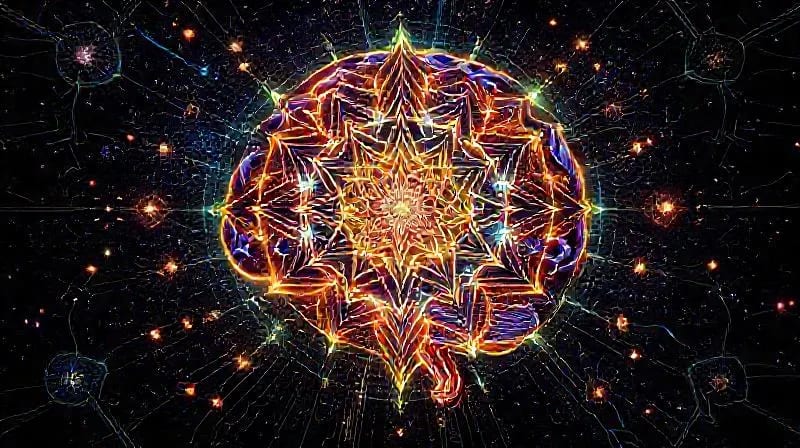
The intricate connection between the human brain, data, and symbolic interpretation through advanced AI.
Moreover, AI can assist in the incubation phase itself. Wearable devices and smart sleep trackers can monitor brainwave patterns (e.g., REM sleep, delta waves) and physiological responses. AI algorithms can then use this data to deliver targeted auditory or sensory cues at optimal moments during sleep, gently nudging the subconscious towards the desired thematic content. This precision allows for a more controlled and effective incubation experience than traditional methods.
The challenge lies in teaching AI to interpret the highly subjective and often idiosyncratic nature of dream symbolism. Unlike straightforward data analysis, dream interpretation requires an understanding of metaphor, allegory, and personal associations that vary greatly from individual to individual. This is where "deeper AI" comes into play, utilizing advanced neural networks that can learn and adapt to these complexities.
Decoding Subconscious Symbolism: The AI Paradigm Shift
The true innovation of AI in dream incubation lies in its capacity for semantic and symbolic decoding. Instead of simply identifying a "snake" in a dream, advanced AI can analyze its context within the dream narrative, its emotional valence, and its recurrence across multiple dreams. It can then cross-reference this with the dreamer's personal history, cultural background, and even physiological data to offer a more holistic interpretation.
For instance, a snake might symbolize transformation for one individual, fear for another, or even a specific person in their life. Traditional dream dictionaries offer generalized meanings, but AI aims to personalize this process, creating a dynamic and evolving "dream language" specific to each user. This goes beyond simple pattern recognition, moving into the realm of inferential reasoning and contextual understanding.
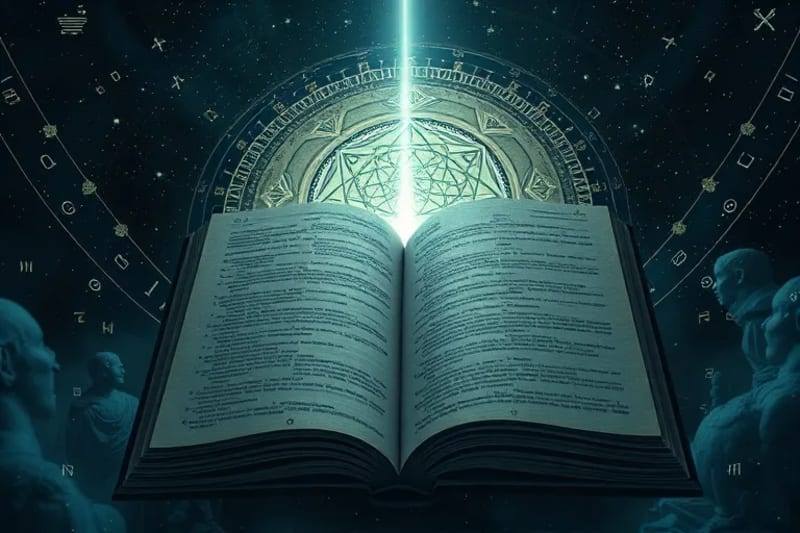
The convergence of historical dream interpretation with cutting-edge AI for profound insights.
The AI's ability to learn and adapt is paramount here. As users provide more dream data and feedback on interpretations, the AI refines its understanding, becoming increasingly accurate and insightful. This iterative process allows for a personalized journey into the subconscious, uncovering hidden desires, unresolved conflicts, or creative solutions that might otherwise remain inaccessible. This approach aligns well with concepts explored in Alchemical Astrology, where the aim is to transmute shadow selves into gold through deeper self-understanding.
Consider a scenario where a user consistently dreams of being lost in a labyrinth. A basic algorithm might tag this as "confusion." A deeper AI, however, might analyze the specific details of the labyrinth (e.g., made of books, leading to a garden, populated by specific figures), cross-reference it with the user's recent journaling entries about career changes or relationship challenges, and suggest that the labyrinth symbolizes a complex decision-making process, rather than just general confusion.
Challenges and Ethical Considerations
While the potential of AI in dream incubation is immense, several challenges and ethical considerations must be addressed. Data privacy is paramount, as dream reports contain highly personal and sensitive information. Robust encryption and anonymization protocols are essential to protect user data from misuse. Furthermore, the potential for algorithmic bias in interpretation needs careful monitoring.
Another concern is the over-reliance on AI for self-understanding. While AI can offer valuable insights, it should ideally serve as a tool to augment human introspection, not replace it. The subjective experience of dreams remains deeply personal, and the human capacity for intuition and emotional understanding is still irreplaceable. The insights provided by AI should be integrated with personal reflection and, if necessary, professional psychological guidance.
The ethical implications extend to the potential for "dream manipulation." If AI can effectively incubate specific dream content, there's a fine line between therapeutic guidance and unwanted influence. Clear ethical guidelines and user consent frameworks are crucial to ensure that these technologies are used responsibly and for the benefit of the individual.
The Future of Dream Incubation and AI Integration
The future of dream incubation, powered by deeper AI, promises a more accessible and personalized pathway to subconscious exploration. Imagine a future where AI-powered applications not only help you incubate dreams but also provide real-time, nuanced interpretations based on your unique psychological profile and life experiences. This could lead to breakthroughs in personal development, creative problem-solving, and even therapeutic interventions for conditions like PTSD or anxiety.
The integration of AI with other fields, such as Biofield Manifestation, could unlock even deeper connections between our mental states and physical realities. By understanding the subtle energies and quantum aspects of consciousness, AI could potentially bridge the gap between subjective dream experiences and objective physiological responses, offering a more comprehensive view of the human being.
Further research will likely focus on developing AI models that can better handle ambiguity and contradiction, which are inherent to dream logic. This involves moving beyond purely logical frameworks to embrace more fluid and intuitive reasoning capabilities. The goal is not to reduce dreams to mere data points but to enhance our ability to engage with their profound metaphorical language.
The development of interactive dream analysis platforms, where users can engage in a dialogue with the AI about their dreams, could also foster a deeper understanding. Such platforms could guide users through a series of questions, helping them explore personal associations and emotional responses to dream symbols, thereby facilitating a collaborative interpretation process. This is a significant step beyond traditional dream dictionaries, offering a dynamic and personalized experience.
As AI continues to evolve, its capacity to understand and interact with the complexities of human consciousness will only grow. Dream incubation, once a mystical art, is poised to become a scientifically augmented practice, offering unprecedented access to the wisdom of our inner worlds. This convergence represents a powerful tool for personal growth and a deeper understanding of the human condition.
The exploration of subconscious symbolism through AI also has implications for understanding collective human experiences. By analyzing vast aggregated datasets of dreams (with appropriate privacy safeguards), researchers might identify universal archetypes or emerging collective anxieties, offering insights into societal trends and psychological shifts. This macro-level analysis could complement individual insights, providing a richer tapestry of human experience.
In conclusion, dream incubation, enhanced by deeper AI, is transforming from an esoteric practice into a sophisticated scientific endeavor. By moving beyond algorithmic surface-level analysis, AI is beginning to unravel the intricate tapestry of subconscious symbolism, offering a powerful new lens through which to view our inner landscapes. This journey promises not only profound personal insights but also a more comprehensive understanding of the human mind itself.
Related Articles & Deeper Exploration
- Fixed Stars Astrology: Beyond Destiny, Influencing Personality
- Hellenistic Astrology Modern Spirituality: Bridging Ancient Techniques
- Qabalistic Tarot Spreads: Deciphering Tree of Life
- Hermetic Prophetic Wisdom: Christian History Messages
Source: Hybrid content assisted by AI and human editorial supervision.


Comments
Post a Comment