
Hellenistic Astrology Modern Spirituality: Bridging Ancient Techniques
Hellenistic astrology, a sophisticated system of celestial prognostication developed in the Greco-Roman world, is experiencing a remarkable resurgence in modern spiritual circles. Far from being a mere historical curiosity, its intricate techniques and philosophical underpinnings offer profound insights into human nature, destiny, and the spiritual journey. This ancient practice provides a robust framework for self-understanding and navigating contemporary life with greater purpose and clarity.
The revival of Hellenistic astrology is driven by a growing desire for deeper, more nuanced approaches to personal development and spiritual exploration. Unlike some modern astrological interpretations, Hellenistic methods are deeply rooted in philosophical traditions, offering a deterministic yet empowering view of life's challenges and opportunities. By bridging these ancient predictive techniques with contemporary spiritual practices, individuals can unlock a richer understanding of their unique cosmic blueprint.

Visualizing the convergence of historical astronomical knowledge with current digital tools, illustrating the enduring relevance of ancient predictive techniques in modern spiritual contexts.
This comprehensive guide delves into the core tenets of Hellenistic astrology, exploring its historical context, key techniques, and practical applications for modern spirituality. We will examine how this ancient system can illuminate personal paths, foster self-awareness, and provide a unique lens through which to view life's complexities. Understanding these foundational principles allows for a more informed and enriching engagement with astrological wisdom.
The journey into Hellenistic astrology is not just about prediction; it's about understanding the underlying patterns and forces that shape our existence. It encourages a reflective approach, inviting us to see our lives as part of a larger cosmic narrative. This perspective can be incredibly grounding and transformative in a rapidly changing world.
Understanding Hellenistic Astrology
Hellenistic astrology emerged around the 1st century BCE in the Hellenistic world, particularly in Alexandria, Egypt, a melting pot of Greek, Egyptian, and Babylonian cultures. This period saw the synthesis of Babylonian astronomical observations with Greek philosophical and mathematical traditions, giving birth to a highly structured and systematic form of astrology. Its influence spread throughout the Roman Empire and laid the groundwork for much of Western astrology.
The surviving texts, primarily from authors like Valens, Dorotheus, and Ptolemy, reveal a complex system focused on delineating specific life events, character traits, and periods of fortune or misfortune. Unlike some contemporary approaches that emphasize psychological interpretation, Hellenistic astrology was primarily concerned with predictive astrology, offering insights into the tangible realities of a person's life. This focus on concrete outcomes makes it particularly compelling for those seeking practical guidance.
A cornerstone of Hellenistic thought is the concept of fate or heimarmene. While this might sound deterministic, it was often understood not as an unchangeable decree, but as a set of predispositions and tendencies woven into the fabric of one's birth chart. The role of the astrologer was to interpret these patterns, allowing individuals to navigate their lives with foresight and make choices that align with or mitigate their inherent cosmic influences. This understanding provides a unique blend of destiny and free will.
The philosophical underpinnings of Hellenistic astrology are deeply intertwined with Stoicism and Neoplatonism, schools of thought that emphasized understanding the natural order and living in harmony with it. This philosophical depth is what elevates Hellenistic astrology beyond simple fortune-telling, transforming it into a tool for spiritual and ethical development. It encourages a disciplined approach to self-knowledge and an acceptance of life's inherent cycles.
Key Principles of Hellenistic Astrology
Several core principles differentiate Hellenistic astrology from later traditions and are crucial for its effective application. These include whole sign houses, planetary sect, lots (or Arabic parts), and various timing techniques. Each of these elements contributes to a highly specific and detailed chart interpretation.
- Whole Sign Houses: This is perhaps the most significant difference from modern quadrant house systems. In whole sign houses, the sign rising on the Eastern horizon (the Ascendant) becomes the entire 1st house, the next sign becomes the 2nd house, and so on. This system simplifies house placements and provides a clear delineation of planetary influence over specific life areas.
- Planetary Sect (Day vs. Night Charts): Planets are divided into two sects: diurnal (Sun, Jupiter, Saturn) and nocturnal (Moon, Venus, Mars). Mercury is versatile. A chart is considered "day" if the Sun is above the horizon and "night" if below. Planets of the same sect as the chart ruler are generally considered more beneficial or empowered, while those of the opposite sect face greater challenges.
- Lots (Arabic Parts): These are calculated points in a chart derived from the positions of planets and the Ascendant. The Lot of Fortune and the Lot of Spirit are particularly important, indicating areas of material well-being and spiritual purpose, respectively. There are numerous other lots, each shedding light on specific facets of life.
- Rulerships and Dignities: Hellenistic astrology places strong emphasis on planetary rulerships, exaltations, and other dignities and debilities. A planet in its domicile or exaltation is considered strong and able to express its nature more effectively, while a planet in its detriment or fall faces inherent difficulties.
- Aspects: While aspects are used, the emphasis is often on traditional aspects (conjunction, sextile, square, trine, opposition) and their relationship to whole signs. The concept of "applying" and "separating" aspects is also critical, indicating unfolding or receding influences.
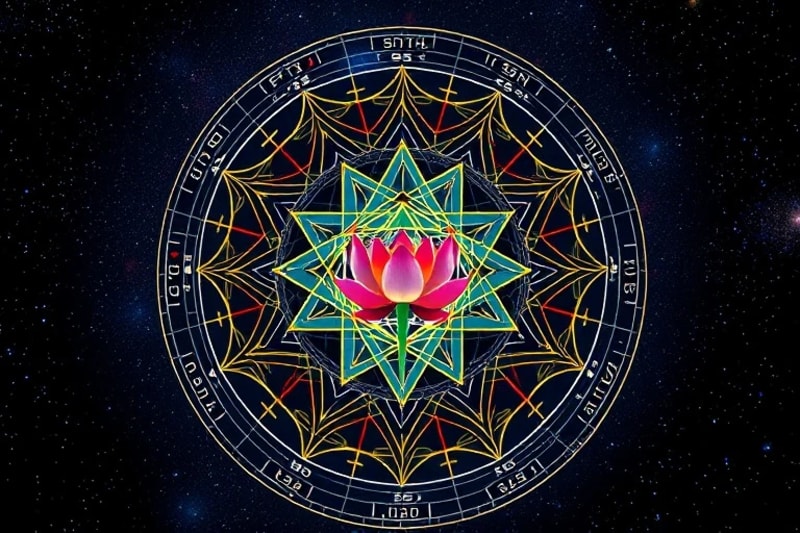
A visual interpretation of a natal chart, showcasing the intricate cosmic geometry that influences individual development and spiritual awakening.
Understanding these principles allows for a much more precise and detailed interpretation of a birth chart, moving beyond generalized zodiac sign descriptions. It provides a structured method for analyzing planetary interactions and their implications for an individual's life path. This level of detail is what makes Hellenistic astrology such a powerful tool for self-discovery.
Hellenistic Techniques for Modern Life
The predictive techniques of Hellenistic astrology are particularly valuable for modern individuals seeking guidance on timing, career, relationships, and personal development. These methods offer a roadmap for understanding periods of ease and challenge, allowing for more informed decision-making. For example, understanding your relationship dynamics can be profoundly enhanced by these ancient insights.
- Profections: This annual timing technique advances the Ascendant and each house by one sign per year, highlighting specific areas of life that will be activated. The planet ruling the profected house and sign becomes the "Lord of the Year," indicating key themes and influences for that twelve-month period. This can be used for annual planning and goal setting.
- Zodiacal Releasing: A more advanced and highly precise timing technique, Zodiacal Releasing divides a person's life into periods ruled by different planets, revealing peak moments of activity and periods of rest or challenge. It's particularly useful for career, relationships, and major life transitions, offering a detailed timeline of potential events.
- Primary Directions: Considered the "master key" of Hellenistic astrology, primary directions measure planetary movements and aspects in a highly precise manner, indicating significant life events with remarkable accuracy. While complex, modern software makes these calculations more accessible.
- Solar Returns: While not exclusively Hellenistic, the interpretation of solar return charts (a chart cast for the moment the Sun returns to its natal position each year) is enriched by Hellenistic principles. It provides an annual forecast, highlighting themes and opportunities for the coming year.
These techniques, when applied to a natal chart, provide a dynamic and evolving picture of an individual's life. They move beyond static character analysis to offer a narrative of unfolding events and developmental stages. This dynamic understanding empowers individuals to engage actively with their destiny rather than passively observe it.
For instance, identifying a period of heightened career activity through Zodiacal Releasing can inspire someone to pursue new professional opportunities with confidence. Conversely, recognizing a period of challenge can encourage introspection and preparation. This foresight is a powerful asset in personal and spiritual growth.
Integrating Hellenistic Astrology into Spirituality
Modern spirituality often emphasizes self-awareness, personal growth, and finding meaning. Hellenistic astrology aligns perfectly with these goals by providing a structured language for understanding the self and one's place in the cosmos. It offers a unique pathway to connect with universal patterns and find spiritual resonance in everyday experiences.
Here are several ways to integrate Hellenistic astrology into a modern spiritual practice:
- Self-Reflection and Shadow Work: By identifying challenging planetary placements or difficult periods indicated by timing techniques, individuals can engage in targeted self-reflection and shadow work. Understanding these predispositions allows for conscious effort to transform weaknesses into strengths.
- Mindful Living and Timing: Using profections or Zodiacal Releasing, one can align spiritual practices with the energetic currents of the year or specific life periods. For example, a year ruled by Venus might be ideal for cultivating love and creativity, while a Saturn year might call for discipline and structure.
- Connecting with Planetary Deities/Archetypes: While Hellenistic astrology is not a religion, its roots in polytheistic cultures mean planets were often associated with specific deities (e.g., Jupiter with Zeus, Venus with Aphrodite). Modern practitioners can engage with these planetary archetypes through meditation, ritual, or journaling to deepen their spiritual connection.
- Understanding Karmic Patterns: The deterministic elements of Hellenistic astrology can be reframed through a spiritual lens as karmic patterns or soul lessons. The birth chart becomes a map of the soul's journey, highlighting areas for growth and healing. This perspective can be particularly insightful when exploring fixed stars and karmic healing.
- Astrological Magic and Electional Astrology: For those interested in more active spiritual practices, Hellenistic texts also contain elements of astrological magic and electional astrology (choosing auspicious times for actions). While requiring careful study, these practices aim to align personal will with cosmic timing for desired outcomes.

A conceptual visualization of how historical astrological instruments can harmonize with contemporary spiritual practices, bridging eras of cosmic understanding.
By integrating these ancient techniques, individuals can cultivate a more profound and personalized spiritual path. Hellenistic astrology offers a rich tapestry of symbolism and predictive power that can illuminate the spiritual dimensions of everyday life, transforming challenges into opportunities for growth.
The Benefits of This Ancient Wisdom Today
The resurgence of Hellenistic astrology is not merely a nostalgic trend; it offers tangible benefits for individuals navigating the complexities of the 21st century. Its structured approach provides clarity and a sense of order in an often chaotic world.
| Benefit | Description | Modern Application |
|---|---|---|
| Enhanced Self-Awareness | Provides a detailed map of inherent strengths, weaknesses, and predispositions. | Deepens understanding of one's psychological makeup and core motivations. |
| Strategic Life Planning | Offers precise timing techniques to identify auspicious and challenging periods. | Guides career choices, relationship decisions, and personal projects for optimal timing. |
| Resilience and Acceptance | Helps understand life's cyclical nature and the inevitability of certain challenges. | Fosters a sense of calm and preparedness during difficult transits, promoting growth. |
| Spiritual Connection | Connects individual experience to larger cosmic patterns and philosophical traditions. | Provides a framework for exploring destiny, purpose, and the soul's journey. |
| Objective Perspective | Reduces personal bias by interpreting objective planetary placements and aspects. | Offers a detached, yet insightful, view of personal circumstances and potential outcomes. |
By embracing Hellenistic astrology, individuals can gain a powerful tool for self-mastery and spiritual alignment. It encourages a proactive stance towards life, where understanding one's cosmic predispositions leads to more conscious and empowered choices. This ancient wisdom provides a stable anchor in the ever-shifting tides of modern existence.
Distinguishing Hellenistic from Modern Astrology
It is important to understand that "modern astrology" is a broad term encompassing various approaches developed primarily in the 20th century, often influenced by psychology and humanistic philosophy. While both systems use the birth chart, their methodologies, interpretations, and philosophical underpinnings can differ significantly.
| Feature | Hellenistic Astrology | Modern Astrology |
|---|---|---|
| House System | Primarily Whole Sign Houses. | Various quadrant systems (Placidus, Koch, Regiomontanus) are common. |
| Focus | Predictive, delineating concrete events and circumstances. | Psychological, emphasizing personality, potential, and inner development. |
| Outer Planets | Only traditional planets (Sun, Moon, Mercury, Venus, Mars, Jupiter, Saturn) are used. | Includes Uranus, Neptune, and Pluto, often for generational or profound psychological themes. |
| Dignities | Strong emphasis on essential dignities (domicile, exaltation, detriment, fall) and sect. | Less emphasis on traditional dignities; focus on aspects and chart patterns. |
| Timing Techniques | Uses profections, zodiacal releasing, primary directions for precise timing. | Relies more on transits and progressions for timing and developmental phases. |
| Philosophical Basis | Stoicism, Neoplatonism, a more deterministic view of fate. | Humanistic psychology, free will, personal choice, and growth. |
Neither system is inherently "better" than the other; they simply serve different purposes and offer distinct perspectives. Modern astrology excels at psychological insight and understanding potential, while Hellenistic astrology provides a powerful framework for understanding the unfolding of life events and navigating destiny with foresight. Many practitioners find value in exploring both.
The beauty of bridging these approaches lies in gaining a more holistic understanding of the self and one's journey. Hellenistic techniques can provide the "what" and "when" of life's events, while modern approaches can offer the "why" and "how" of personal transformation. This synergy creates a powerful tool for comprehensive spiritual growth.
In conclusion, Hellenistic astrology offers a rich and profound system for those seeking to deepen their spiritual understanding and navigate modern life with greater wisdom. Its ancient techniques, rooted in a sophisticated philosophical tradition, provide a unique lens through which to view destiny, purpose, and personal growth. By embracing this ancient wisdom, individuals can unlock new dimensions of self-awareness and find a more harmonious alignment with their cosmic blueprint.
Explore Further: Related Insights
Source: Hybrid content assisted by AI and human editorial supervision.


Comments
Post a Comment