
Dream Dictionary: Common Symbols, Archetypes Explained | StarPluto
Dreams have fascinated humanity since ancient times, serving as a mysterious bridge between our conscious reality and the hidden depths of the subconscious mind. From vivid narratives to fleeting images, these nocturnal experiences often carry profound messages, insights, and warnings that can guide our waking lives. Understanding the language of dreams, particularly its common symbols and archetypes, offers a unique pathway to self-discovery and personal growth.
This comprehensive guide delves into the intricate world of dream interpretation, exploring both historical perspectives and modern psychological theories. We will unravel the meanings behind frequently encountered dream symbols and archetypes, providing you with the tools to decode your own nocturnal visions. By learning to interpret these universal patterns, you can gain a deeper understanding of your inner landscape, emotional states, and unresolved issues, fostering a more harmonious existence.
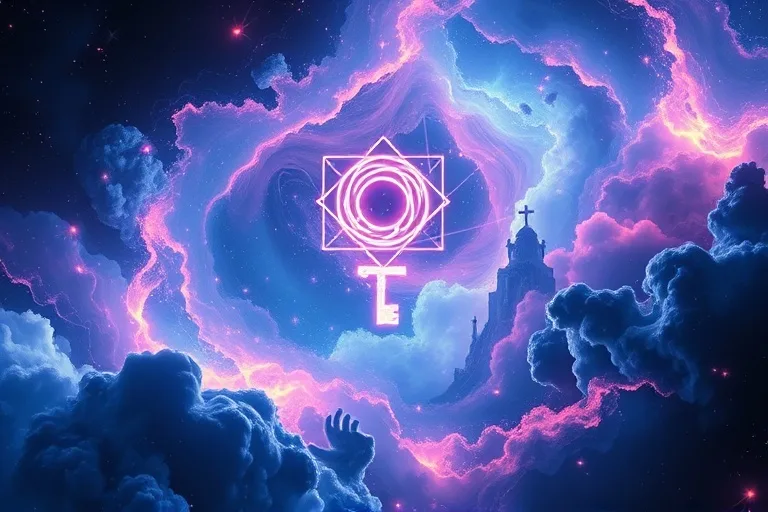
A conceptual digital illustration depicting abstract symbols and archetypal figures swirling within a cosmic nebula, symbolizing the profound depths of the subconscious mind and the intricate nature of dream interpretation.
The journey into dream analysis is not merely about finding a fixed meaning for every symbol; it is about recognizing patterns, connecting them to your personal experiences, and allowing your intuition to guide you. While some symbols hold universal significance, the most potent interpretations often arise from your unique life context and emotional associations. This guide will equip you with a foundational understanding, encouraging you to develop your own personalized dream dictionary.
Join us as we explore the fascinating realm of dreams, transforming confusion into clarity and unlocking the wisdom that lies within your sleeping mind. From ancient oneiromancy to Jungian archetypes, prepare to embark on an enlightening quest to understand the messages your subconscious is trying to convey.
Table of Contents:
- The Ancient Art of Oneiromancy
- Why Do We Dream? Scientific and Esoteric Views
- Understanding Dream Symbols: A Universal Language
- Common Dream Archetypes and Their Meanings
- Decoding Personal Symbols: Your Unique Dream Language
- Practical Steps for Effective Dream Interpretation
- The Role of Archetypes in the Collective Unconscious
- Dream Journaling: A Key to Self-Discovery
The Ancient Art of Oneiromancy
Oneiromancy, the ancient practice of dream interpretation, has roots in virtually every major civilization throughout history. From the Egyptians and Greeks to the Chinese and indigenous cultures, dreams were often regarded as divine messages, prophecies, or insights into health and destiny. Ancient texts, such as the Egyptian Dream Book and the Babylonian Epic of Gilgamesh, provide early evidence of systematic attempts to categorize and understand dream symbols.
In many ancient societies, dream interpreters held significant social and religious roles, advising rulers and common folk alike. They believed that by deciphering these nocturnal visions, one could gain foresight, understand the will of the gods, or even diagnose illnesses. This rich historical tapestry underscores humanity's enduring quest to comprehend the enigmatic world of dreams and its connection to our waking existence.
Why Do We Dream? Scientific and Esoteric Views
The question of why we dream has puzzled scientists and philosophers for centuries, leading to a diverse range of theories. Scientifically, dreams are primarily associated with the REM (Rapid Eye Movement) stage of sleep, during which the brain is highly active. Theories suggest dreams play a role in memory consolidation, emotional regulation, problem-solving, and even simulating threats to prepare for real-life situations.
From an esoteric and psychological standpoint, figures like Sigmund Freud viewed dreams as "the royal road to the unconscious," a means by which repressed desires and conflicts manifest symbolically. Carl Jung, on the other hand, proposed that dreams are compensatory, helping to balance conscious attitudes and providing access to the collective unconscious, a reservoir of universal human experiences and archetypes. Esoteric traditions often see dreams as communications from higher selves, spirit guides, or the universe itself, offering spiritual guidance and insights beyond the material realm.
Understanding Dream Symbols: A Universal Language
Dream symbols are the building blocks of our nocturnal narratives, acting as metaphors for our inner thoughts, feelings, and experiences. While some symbols are highly personal, stemming from individual memories and associations, many also carry universal or archetypal meanings that resonate across cultures and individuals. These archetypes, as described by Jung, are primordial images and patterns of thought that are inherited and shared by all humans.
Interpreting these symbols involves more than just looking up a dictionary definition; it requires introspection and an understanding of the dream's overall emotional tone and narrative context. A symbol's meaning can shift dramatically based on the surrounding elements of the dream and the dreamer's current life situation. Therefore, a holistic approach that combines universal interpretations with personal relevance is crucial for accurate dream analysis.
Common Dream Archetypes and Their Meanings
Dreams are rich tapestries woven with a myriad of symbols, each offering a glimpse into our inner world. Below is an exploration of common dream archetypes and their general interpretations. Remember to always consider your personal feelings and associations with these symbols.
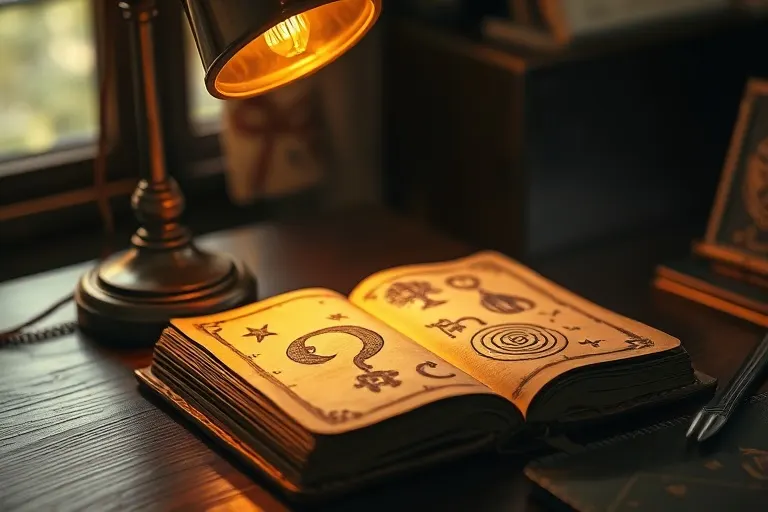
A cinematic still life captures an antique, leather-bound dream journal, its pages adorned with intricate symbols, bathed in the warm glow of a vintage desk lamp.
Animals in Dreams
Animals in dreams often represent primal instincts, emotions, or aspects of our personality. Their appearance, behavior, and species provide clues to their symbolic meaning.
- Snake: Often symbolizes transformation, healing, hidden fears, or temptation. Its meaning can be positive (renewal) or negative (deceit) depending on the context.
- Bird: Represents freedom, spirituality, higher perspectives, or aspirations. The type of bird and its actions (flying, caged) further refine the interpretation.
- Cat: Associated with independence, intuition, femininity, mystery, and stealth. A wild cat might suggest untamed aspects of self, while a domestic cat could signify comfort.
- Dog: Symbolizes loyalty, friendship, protection, or instinct. A friendly dog indicates support, while an aggressive one might point to inner conflict or betrayal.
- Spider: Can represent creativity, weaving destiny, manipulation, or feeling trapped. Its presence often evokes feelings of fear or fascination.
- Fish: Connected to the subconscious, emotions, creativity, and spiritual insights. Swimming in clear water suggests clarity, while murky water implies emotional confusion.
Places and Settings in Dreams
The environments in our dreams often reflect our inner state, current life circumstances, or different aspects of our psyche.
- House: Represents the self, with different rooms symbolizing various aspects of your personality or life. The condition of the house (dilapidated, new, familiar) is significant.
- Water (Ocean, River, Lake): Symbolizes emotions, the subconscious, and the flow of life. Calm water suggests emotional peace, while turbulent water indicates turmoil.
- Forest: Can signify the unconscious mind, mystery, growth, or feeling lost. A dense forest might mean confusion, while a sunlit one suggests enlightenment.
- City: Often represents society, community, or the rational mind. A bustling city might indicate social engagement, while an empty one could suggest loneliness.
- Mountain: Symbolizes challenges, aspirations, achievements, or obstacles. Climbing a mountain signifies striving for goals, while descending might mean overcoming difficulties.
People and Relationships in Dreams
The people who appear in our dreams, whether familiar or unknown, often represent aspects of ourselves, our relationships, or qualities we need to integrate.
- Strangers: Can symbolize unknown aspects of yourself, new opportunities, or feelings about the wider world. Their demeanor often reflects your internal state.
- Family Members: Represent specific qualities or unresolved issues related to those individuals, or the roles they play in your life. Deceased family members might offer guidance or closure.
- Authority Figures: Such as teachers, bosses, or police, often symbolize your inner critic, feelings about control, or societal expectations.
- Deceased Loved Ones: Can signify unresolved grief, a need for guidance, or a message from the spiritual realm. They often appear as comforting presences.
Objects and Tools in Dreams
Everyday objects in dreams are rarely literal; they serve as symbolic representations of our resources, abilities, or current situations.
- Car: Symbolizes your drive, direction, and control over your life's journey. The condition of the car or who is driving can be very telling.
- Key: Represents solutions, access to hidden knowledge, opportunities, or unlocking potential. Losing a key might suggest missed chances or feeling stuck.
- Money: Often relates to self-worth, power, resources, or energy. Gaining money could mean feeling abundant, while losing it might indicate feelings of inadequacy.
- Clothing: Symbolizes your public image, identity, or how you present yourself to the world. The type, condition, or absence of clothing offers insights.
- Book: Can represent knowledge, wisdom, learning, or a chapter in your life. Reading a book might suggest seeking answers or introspection.
Actions and Scenarios in Dreams
Recurring actions or common scenarios in dreams often highlight underlying anxieties, desires, or life transitions.
- Falling: Commonly signifies feelings of losing control, insecurity, anxiety, or fear of failure. It can also represent letting go.
- Flying: Symbolizes freedom, liberation, overcoming obstacles, or a sense of power and achievement. It often indicates a feeling of being unburdened.
- Chasing/Being Chased: Represents avoiding an issue, fear of confrontation, or trying to catch up with something in your life. The chaser or chased object is key.
- Being Naked in Public: Often signifies vulnerability, fear of exposure, shame, or a desire for authenticity and transparency.
- Losing Teeth: A very common dream, often associated with feelings of powerlessness, anxiety about appearance, fear of aging, or communication issues.
- Being Late: Symbolizes anxiety about missing opportunities, feeling unprepared, or concerns about time management in waking life.
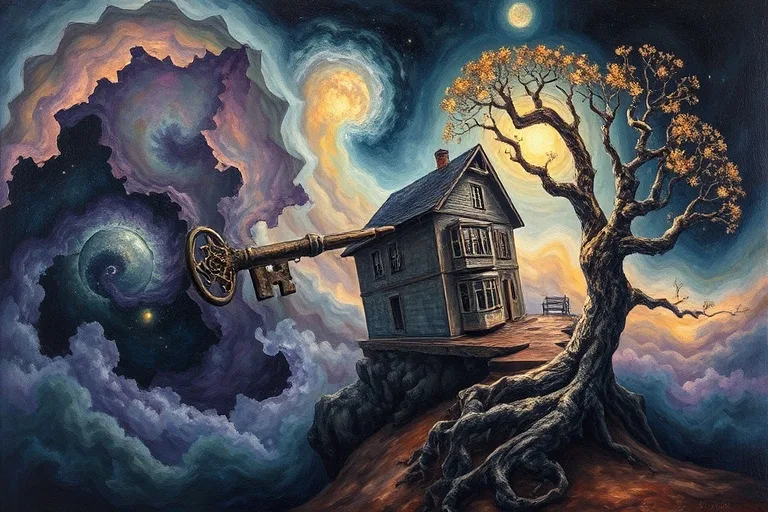
An abstract oil painting portrays a fragmented landscape where familiar objects like a key, a house, and a tree subtly distort and merge into a surreal, dreamlike environment.
Elements and Nature in Dreams
Natural elements and phenomena in dreams often reflect fundamental forces at play in our lives, our emotions, and our connection to the world.
- Fire: Can symbolize passion, destruction, transformation, purification, or anger. Controlled fire might mean passion, while uncontrolled fire suggests destructive emotions.
- Earth: Represents grounding, stability, security, fertility, or the material world. Earthquakes or unstable ground might indicate insecurity.
- Air: Associated with intellect, communication, freedom, thoughts, and ideas. Clear air suggests mental clarity, while stormy air implies mental turmoil.
- Water: (As mentioned before) Deeply connected to emotions, the subconscious, intuition, and the feminine principle. Its state is crucial for interpretation.
- Sun: Symbolizes consciousness, vitality, enlightenment, warmth, and masculine energy. A bright sun indicates clarity and happiness.
- Moon: Represents the subconscious, intuition, emotions, cycles, and feminine energy. Its phase and appearance in the dream are significant.
Decoding Personal Symbols: Your Unique Dream Language
While archetypal symbols provide a useful starting point, the most profound dream interpretations often come from understanding your unique personal symbols. These are elements that hold specific significance to you, based on your memories, experiences, culture, and emotional associations. For example, a car might represent freedom to one person, while to another, it could symbolize a past accident or a specific journey.
To decode your personal dream language, it's essential to ask yourself a series of questions about each symbol that appears in your dream. What is your immediate feeling or association with this object, person, or action? Does it remind you of anything specific from your past or present? How did you interact with it in the dream, and what emotions did that interaction evoke? This introspective process helps bridge the gap between the universal and the deeply personal, leading to more accurate and meaningful insights.
Practical Steps for Effective Dream Interpretation
Interpreting dreams is a skill that improves with practice and patience. Here are some practical steps to help you become a more effective dream interpreter:
- Start a Dream Journal: Keep a notebook and pen by your bed. Immediately upon waking, write down everything you remember about your dream, no matter how fragmented. Include details, emotions, colors, and any dialogue.
- Note Key Symbols and Actions: Identify the most prominent symbols, people, places, and actions in your dream. Circle or highlight them for later analysis.
- Record Emotions: Pay close attention to the emotions you felt during the dream and upon waking. Emotions are powerful indicators of the dream's underlying message.
- Consider Current Life Events: Reflect on what is happening in your waking life. Are there any recent events, worries, or aspirations that might be reflected in your dream?
- Ask Yourself Questions: For each symbol, ask: "What does this mean to me?" "What are my personal associations?" "How does this make me feel?"
- Look for Patterns: Do certain symbols, themes, or emotions recur in your dreams? Recurring elements often point to unresolved issues or consistent messages from your subconscious.
- Trust Your Intuition: While dream dictionaries and theories are helpful, your inner wisdom is your best guide. The most accurate interpretation will often feel right and resonate deeply with you.
The Role of Archetypes in the Collective Unconscious
Carl Jung's concept of the collective unconscious is pivotal to understanding archetypes in dreams. He proposed that beyond our personal unconscious, there exists a deeper, universal layer of the psyche, shared by all humanity. This collective unconscious contains primordial images and patterns of thought, known as archetypes, which manifest in myths, religions, fairy tales, and, significantly, in our dreams.
Archetypes are not fixed images but rather universal templates or predispositions that influence our perceptions and behaviors. Common archetypes include The Hero, The Shadow, The Anima/Animus, The Wise Old Man/Woman, The Great Mother, and The Trickster. When these archetypes appear in dreams, they often represent fundamental aspects of the human experience, guiding us toward individuation – the process of integrating the conscious and unconscious to achieve psychological wholeness. Recognizing these universal patterns can provide profound insights into our shared human journey and personal development.
Dream Journaling: A Key to Self-Discovery
Dream journaling is arguably the single most effective practice for anyone serious about dream interpretation and self-discovery. The act of regularly recording your dreams not only improves your dream recall but also creates a tangible record of your subconscious activity. Over time, you will begin to notice recurring themes, symbols, and emotional patterns that might otherwise go unnoticed.
This consistent practice allows you to track your psychological evolution, identify unresolved conflicts, and gain clarity on decisions you face in your waking life. A dream journal becomes a personal dialogue with your inner self, a sacred space where the wisdom of your subconscious can be accessed and integrated. It transforms fleeting nocturnal experiences into powerful tools for personal growth and deeper self-understanding.
In conclusion, the world of dreams is a vast and fertile ground for exploration, offering invaluable insights into our inner workings. By understanding common symbols and archetypes, and by diligently practicing dream interpretation through methods like journaling, you can unlock a profound source of wisdom. This journey into your dreamscape promises not only self-discovery but also a richer, more integrated experience of life itself. Embrace the mystery, listen to your subconscious, and let your dreams guide you.
Fuente: Contenido híbrido asistido por IAs y supervisión editorial humana.


Comments
Post a Comment