
Chinese Zodiac Feng Shui Harmony: Advanced Elemental Compatibility
Unlocking Harmony: Advanced Elemental Compatibility in Chinese Zodiac and Feng Shui
The ancient wisdom of the Chinese Zodiac and Feng Shui offers profound insights into personal well-being and environmental harmony. While often studied independently, their combined application, particularly through the lens of elemental compatibility, provides a powerful framework for optimizing one's life. Understanding how your birth element interacts with the elements of your living space and other individuals can unlock deeper levels of balance, prosperity, and health.
This advanced exploration delves beyond basic zodiac readings, focusing on the intricate dance of the five elements – Wood, Fire, Earth, Metal, and Water – as they manifest in both personal astrology and environmental design. By harmonizing these forces, individuals can create environments that naturally support their energetic blueprint and foster a life of greater flow and success.
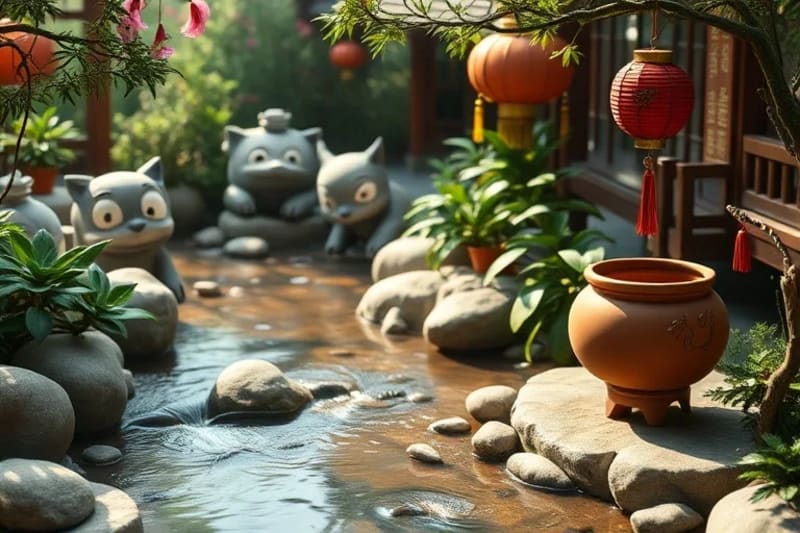
A meticulously designed garden, where the five elements converge to create an atmosphere of profound tranquility and balance, reflecting the core principles of Feng Shui and elemental compatibility.
Table of Contents
- Understanding the Five Elements
- Chinese Zodiac and Your Elemental Affinity
- Feng Shui Principles and Elemental Placement
- Advanced Compatibility: Personal and Environmental
- Practical Application: Harmonizing Your Home
- Elemental Compatibility in Relationships
- Beyond the Basics: Integrating Elemental Wisdom
Understanding the Five Elements: The Foundation of Harmony
The concept of the Five Elements (Wu Xing) – Wood, Fire, Earth, Metal, and Water – is fundamental to both Chinese astrology and Feng Shui. These are not merely substances but dynamic energies that interact in cycles of creation (Sheng Cycle) and destruction (Ke Cycle). Each element possesses unique qualities, colors, shapes, directions, and associations that influence everything from personality traits to environmental energy.
- Wood: Represents growth, creativity, flexibility, and new beginnings. Associated with green, rectangular shapes, and the East.
- Fire: Symbolizes passion, energy, transformation, and illumination. Associated with red, triangular shapes, and the South.
- Earth: Embodies stability, nurturing, grounding, and practicality. Associated with yellow/brown, square shapes, and the Center/Northeast/Southwest.
- Metal: Signifies clarity, precision, organization, and communication. Associated with white/grey, circular/oval shapes, and the West/Northwest.
- Water: Represents wisdom, intuition, flow, and introspection. Associated with blue/black, wavy shapes, and the North.
Understanding these fundamental attributes is the first step towards leveraging elemental harmony. The Sheng Cycle describes how elements mutually generate each other (Wood feeds Fire, Fire creates Earth (ash), Earth bears Metal, Metal holds Water, Water nourishes Wood). Conversely, the Ke Cycle illustrates how elements control or overcome each other (Wood controls Earth, Earth absorbs Water, Water extinguishes Fire, Fire melts Metal, Metal chops Wood). These cycles are crucial for identifying beneficial and challenging interactions, both personally and environmentally.
Chinese Zodiac and Your Elemental Affinity
Each of the twelve Chinese Zodiac animals is associated with a fixed element, but more importantly, the year of birth also carries a specific elemental influence that cycles every ten years. For example, a person born in the Year of the Rat might be a Wood Rat, Fire Rat, Earth Rat, Metal Rat, or Water Rat, significantly altering their personality and energetic makeup. This combination of animal and element forms your unique elemental blueprint.
To determine your specific elemental affinity, you must look at the last digit of your birth year:
| Last Digit of Birth Year | Associated Element |
|---|---|
| 0 or 1 | Metal |
| 2 or 3 | Water |
| 4 or 5 | Wood |
| 6 or 7 | Fire |
| 8 or 9 | Earth |
For example, someone born in 1984 is a Wood Rat, while someone born in 1986 is a Fire Tiger. This elemental overlay adds a layer of depth to the zodiac animal's inherent characteristics, influencing personality, strengths, weaknesses, and even health predispositions. Understanding this personal element is vital for effective Feng Shui application, as it dictates which elements will support or challenge your energy.
Feng Shui Principles and Elemental Placement
Feng Shui is the art and science of arranging living spaces to achieve harmony with the environment. It utilizes the Bagua map, a grid representing different life areas (e.g., wealth, relationships, career), each associated with a specific direction and element. By strategically placing elements in these areas, you can enhance or suppress their energy, creating a balanced flow of Qi (life force energy).
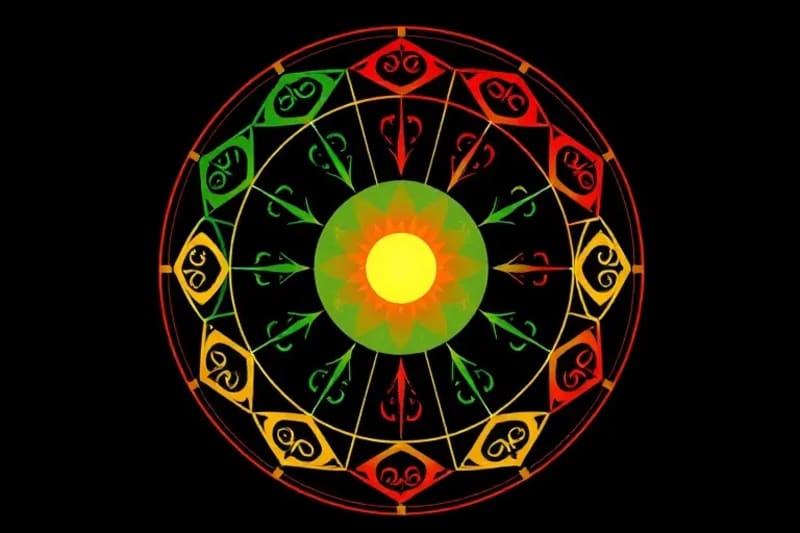
A vibrant digital representation of the five elements, illustrating their complex and dynamic interrelationships within the cosmic order.
For instance, the Wealth area (Southeast) is associated with Wood. Placing a healthy plant or wooden decor here can activate prosperity. The Relationship area (Southwest) is linked to Earth, benefiting from ceramics or images of couples. Understanding these elemental associations for each Bagua sector is crucial for effective Feng Shui. However, advanced application goes a step further by considering your personal element within this framework.
The goal is not just to activate the Bagua sectors but to ensure these activations are compatible with your personal energetic needs. For example, if your personal element is Fire, and you have a strong Water presence in your bedroom (North sector), it might dampen your energy. Adjustments would involve introducing Wood elements to mediate (Water feeds Wood, Wood feeds Fire) or reducing excessive Water symbols. This personalized approach transforms generic Feng Shui advice into a highly effective strategy for individual well-being.
Advanced Compatibility: Personal and Environmental Synergy
Advanced elemental compatibility involves assessing the interaction between your personal birth element and the dominant elements of your home or specific rooms. The aim is to create a supportive environment that enhances your strengths and mitigates your weaknesses. For example, a Wood person thrives in environments with ample Water (nourishing) and Wood (strengthening) elements, while too much Metal (controlling) can feel restrictive.
Consider the following guidelines for personal elemental harmony:
- If your element is Wood: Seek Water (nourishing) and Wood (strengthening) elements. Moderate Fire (expending energy) and Earth (controlled). Avoid excessive Metal (destroying).
- If your element is Fire: Seek Wood (nourishing) and Fire (strengthening) elements. Moderate Earth (expending energy) and Metal (controlled). Avoid excessive Water (destroying).
- If your element is Earth: Seek Fire (nourishing) and Earth (strengthening) elements. Moderate Metal (expending energy) and Water (controlled). Avoid excessive Wood (destroying).
- If your element is Metal: Seek Earth (nourishing) and Metal (strengthening) elements. Moderate Water (expending energy) and Wood (controlled). Avoid excessive Fire (destroying).
- If your element is Water: Seek Metal (nourishing) and Water (strengthening) elements. Moderate Wood (expending energy) and Fire (controlled). Avoid excessive Earth (destroying).
These interactions extend beyond decor. They influence color choices, materials, shapes, and even the type of activities you engage in within a space. For instance, a Fire person might feel more energized and creative in a home with vibrant reds and triangular patterns, but too much could lead to burnout. Balancing these energies is key. This approach is similar to how secondary progressions in astrology chart soul evolution, providing a dynamic understanding of personal growth and environmental influence.
Practical Application: Harmonizing Your Home
Applying advanced elemental compatibility involves a systematic approach to your living environment. Start by identifying your personal element. Then, assess each room in your home, considering its primary function and the dominant elements present through decor, colors, and materials. Use the Bagua map to identify the elemental associations of each sector.
- Bedroom: Focus on nurturing and supportive elements. For a Fire person, avoid excessive red. Introduce Wood (plants, wooden furniture) to support Fire, and Earth (ceramics, neutral tones) for grounding.
- Home Office: Emphasize elements that promote focus and productivity. A Metal person might benefit from clear, organized spaces with metal accents, but ensure enough Water (blue hues, small water features) to prevent rigidity.
- Living Room: This communal space should foster harmony. Ensure a balanced representation of all five elements, with an emphasis on those that support the primary occupants.
- Kitchen: Dominated by Fire and Water, balance is crucial. For a Wood person, ensure ample Wood elements (wooden cutting boards, green accents) to mediate the Fire-Water dynamic.
Remember to use the Sheng (generative) cycle to introduce supportive elements and the Ke (controlling) cycle to mitigate excessive or clashing elements. For instance, if you have too much Fire energy in a room, introduce Water elements to control it, or Earth elements to absorb its intensity. This intricate balancing act creates a bespoke environment tailored to your unique energetic needs. This holistic approach to environmental design can significantly impact your daily life, much like understanding your Natal Moon's influence on emotions and instincts.
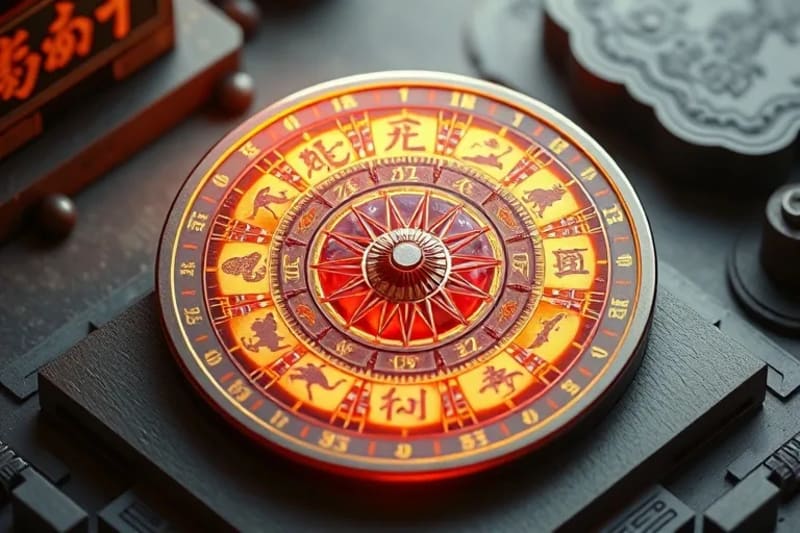
An intricate Lo Pan compass, illuminated by an ethereal energy grid, symbolizing the profound connection between cosmic influences and the precise arrangement of earthly spaces.
Elemental Compatibility in Relationships
Beyond personal spaces, elemental compatibility extends to interpersonal relationships. Understanding the elements of your partners, family members, or colleagues can shed light on dynamic interactions. A relationship where elements are in a Sheng (generative) cycle tends to be more harmonious and mutually supportive. For example, a Wood person and a Fire person often have a nurturing relationship, as Wood feeds Fire.
Conversely, relationships with elements in a Ke (controlling) cycle might present challenges. A Water person and a Fire person might experience clashes, as Water extinguishes Fire. However, these challenges are not insurmountable; they simply indicate areas that require conscious effort and understanding. Just as with challenging Chinese Zodiac compatibilities, these interactions can foster growth through conflict if approached constructively.
When elements clash, the key is to introduce a mediating element. For a Water-Fire conflict, introducing Wood can create a bridge (Water nourishes Wood, Wood feeds Fire). This principle can be applied to communication styles, shared activities, or even the design of shared spaces. By consciously acknowledging these elemental dynamics, individuals can foster deeper understanding and cultivate more resilient relationships.
Beyond the Basics: Integrating Elemental Wisdom for Holistic Well-being
The advanced integration of Chinese Zodiac and Feng Shui elemental compatibility offers a holistic path to well-being. It encourages a deeper connection to the natural world and an understanding of how subtle energies influence our lives. This wisdom extends beyond interior design, influencing choices in diet, clothing, career paths, and even daily routines. By aligning with your personal element and creating supportive environments, you can enhance your vitality, creativity, and overall sense of peace.
Embracing this ancient knowledge allows for a proactive approach to life, where you are not merely reacting to circumstances but actively shaping your reality through intelligent energetic management. The continuous study and application of these principles lead to a more conscious and harmonious existence, where personal well-being and environmental synergy are inextricably linked.
The wisdom of the Five Elements is a dynamic system, not a static set of rules. Continuous observation and adjustment are key to maintaining balance.
As energies shift with seasons and personal cycles, so too should your environment adapt to support your evolving needs.
Ultimately, the goal is to cultivate a life where your inner self resonates with your outer world, creating a powerful feedback loop of positive energy and growth. This advanced understanding of elemental compatibility is a key to unlocking that potential.
Explore Further: Related Insights
Source: Hybrid content assisted by AI and human editorial supervision.


Comments
Post a Comment