
Cosmic Sociology: AI Ethics, Global Consciousness Shifts Digital Age
The confluence of advanced artificial intelligence (AI) and the rapidly evolving digital age is fundamentally reshaping human society and our understanding of consciousness. This transformation has given rise to a new field of inquiry: Cosmic Sociology. This discipline extends traditional sociological analysis beyond terrestrial boundaries, examining the intricate interplay between technological progress, ethical considerations, and the emergent properties of a globally interconnected consciousness, potentially even considering future extraterrestrial interactions.
Cosmic Sociology seeks to understand how AI, as a powerful catalyst, influences collective human thought, behavior, and societal structures on a planetary scale, while simultaneously grappling with the profound ethical dilemmas it presents. It delves into the mechanisms through which digital platforms facilitate unprecedented levels of global interconnectedness, leading to shifts in shared values, beliefs, and perceptions of reality.
Table of Contents
- Foundations of Cosmic Sociology
- AI Ethics in a Globalized World
- Digital Age and Consciousness Evolution
- Intersections: AI, Consciousness, and Cosmic Governance
- Challenges and Opportunities
- The Future of Cosmic Sociology

Exploring the intricate dance between universal forces, emergent consciousness, and the digital scaffolds that shape our collective future.
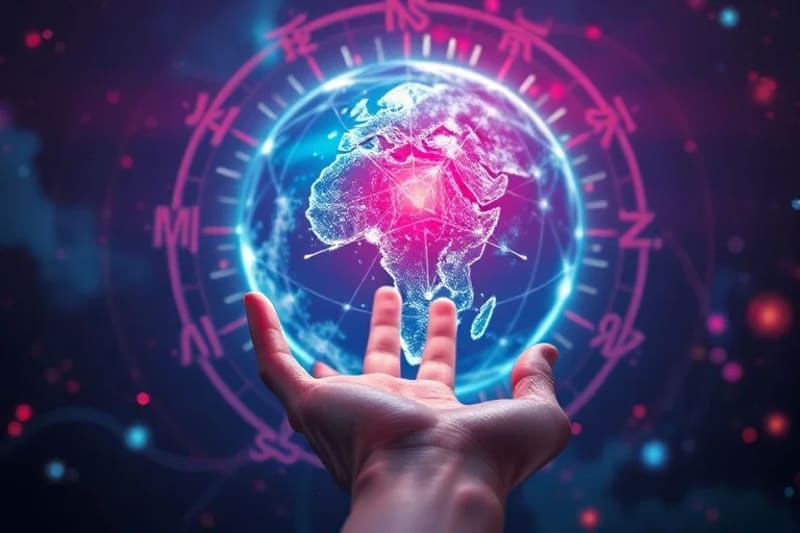
Conceptual rendering of cosmic sociology, blending abstract elements of consciousness and digital networks, created by advanced AI algorithms.Foundations of Cosmic Sociology
Cosmic Sociology emerges from the recognition that humanity's trajectory is no longer confined to Earth. It builds upon classical sociological theories, re-evaluating concepts like social structure, culture, and power dynamics through a universal lens. This perspective considers how potential future space colonization, interstellar communication, or even the mere contemplation of alien life might alter human societal organization and identity.
Key theoretical frameworks include systems theory, which views societies as complex adaptive systems interacting within a larger cosmic environment, and critical theory, which scrutinizes power imbalances and ethical implications in the development and deployment of AI and space technologies. The field also draws heavily from transhumanism and posthumanism, exploring how technological augmentation and expansion into space could redefine what it means to be human and how societies function.
The core premise is that as our technological capabilities expand, so too must our sociological imagination. This includes considering the ethical implications of AI's role in shaping these new realities, from algorithmic governance to the potential for superintelligent systems to influence global decision-making. The transformation of consciousness, often linked to spiritual and esoteric practices like Pluto Sign transformation, finds new dimensions when viewed through the lens of cosmic expansion and AI integration.
AI Ethics in a Globalized World
The rapid advancement of AI necessitates a robust ethical framework, especially when considering its global impact. AI ethics addresses concerns such as algorithmic bias, accountability for autonomous systems, data privacy, and the potential for job displacement. In a globalized world, these issues are magnified, as AI technologies developed in one cultural context can have far-reaching and unintended consequences across diverse societies.
Principles guiding AI ethics often include transparency, fairness, human oversight, and beneficial impact. However, achieving consensus on these principles across different nations and value systems remains a significant challenge. The rise of AI also brings into focus the question of consciousness within machines, prompting philosophical debates about sentience, rights, and the very definition of life itself. This is particularly relevant when considering the ethical implications of AI in fields like preventive medicine and personalized longevity, where AI decisions can have life-altering effects.
The delicate balance of human-AI interaction, emphasizing ethical considerations in a digitally interconnected world.
A digital painting envisioning the future of AI ethics, rendered by an advanced generative AI model.Furthermore, the potential for AI to be misused for surveillance, manipulation, or autonomous warfare raises critical questions about global security and human rights. The concept of cybersecurity against deepfakes and quantum threats highlights the urgent need for robust ethical guidelines and regulatory frameworks to prevent catastrophic outcomes in the digital realm.
Digital Age and Consciousness Evolution
The digital age, characterized by ubiquitous connectivity and information overload, is profoundly impacting global consciousness. Social media, instant communication, and virtual realities are creating new forms of collective identity and shared experience. This has led to an accelerated evolution of consciousness, where individuals are exposed to diverse perspectives and global events in real-time, fostering a sense of planetary interconnectedness.
However, this evolution is not without its complexities. The digital age also presents challenges such as echo chambers, misinformation, and digital fatigue. The constant influx of data can lead to cognitive overload, while the curated nature of online experiences can distort perceptions of reality. Yet, it also offers unprecedented opportunities for collective action, global empathy, and the rapid dissemination of knowledge, influencing practices from haptic feedback meditation to large-scale social movements.
The concept of a "global brain" or a "noosphere" — a collective sphere of human thought and consciousness — is becoming increasingly tangible with the advent of AI and pervasive digital networks. This emergent collective intelligence raises questions about individual autonomy versus collective will, and the potential for a unified global consciousness to address planetary challenges.
Intersections: AI, Consciousness, and Cosmic Governance
The intersection of AI, global consciousness, and the nascent field of cosmic governance represents the frontier of Cosmic Sociology. AI systems, particularly those with advanced machine learning capabilities, are already influencing collective human behavior through recommendation algorithms, personalized content, and predictive analytics. As AI becomes more sophisticated, its capacity to shape and even guide global consciousness will only increase.
Cosmic governance, in this context, refers to the frameworks and principles that would regulate human activities beyond Earth, including space exploration, resource management, and potential interactions with extraterrestrial intelligence. The ethical development of AI is paramount to establishing fair and sustainable cosmic governance, ensuring that technological expansion is guided by principles of equity and long-term well-being for all sentient beings.

Reflecting on timeless ethical principles as digital advancements illuminate the path to cosmic understanding.
A 3D render exploring the philosophical connection between ancient wisdom and future digital ethics, conceptualized by AI.The challenge lies in creating AI systems that not only serve human interests but also uphold universal ethical standards, fostering a global consciousness that is empathetic, resilient, and capable of navigating the complexities of a multi-planetary future. This requires interdisciplinary collaboration between sociologists, ethicists, AI developers, and policymakers to design AI that promotes collective flourishing rather than exacerbating existing inequalities or creating new forms of control.
Challenges and Opportunities
The path forward is fraught with both significant challenges and immense opportunities. Challenges include the potential for AI to deepen digital divides, exacerbate social inequalities, or even lead to autonomous systems making decisions that conflict with human values. The rapid pace of technological change often outstrips the development of ethical guidelines and legal frameworks, creating a regulatory vacuum.
On the other hand, AI offers unprecedented opportunities to address global challenges such as climate change, poverty, and disease. It can facilitate enhanced scientific discovery, foster cross-cultural understanding through advanced translation and communication tools, and even potentially accelerate the evolution of human consciousness towards higher states of awareness and collective problem-solving. The ethical integration of AI could lead to a more just, equitable, and sustainable future, both on Earth and in any future cosmic endeavors.
Moreover, AI can assist in analyzing vast datasets related to human behavior and societal trends, providing insights that can inform better governance and policy-making. It can help us understand the subtle shifts in global consciousness, identifying areas where intervention or support is needed to foster positive societal change.
The Future of Cosmic Sociology
The future of Cosmic Sociology is dynamic and ever-expanding. As AI continues to evolve and humanity ventures further into space, this field will become increasingly vital for understanding our place in the universe and how we choose to shape our collective destiny. It will explore how AI might mediate future interspecies communication, how ethical frameworks adapt to non-human intelligences, and how global consciousness might integrate cosmic perspectives.
Ultimately, Cosmic Sociology serves as a critical lens through which to examine the profound implications of technological advancement on human society and consciousness. It calls for a proactive, ethical, and inclusive approach to developing AI and exploring the cosmos, ensuring that our progress is guided by wisdom and a deep understanding of our interconnectedness, not just on Earth, but across the vast expanse of the universe.
Explore More Insights
Mediumship: Bridging Worlds, Exploring Connections | StarPluto
Biophilic Manifestation Nature's Blueprint: Harmonizing Intentions
Lilith Astrology: Dark Feminine, Untamed Instincts | StarPluto
Zodiac Synastry: Planetary Aspects in Relationships | StarPluto
Astrología Chamánica: Animales Poder, Guía Ancestral | AstroFuturo
Profecías Naturaleza: Fenómenos Climáticos Mensajes Divinos | Profecías
Source: Hybrid content assisted by AI and human editorial supervision.


Comments
Post a Comment