
Astrology Ethics AI Big Data Collective Trends
The convergence of ancient astrological wisdom with modern technological advancements like Artificial Intelligence (AI) and Big Data analytics presents a fascinating, yet complex, frontier. This intersection promises unprecedented insights into collective human behavior and societal trends, moving beyond individual natal chart interpretations to macro-level pattern recognition. However, this powerful synergy also introduces profound ethical considerations that demand careful navigation, ensuring that the pursuit of knowledge does not compromise individual autonomy, privacy, or the integrity of both astrological practice and data science principles. Understanding this evolving landscape requires a deep dive into the technical capabilities, philosophical implications, and moral responsibilities inherent in merging such disparate fields.
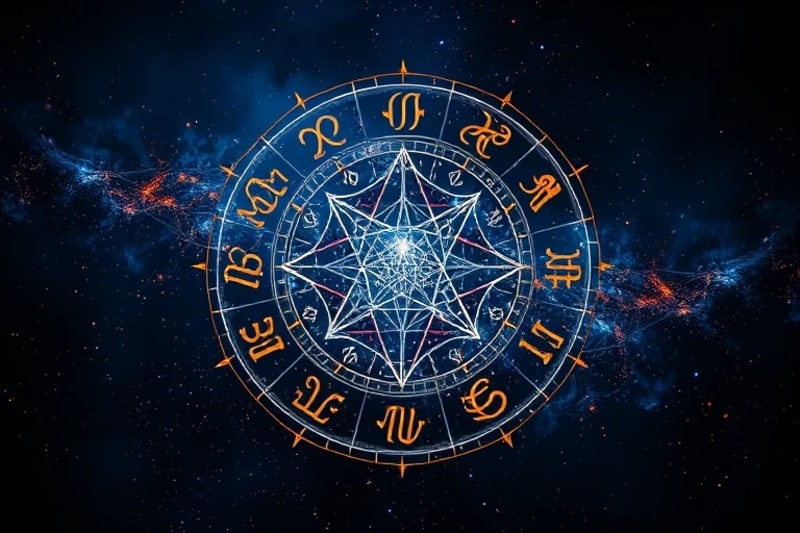
A visual synthesis of cosmic patterns and digital information, illustrating the intricate relationship between astrological data and AI analytics.
The application of AI and Big Data to astrological charts and historical events allows for the identification of correlations and causal links that were previously imperceptible to human analysis alone. This article explores the methodologies involved, the ethical frameworks necessary for responsible implementation, and the potential impact on our understanding of collective consciousness and destiny. As we delve into this new domain, it becomes crucial to establish robust guidelines that uphold scientific rigor, ethical integrity, and respect for the diverse interpretations of both astrology and technology.
Table of Contents
- The Confluence of Ancient Wisdom and Modern Technology
- Ethical Imperatives in Algorithmic Astrology
- Big Data and Collective Astrological Trends
- The Role of AI in Astrological Interpretation and Research
- Future Trajectories: AI, Ethics, and the Evolution of Astrology
The Confluence of Ancient Wisdom and Modern Technology
Astrology, an ancient system of knowledge, has historically relied on meticulous observation, complex mathematical calculations, and intuitive interpretation of celestial phenomena. Its core premise posits a correlation between planetary positions and earthly events, including human characteristics and collective destinies. The advent of computational power, AI, and Big Data analytics offers an unprecedented opportunity to re-examine these correlations on a scale unimaginable to previous generations of astrologers.
Modern data science can process vast datasets that include historical astrological charts, global events, demographic information, economic indicators, and even sentiment analysis from social media. AI algorithms, particularly machine learning models, can identify subtle patterns, clusters, and predictive relationships within this multi-dimensional data. This allows researchers to move beyond anecdotal evidence and subjective interpretations, potentially uncovering statistically significant correlations between planetary alignments and observable collective trends.
For instance, researchers could analyze thousands of historical economic crises in conjunction with specific astrological configurations, identifying recurring planetary patterns that precede periods of financial instability. Similarly, AI could be trained on historical data of social movements, technological breakthroughs, or cultural shifts, correlating these with complex astrological transits and progressions. This approach transforms astrology from a purely interpretive art into a field amenable to empirical investigation, albeit one that still requires careful consideration of its philosophical underpinnings.
Ethical Imperatives in Algorithmic Astrology
The integration of AI and Big Data into astrology, while promising, is fraught with ethical challenges that must be addressed proactively. The primary concerns revolve around data privacy, algorithmic bias, the implications for free will, and the potential for misuse of predictive insights. These issues are not unique to algorithmic astrology but are amplified by the sensitive nature of personal and collective destiny interpretations.
A conceptual artwork exploring the delicate balance between data transparency and individual privacy in the age of algorithmic analysis.
Data Privacy: Astrological analysis often requires birth data (date, time, location), which can be highly personal. When combined with other datasets, this information could be used to create highly detailed profiles. Ensuring robust data anonymization, encryption, and consent mechanisms is paramount. Users must have clear control over their data and understand how it is being used, especially when contributing to large-scale collective trend analysis. The principles applied in neuroarchitecture regarding personal space and well-being can offer parallels for digital data privacy.
Algorithmic Bias: AI models are only as unbiased as the data they are trained on. If historical astrological data or the societal data used for correlation contains inherent biases (e.g., gender, race, socioeconomic status), the AI will perpetuate and even amplify these biases in its interpretations or predictions. Developing fair and transparent algorithms that are regularly audited for bias is critical to prevent discriminatory outcomes. This extends to the interpretation of planetary influences, where traditional astrological texts might carry historical biases that need to be critically re-evaluated through a modern ethical lens.
Determinism vs. Free Will: One of the most profound philosophical questions in astrology concerns the extent to which celestial influences dictate human fate. Algorithmic astrology, by potentially offering more precise "predictions" or trend analyses, could inadvertently reinforce a deterministic worldview, undermining the concept of free will and personal agency. It is crucial to frame these insights as probabilities, tendencies, or energetic potentials rather than immutable decrees, emphasizing that awareness of astrological influences empowers individuals and collectives to make conscious choices. This philosophical debate often touches upon the nature of interpreting planetary messages subconsciously, highlighting the interplay between fate and choice.
Misuse of Predictive Insights: The ability to predict collective trends, whether economic, social, or political, carries significant risks. Such insights could be exploited for manipulative purposes, market speculation, or social engineering. Establishing clear ethical guidelines for the application and dissemination of these predictions is essential. This includes preventing the weaponization of astrological insights and ensuring that any collective trend analysis serves the greater good, promoting understanding and proactive adaptation rather than exploitation.
Big Data and Collective Astrological Trends
Big Data analytics provides the backbone for identifying collective astrological trends. By aggregating and analyzing vast quantities of anonymized data points, researchers can discern macro-level patterns that affect entire populations, nations, or even global consciousness. This shifts the focus from individual horoscopes to the "horoscope" of humanity or specific societal segments.
Consider the analysis of major planetary cycles, such as the Uranus-Pluto squares or the Jupiter-Saturn conjunctions, which astrologers traditionally associate with significant societal transformations. With Big Data, these cycles can be correlated with historical records of revolutions, technological paradigm shifts, economic depressions, or periods of profound cultural change. AI can then identify the specific nuances of these correlations, such as the duration of influence, the specific sectors most affected, or the preceding conditions that amplify or mitigate the astrological impact.
For example, an AI model could analyze millions of birth charts of individuals involved in specific historical movements (e.g., the counter-culture movement of the 1960s, the rise of digital nomads in the 21st century) and identify common astrological signatures or transits that were active during their formative years or periods of peak influence. This could reveal collective karmic patterns or generational themes that are astrologically imprinted, offering insights into the underlying energetic currents driving societal evolution. This kind of analysis could even inform practices like Feng Shui for digital nomads, by understanding collective energy flows in modern contexts.
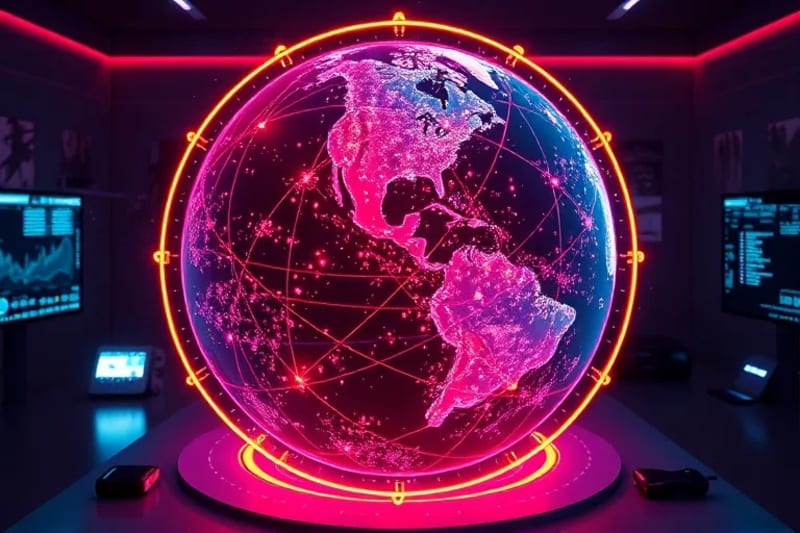
A futuristic visualization of Earth's collective energy field, influenced by celestial mechanics and analyzed through advanced data networks.
However, it is crucial to differentiate between correlation and causation. While Big Data can reveal strong correlations between astrological phenomena and collective events, it does not inherently prove causation. The relationship might be one of synchronicity, a reflection of underlying universal patterns, or a complex interplay of multiple factors. Researchers must maintain scientific humility and avoid overstating causal links, focusing instead on identifying meaningful patterns that can inform our understanding of human experience.
The Role of AI in Astrological Interpretation and Research
AI plays a multifaceted role in the evolution of astrological practice and research. Beyond identifying broad collective trends, AI can assist in nuanced chart interpretation, accelerate research into planetary influences, and even help in the development of more personalized astrological insights.
- Automated Chart Analysis: AI can process natal charts, transits, progressions, and synastry charts with unparalleled speed and accuracy. While traditional astrology relies on human interpretation, AI can quickly identify key aspects, house placements, and planetary dignities, providing a comprehensive initial overview. This does not replace human intuition but rather augments it, freeing astrologers to focus on deeper, more qualitative interpretations. For instance, AI could quickly highlight complex interactions like mutual reception in astrology, which can be subtle to detect manually.
- Research into Planetary Influences: AI can analyze vast amounts of data to investigate specific astrological hypotheses. For example, researchers could use AI to study the correlation between specific aspects of Uranus (associated with awakening and rebellion) in natal charts and individuals' propensity for innovation or social activism. This could provide empirical backing or refinement to long-held astrological tenets. Understanding the influence of Uranus in astrology through AI could revolutionize our understanding of societal change.
- Personalized Insights: While collective trends are important, AI can also enhance personalized astrology. By analyzing an individual's chart in the context of millions of other charts and their life outcomes (anonymized and consented, of course), AI could offer more statistically informed insights into potential life paths, challenges, and opportunities. This moves beyond generic interpretations to data-driven personalized guidance, always emphasizing free will and personal choice.
- Predictive Modeling: AI can develop predictive models for future astrological configurations and their potential collective impact. These models could forecast periods of increased social tension, economic volatility, or creative breakthroughs, allowing societies to prepare and adapt. This is not about fortune-telling but about identifying energetic windows and probabilities based on historical patterns.
However, it is vital to acknowledge the limitations of AI. AI excels at pattern recognition and data processing but lacks consciousness, intuition, and the capacity for subjective human experience. The deepest insights in astrology often come from the astrologer's empathy, wisdom, and ability to synthesize complex symbolic meanings within a human context. Therefore, the ideal future of algorithmic astrology likely involves a hybrid approach, where AI provides powerful analytical tools, and human astrologers provide the crucial interpretive, ethical, and empathetic overlay.
Future Trajectories: AI, Ethics, and the Evolution of Astrology
The future of astrology, intertwined with AI and Big Data, is poised for significant transformation. This evolution will necessitate the development of new frameworks, both technological and ethical, to ensure responsible progress. The trajectory involves several key areas:
| Aspect | Description |
|---|---|
| Regulatory Frameworks | As algorithmic astrology gains traction, there will be a need for regulatory bodies or industry standards to govern data collection, algorithmic transparency, bias mitigation, and the ethical use of predictive insights. This could involve certifications for AI astrology platforms or guidelines for responsible astrological data science. |
| Hybrid Human-AI Practices | The most effective applications will likely be synergistic, combining AI's analytical power with human wisdom and intuition. Astrologers may use AI tools to generate initial reports, identify complex patterns, or cross-reference historical data, then apply their unique interpretive skills and client-facing empathy. |
| Philosophical Re-evaluation | The empirical validation (or refutation) of astrological principles through AI will force a re-evaluation of core astrological philosophies. This could lead to a more nuanced understanding of celestial influence, moving beyond simplistic cause-and-effect models to embrace concepts like synchronicity, energetic resonance, and the holographic nature of reality. |
| Educational Evolution | Astrology education will need to adapt, incorporating data science literacy, ethical AI principles, and critical thinking skills. Future astrologers may need to understand not only planetary symbolism but also how machine learning models function and their inherent limitations. |
| Accessibility and Democratization | AI tools could make sophisticated astrological analysis more accessible to a wider audience, democratizing knowledge that was once the exclusive domain of trained practitioners. However, this also carries the risk of superficial or misinformed interpretations, underscoring the need for robust educational resources and ethical platforms. |
Ultimately, the integration of AI and Big Data into astrology is not merely a technological advancement; it is a profound philosophical and ethical undertaking. It challenges us to reconsider the nature of destiny, free will, collective consciousness, and our responsibility in wielding powerful predictive tools. The journey ahead requires interdisciplinary collaboration, open dialogue, and a commitment to ethical innovation.
Explore More Astrological Insights
Delve deeper into the cosmic influences shaping our lives and collective destiny. Our extensive library offers advanced perspectives on various astrological topics, from personal chart interpretations to broader societal trends.
- Advanced Synastry Decoding Relational Karma North Node: Uncover the karmic connections in your relationships.
- Intercepted Houses: Unlocking Natal Chart Potentials: Discover hidden dynamics within your birth chart.
- Astrology Sleep Cycles Lunar Phases: Optimizing Rest: Harmonize your sleep with celestial rhythms.
- Advanced Synastry: Composite Charts, Relationship Dynamics: Gain deeper insights into relationship dynamics.
- Urban Geomancy: Aligning Dwellings Cosmic Energies: Learn how to align your living spaces with cosmic forces.
- Imum Coeli Astrology: Decoding Roots, Private Self: Explore the deepest foundations of your being.
- 4th House Astrology: Roots, Family, Emotional Foundation: Understand your emotional bedrock and family heritage.
- Compatibilidad Amorosa Venus Marte Astrología Avanzada Relaciones: Explore the astrological dynamics of love and attraction.
Source: Hybrid content assisted by AI and human editorial supervision.


Comments
Post a Comment