
Astro-Botany: Celestial Influences on Plant Growth
Astro-Botany, an intriguing field that bridges the ancient wisdom of astrology with the science of plant life, explores the profound celestial influences on plant growth, vitality, and energetic properties. This discipline suggests that just as the moon affects tides, and the sun dictates seasons, other celestial bodies and their positions can subtly impact the botanical world. From the timing of planting and harvesting to the medicinal potency of herbs, Astro-Botany offers a unique lens through which to understand the intricate dance between cosmos and flora.
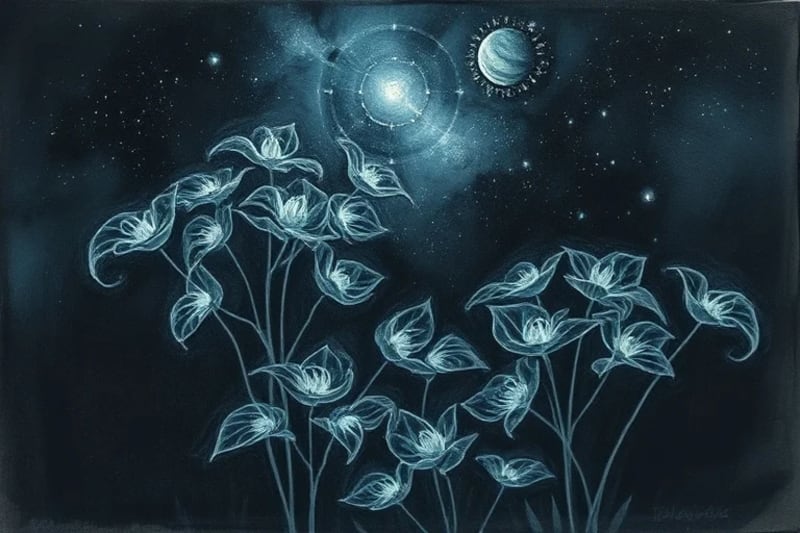
Precursors intellectuales, diagramas fundamentales y representaciones conceptuales que forjaron la visión de la Astro-Botánica sobre la interacción cósmica y vegetal.
Fuente visual sujeta a disponibilidad del ecosistema: Wikimedia Commons bajo licencia CC BY-SA 4.0 o renderizado conceptual IA.
Historically, the connection between celestial cycles and agriculture has been recognized across various ancient civilizations. Farmers and healers observed patterns, linking lunar phases to germination rates, planetary positions to crop yields, and zodiacal influences to the medicinal qualities of plants. This knowledge, often passed down through oral traditions and esoteric texts, formed the bedrock of practices like biodynamic farming and herbal astrology.
In modern times, while mainstream science largely focuses on quantifiable factors like soil composition, light, and water, a growing interest in holistic and esoteric approaches has led to a renewed exploration of Astro-Botany. This article delves into the core principles of this fascinating field, examining how celestial bodies, zodiac signs, and elemental forces are believed to interact with the plant kingdom, influencing everything from growth patterns to energetic signatures.
Table of Contents
- Historical Roots and Ancient Wisdom
- Planetary Influences on Plant Growth
- Zodiacal Energies and Plant Types
- Lunar Gardening: Harnessing the Moon's Rhythm
- Energetic Signatures and Medicinal Properties
- Crystals, Gems, and Plant Energetics
- The Metaphysical Perspective of Astro-Botany
- Modern Applications and Biodynamic Agriculture
- Conclusion: Reconnecting with Cosmic Rhythms
Historical Roots and Ancient Wisdom
The concept of Astro-Botany is not new; it is deeply embedded in the agricultural and healing practices of ancient cultures. From the Egyptians and Babylonians to the Greeks, Romans, and indigenous peoples worldwide, observations of celestial phenomena were integral to understanding natural cycles. The alignment of stars and planets was often consulted for optimal planting, tending, and harvesting times, believed to imbue plants with specific qualities or enhance their growth.
In medieval Europe, herbalists and alchemists meticulously documented the correspondences between planets, zodiac signs, and medicinal plants. Paracelsus, a renowned physician and astrologer, extensively wrote about the "Doctrine of Signatures," which posited that God had marked plants with signs indicating their medicinal uses, often correlating with planetary influences. For example, plants with heart-shaped leaves might be associated with the Sun and used for heart ailments, while moon-ruled plants were often linked to water balance and emotional well-being.
These traditions highlight a holistic worldview where the microcosm (Earth and its inhabitants) mirrors the macrocosm (the cosmos). The belief was that everything is interconnected, and understanding these connections could lead to greater harmony and efficacy in cultivation and healing. This historical context provides a rich foundation for contemporary explorations into Astro-Botany.
Planetary Influences on Plant Growth
Each planet in our solar system is believed to exert a unique energetic influence on plants. These influences are not necessarily physical forces but subtle energetic vibrations that can affect a plant's growth habit, chemical composition, and overall vitality. Understanding these planetary correspondences is crucial for anyone practicing Astro-Botany.
- Sun: Associated with vitality, growth, and life force. Sun-ruled plants often thrive in full sun, are robust, and may have a warming effect (e.g., sunflowers, calendula, rosemary). They are often used for general invigoration and heart health.
- Moon: Governs water, growth cycles, and fertility. Moon-ruled plants are often succulent, have white flowers, or grow quickly (e.g., lettuce, cabbage, cucumber, jasmine). They are linked to emotional balance, sleep, and fluid regulation.
- Mercury: Influences communication, intellect, and nervous system. Mercury-ruled plants often have fine leaves or intricate structures (e.g., dill, lavender, parsley). They are used for mental clarity and nerve soothing.
- Venus: Associated with beauty, love, harmony, and fertility. Venus-ruled plants are typically fragrant, beautiful, or sweet (e.g., roses, apples, strawberries, thyme). They are used for skin health, emotional comfort, and attracting love.
- Mars: Governs energy, passion, and protection. Mars-ruled plants are often thorny, spicy, or stimulating (e.g., nettle, garlic, ginger, cayenne). They are used for boosting energy, protection, and stimulating circulation.
- Jupiter: Influences expansion, abundance, and healing. Jupiter-ruled plants are often large, stately, or have broad leaves (e.g., oak, dandelion, sage). They are used for liver support, growth, and prosperity.
- Saturn: Associated with structure, discipline, and boundaries. Saturn-ruled plants are often slow-growing, have strong woody stems, or are bitter (e.g., comfrey, horsetail, hemlock). They are used for bones, teeth, and grounding.
Beyond the traditional seven planets, modern Astro-Botany also considers the influences of Uranus, Neptune, and Pluto, linking them to more subtle, transformative, or collective energetic shifts in plant life. For instance, Uranus might be associated with unusual or innovative plant mutations, while Neptune could relate to plants with hallucinogenic or deeply spiritual properties. This expanded view allows for a more nuanced understanding of plant energetics.
Zodiacal Energies and Plant Types
The twelve zodiac signs also play a significant role in Astro-Botany, each associated with specific elements (Fire, Earth, Air, Water) and influencing different plant parts or growth characteristics. Planting and harvesting according to these zodiacal positions can optimize a plant's development and potency.
| Zodiac Sign | Element | Associated Plant Part/Focus | Examples of Influenced Plants |
|---|---|---|---|
| Aries, Leo, Sagittarius | Fire | Fruit, Seeds | Tomatoes, Peppers, Beans, Grains |
| Taurus, Virgo, Capricorn | Earth | Root, Tubers | Carrots, Potatoes, Radishes, Onions |
| Gemini, Libra, Aquarius | Air | Flower, Scent | Roses, Lavender, Broccoli, Cauliflower |
| Cancer, Scorpio, Pisces | Water | Leaf, Stem | Lettuce, Spinach, Cabbage, Herbs (e.g., mint) |
Gardeners often consult astrological calendars to determine the best times for specific tasks. For instance, planting root crops during Earth signs (Taurus, Virgo, Capricorn) is believed to promote strong root development, while harvesting leafy greens during Water signs (Cancer, Scorpio, Pisces) might enhance their succulence. This meticulous timing is an example of applying auspicious dates and times to agricultural practices.
Lunar Gardening: Harnessing the Moon's Rhythm
Lunar gardening is perhaps the most widely recognized aspect of Astro-Botany. It involves aligning gardening activities with the moon's phases and its position in the zodiac. The moon's gravitational pull influences water movement, affecting sap flow in plants and moisture levels in the soil, while its light cycles impact germination and growth.
- New Moon to First Quarter (Waxing Crescent): This phase is considered ideal for planting annuals that produce above-ground crops, especially leafy vegetables. The increasing moonlight and gravitational pull are thought to encourage strong leaf and stem growth.
- First Quarter to Full Moon (Waxing Gibbous): Best for planting fruiting annuals and flowers. The moon's energy is at its peak, promoting robust growth and fruit development.
- Full Moon to Last Quarter (Waning Gibbous): Ideal for planting root crops, perennials, and biennials. The decreasing light encourages energy to be drawn downwards, strengthening roots. This is also a good time for transplanting and pruning.
- Last Quarter to New Moon (Waning Crescent): A resting period for the garden. Activities like weeding, pest control, and soil preparation are favored, as the moon's energy is believed to be at its lowest, making plants less susceptible to disturbance.
Beyond the phases, the moon's passage through different zodiac signs further refines these recommendations, linking back to the elemental influences on specific plant parts. This detailed approach allows gardeners to work in harmony with natural rhythms, potentially leading to healthier plants and more abundant yields.
Energetic Signatures and Medicinal Properties
A core tenet of Astro-Botany is that celestial influences imbue plants with specific energetic signatures, which in turn affect their medicinal properties and flavor profiles. A plant grown under a strong Mars influence might be more pungent and stimulating, while one under Venus could be sweeter and more soothing.
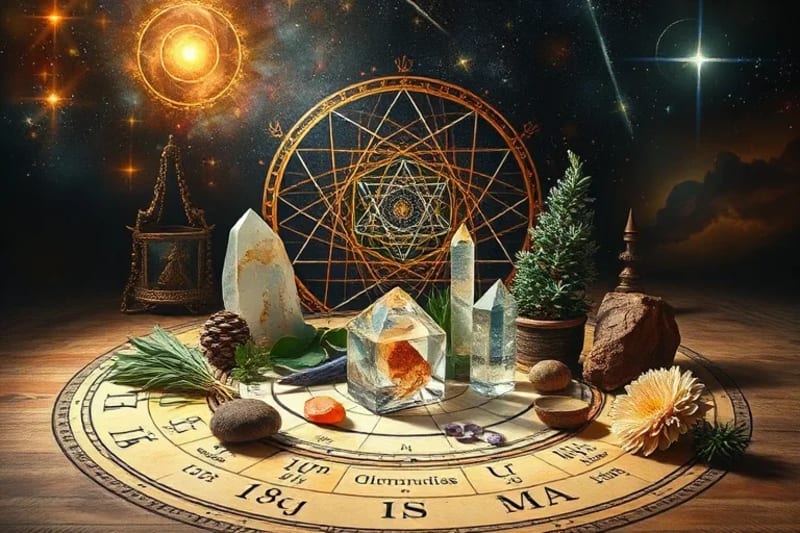
An artistic representation of the subtle energetic interplay between plants, crystals, and the celestial sphere.
Traditional herbal medicine often considers these energetic qualities. For example, a "cooling" herb might be associated with lunar or water influences, while a "warming" herb could be linked to solar or fire energies. These subtle distinctions are believed to be crucial for matching herbs to individual constitutions and ailments, promoting a holistic approach to healing that considers the entire energetic landscape of the patient and the plant.
The concept extends to the vibrational linguistics of plants, suggesting that plants absorb and transmute cosmic energies into their physical and energetic structures. This makes them potent carriers of specific frequencies that can interact with human bio-fields. When we consume these plants, use them in remedies, or even simply spend time in their presence, we are engaging with these celestial imprints.
Crystals, Gems, and Plant Energetics
The synergy between crystals, gems, and plants is another fascinating aspect of Astro-Botany and general metaphysics. Crystals are believed to store and amplify energetic frequencies, making them ideal partners for plants in enhancing celestial influences. Just as plants respond to light and water, they are thought to respond to the subtle vibrations emitted by crystals.
Gardeners and practitioners of Astro-Botany often place specific crystals near plants to support their growth, protect them from negative energies, or enhance their particular energetic qualities. For instance, amethyst might be used to promote peaceful growth and spiritual connection, while clear quartz could amplify the overall vitality of a plant. Rose quartz might encourage flowering and fruit production, aligning with Venusian energies.
This practice is rooted in the belief that both plants and crystals are conduits for cosmic energy, and by combining them, one can create a more potent energetic field. This aligns with broader metaphysical principles that explore the unseen forces shaping our reality, similar to the universal truths found in Tarot and Sacred Geometry.
The Metaphysical Perspective of Astro-Botany
At its heart, Astro-Botany is a metaphysical discipline, exploring the fundamental nature of reality beyond the purely physical. It posits that the universe is a vast, interconnected web of energy, and that celestial bodies are not merely distant objects but active participants in Earth's life cycles. This perspective encourages a deeper, more spiritual connection to nature and the cosmos.
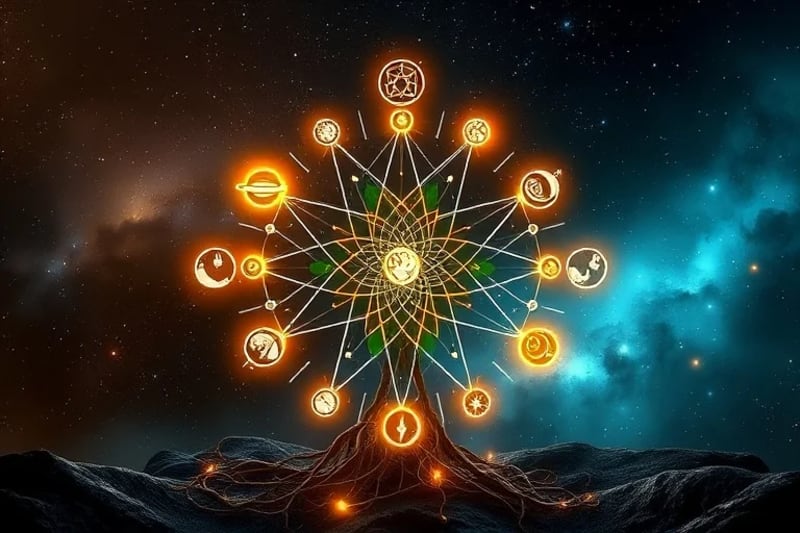
A conceptual visualization of the invisible energetic pathways linking Earth's flora to the distant celestial bodies.
From a metaphysical standpoint, plants are seen as living beings with consciousness, capable of responding to subtle energetic cues. The celestial influences are not just external forces but are integrated into the very essence of the plant, shaping its growth, form, and purpose. This holistic view encourages us to see gardening not just as a chore, but as a sacred practice of co-creation with the universe.
Understanding Astro-Botany from a metaphysical angle also opens doors to concepts like biophilic manifestation, where harmonizing intentions with nature's blueprint can lead to desired outcomes. It suggests that by aligning our gardening efforts with cosmic rhythms, we can not only grow healthier plants but also cultivate a more harmonious and abundant life for ourselves.
Modern Applications and Biodynamic Agriculture
While Astro-Botany might seem esoteric, its principles are actively applied in modern biodynamic agriculture. Developed by Rudolf Steiner in the early 20th century, biodynamics views the farm as a self-sustaining organism, deeply integrated with cosmic forces. It incorporates astrological timing for planting, cultivating, and harvesting, along with special preparations made from natural materials to enhance soil fertility and plant vitality.
Biodynamic farmers observe lunar and planetary cycles, believing that these influences contribute to the overall health and energetic quality of their crops. They report benefits such as increased pest resistance, enhanced flavor, and greater nutritional value in their produce. While scientific validation in conventional terms remains limited, the practical results and growing popularity of biodynamic farming suggest a tangible impact.
The modern resurgence of interest in Astro-Botany reflects a broader shift towards sustainable, holistic, and spiritually informed approaches to agriculture and well-being. It encourages a deeper respect for the interconnectedness of all life and the profound influence of the cosmos on our earthly existence.
Conclusion: Reconnecting with Cosmic Rhythms
Astro-Botany offers a compelling framework for understanding the subtle yet powerful influences of celestial bodies on plant growth and energetics. From the ancient wisdom of herbalists to the structured practices of biodynamic agriculture, the idea that plants are deeply intertwined with cosmic rhythms has persisted through millennia. By observing and aligning with these celestial cycles, we can foster healthier, more vibrant plant life and, in turn, cultivate a deeper connection to the natural world and the universe at large.
Whether approached from a purely practical gardening perspective or a profound metaphysical inquiry, Astro-Botany invites us to look beyond the visible, acknowledging the unseen forces that shape life on Earth. It serves as a reminder that we are all part of a grand cosmic design, and by understanding these intricate relationships, we can enhance our well-being and the vitality of our planet.
Source: Hybrid content assisted by AI and human editorial supervision.


Comments
Post a Comment