
Vibrational Linguistics: Esoteric Power Words, Mantras
Vibrational linguistics delves into the profound concept that language is not merely a tool for communication but a powerful energetic force capable of shaping reality. This esoteric discipline explores how words, sounds, and sacred languages carry inherent frequencies that can influence consciousness, physical matter, and spiritual well-being. From ancient chants to modern affirmations, the understanding of linguistic vibration offers a transformative lens through which to view our interactions with the world.
- Introduction to Vibrational Linguistics
- The Science of Sound and Vibration
- Historical and Cultural Perspectives on Sacred Language
- Mantras: Tools for Transformation
- The Power of Spoken Words and Intent
- Practical Applications of Vibrational Linguistics
- Ethical Considerations and Responsible Practice
- Conclusion
Introduction to Vibrational Linguistics
At its core, vibrational linguistics posits that every sound, word, and linguistic construct possesses a unique energetic signature. This signature interacts with our own energetic field and the fabric of reality itself. Ancient traditions across the globe have long recognized this intrinsic power, using specific vocalizations and sacred texts for healing, manifestation, and spiritual connection.
Unlike conventional linguistics, which focuses on grammar, syntax, and semantics, vibrational linguistics explores the deeper, often unseen, impact of language. It suggests that the true meaning and power of words extend beyond their dictionary definitions. This field bridges the gap between science and spirituality, offering a holistic view of human communication and its potential.

The unseen energy of language: Ancient symbols and glowing texts reveal the profound impact of linguistic vibrations on reality.
The concept is rooted in the understanding that everything in the universe is in a state of vibration, including thoughts and words. When we speak, we are not just conveying information; we are emitting specific frequencies that interact with our environment. These frequencies can either harmonize or disrupt, create or destroy, depending on their nature and our intention.
The Science of Sound and Vibration
While often considered esoteric, the principles of vibrational linguistics find resonance in scientific fields such as cymatics and quantum physics. Cymatics, the study of visible sound and vibration, demonstrates how sound frequencies can create intricate geometric patterns in physical matter. This visual evidence suggests a direct link between sound and form.
Dr. Hans Jenny's pioneering work in cymatics in the mid-20th century showed that different frequencies produced distinct patterns. For instance, specific vocalizations could arrange sand, water, or other substances into complex, often beautiful, designs. This phenomenon provides a tangible metaphor for how words might subtly influence the structure of our reality.
Furthermore, quantum physics suggests that observation and intention can influence the behavior of particles. If our thoughts and words are forms of energy and intention, it is plausible that they play a role in shaping our experiences. The placebo effect in medicine also highlights the power of belief and expectation, which are often communicated through words and affirmations.
The concept of "vibrational frequency" in language stems from the understanding that sound is a wave, characterized by frequency and amplitude. Human speech produces complex sound waves, which are then interpreted by the auditory system. Beyond the physical properties, esoteric traditions propose that these sound waves carry additional, non-physical information or energy that interacts with the observer and environment.
Research into psychoacoustics and neuro-linguistic programming (NLP) also touches upon how specific linguistic patterns and vocal tones can affect psychological states. While not directly proving "vibrational linguistics," these fields acknowledge the profound impact of spoken and internal language on human perception and behavior.
Historical and Cultural Perspectives on Sacred Language
Across diverse cultures and historical epochs, sacred languages and specific vocalizations have been revered for their inherent power. Ancient Egyptians used hieroglyphs and ritualistic incantations, believing words held divine essence. The Hebrew Kabbalah emphasizes the mystical significance of letters and their combinations, seeing them as building blocks of creation.
In Hinduism and Buddhism, Sanskrit is considered a sacred language, where each syllable is believed to resonate with a specific cosmic vibration. Mantras chanted in Sanskrit are not just prayers; they are seen as sonic keys to unlocking higher states of consciousness and influencing energetic pathways. The very act of uttering these sounds is a spiritual practice.

Harmonious connection: Intricate patterns of sound frequencies merge with human figures, illustrating the profound impact of vibrational language on well-being.
Indigenous cultures worldwide also hold deep reverence for the spoken word, often using chants, songs, and storytelling as tools for healing, community building, and connecting with ancestral spirits. The intention and vibration behind these vocalizations are considered paramount, far outweighing the literal meaning of the words.
Mantras: Tools for Transformation
Mantras are perhaps the most widely recognized application of vibrational linguistics. These sacred sounds, words, or phrases are repeated with focused intention to induce specific states of mind or to manifest desired outcomes. The repetition itself creates a cumulative energetic effect, much like a resonant frequency building in power.
The word "mantra" itself is derived from Sanskrit, meaning "instrument of thought" or "protection for the mind." Chanting a mantra is believed to purify the mind, calm the nervous system, and align the individual with higher spiritual energies. Different mantras are associated with various deities, qualities, or intentions, each carrying a distinct vibrational signature.
Examples of powerful mantras include "Om" (the universal sound of creation), "Om Mani Padme Hum" (compassion), and "So Hum" (I am That). The effectiveness of a mantra lies not just in its sound but also in the practitioner's focused attention and belief. Consistent practice can lead to profound shifts in perception and reality.
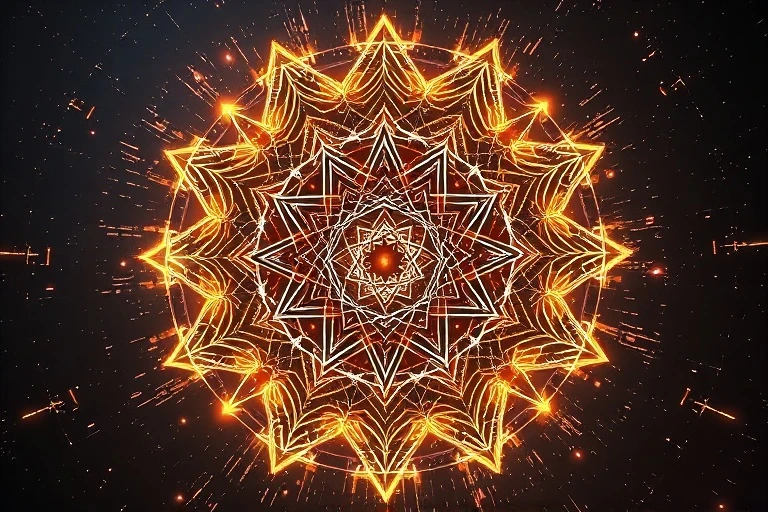
Sacred manifestation: Geometric shapes and light particles emerge from a mantra, illustrating the dynamic power of sound in creation.
The Power of Spoken Words and Intent
Beyond formal mantras, everyday spoken words also carry significant vibrational weight. The tone, emotion, and intention behind our words can have a tangible impact on ourselves and others. Positive affirmations, for instance, are a practical application of this principle, aiming to reprogram subconscious beliefs through repetitive positive language.
Dr. Masaru Emoto's controversial work on water crystals, while not universally accepted scientifically, illustrates this concept vividly. His experiments purported to show that water exposed to positive words like "love" and "gratitude" formed beautiful, symmetrical crystals, while water exposed to negative words like "hate" formed distorted, chaotic patterns. This work, regardless of its scientific rigor, has popularized the idea that words carry energetic information.
The power of intention is a crucial component of vibrational linguistics. It is not just the sound itself, but the conscious energy infused into that sound, that amplifies its effect. This emphasizes the importance of mindful speech and the awareness of the energetic footprint we leave with every word we utter.
Practical Applications of Vibrational Linguistics
The principles of vibrational linguistics can be applied in various aspects of life to foster positive change and enhance well-being. Understanding these applications can empower individuals to harness the inherent power of their own language.
- Healing and Wellness: Sound healing modalities, such as chanting, toning, and the use of singing bowls, utilize specific frequencies to promote relaxation, reduce stress, and balance the body's energy centers. The vibrational input aims to restore harmony at a cellular level.
- Manifestation and Goal Setting: Conscious use of affirmations and positive self-talk can help reprogram subconscious beliefs and align one's energetic field with desired outcomes. Regularly stating goals aloud with conviction can amplify their potential for manifestation.
- Emotional Regulation: Specific vocalizations or mantras can be used to shift emotional states, moving from anxiety to calm, or from anger to peace. The act of vocalizing itself can be a powerful release and rebalancing mechanism.
- Spiritual Growth: Engaging with sacred languages, chanting mantras, or participating in vocal meditations can deepen spiritual connection and facilitate access to altered states of consciousness. These practices often form the bedrock of many spiritual paths.
- Interpersonal Communication: Being mindful of the tone, intention, and specific words used in conversations can significantly improve relationships. Understanding that words carry vibration encourages more empathetic and constructive dialogue.
The integration of these practices into daily life can lead to a more conscious and empowered existence. It transforms the mundane act of speaking into a potent act of creation and self-awareness.
Ethical Considerations and Responsible Practice
With great power comes great responsibility. The understanding of vibrational linguistics necessitates an ethical approach to language. Just as positive words can uplift, negative or destructive language can create discord and harm, both for the speaker and the receiver.
It is crucial to cultivate mindfulness in speech, being aware of the impact our words have on others and on our own inner landscape. Engaging in practices like conscious communication, non-violent communication, and practicing silence can help refine one's linguistic output. The goal is to use language as a tool for healing, connection, and creation, rather than for division or destruction.
Furthermore, when working with sacred languages or traditional mantras, it is important to approach them with respect and an understanding of their cultural and spiritual origins. Appropriation without genuine reverence can diminish their power and disrespect the traditions from which they emerged. Seeking guidance from experienced teachers is advisable for deeper engagement.
Conclusion
Vibrational linguistics offers a compelling framework for understanding the profound esoteric power embedded within words, mantras, and sacred languages. By recognizing that language is a dynamic force of energy and intention, we can transform our relationship with communication and, in turn, with reality itself. This perspective encourages a conscious, respectful, and intentional use of language as a pathway to personal growth, healing, and collective harmony.
Embracing the principles of vibrational linguistics invites us to become more mindful creators of our experiences. Every word spoken, every mantra chanted, and every thought conceived contributes to the intricate symphony of existence. By choosing our words wisely and infusing them with positive intent, we actively participate in shaping a more harmonious and enlightened world.
Source: Hybrid content assisted by AIs and human editorial supervision.


Comments
Post a Comment