
Pet Astrology: Natal Chart Insights for Animal Companions
For many, pets are more than just animals; they are cherished family members, each with a unique personality and spirit. Just as humans are influenced by celestial energies at their moment of birth, so too are our animal companions. Pet astrology offers a fascinating lens through which to understand the innate characteristics, behaviors, and needs of your furry, feathered, or scaled friends.
This ancient practice, adapted for the animal kingdom, can provide profound insights into why your cat is aloof, your dog is fiercely loyal, or your bird is particularly vocal. By examining their natal chart, we can uncover a cosmic blueprint that reveals their core essence, emotional landscape, and even their preferred mode of interaction with the world.
Understanding your pet's astrological profile can not only deepen your bond but also help you tailor their environment, training, and care to better suit their intrinsic nature. This guide will explore the fundamentals of pet astrology, helping you decode your animal companion's unique celestial signature.
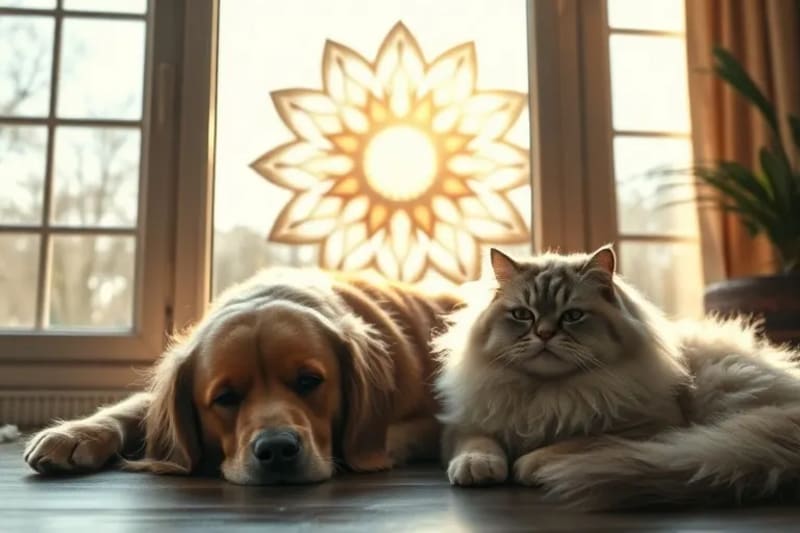
A tranquil scene where animal companions rest, subtly touched by celestial light, symbolizing the profound connection between pets and cosmic energies.
Fuente visual sujeta a disponibilidad del ecosistema: Wikimedia Commons bajo licencia CC BY-SA 4.0 o renderizado conceptual IA.
Table of Contents
- What is a Pet Natal Chart?
- Deciphering Key Astrological Elements in Pet Charts
- The Role of Houses in Animal Astrology
- Planetary Aspects and Their Influence on Pet Behavior
- Practical Applications: Using Pet Astrology for a Deeper Bond
- Ethical Considerations and Responsible Pet Astrology
- Conclusion: Harmonizing with Your Animal Companion
What is a Pet Natal Chart?
A pet natal chart, often referred to as a birth chart, is a snapshot of the heavens at the precise moment and location of your pet's birth. It maps the positions of the Sun, Moon, planets, and other celestial bodies across the twelve zodiac signs and twelve astrological houses. This intricate diagram serves as a cosmic fingerprint, detailing your pet's inherent personality traits, emotional landscape, and life path.
Just like human natal charts, a pet's chart requires accurate birth information: date, time, and place of birth. While obtaining this data can sometimes be challenging for adopted pets, even an approximate time can yield valuable insights. The closer the birth time, the more precise the chart and its interpretations will be, particularly regarding the Ascendant (Rising Sign).
The natal chart helps us understand the underlying motivations behind a pet's actions, their natural inclinations, and how they perceive their world. It moves beyond superficial observations, offering a deeper appreciation for their unique spirit. This approach is not about predicting the future but about fostering a more profound connection through understanding.
Deciphering Key Astrological Elements in Pet Charts
Several core components of a pet's natal chart offer significant revelations about their character. Understanding these elements is crucial for interpreting their cosmic blueprint and providing them with the best possible care.
The Sun Sign: Core Personality and Vitality
The Sun sign represents your pet's fundamental essence, their ego, and their vital life force. It describes their core personality traits, how they express themselves, and what brings them joy and fulfillment. A Leo pet, for instance, might be naturally regal and attention-seeking, while a Cancer pet could be deeply nurturing and attached to their home.
This placement indicates their general disposition and what motivates them. It's the most recognizable part of their astrological identity and often aligns with their most obvious behaviors. Knowing their Sun sign helps you understand their basic needs for play, rest, and interaction.
The Moon Sign: Emotional Nature and Security
The Moon sign governs your pet's emotional world, their instincts, and what makes them feel safe and secure. It reveals their deepest needs for comfort, how they react to stress, and their relationship with their primary caregivers. A pet with a Scorpio Moon might be intensely loyal and prone to deep attachments, whereas a Gemini Moon pet could be more adaptable and curious.
This placement is particularly important for understanding their emotional responses and how to best provide them with a stable and loving environment. It sheds light on their habits, their comfort zones, and what truly makes them feel at home. For more on how celestial bodies influence daily life, consider exploring Astrological Transits: Navigating Planetary Influences Daily.
The Ascendant (Rising Sign): First Impressions and World Interaction
The Ascendant, or Rising Sign, represents how your pet appears to others and how they initially interact with their environment. It's their "mask" or the first impression they make. An Aries Rising pet might be bold and energetic upon meeting new people, while a Pisces Rising pet could be shy and sensitive, preferring to observe from a distance.
This sign changes approximately every two hours, making an accurate birth time crucial for its determination. It influences their physical appearance, their immediate reactions, and their overall demeanor in new situations. Understanding the Ascendant can help you manage their initial interactions and provide appropriate introductions to new experiences.

A stylized cosmic map interwoven with paw prints and celestial symbols, illustrating the intricate astrological blueprint of an animal companion.
Planetary Placements: Specific Behaviors and Traits
Beyond the Sun, Moon, and Ascendant, the positions of other planets in your pet's chart offer nuanced details about their personality. Each planet represents a different facet of their being:
- Mercury: Communication style, curiosity, and learning ability. A Mercury in Virgo pet might be meticulous and quick to learn commands, while a Mercury in Sagittarius could be adventurous and easily distracted.
- Venus: Affection, what they find pleasurable, and their approach to relationships. A Venus in Libra pet might be charming and seek harmony, whereas a Venus in Aries could be demonstrative and playful.
- Mars: Energy levels, drive, and how they assert themselves. A Mars in Capricorn pet might be disciplined and hardworking, while a Mars in Leo could be bold and dramatic in their actions.
- Jupiter: Luck, expansion, and areas of growth. This planet can indicate where your pet experiences abundance or good fortune.
- Saturn: Challenges, lessons, and areas where they might feel restricted or need structure. Saturn can point to areas requiring patience and consistent training.
These planetary placements, combined with the zodiac signs they occupy, paint a comprehensive picture of your pet's unique temperament and potential. Understanding these can help you anticipate their reactions and provide appropriate outlets for their energies.
The Role of Houses in Animal Astrology
The natal chart is divided into twelve houses, each representing a different area of life. In pet astrology, these houses are interpreted through the lens of an animal's experience, providing context for where and how their planetary energies manifest. For example, a planet in the 6th House (daily routines, health) might indicate specific health predispositions or habits related to their daily life.
Here’s a simplified overview of how some houses might be interpreted for pets:
- 1st House (Self): Their physical body, appearance, and overall demeanor.
- 2nd House (Possessions/Resources): Their toys, food, and sense of security regarding their belongings.
- 3rd House (Communication/Learning): How they communicate (barks, meows, body language) and their capacity for learning.
- 4th House (Home/Family): Their emotional connection to home, their comfort zone, and their bond with their human family.
- 5th House (Play/Creativity): Their need for play, fun, and how they express joy.
- 6th House (Health/Routine): Their daily habits, health predispositions, and relationship with routines.
- 7th House (Partnerships): Their relationship with their primary human companion or other animal companions in the household.
- 8th House (Transformation/Shared Resources): Deep bonds, shared resources (like food from your plate!), and significant life changes.
- 9th House (Exploration/Higher Learning): Their desire for exploration, adventure, and new experiences.
- 10th House (Public Image/Purpose): How they are perceived outside the home, their "role" in the family or community.
- 11th House (Groups/Friends): Their interaction with other animals or people in social settings.
- 12th House (Hidden Matters/Spirituality): Their subconscious patterns, hidden fears, or spiritual connection.
The houses provide a framework for understanding where the energies of the planets and signs are most active in your pet's life. For instance, a pet with Mars in the 5th House might have an exceptionally playful and energetic approach to games.
Planetary Aspects and Their Influence on Pet Behavior
Planetary aspects are the angles formed between planets in the natal chart, revealing how different energies interact and blend within your pet's personality. These aspects can indicate areas of harmony, tension, or unique talents. Conjunctions, oppositions, squares, trines, and sextiles each tell a different story about the flow of energy.
For example, a harmonious aspect (like a trine or sextile) between Venus (affection) and Mars (action) might indicate a pet that expresses love easily and joyfully. Conversely, a challenging aspect (like a square or opposition) between the Moon (emotions) and Saturn (restriction) could suggest a pet that struggles with emotional expression or has periods of shyness and withdrawal.
Understanding these aspects helps pet owners identify potential behavioral patterns, both positive and challenging. It provides a roadmap for addressing specific needs, such as providing extra comfort during stressful times or encouraging particular activities that align with their energetic predispositions. This nuanced understanding goes beyond basic sign interpretations, offering a deeper dive into your pet's psychological makeup. The influence of celestial mechanics extends even to the growth of plants, as explored in Astro-Botany: Celestial Influences on Plant Growth, showing the pervasive nature of these energies.
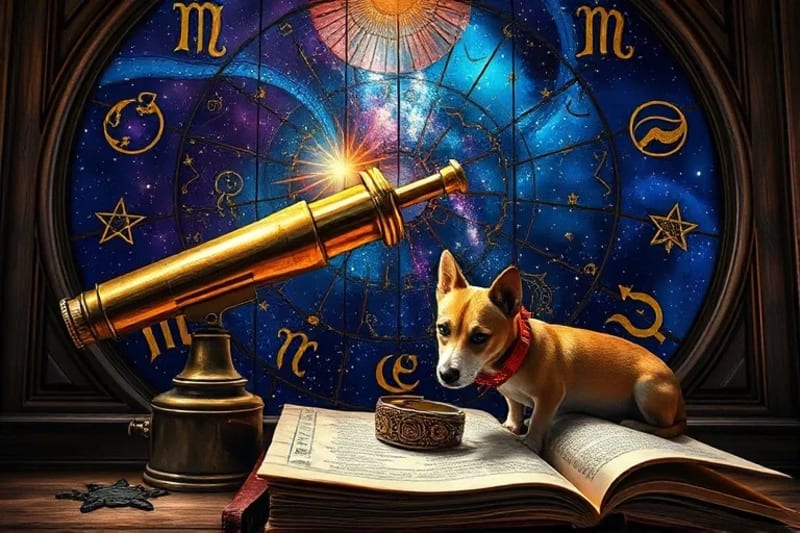
A poignant oil painting featuring a vintage telescope and an antique pet collar resting on astrology books, evoking a sense of ancient wisdom and cosmic connection for animal companions.
Practical Applications: Using Pet Astrology for a Deeper Bond
Applying astrological insights to your pet's life can significantly enhance your relationship and their well-being. Here are some practical ways to use their natal chart:
- Tailored Training: Understand their learning style (Mercury) and motivation (Mars). A pet with Mercury in Gemini might thrive on varied, short training sessions, while one with Mercury in Capricorn might prefer structured, repetitive lessons.
- Environmental Enrichment: Create a home environment that caters to their Moon sign's emotional needs. A pet with a Cancer Moon will cherish a cozy, secure den, while a Sagittarius Moon pet might need more space to roam and explore.
- Diet and Health: While not a substitute for veterinary care, certain planetary placements or signs can indicate predispositions. For instance, a strong Taurus influence might suggest a love for food, requiring careful portion control.
- Play and Exercise: Match their energy levels and preferences (Sun, Mars). An Aries pet will likely need vigorous exercise, while a Pisces pet might prefer gentle walks and quiet playtime.
- Managing Stress: Identify their emotional triggers (Moon, challenging aspects) and provide comfort accordingly. A pet with a sensitive Moon might need extra reassurance during thunderstorms or vet visits.
- Understanding Interspecies Dynamics: If you have multiple pets, their individual charts can reveal how their personalities might mesh or clash. This is akin to human Elemental Synastry: Fire-Water Dynamics in Relationships, applied to your animal family.
By observing your pet through an astrological lens, you gain a deeper empathy and a more effective approach to their care. It's about working with their natural tendencies rather than against them, fostering a harmonious coexistence.
Ethical Considerations and Responsible Pet Astrology
While pet astrology offers valuable insights, it's crucial to approach it with a responsible and ethical mindset. It should always be used as a complementary tool for understanding, not as a definitive guide or a replacement for professional advice.
- Not a Substitute for Veterinary Care: Astrological insights into health predispositions are speculative and should never override the advice of a qualified veterinarian. Always prioritize professional medical care for your pet.
- Avoid Anthropomorphism: While we can draw parallels between human and animal astrological interpretations, it's important to remember that pets are animals. Their charts should be interpreted within the context of their species and natural instincts, not by imposing complex human emotions or motivations.
- Respect Individuality: Astrology provides a framework, but every pet is an individual. Their life experiences, training, and environment also shape their personality. Use the chart as a guide, but always observe and respond to your pet's unique expressions.
- Focus on Empathy and Connection: The ultimate goal of pet astrology is to foster greater empathy and strengthen the bond between you and your companion. It's about understanding their needs and providing a loving, supportive environment.
By adhering to these ethical guidelines, pet astrology can be a wonderful way to deepen your connection with your animal friends, recognizing their unique place in the cosmic tapestry. It encourages a mindful approach to pet ownership, celebrating their individuality and supporting their well-being.
"The greatness of a nation and its moral progress can be judged by the way its animals are treated."
— Mahatma Gandhi
While not a legal text, this quote encapsulates the spirit of responsible animal care and the ethical considerations that extend to all aspects of our interaction with pets, including esoteric practices like astrology.
Conclusion: Harmonizing with Your Animal Companion
Pet astrology offers a unique and enriching perspective on our animal companions, inviting us to look beyond their species and recognize their individual cosmic essence. By understanding their natal chart, we gain invaluable insights into their core personality, emotional needs, behavioral patterns, and even their life purpose within our families.
This ancient wisdom, applied to the modern pet-owner relationship, empowers us to create more harmonious environments, tailor our care, and deepen the unspoken bond we share. It's a journey of discovery, fostering greater empathy and a more profound appreciation for the intricate lives of our beloved pets. Embrace the stars to better understand the paws, claws, and wings that enrich your world.
Related Articles
- Karmic Nodes & Fixed Stars: Galactic Blueprint for Soul Growth
- Advanced Synastry: Decoding Composite Charts & Soul Contracts
- Astro-Archeology: Unearthing Ancient Celestial Narratives in Civilizations
- Ancestral Healing & Shamanic Practices: Connecting with Your Roots
- Astrocartography Lines: Interpreting Planetary Crossings for Relocation Guide
- The True Meaning of Your Birth Time: Astrological Precision (Spanish)
- Future Preventive Medicine: AI, Big Data, IoT & Active Aging (Spanish)
Source: Hybrid content assisted by AI and human editorial supervision.


Comments
Post a Comment