
Astro-Botany: Celestial Influences Plant Growth
Astro-Botany, a captivating field at the intersection of esotericism and natural science, explores the profound hypothesis that celestial bodies exert measurable influences on plant growth, vitality, and energetic properties. This ancient wisdom, often dismissed by mainstream science, suggests that the rhythmic dance of planets, the phases of the Moon, and the positions of stars are not merely distant astronomical phenomena but active participants in the terrestrial life cycle.
From the germination of a seed to the blossoming of a flower and the ripening of fruit, proponents of Astro-Botany believe that each stage is subtly guided by cosmic energies. Understanding these connections offers a unique perspective on cultivation, herbalism, and our intrinsic bond with the universe. This introductory guide delves into the core principles of Astro-Botany, aiming to provide an educational foundation for those curious about the celestial impact on our green companions.
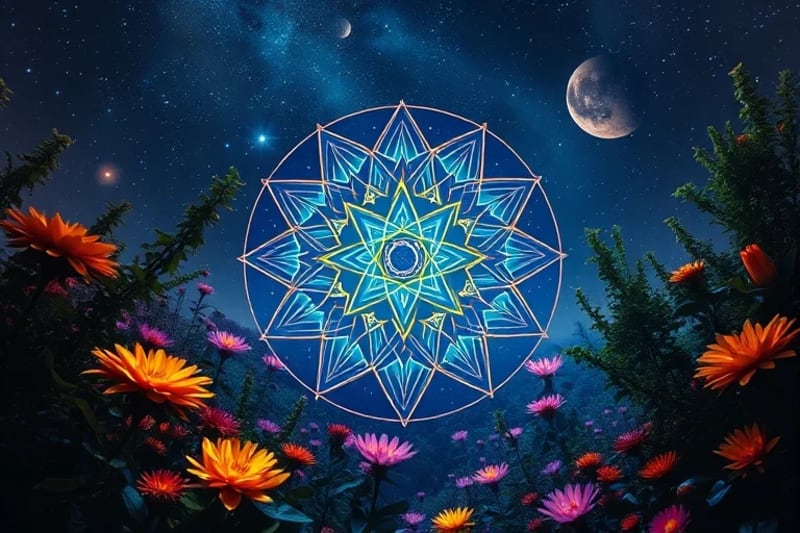
Exploring the intricate relationship between celestial energies and the vibrant life force within plants, revealing a universe of interconnectedness.
Conceptual rendering of celestial botany, inspired by ancient wisdom and rendered through AI.Table of Contents
- Historical Roots and Ancient Wisdom
- The Moon's Potent Influence on Plant Cycles
- Planetary Energies and Their Botanical Associations
- Astrological Gardening: Practical Applications
- Energetic Properties and Herbalism
- Modern Perspectives and Future Directions
Historical Roots and Ancient Wisdom
The concept of celestial influence on plants is far from new. Ancient civilizations, from the Egyptians and Babylonians to the Greeks and Romans, meticulously observed the heavens and their perceived effects on agriculture and medicine. Their understanding of the cosmos was deeply interwoven with their daily lives, including how they cultivated crops and harvested medicinal herbs.
Philosophers like Plato and Aristotle discussed the "music of the spheres" and the interconnectedness of all things, suggesting a harmonious relationship between macrocosm (the universe) and microcosm (Earthly life). This holistic worldview laid the groundwork for what would later be termed Astro-Botany, where the growth of a plant was seen as a reflection of cosmic rhythms.
Many traditional farming practices, such as planting by the Moon's phases, are direct descendants of these ancient astrological observations. These practices were not merely superstitions but empirical knowledge passed down through generations, demonstrating a practical application of celestial awareness in fostering plant vitality.
The Moon's Potent Influence on Plant Cycles
Among all celestial bodies, the Moon is perhaps the most recognized for its direct and observable influence on Earthly life, including plants. Its gravitational pull affects tides, and Astro-Botany posits a similar, albeit subtler, effect on the moisture content in soil and plant sap. The different lunar phases are believed to encourage specific types of growth.
- New Moon to First Quarter (Waxing Crescent): This period is considered ideal for planting leafy greens and annuals that produce above-ground crops. The increasing light and gravitational pull are thought to encourage strong leaf growth.
- First Quarter to Full Moon (Waxing Gibbous): As the Moon approaches fullness, its energy is believed to be strongest, favoring the planting of fruiting plants and flowering annuals. This phase is also good for grafting and transplanting.
- Full Moon to Last Quarter (Waning Gibbous): This phase is associated with root development and bulb growth. It's considered an excellent time for planting root crops like carrots, potatoes, and onions.
- Last Quarter to New Moon (Waning Crescent): This "resting" phase is best for pruning, weeding, and pest control. The Moon's energy is thought to be drawing downwards, making it less favorable for planting but good for maintenance.
These lunar gardening principles are widely adopted in biodynamic agriculture, a holistic farming approach that integrates ecological, spiritual, and ethical considerations. For a deeper dive into energy purification, exploring practices like Aura Cleansing might offer complementary insights into energetic influences.

The unseen world of plant roots, intricately connected to the cosmic dance of celestial bodies and astrological energies.
Artistic interpretation of root systems influenced by cosmic forces, rendered in a watercolor style.Planetary Energies and Their Botanical Associations
Beyond the Moon, each planet in our solar system is believed to impart distinct energetic qualities that influence specific types of plants. These associations form the basis of traditional herbalism and astrological botany, where plants are chosen not just for their chemical composition but also for their planetary resonance. Understanding these connections can enhance the efficacy of herbal remedies and guide cultivation choices.
| Celestial Body | Associated Qualities | Example Plants |
|---|---|---|
| Sun | Vitality, growth, warmth, healing, leadership | Sunflower, Marigold, Rosemary, Bay Laurel |
| Moon | Nurturing, intuition, moisture, fertility, emotional healing | Willow, Cucumber, Lettuce, Cabbage, White Rose |
| Mercury | Communication, intellect, adaptability, nervous system | Lavender, Dill, Parsley, Fennel |
| Venus | Love, beauty, harmony, pleasure, fertility, skin | Rose, Apple, Strawberry, Mint, Thyme |
| Mars | Energy, courage, passion, protection, inflammation | Nettle, Garlic, Ginger, Pepper, Thistle |
| Jupiter | Expansion, abundance, wisdom, protection, liver | Oak, Dandelion, Sage, Borage, Hyssop |
| Saturn | Structure, discipline, boundaries, grounding, bones | Comfrey, Horsetail, Hemlock, Poppy, Yew |
These correspondences are not rigid but offer a framework for understanding the subtle energetic signatures of plants. Further exploration into Astrology Mythology: Gods Behind Planets can provide a deeper context for these planetary archetypes.
Astrological Gardening: Practical Applications
Astrological gardening is the practice of aligning planting, cultivating, and harvesting activities with the positions and phases of celestial bodies. This approach aims to maximize plant vitality, yield, and resistance to pests and diseases. It goes beyond simple lunar gardening by incorporating the zodiac signs and planetary aspects.
- Zodiacal Influences: Each of the twelve zodiac signs is associated with an element (fire, earth, air, water) and governs specific plant parts. For instance, water signs (Cancer, Scorpio, Pisces) are favorable for leafy growth, while earth signs (Taurus, Virgo, Capricorn) are ideal for root crops.
- Planetary Hours: Ancient astrological traditions divide the day into planetary hours, each ruled by a different planet. Performing gardening tasks during the hour of a planet associated with the plant or desired outcome is believed to enhance results. For example, planting herbs for healing during a Jupiter hour.
- Seed Germination: Some practitioners suggest that seeds germinated during auspicious astrological alignments exhibit stronger growth and resilience. This requires careful planning and observation of ephemerides.
While the scientific community often views these practices as pseudoscientific, anecdotal evidence and traditional knowledge persist. Many gardeners report improved results when following astrological calendars, suggesting a subtle yet tangible connection. The principles of Planetary Dignities: Essential vs. Accidental Explained can further illuminate how planetary strengths and weaknesses might translate into botanical vitality.

A visionary glimpse into a laboratory where advanced technology explores the intricate energetic dialogue between celestial bodies and plant life.
Conceptual 3D render of a high-tech botanical research facility studying cosmic influences.Energetic Properties and Herbalism
In Astro-Botany, plants are not just collections of chemical compounds; they are living beings imbued with energetic signatures influenced by their celestial patrons. This perspective is crucial in traditional herbalism, where the timing of harvest and the planetary associations of an herb are considered vital for its medicinal efficacy. For example, a plant ruled by the Moon might be used for calming and emotional healing, while one ruled by Mars might be employed for stimulating or protective purposes.
The concept extends to the preparation and administration of herbal remedies. Some herbalists believe that preparing a tincture or infusion during a specific planetary hour can amplify its energetic qualities. This holistic view considers the plant's growth environment, the cosmic energies present during its life cycle, and the energetic needs of the individual seeking healing.
This deep connection between celestial influence and plant energetics is also mirrored in practices like Crystal Healing Basics: Gemstone Properties & Uses Guide, where minerals are also understood to possess specific energetic frequencies. Both fields share a common thread of utilizing natural elements imbued with subtle energies for well-being.
Modern Perspectives and Future Directions
While Astro-Botany remains largely outside the purview of conventional scientific research, there is a growing interest in understanding subtle energies and their impact on biological systems. Fields like bio-electromagnetics and quantum biology are beginning to explore phenomena that might, in time, provide a scientific framework for some of Astro-Botany's claims.
The increasing awareness of ecological interconnectedness and the limitations of purely mechanistic views of nature are also paving the way for a more open-minded approach to ancient wisdom traditions. As we seek sustainable and holistic practices, the principles of Astro-Botany may offer valuable insights into optimizing plant health and harnessing natural energies.
Further research, perhaps utilizing advanced sensor technologies and statistical analysis of long-term cultivation data, could potentially shed light on these subtle celestial influences. Until then, Astro-Botany continues to be a rich source of inspiration for gardeners, herbalists, and anyone seeking a deeper, more mystical connection with the natural world.
Explore Our Ecosystem of Content
- Chinese Zodiac: AI Predictive Tools, Ancient Oracles, Lunar Astrology
- Chinese Zodiac Challenging Compatibilities: Growth Through Conflict | StarPluto
- Five Elements Chinese Astrology: Wood, Fire, Earth, Metal, Water Explained | StarPluto
- Karmic Synastry Deep Dive Soul Contracts Relationships
- Planetary Dignities: Advanced Chart Interpretation | StarPluto
- Healing Planetary Debilitations: Alchemical Remedies Natal Challenges
- Digital Dream Weaving: AI-Assisted Subconscious Exploration
- Decumbiture Astrology: Illness, Recovery, Onset Analysis
- Lunar Nodes Aspects: Karmic Connections in Birth Chart | StarPluto
- Snake Goat Compatibility: Mutual Understanding & Growth | StarPluto
- Lunar Shadow Emotional Health Psycho-Astrology Energy Therapy
- Hedy Lamarr: Hollywood Star, Wi-Fi Pioneer, Disruptive Innovation
- Music and Neuroscience: Rhythm, Melody and Brain Impact
- Male Hormonal Biohacking: Genomic Strategies for Longevity
- Eco-Astrology Rituals to Heal Earth and Connect Chart
- Neuro-Astrology Brain Synchronization Planetary Cycles
- Collective Psychology Transits: Uranus, Neptune, Pluto
- Mary Music Literature: Marian Cult Arts Cultural Impact
- Monastic Mysticism: Inner Peace in a Hyperconnected World
- Virgin Mary Salvation Plan: Genesis Apocalypse
Source: Hybrid content assisted by AI and human editorial supervision.


Comments
Post a Comment