
Five Elements Chinese Astrology: Wood, Fire, Earth, Metal, Water Explained | StarPluto
Chinese astrology, a complex and ancient system, delves deep into the cosmic influences that shape human destiny and personality. At its core lies the profound philosophy of the Five Elements, known as Wu Xing (五行), which translates to "Five Movements" or "Five Phases." These aren't merely static elements but dynamic energies that continuously interact, transform, and influence everything in the universe, including the human experience.
Understanding the Five Elements – Wood, Fire, Earth, Metal, and Water – is crucial for deciphering Chinese astrological charts, comprehending personality traits, and even guiding health and lifestyle choices. This foundational concept provides a holistic framework for interpreting the intricate dance between nature and human life. It offers insights into our strengths, weaknesses, and potential paths.
Unlike Western elemental systems that often assign a single element to a zodiac sign, Chinese astrology integrates these five energies with the twelve animal signs and the ten Celestial Stems (Heavenly Stems) to create a much more nuanced and intricate profile. This article will explore each element in detail, their fundamental characteristics, and their dynamic interactions, providing a comprehensive guide for beginners and enthusiasts alike.
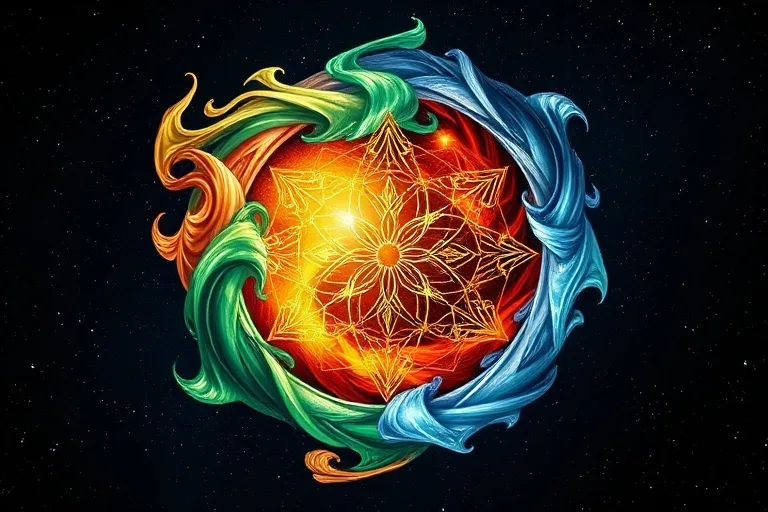
The intricate dance of the Tarot Quantum Mechanics Intersecting Divination Reality, symbolizing the fundamental energies of the universe.
Introduction to Wu Xing: The Foundation
The concept of Wu Xing originated in ancient China, predating many other philosophical systems. It's not just about material substances but rather about processes, qualities, and transformations. Each element represents a distinct phase in the cycle of nature, reflecting different aspects of energy and matter.
These elements are deeply embedded in various Chinese disciplines, including traditional Chinese medicine (TCM), Feng Shui, martial arts, and, of course, astrology. In astrology, the dominant element at the time of birth, combined with the animal sign, provides a unique lens through which to understand an individual's innate characteristics and life trajectory.
The interaction between these elements is what creates balance or imbalance, influencing personality, health, and relationships. A deeper understanding of these dynamics allows for greater self-awareness and the ability to cultivate harmony in one's life. It's a system that emphasizes the interconnectedness of all things.
The Wood Element: Growth and Creativity
The Wood element is associated with spring, new beginnings, growth, and expansion. Individuals with a strong Wood influence are often characterized by their pioneering spirit, creativity, and assertiveness. They are natural leaders, eager to initiate projects and push boundaries.
Key traits of Wood personalities include ambition, resilience, and a strong sense of justice. They are often visionary, possessing the ability to see the bigger picture and inspire others. However, an imbalance in Wood can lead to impatience, anger, stubbornness, and a tendency to overwork.
- Associated Color: Green
- Direction: East
- Season: Spring
- Emotion: Anger (imbalanced), Kindness (balanced)
- Organs: Liver and Gallbladder
- Animal Signs: Tiger, Rabbit, Dragon
To balance an excessive Wood element, activities that promote calmness, flexibility, and patience are recommended. Spending time in nature, practicing meditation, and engaging in creative outlets can help harness its positive attributes while mitigating its challenges. It's all about finding a harmonious flow.
The Fire Element: Passion and Dynamism
Fire represents summer, warmth, enthusiasm, and transformation. Those influenced by Fire are typically energetic, charismatic, and passionate individuals. They thrive on excitement, social interaction, and are often the life of the party, radiating joy and inspiration.
Fire personalities are known for their leadership qualities, quick wit, and ability to motivate others. They possess a natural flair for drama and are often drawn to creative or public-facing roles. However, an excess of Fire can manifest as impulsiveness, impatience, aggression, and anxiety, leading to burnout.
- Associated Color: Red
- Direction: South
- Season: Summer
- Emotion: Joy (balanced), Anxiety/Impatience (imbalanced)
- Organs: Heart and Small Intestine
- Animal Signs: Snake, Horse, Goat
To balance Fire, it's important to cultivate calm and introspection. Activities like reading, quiet contemplation, and engaging in cooling practices can help. Learning to manage energy and avoid over-commitment is also key for Fire-dominant individuals. Self-care is paramount for them.
The Earth Element: Stability and Nurturing
Earth signifies stability, grounding, and nurturing. It is associated with the transitional periods between seasons. Individuals with a strong Earth influence are reliable, practical, and compassionate. They are the anchors of their communities, offering support and wisdom.
Earth personalities are known for their patience, loyalty, and strong work ethic. They are excellent problem-solvers, preferring methodical approaches and tangible results. They value harmony and are often mediators in conflicts. However, an imbalanced Earth can lead to worry, overthinking, stubbornness, and a tendency to become stagnant or overly cautious.
- Associated Color: Yellow/Brown
- Direction: Center
- Season: Late Summer/Transitional periods
- Emotion: Worry (imbalanced), Empathy/Contentment (balanced)
- Organs: Spleen and Stomach
- Animal Signs: Ox, Dragon, Goat, Dog (these are associated with Earth branches)
To balance Earth, it's beneficial to embrace change, engage in physical activity, and practice mindfulness to reduce worry. Cultivating new interests and stepping out of comfort zones can also help prevent stagnation. Grounding exercises are particularly beneficial for Earth types.
The Metal Element: Structure and Precision
Metal is associated with autumn, harvest, structure, and refinement. Individuals with a strong Metal influence are often organized, disciplined, and precise. They value order, clarity, and justice, often possessing a keen intellect and strong moral compass.
An artistic representation of the Tarot Quantum Mechanics Intersecting Divination Reality, where each element nurtures the next in a continuous flow.
Metal personalities are analytical, decisive, and often possess a strong sense of self-worth. They are excellent at setting boundaries and adhering to principles. They can be perfectionists and are often drawn to fields requiring precision and logic. However, an excess of Metal can lead to rigidity, grief, detachment, and an overly critical nature.
- Associated Color: White/Silver
- Direction: West
- Season: Autumn
- Emotion: Grief/Sadness (imbalanced), Righteousness/Courage (balanced)
- Organs: Lungs and Large Intestine
- Animal Signs: Monkey, Rooster, Dog
To balance Metal, it's helpful to practice letting go, embracing spontaneity, and cultivating compassion. Engaging in activities that connect one to their emotions, such as creative expression or deep breathing exercises, can soften its edges. Flexibility is a key lesson for Metal types.
The Water Element: Wisdom and Flexibility
Water embodies winter, introspection, wisdom, and adaptability. Individuals with a strong Water influence are often intuitive, philosophical, and deeply perceptive. They possess a profound understanding of human nature and the ebb and flow of life.
Water personalities are known for their calm demeanor, excellent listening skills, and ability to navigate complex situations with ease. They are often introspective and value deep connections. However, an excess of Water can lead to fear, isolation, indecisiveness, and a tendency to withdraw or be overly secretive.
- Associated Color: Black/Blue
- Direction: North
- Season: Winter
- Emotion: Fear (imbalanced), Calmness/Wisdom (balanced)
- Organs: Kidneys and Bladder
- Animal Signs: Rat, Pig
To balance Water, it's important to engage in social activities, practice courage, and seek constructive ways to express emotions. Physical activity, especially those that build strength, can help ground Water energy. Setting clear goals and boundaries can also be beneficial. It's about flowing, not stagnating.
The Cycles of the Five Elements
The true power of the Wu Xing lies in their dynamic interactions, which are described through various cycles. These cycles explain how elements support, control, and influence each other, creating a constant state of flux and balance.
Generative Cycle (Sheng Cycle)
This cycle describes how each element nurtures and produces the next, representing a supportive and harmonious relationship. It's a continuous flow of creation and growth, essential for maintaining balance.
- Wood feeds Fire: Wood is fuel for fire.
- Fire creates Earth: Fire turns wood into ash, forming earth.
- Earth produces Metal: Metal is extracted from the earth.
- Metal collects Water: Metal becomes liquid when heated, or water condenses on metal surfaces.
- Water nourishes Wood: Water helps trees grow.
Destructive Cycle (Ke Cycle)
This cycle illustrates how each element controls or overcomes another, maintaining a necessary check and balance. It prevents any single element from becoming too dominant, ensuring equilibrium.
- Wood controls Earth: Tree roots penetrate and hold the earth.
- Earth controls Water: Earth dams or channels water.
- Water controls Fire: Water extinguishes fire.
- Fire controls Metal: Fire melts metal.
- Metal controls Wood: Metal (an axe) cuts wood.
A powerful visual of the Advanced Planetary Dignities Beyond Rulerships Synastry Electional Astrology, where elements keep each other in check, preventing imbalance.
Over-acting Cycle (Cheng Cycle) and Weakening Cycle (Wu Cycle)
Beyond the primary generative and destructive cycles, there are also cycles of imbalance. The Over-acting Cycle occurs when an element over-controls or overpowers another, leading to excess. The Weakening Cycle happens when an element is counter-controlled or insulted, leading to deficiency.
For example, if Wood is excessively strong, it can "over-act" on Earth, leading to digestive issues or stubbornness. Conversely, if Earth is too strong, it can "weaken" Wood, stifling creativity and growth. These cycles are critical for diagnosing imbalances in health and personality in TCM and astrology. Understanding these dynamics helps in finding remedies.
Applying the Five Elements in Chinese Astrology
In Chinese astrology, your birth year is not only associated with an animal sign but also with one of the Five Elements. This combination creates a unique elemental animal sign, such as a Wood Dragon or a Fire Rooster. This elemental influence adds a layer of depth to the basic animal characteristics.
For instance, a Metal Rat might be more disciplined and analytical than a Water Rat, who would be more intuitive and adaptable. The elemental characteristics modify and enrich the core traits of the animal sign, offering a more precise personality profile. This intricate system allows for millions of unique combinations.
| Element | Key Astrological Influence | Associated Animal Signs (Examples) |
|---|---|---|
| Wood | Pioneering, creative, assertive, growth-oriented, just. | Tiger, Rabbit, Dragon |
| Fire | Passionate, energetic, charismatic, impulsive, leadership. | Snake, Horse, Goat |
| Earth | Stable, practical, nurturing, reliable, patient, worrying. | Ox, Dragon, Goat, Dog |
| Metal | Organized, disciplined, precise, critical, righteous. | Monkey, Rooster, Dog |
| Water | Intuitive, philosophical, adaptable, fearful, wise. | Rat, Pig |
Furthermore, the elements are also associated with the ten Heavenly Stems, which cycle through each year, month, day, and even hour. This means that at any given moment, a specific elemental energy is dominant, influencing events and individuals. This dynamic interaction creates a constantly shifting energetic landscape.
Understanding the interplay of these elements in your birth chart can reveal deep insights into your personality, potential career paths, relationship dynamics, and even health predispositions. It's a tool for self-discovery and personal growth, offering guidance on how to best navigate life's challenges and opportunities.
Balancing Your Elements for Harmony
The goal in Chinese astrology and related practices is to achieve a harmonious balance of the Five Elements within oneself and one's environment. An imbalance, whether an excess or deficiency of an element, can lead to physical, emotional, or spiritual disharmony. Recognizing these imbalances is the first step towards correction.
For example, if you have an excess of Fire, you might benefit from incorporating more Water and Earth elements into your life through diet, colors, activities, or even environmental adjustments (Feng Shui). Conversely, if you are deficient in Wood, you might seek activities that foster growth and creativity, like learning a new skill or starting a project.
Consulting with a Chinese astrology expert or a Traditional Chinese Medicine practitioner can provide personalized guidance on how to balance your unique elemental constitution. They can offer tailored advice based on your specific birth chart and current life circumstances. This holistic approach empowers individuals to take charge of their well-being.
Conclusion: The Holistic View
The Five Elements of Chinese astrology offer a profound and intricate system for understanding the universe and our place within it. More than just symbolic representations, they are dynamic forces that shape our personalities, influence our health, and guide our interactions with the world. Embracing this ancient wisdom can lead to greater self-awareness and a more harmonious existence.
By learning about Wood's growth, Fire's passion, Earth's stability, Metal's structure, and Water's wisdom, we gain valuable tools for personal development. The continuous cycles of generation and destruction remind us that change is constant and balance is key. This holistic perspective encourages us to live in alignment with natural rhythms.
Whether you're a seasoned astrologer or a curious newcomer, delving into the Wu Xing will undoubtedly enrich your understanding of Chinese astrology and its timeless insights. It's a journey into the fundamental energies that govern life itself. Explore further to uncover how these elements resonate within your own Tarot Quantum Mechanics Intersecting Divination Reality and daily experiences.
Fuente: Contenido híbrido asistido por IAs y supervisión editorial humana.


Comments
Post a Comment