
Astro-Archeology: Unearthing Celestial Narratives Ancient Civilizations
Astro-archeology, often referred to as archaeoastronomy, is a fascinating interdisciplinary field dedicated to understanding how ancient cultures perceived and interacted with the cosmos. It meticulously investigates the astronomical knowledge embedded within the architecture, art, and artifacts of past civilizations, revealing their celestial narratives. This discipline bridges the gap between the tangible remnants of human history and the intangible realm of ancient sky-watching, offering profound insights into their worldviews, rituals, and societal structures.
The practice involves a rigorous scientific methodology, combining archaeological excavation and analysis with astronomical calculations and cultural anthropology. By examining alignments of temples, tombs, and megalithic structures with celestial events like solstices, equinoxes, and planetary cycles, researchers can reconstruct the sophisticated astronomical understanding of our ancestors. This field is not merely about identifying astronomical observations but about deciphering the profound cultural and spiritual significance these observations held for ancient peoples.
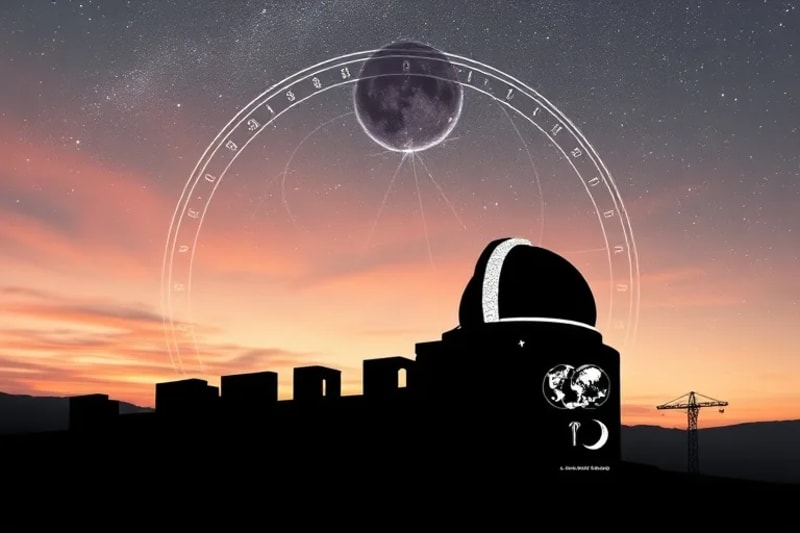
Intellectual precursors, fundamental diagrams, and conceptual representations that shaped the vision of Astro-Archeology regarding ancient civilizations.
Visual source subject to ecosystem availability: Wikimedia Commons under license CC BY-SA 4.0 or conceptual AI rendering.
Table of Contents
- Foundational Principles of Astro-Archeology
- Key Examples from Ancient Civilizations
- Deciphering Celestial Narratives
- Challenges and Future Directions
Foundational Principles of Astro-Archeology
The core of astro-archeology lies in its interdisciplinary approach, drawing from astronomy, archaeology, anthropology, and history. Researchers employ a variety of methods to uncover and interpret celestial connections. This includes meticulous site surveys, precise measurements of architectural alignments, and the analysis of iconographic and textual evidence related to sky phenomena.
One primary methodology involves identifying astronomical alignments in ancient structures. This requires sophisticated surveying techniques to determine the exact orientation of buildings relative to cardinal directions and significant celestial events. For instance, a doorway might align perfectly with the sunrise on the summer solstice, or a temple axis could point to the rising of a particular star during a specific historical period.
Beyond structural alignments, astro-archeologists also analyze artifacts and rock art for astronomical symbolism. Pottery, carvings, and paintings often depict celestial bodies, constellations, or mythological figures associated with the sky. Understanding these symbols within their cultural context is crucial for deciphering the full scope of ancient celestial narratives and how they informed daily life and spiritual practices, much like integrating the unconscious self for wholeness in modern psychological astrology.
Another critical aspect is the use of computational tools to reconstruct ancient sky views. Software can simulate the positions of stars, planets, and the sun at specific historical dates and locations, allowing researchers to test hypotheses about potential alignments. This digital reconstruction helps validate or refute proposed astronomical connections that might not be immediately obvious from physical remains alone.
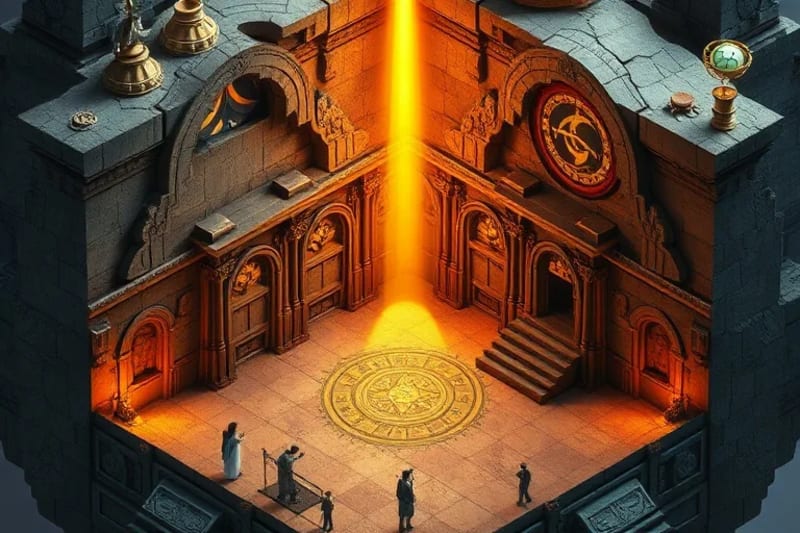
Revealing the intricate celestial alignments within ancient architectural wonders.
The field also heavily relies on ethnographic and ethnohistorical data, where available. Studying contemporary indigenous cultures that maintain traditional sky knowledge can provide valuable analogies and insights into how ancient societies might have interpreted celestial phenomena. This comparative approach helps prevent ethnocentric biases in interpretation and fosters a deeper appreciation for diverse cosmological systems.
The synthesis of these diverse methodologies allows astro-archeology to paint a comprehensive picture of ancient celestial engagements. It moves beyond mere observation to explore the profound impact of the cosmos on ancient societal organization, religious practices, and even political power structures. Understanding these connections helps us appreciate the sophistication of ancient thought and their deep integration with the natural world.
Key Examples from Ancient Civilizations
Throughout history, numerous civilizations have left indelible marks of their celestial observations. Ancient Egypt provides a wealth of astro-archeological evidence. The Great Pyramid of Giza, for instance, is thought to have precise alignments with the cardinal points, and its air shafts have been hypothesized to point towards specific stars like Sirius (Sopdet) and Thuban. The rising of Sirius was particularly significant, coinciding with the annual flooding of the Nile, a crucial event for Egyptian agriculture and cosmology.
The Maya civilization of Mesoamerica is another prime example, renowned for its sophisticated astronomical knowledge and complex calendar systems. Structures like El Caracol at Chichen Itza served as observatories, with windows and doorways aligned to track the movements of Venus, a planet of immense mythological and calendrical importance. The Mayan calendar, particularly the Long Count, intricately wove together astronomical cycles with their understanding of time and destiny.
In Europe, Stonehenge stands as one of the most iconic astro-archeological sites. Its primary axis aligns with the sunrise of the summer solstice and the sunset of the winter solstice, indicating a profound connection to seasonal cycles. Further research suggests alignments with lunar standstills, demonstrating an advanced understanding of lunar movements. These alignments likely played a crucial role in ritualistic practices and marking agricultural seasons.
Other notable examples include the Nazca Lines in Peru, some of which are believed to have astronomical significance, possibly related to water sources or agricultural calendars. The Pueblo Bonito in Chaco Canyon, New Mexico, exhibits alignments with solstices and equinoxes, suggesting a deep connection between the ancestral Puebloans and celestial events. These diverse examples underscore the universal human impulse to connect with the cosmos, often reflected in their architecture and art.
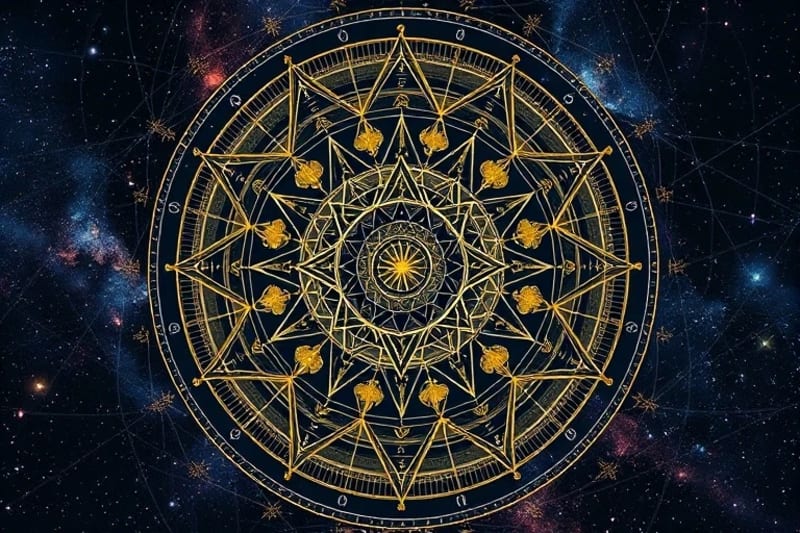
Conceptualizing the interwoven patterns of ancient celestial knowledge and earthly design.
Deciphering Celestial Narratives
Beyond identifying alignments, astro-archeology seeks to decipher the narratives these celestial connections tell us about ancient cultures. The cosmos was not just a backdrop but an active participant in their lives, influencing everything from religious beliefs to agricultural practices. For many ancient societies, the sky was a living entity, populated by gods, spirits, and omens.
Ancient cosmologies often viewed the celestial realm as a mirror of the earthly one, or even its origin. The movements of the sun, moon, and stars were interpreted as divine communications, guiding human actions and predicting future events. This deep integration meant that astronomical observations were not purely scientific but deeply spiritual and ritualistic. The precise timing of ceremonies, sacrifices, and agricultural cycles was often dictated by celestial phenomena.
The study of conscious coupling and synastry in modern astrology, for example, shares a conceptual lineage with ancient attempts to understand how cosmic forces influence human relationships and destiny. Similarly, the ancient practice of interpreting celestial omens can be seen as a precursor to modern AI-assisted dream interpretation, both seeking to decode hidden meanings from complex patterns.
Moreover, celestial narratives often played a critical role in legitimizing political power. Rulers and priests who could accurately predict eclipses or solstices were seen as possessing divine knowledge, reinforcing their authority. The construction of monumental structures aligned with these events served as powerful public displays of this cosmic connection, solidifying social hierarchies and collective identity.
Oral traditions and mythological texts provide invaluable context for understanding these narratives. While archaeological evidence offers the "what" and "where," myths often provide the "why" and "how" of ancient celestial beliefs. Integrating these diverse sources allows for a richer, more nuanced interpretation of how the cosmos shaped ancient human experience.
Challenges and Future Directions
Despite its profound contributions, astro-archeology faces several inherent challenges. One significant hurdle is the potential for confirmation bias, where researchers might inadvertently seek out alignments that fit preconceived notions. Rigorous statistical analysis and multiple lines of evidence are essential to mitigate this risk, ensuring that identified alignments are genuinely intentional rather than coincidental.
Another challenge lies in the preservation of ancient sites. Erosion, modern development, and even climate change threaten the integrity of many astro-archeological monuments. Protecting these sites is paramount for future research and for preserving our shared human heritage. International collaboration and local community engagement are vital in these conservation efforts.
The interpretation of cultural context also presents complexities. Without direct access to the minds of ancient peoples, understanding their exact motivations and beliefs behind celestial alignments requires careful inference. This is where anthropology and ethnohistory become particularly important, offering comparative frameworks and insights into the human relationship with the sky across different cultures.
Looking to the future, astro-archeology is poised for exciting advancements. The integration of cutting-edge technologies like LiDAR (Light Detection and Ranging) allows for highly accurate mapping of sites, even those hidden beneath dense vegetation, revealing previously unknown structures and alignments. Artificial intelligence and machine learning can assist in analyzing vast datasets, identifying subtle patterns in astronomical iconography and architectural design that human observers might miss.
Furthermore, the field is expanding its geographical and temporal scope, moving beyond well-studied regions to explore celestial knowledge in less-documented ancient societies. This global perspective enriches our understanding of the diverse ways humanity has engaged with the cosmos throughout history, continually unearthing new celestial narratives and deepening our appreciation for the universal human connection to the stars.
Source: Hybrid content assisted by AI and human editorial supervision.


Comments
Post a Comment