
AI-Assisted Dream Interpretation: Algorithmic Approaches
AI-Assisted Dream Interpretation: Algorithmic Approaches to Unlocking Subconscious Symbolism
Dreams have fascinated humanity for millennia, serving as a mysterious conduit to the subconscious mind. From ancient civilizations to modern psychology, the quest to understand these nocturnal narratives has been a persistent endeavor. Traditionally, dream interpretation relied on subjective analysis, often guided by cultural beliefs, personal experiences, or established psychological frameworks like those proposed by Freud and Jung. However, the advent of Artificial Intelligence (AI) is ushering in a new era, promising more objective, data-driven, and personalized approaches to deciphering the intricate language of dreams.
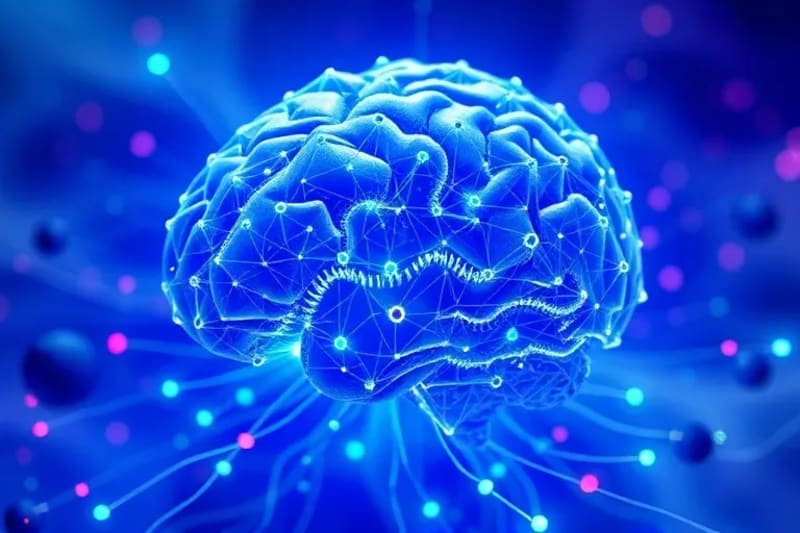
Conceptual representation of AI analyzing complex neural networks and digital data streams to interpret subconscious thought patterns.
Fuente visual sujeta a disponibilidad del ecosistema: Wikimedia Commons bajo licencia CC BY-SA 4.0 o renderizado conceptual IA.This article delves into the burgeoning field of AI-assisted dream interpretation, exploring the algorithmic methodologies employed, the potential benefits, and the inherent challenges. We will examine how AI can process vast amounts of dream data, identify recurring patterns, and offer insights that might elude human analysis, thereby enriching our understanding of the subconscious and facilitating personal growth.
Table of Contents
- Historical Context of Dream Interpretation
- The Intersection of AI and Dream Analysis
- Algorithmic Approaches to Symbolism
- Benefits of AI-Assisted Interpretation
- Challenges and Ethical Considerations
- Future Directions and Research
Historical Context of Dream Interpretation
For millennia, dreams have been regarded as profound messages, often divine or prophetic. Ancient Egyptians meticulously recorded their dreams, believing them to be communications from the gods or insights into future events. Dream interpretation was a specialized skill, often practiced by priests or seers, and was integral to decision-making in both personal and state affairs. Similarly, Mesopotamian cultures viewed dreams as omens, categorizing them as either good or bad and developing elaborate systems for their decipherment.
In classical Greece and Rome, dreams were also considered significant, though interpretations varied. Philosophers like Aristotle explored the physiological aspects of dreams, suggesting they were reflections of bodily states, while others, like Artemidorus of Daldis, compiled comprehensive dream dictionaries, attempting to standardize symbolic meanings. These early attempts at systematization laid foundational groundwork for later, more scientific inquiries into the nature of dreams and their meanings.
The modern psychological approach to dream interpretation largely began with Sigmund Freud's seminal work, "The Interpretation of Dreams" (1899). Freud posited that dreams are the "royal road to the unconscious," serving as a disguised fulfillment of repressed wishes. He introduced concepts like manifest content (the dream as remembered) and latent content (the underlying, unconscious meaning), and techniques such as free association to uncover these hidden desires. Following Freud, Carl Jung expanded on these ideas, introducing the concept of the collective unconscious and archetypes, universal symbols that appear in dreams across cultures. Jung believed dreams offer guidance and promote individuation, a process of psychological integration.
While the Freudian and Jungian schools have profoundly influenced dream analysis, they are often criticized for their subjectivity and lack of empirical verification. Contemporary dream research, particularly in cognitive neuroscience, focuses on the neurological processes underlying dreaming, exploring its role in memory consolidation, emotional regulation, and problem-solving. This scientific shift, combined with advancements in computational power, sets the stage for AI to bridge the gap between subjective interpretation and objective data analysis.
The Intersection of AI and Dream Analysis
The intersection of Artificial Intelligence and dream analysis represents a fascinating frontier in both cognitive science and computational linguistics. AI's capacity to process and analyze vast datasets, identify complex patterns, and learn from experience makes it uniquely suited to tackle the inherent complexities of dream narratives. Unlike human interpreters, AI systems are not susceptible to personal biases or fatigue, offering a consistent and scalable approach to understanding the subconscious.
At its core, AI-assisted dream interpretation involves feeding dream reports—typically textual descriptions provided by individuals—into sophisticated algorithms. These algorithms then employ various techniques, primarily from the field of Natural Language Processing (NLP), to deconstruct the narrative, extract key elements, and identify underlying themes. The goal is to move beyond superficial meanings and uncover the deeper psychological or emotional significance embedded within the dream's symbolism.
Abstract visualization of an AI neural network processing and interpreting complex dream patterns and data.
The process often begins with data collection, where individuals record their dreams in detail. These narratives are then digitized and pre-processed to clean the text, remove noise, and standardize linguistic variations. Subsequently, NLP techniques come into play, including:
- Tokenization and Part-of-Speech Tagging: Breaking down sentences into individual words or tokens and identifying their grammatical roles (nouns, verbs, adjectives).
- Named Entity Recognition (NER): Identifying and classifying key entities in the dream, such as people, places, objects, and abstract concepts.
- Sentiment Analysis: Determining the emotional tone and polarity (positive, negative, neutral) associated with different elements or the overall dream narrative. This can reveal underlying emotional states of the dreamer.
- Topic Modeling: Identifying abstract "topics" that occur in a collection of dream reports, allowing for the categorization of dreams into broader themes like anxiety, aspiration, or conflict.
Beyond basic NLP, advanced machine learning models, particularly deep learning architectures like recurrent neural networks (RNNs) and transformers, are being trained on vast corpora of dream reports, psychological texts, mythological databases, and even cultural narratives. This training allows AI to learn the nuanced relationships between symbols, contexts, and potential meanings, moving beyond simple keyword matching to contextual understanding. This approach aligns with the exploration of Esoteric Symbolism and Karmic Patterns, where deeper, interconnected meanings are sought.
Algorithmic Approaches to Symbolism
The core challenge in dream interpretation, whether human or AI-driven, lies in deciphering symbolism. Dreams rarely present information literally; instead, they communicate through metaphors, allegories, and archetypes. AI systems employ several sophisticated algorithmic approaches to tackle this:
- Pattern Recognition: AI excels at identifying recurring motifs, objects, and interactions across an individual's dream journal or even across a large dataset of diverse dreamers. For instance, a recurring dream of being chased might be flagged as a pattern related to anxiety or avoidance.
- Contextual Analysis: Instead of assigning fixed meanings to symbols (e.g., "water always means emotions"), AI considers the entire context of the dream. The type of water (calm lake vs. stormy ocean), the dreamer's interaction with it, and accompanying emotions all modify the interpretation. This contextual understanding is crucial for personalized insights, much like how Elemental Ascendant Dynamics influence individual compatibility.
- Semantic Networks and Ontologies: AI can build or utilize semantic networks that map relationships between concepts. For example, "snake" might be linked to "fear," "transformation," "healing," or "deception," depending on cultural and personal associations. Ontologies provide structured knowledge bases that help AI understand these complex relationships.
- Cross-Referencing Databases: AI systems can compare dream elements against vast databases of psychological theories, mythological narratives, cultural symbols, and even personal historical data provided by the user. This allows for a multi-layered interpretation that considers both universal archetypes and individual experiences.
- Predictive Modeling: By analyzing past dream patterns and their correlation with waking life events or emotional states, AI could potentially develop predictive models. While not fortune-telling, this could help individuals anticipate recurring psychological challenges or identify emerging themes in their subconscious.
These algorithmic approaches allow AI to move beyond simple "dream dictionary" interpretations, which often oversimplify complex symbols. Instead, AI aims to provide a nuanced, personalized analysis that takes into account the dreamer's unique psychological landscape. This depth of analysis can be particularly useful in understanding underlying psychological currents or even Past Life Regression Birth Chart insights, which often touch upon deep-seated subconscious patterns.
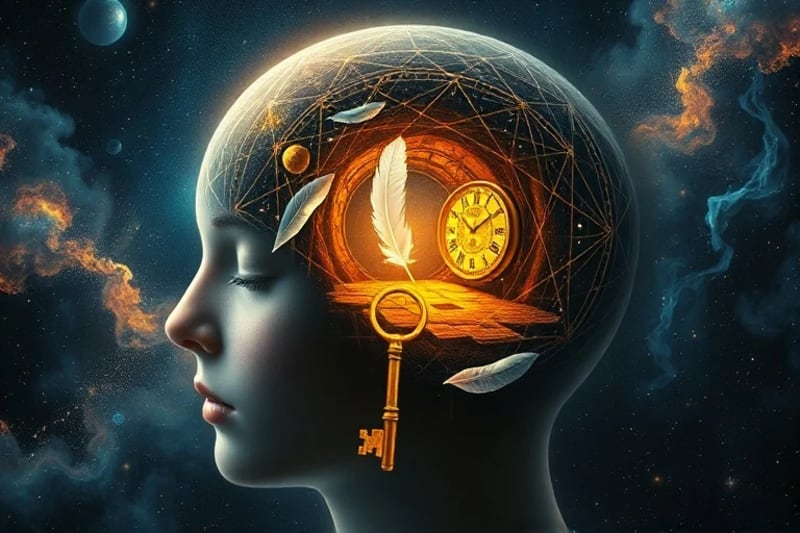
A surreal painting depicting a symbolic key unlocking the hidden depths of the subconscious mind, revealing abstract concepts.
Benefits of AI-Assisted Interpretation
The integration of AI into dream interpretation offers several significant benefits, enhancing both the accessibility and efficacy of this ancient practice:
- Objectivity and Consistency: AI eliminates human biases, emotional states, or personal interpretations that can influence traditional dream analysis. It provides consistent interpretations based on predefined algorithms and learned patterns, ensuring a standardized approach.
- Scalability and Accessibility: AI tools can analyze an unlimited number of dream reports simultaneously, making dream interpretation accessible to a much broader audience without the need for individual consultations with human experts. This democratizes access to self-understanding.
- Pattern Recognition Beyond Human Capacity: AI can detect subtle, long-term patterns and correlations across hundreds or thousands of dreams that a human might miss. This includes identifying recurring symbols, emotional shifts, or thematic developments over extended periods, offering a holistic view of the dreamer's psychological evolution.
- Personalized Insights: While drawing on universal archetypes, AI can also learn from an individual's specific dream history, personal vocabulary, and life circumstances (if provided). This allows for highly personalized interpretations that resonate more deeply with the dreamer.
- Research and Data Collection: AI systems can serve as powerful research tools, collecting and analyzing vast quantities of dream data to identify universal dream themes, cultural variations, and potential links between dream content and mental health indicators. This could lead to new psychological theories and therapeutic interventions.
- Facilitating Self-Reflection: By providing structured interpretations and prompting further inquiry, AI can encourage users to engage in deeper self-reflection and introspection, fostering greater self-awareness and personal growth.
These advantages highlight AI's potential to transform dream interpretation from a niche, often subjective practice into a widely accessible, data-driven tool for psychological insight and personal development. The ability to process complex symbolic language and provide structured feedback can significantly enhance an individual's journey toward self-discovery.
Challenges and Ethical Considerations
Despite its promising potential, AI-assisted dream interpretation faces several significant challenges and raises important ethical considerations that must be addressed for its responsible development and deployment.
- Subjectivity of Dream Language: Dreams are inherently subjective and often defy literal or even consistent symbolic interpretation. A "snake" might represent fear for one person and healing for another. AI struggles with this inherent ambiguity and the highly personal nature of symbolism, which is deeply rooted in individual experience and cultural context.
- Data Quality and Bias: The effectiveness of AI models heavily relies on the quality and diversity of the training data. If dream reports used for training are biased (e.g., predominantly from a specific cultural group or demographic), the AI's interpretations may perpetuate those biases, leading to inaccurate or culturally insensitive analyses.
- Lack of Empathy and Human Nuance: AI cannot replicate human empathy, intuition, or the nuanced understanding that a skilled human therapist brings to dream interpretation. The emotional and relational context of a dream, often crucial for its meaning, can be lost in algorithmic processing.
- Privacy and Data Security: Dream reports often contain highly personal and sensitive information. Storing and processing such data raises significant privacy concerns. Robust security measures and clear data governance policies are essential to protect user information from misuse or breaches.
- Over-reliance and Misinterpretation: Users might over-rely on AI interpretations, potentially leading to misinterpretations or a diminished capacity for personal introspection. A dream interpretation should be a starting point for self-reflection, not a definitive answer.
- Ethical Boundaries in Mental Health: If AI dream interpretation is used in a therapeutic context, clear ethical guidelines are needed. AI should not replace professional mental health support, especially for individuals experiencing severe psychological distress. It should serve as a complementary tool, much like other self-help resources.
Addressing these challenges requires a multidisciplinary approach, combining expertise in AI, psychology, ethics, and data privacy. The goal should be to develop AI tools that augment human understanding rather than replace it, providing supportive insights while respecting the profound complexity of the human psyche.
Future Directions and Research
The field of AI-assisted dream interpretation is still in its nascent stages, but its future holds immense potential for innovation and deeper understanding. Future research and development are likely to focus on several key areas:
- Multimodal Dream Analysis: Beyond textual reports, future AI systems could integrate other forms of data, such as biometric feedback (heart rate, brain activity during sleep), visual elements (if dream content can be sketched or described visually), and even voice recordings of dream narratives. This multimodal approach could provide a richer, more comprehensive context for interpretation.
- Personalized Learning Models: AI models will become increasingly adept at learning an individual's unique symbolic language over time. By continuously analyzing a user's dream journal and feedback, the AI can refine its interpretations to align more closely with the individual's personal history and psychological framework.
- Integration with Therapeutic Practices: AI tools could be integrated into therapeutic settings, offering therapists data-driven insights into their clients' subconscious patterns. This could aid in diagnosis, treatment planning, and tracking progress, always under the guidance of a human professional.
- Cross-Cultural Dream Dictionaries and Ontologies: Developing AI models trained on diverse cultural dream dictionaries and mythological databases could help overcome cultural biases and provide more globally relevant interpretations. This would involve extensive collaboration with anthropologists and cultural experts.
- Real-time Dream Analysis: Advances in wearable technology and brain-computer interfaces might eventually allow for near real-time analysis of dream content, offering immediate insights upon waking. This could revolutionize how individuals interact with their dreams.
- Ethical AI Frameworks: As AI becomes more sophisticated, the development of robust ethical AI frameworks specifically for psychological applications will be paramount. This includes ensuring transparency in algorithms, protecting user data, and establishing clear boundaries for AI's role in sensitive areas like mental health.
The journey towards fully understanding the subconscious through AI is complex, but the potential rewards—from enhanced self-awareness to groundbreaking psychological research—are substantial. As technology evolves, so too will our capacity to unlock the profound symbolism embedded within our dreams, offering new pathways to personal growth and self-discovery. This innovative approach to understanding the self complements other deep dives into personal energetics, such as those discussed in Chinese Zodiac Elemental Energetics, by providing a technological lens to internal landscapes.
Related Insights
- Advanced Zodiac Compatibility Advanced Elemental Ascendant Influences
- Horary Astrology: Answering Specific Questions
- Karmic Debts Gifts: Advanced North South Node Astrology
- Sabian Symbols: Deeper Meaning in Chart Degree Placements
Source: Hybrid content assisted by AI and human editorial supervision.


Comments
Post a Comment