
Planetary Dignities: Electional Astrology, Synastry Mastery
Mastering Planetary Dignities: Beyond Rulerships in Electional Astrology & Synastry
In the intricate language of astrology, understanding planetary dignities is paramount for any serious practitioner. While many beginners are familiar with basic rulerships, the true mastery of astrological interpretation, particularly in advanced fields like electional astrology and synastry, lies in a nuanced comprehension of all forms of planetary strength and debility. This comprehensive guide delves deep into the essential and accidental dignities, revealing how they empower astrologers to make precise judgments about timing, relationships, and individual potential.
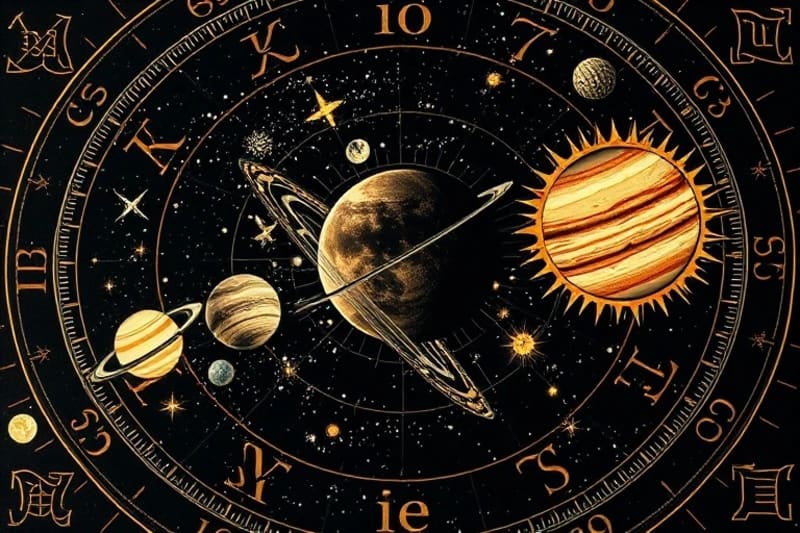
A cosmic tableau illustrating the nuanced interplay of planetary dignities and debilities, essential for advanced astrological interpretation.
Planetary dignities describe the inherent strength or weakness of a planet based on its zodiacal position and other celestial factors. A planet in dignity is said to be "at home" or "comfortable," able to express its nature fully and beneficially. Conversely, a planet in debility struggles to manifest its positive qualities, often leading to challenges or distorted expressions. Moving beyond simple planetary placements, understanding these nuances unlocks a deeper layer of astrological wisdom.
The concept of planetary dignities has roots in ancient astrological traditions, evolving through Hellenistic, Persian, and Medieval periods. These systems provided a framework for evaluating a planet's efficacy, allowing astrologers to assess its capacity to act and influence events. This foundational knowledge is critical for understanding how celestial energies manifest in our lives and the world around us.
Table of Contents
- Essential Dignities: The Planet's Intrinsic Power
- Debilities and Their Implications
- Accidental Dignities: Circumstantial Strengths
- Electional Astrology: Timing for Success
- Synastry and Relationship Dynamics
- Advanced Interpretation and Nuance
Essential Dignities: The Planet's Intrinsic Power
Essential dignities refer to a planet's strength based solely on its zodiacal position. These are the most fundamental forms of dignity, indicating a planet's ability to act according to its true nature. Understanding these allows for a clear assessment of a planet's intrinsic power, independent of external circumstances.
- Rulership (Domicile): A planet is in its rulership when it is in the sign it naturally governs. Here, the planet is "at home," operating with full authority and expressing its qualities most purely and powerfully. For example, Mars rules Aries and Scorpio, while Venus rules Taurus and Libra.
- Exaltation: A planet in exaltation is in a sign where it receives special honor and recognition. While not "at home," it is highly esteemed and can perform its functions with great effectiveness and distinction, often in a more refined or amplified manner than in its domicile.
- Triplicity: Triplicities divide the zodiac into four groups of three signs, each associated with an element (Fire, Earth, Air, Water) and ruled by a set of planets, one for day charts and one for night charts. A planet in its triplicity has a comfortable, supportive environment, offering moderate strength and stability.
- Term (Bounds): Terms are specific degrees within each sign where a planet gains minor dignity. This provides a subtle boost in strength, allowing the planet a degree of control or influence over matters related to those specific degrees.
- Face (Decan): Faces are the weakest form of essential dignity, dividing each sign into three 10-degree segments, each ruled by a planet. A planet in its face has minimal dignity, offering a slight ability to express itself, but often with less inherent power or consistency.
These essential dignities form a hierarchical structure, with rulership being the strongest and face the weakest. A planet with multiple essential dignities is considered exceptionally strong, capable of delivering on its promises and fulfilling its significations with ease.
| Dignity Type | Description | Strength Level |
|---|---|---|
| Rulership (Domicile) | Planet is in its home sign, operating with full authority. | Strongest |
| Exaltation | Planet is honored, can perform functions effectively and distinctly. | Very Strong |
| Triplicity | Planet is in a supportive elemental environment, moderate strength. | Moderate |
| Term (Bounds) | Planet gains minor dignity within specific degrees of a sign. | Minor |
| Face (Decan) | Planet has minimal dignity within a 10-degree segment. | Weakest |
Debilities and Their Implications
Just as planets can be strong, they can also be in a state of debility, meaning they are weakened or challenged in their expression. These positions indicate areas where a planet struggles to function optimally, often leading to difficulties, frustrations, or a distorted manifestation of its energies.
- Detriment: A planet is in detriment when it is in the sign opposite its rulership. Here, the planet is in its "exile" or "opposite home," finding it difficult to express its nature effectively. Its energies may be thwarted, misunderstood, or expressed in an uncharacteristic way.
- Fall: A planet in fall is in the sign opposite its exaltation. This is a position of great discomfort and weakness, where the planet feels "humiliated" or unable to perform its functions with grace. Its positive qualities may be undermined, leading to challenges or a sense of inadequacy.
Understanding both dignities and debilities is crucial for a balanced interpretation. A planet in debility does not necessarily mean doom, but rather indicates an area requiring more conscious effort, adaptation, or a different approach to harness its energies constructively. For a deeper dive into elemental influences, consider exploring Chinese Zodiac Elemental Compatibility: Advanced Analysis, which offers a different perspective on how elemental strengths and weaknesses combine.
Accidental Dignities: Circumstantial Strengths
Beyond essential dignities, accidental dignities describe a planet's strength or weakness based on its position within the astrological houses, its speed, direction, and aspects to other planets. These are "accidental" because they are not inherent to the sign but rather depend on the planet's temporary circumstances in the chart.
Ethereal figures intertwined with celestial symbols, illustrating the complex energetic dynamics of synastry in astrological compatibility.
- Angularity: Planets in angular houses (1st, 4th, 7th, 10th) are considered very strong and prominent, having a direct and powerful influence on the native's life and actions.
- Succedent Houses: Planets in succedent houses (2nd, 5th, 8th, 11th) have moderate strength, providing stability and support to the angular houses.
- Cadent Houses: Planets in cadent houses (3rd, 6th, 9th, 12th) are generally considered weaker, having less direct impact and often signifying areas of learning, adaptation, or challenges.
- Speed and Direction: A planet moving faster than its average speed (swift in motion) is considered stronger, indicating quick action. A planet in direct motion is stronger than one in retrograde motion, which suggests introspection, delay, or re-evaluation.
- Aspects: Benefic aspects (trines, sextiles) from other planets can lend strength and support, while malefic aspects (squares, oppositions) can weaken a planet or create challenges. Conjunctions can either empower or complicate, depending on the planets involved.
- Sect: A planet is in sect when it is a "day planet" (Sun, Jupiter, Saturn) in a day chart, or a "night planet" (Moon, Venus, Mars) in a night chart. Being in sect provides a subtle but significant boost in efficacy and ease of expression.
Accidental dignities add layers of complexity and realism to a chart interpretation. A planet might be essentially dignified but accidentally weak (e.g., in detriment and cadent), or essentially debilitated but accidentally strong (e.g., in fall but angular and swift). This interplay is where true astrological artistry begins.
Electional Astrology: Timing for Success
Electional astrology is the art of choosing the most auspicious moment to begin an endeavor, ensuring its success and longevity. Planetary dignities are the cornerstone of this practice. When electing a chart for a new business, marriage, surgery, or any significant event, the astrologer seeks to place the significator planets in positions of maximum dignity and strength.
For example, for a marriage chart, Venus (love, union) and the Moon (emotions, home) should ideally be in their essential dignities (rulership or exaltation) and accidentally dignified (angular, swift, well-aspected). Malefic planets should be in cadent houses or otherwise weakened to minimize their negative influence. This meticulous selection process aims to imbue the event with favorable celestial energies from its inception.
A dynamic clockwork mechanism, with celestial bodies and intricate gears, representing the precise timing and calculated movements in electional astrology.
The goal is to create a "birth chart" for the event that is as robust and harmonious as possible. This requires not only a deep understanding of dignities but also the ability to synthesize multiple astrological factors. Astrologers often consult various ancient texts and techniques, sometimes even drawing parallels with practices like Mesoamerican Astrology: Decoding Ancient Calendars Celestial Alignments, which also emphasized auspicious timing based on complex celestial observations.
When timing life events, the consideration of critical degrees and their predictive power also becomes highly relevant. For more on this, you can read about Critical Degrees Predictive Astrology: Timing Life Events, which complements the principles of electional astrology by highlighting sensitive points in the zodiac.
Synastry and Relationship Dynamics
In synastry, the comparison of two natal charts to understand relationship dynamics, planetary dignities provide profound insights into how individuals interact. When a planet in one person's chart falls into a sign of dignity or debility for the other person's planet, it significantly impacts the energetic exchange.
For instance, if Person A's Mars (action, drive) is in Aries (its rulership) and conjuncts Person B's Venus (love, harmony), Person B might experience Person A's Mars as confident, passionate, and direct. However, if Person A's Mars is in Libra (its detriment) and conjuncts Person B's Venus, Person B might perceive Person A's Mars as indecisive, passive-aggressive, or struggling to assert themselves, leading to friction.
Dignities also reveal how well each partner can support or challenge the other's planetary expressions. A partner whose planet is in dignity might be a source of strength and positive influence for the other, while a planet in debility might highlight areas of vulnerability or misunderstanding within the relationship. This depth of analysis moves beyond simple aspect interpretations, offering a more holistic view of compatibility and potential areas for growth.
Advanced Interpretation and Nuance
Mastering planetary dignities means understanding their interplay and how they can modify each other. A planet in its fall might still perform well if it is accidentally dignified (e.g., angular and well-aspected). Conversely, a planet in rulership might be hampered by severe accidental debilities (e.g., retrograde, in a cadent house, and afflicted by malefic aspects).
This layered approach allows for incredibly precise interpretations. It moves beyond simplistic "good" or "bad" labels and instead offers a dynamic understanding of a planet's capacity and how its energies are likely to manifest. For example, the concept of "Planets without Aspects" in a natal chart, as explored in Planetas sin Aspectos: Potencial Latente y Desafíos en la Carta Natal, can be further illuminated by assessing the essential and accidental dignities of such isolated planets.
Ultimately, planetary dignities are not just academic concepts; they are practical tools that empower astrologers to provide more accurate forecasts, select more opportune timings, and offer deeper insights into human relationships. By moving beyond basic rulerships and embracing the full spectrum of essential and accidental dignities, one truly begins to master the profound language of the cosmos.
"The wise astrologer considers not only where a planet resides, but how it thrives or struggles within its celestial abode, for therein lies the secret to its true power."
— Ancient Astrological Axiom
The journey into mastering planetary dignities is continuous, requiring diligent study, practice, and an open mind. It is through this dedication that astrologers can truly unlock the predictive and interpretive potential of the birth chart, electional charts, and synastry readings, guiding individuals towards greater self-awareness and more harmonious living.
Related Explorations
- Tiger Chinese Zodiac 2025 Forecast: Love, Career, Health | StarPluto
- Lunar Calendar Traditions: Chinese New Year Cultural Guide
- Snake Chinese Horoscope: Compatibility Guide | StarPluto
- Tiger Chinese Zodiac: Five Elements Influence Traits Guide | StarPluto
- Metal Snake Year: Traits, Destiny & Horoscope | StarPluto
- Chinese Zodiac Baby Names: Elemental Auspiciousness | StarPluto
- Spirit Guides: Building Your Spiritual Team | StarPluto
- Feng Shui Digital Nomads Harmonizing Virtual Well-being
- Mundane Astrology: Predicting Global Events, Societal Shifts | StarPluto
- [ALTHOX] Abarcar: Definiciones, Alcance y Profundidad del Concepto
- [ALTHOX] Exploración Espacio Profundo: Misiones, Desafíos, Futuro
- [ALTHOX] Michael Jackson Brain Musical Genius Creative Impact
- [ASTROFUTURO] Famosos Conejo: Diplomacia, Arte y Estrategia
- [ASTROFUTURO] Serpiente Fuego Horóscopo: Carácter y Destino
- [PROFECIAS] Rosario Dolorosos: Reflexión y Guía Espiritual
- [PROFECIAS] Santo Grial: Leyenda, Simbolismo, Reliquia Eucarística Definitiva
- [PROFECIAS] Rosario: Análisis Teológico Profundo Promesas y Cumplimiento
Source: Hybrid content assisted by AI and human editorial supervision.


Comments
Post a Comment