
Mesoamerican Astrology: Decoding Ancient Calendars Celestial Alignments
Mesoamerican astrology, a sophisticated system developed by ancient civilizations such as the Maya, Aztec, and Zapotec, offers a profound understanding of time, cosmology, and human destiny. Unlike Western astrology, which primarily focuses on planetary positions at the moment of birth, Mesoamerican systems are deeply rooted in intricate calendrical cycles and the observation of celestial alignments. These ancient cultures believed that the cosmos was a living entity, and its movements directly influenced earthly events, agricultural cycles, and individual lives.
The study of Mesoamerican astrology is not merely about predicting the future; it is a holistic approach to understanding one's place within the grand cosmic tapestry. It involves decoding complex calendrical glyphs, interpreting the significance of astronomical phenomena, and recognizing the interconnectedness of all existence. This article delves into the core principles of Mesoamerican astrology, exploring its unique calendrical systems, the role of celestial bodies, and its enduring legacy in shaping the worldview of these remarkable civilizations.
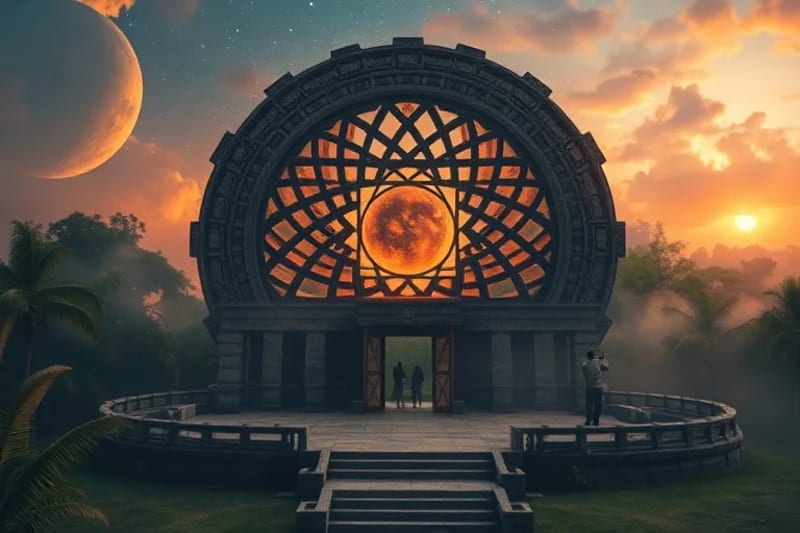 Precursors intellectuales, diagramas fundamentales y representaciones conceptuales que forjaron la visión de las civilizaciones mesoamericanas sobre la cosmología.
Fuente visual sujeta a disponibilidad del ecosistema: Wikimedia Commons bajo licencia CC BY-SA 4.0 o renderizado conceptual IA.
To truly appreciate the depth of Mesoamerican astrology, one must first grasp the sophistication of their calendrical systems. These were not simple time-keeping devices but rather sacred instruments that mapped the cycles of the universe, guiding everything from agricultural practices to religious ceremonies and political decisions. The interplay of these calendars created a rich, multi-layered system of divination and prophecy.
Table of Contents
- The Foundations: Intricate Calendrical Systems
- Celestial Alignments and Deities: Cosmic Influences
- Astrological Interpretation and Prophecy
- Mesoamerican Cosmology and Worldview
- Modern Relevance and Revival
The Foundations: Intricate Calendrical Systems
The heart of Mesoamerican astrology lies in its complex and interconnected calendrical systems. The Maya, for instance, utilized several calendars simultaneously, each serving a distinct purpose and contributing to a comprehensive understanding of time and fate. These calendars were not merely tools for tracking days but were imbued with spiritual significance, reflecting the cyclical nature of creation and destruction.
The two most prominent calendars were the Tzolk'in (also known as the Sacred Round or 260-day calendar) and the Haab' (the 365-day civil calendar). The Tzolk'in combined 20 day names with 13 numbers, creating 260 unique day combinations. Each day sign and number carried specific energies and meanings, influencing an individual's personality and destiny. The Haab', on the other hand, was a solar calendar consisting of 18 months of 20 days each, plus a 5-day period known as Wayeb', considered unlucky or transitional.
The synchronization of the Tzolk'in and Haab' formed the Calendar Round, a 52-year cycle. This cycle was profoundly significant, as it represented a complete "binding of the years," after which the same day name and number combination would recur. The end of a 52-year cycle was often marked by ceremonies and rituals, symbolizing renewal and the continuation of cosmic order. Beyond these, the Maya also used the Long Count calendar, a linear count of days from a mythical starting point, primarily used for historical dating and long-term prophecies. This intricate system allowed for precise astronomical calculations and the tracking of vast stretches of time.
The Mesoamerican calendrical systems were not static; they were living, breathing entities that reflected the dynamic relationship between humanity and the cosmos. Each day, month, and year carried a unique energetic imprint, influencing the collective consciousness and individual experiences.
Understanding these cycles was paramount for priests and astrologers, who served as intermediaries between the earthly realm and the divine, guiding their communities through the rhythms of time.
The Aztec calendar, while sharing fundamental similarities, had its own distinct iconography and nomenclature. Their primary sacred calendar was the Tonalpohualli (equivalent to the Tzolk'in), and the civil calendar was the Xiuhpohualli (equivalent to the Haab'). The famous Aztec Sun Stone, or Piedra del Sol, is a monumental representation of their cosmological and calendrical knowledge, depicting the various cosmic eras and the cyclical nature of time. These calendars were not just for tracking time but were integral to their religious practices, agricultural planning, and even warfare strategies.
Celestial Alignments and Deities: Cosmic Influences
Mesoamerican civilizations were astute astronomers, meticulously observing the movements of celestial bodies. Their architectural marvels, such as El Castillo at Chichen Itza, are often aligned with solstices and equinoxes, demonstrating a profound understanding of celestial mechanics. These alignments were not merely architectural feats but served as practical observatories and sacred sites for rituals marking significant cosmic events. The Sun and Moon held paramount importance, dictating agricultural cycles and influencing daily life. The Sun, often associated with powerful deities like Kinich Ahau (Maya) or Huitzilopochtli (Aztec), represented life, warmth, and the daily journey across the sky.
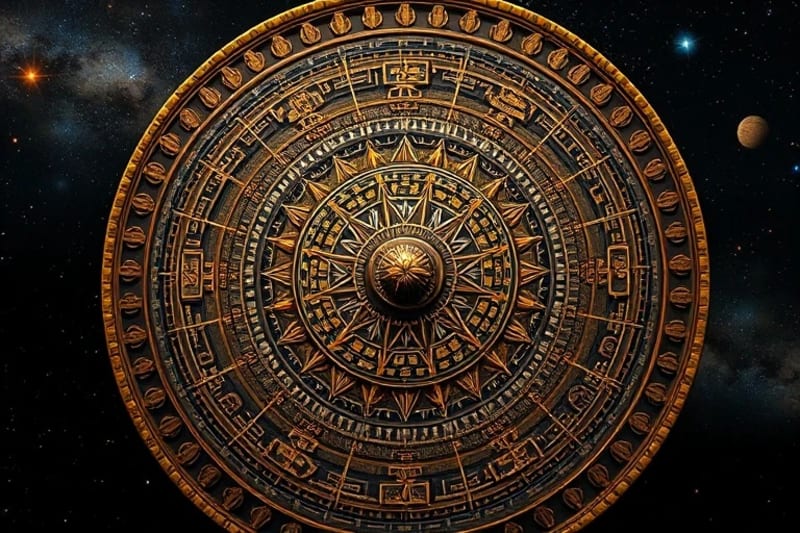 Representación artística del calendario solar azteca y su conexión con los movimientos celestes.
Venus, known as the "Morning Star" and "Evening Star," was perhaps the most significant planet in Mesoamerican astrology. Its cycles were meticulously tracked, and its appearances and disappearances were linked to prophecies, warfare, and the reigns of rulers. The Maya, in particular, had an incredibly accurate Venus calendar, which they used for divinatory purposes and to time important events. Other planets, though less emphasized than Venus, were also observed and integrated into their cosmological framework, each carrying specific symbolic meanings and influences. This deep understanding of planetary cycles highlights a sophisticated approach to celestial observation, akin to the detailed planetary analyses found in understanding your natal chart in Western astrology.
Constellations also played a role, though their interpretations differed from Greco-Roman traditions. The Mesoamericans identified their own patterns in the stars, often associating them with specific animals, deities, or narratives from their rich mythologies. Eclipses, comets, and other transient celestial phenomena were considered powerful omens, often interpreted as messages from the gods or indicators of significant societal shifts. The integration of these celestial observations with their calendrical systems allowed for a nuanced and predictive astrological practice, where the cosmic dance was seen as a direct reflection of earthly affairs.
Astrological Interpretation and Prophecy
Mesoamerican astrology was deeply intertwined with individual and collective destiny. Upon birth, an individual's day sign and number from the Tzolk'in (or Tonalpohualli) provided a foundational understanding of their personality traits, strengths, weaknesses, and life path. Priests and diviners would consult sacred books, such as the Maya codices or Aztec tonalamatl, to interpret these birth energies and offer guidance. These interpretations were not static; they recognized the dynamic interplay of cosmic forces and personal choices, much like the concept of an evolving self in progressed chart astrology.
Each of the 20 day signs, such as Imix (Crocodile/Earth Monster), Ik' (Wind/Spirit), Ak'bal (Night/Darkness), and K'an (Maize/Seed), carried specific symbolic meanings and associations with deities. Similarly, the 13 numbers added layers of intensity and influence. For example, a person born on 8 Ahau (Lord) would have a powerful and leadership-oriented destiny, while someone born on 4 Eb (Road/Path) might be destined for travel or a journey of self-discovery. These birth readings were crucial for naming children, determining suitable marriage partners, and even choosing one's profession.
Beyond individual readings, Mesoamerican astrology was a powerful tool for collective prophecy and planning. Priests would track the cycles of Venus, the Sun, and other celestial bodies to predict auspicious times for planting, harvesting, warfare, and religious ceremonies. Eclipses, especially solar eclipses, were often seen as moments of great cosmic upheaval and potential danger, requiring elaborate rituals to appease the gods and restore balance. The Long Count calendar, with its vast cycles, was used to predict major shifts in eras, famously culminating in the end of a cycle in 2012, which was widely misinterpreted as an apocalyptic prediction rather than a calendrical renewal.
The practice of divination extended to interpreting dreams, omens, and the behavior of animals, all seen as reflections of cosmic influences. The Mesoamerican astrologer was not just an observer but an active participant in maintaining cosmic harmony, using their knowledge to guide their communities through the ebb and flow of universal energies. This holistic approach to life and the cosmos contrasts with some modern astrological practices but shares a common thread with ancient systems like Hellenistic astrology, which also emphasized the profound impact of celestial mechanics on human affairs.
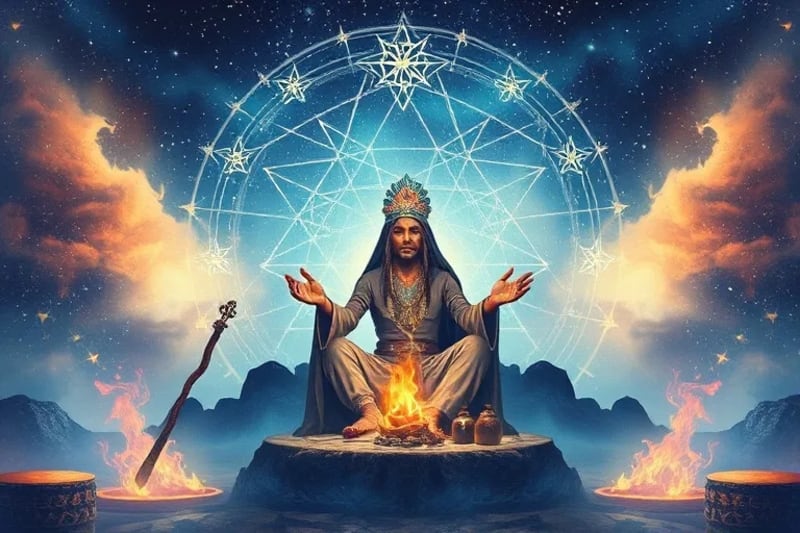 Representación conceptual de un ritual chamánico mesoamericano bajo la guía de las estrellas.
Mesoamerican Cosmology and Worldview
The astrological systems of Mesoamerica were deeply embedded in a rich and complex cosmology that shaped every aspect of their worldview. Central to this cosmology was the concept of cyclical time, where creation and destruction were not linear but part of an eternal cosmic dance. The universe was seen as a multi-layered structure, often depicted as having an underworld, an earthly realm, and a celestial realm, each inhabited by various deities and spirits. The movements of the sun, moon, and stars were believed to be the manifestations of these divine entities, constantly interacting with the human world.
The Mesoamerican worldview emphasized the interconnectedness of all things. Humans were not separate from nature or the cosmos but an integral part of it. Every action, every ritual, and every celestial event had repercussions throughout the entire system. This holistic perspective fostered a deep respect for the environment and a sense of responsibility to maintain cosmic balance. Deities often embodied natural forces and celestial bodies, such as Quetzalcoatl (Feathered Serpent), who was associated with Venus, wind, and wisdom, or Itzamná, the supreme creator god of the Maya, linked to the sky and writing.
The concept of destiny versus free will was also nuanced. While an individual's birth sign provided a blueprint for their potential, it was understood that personal choices and ritualistic actions could influence or alter one's path. Offerings, ceremonies, and adherence to moral codes were believed to help align individuals and communities with favorable cosmic energies, mitigating negative influences. This dynamic interplay between predetermined cosmic forces and human agency is a fascinating aspect of their philosophical framework, resonating with broader metaphysical principles of manifestation and co-creation.
The cyclical nature of time also meant that past events were not merely history but living forces that could influence the present and future. Ancestors, historical figures, and ancient prophecies held significant weight, constantly informing current decisions and shaping collective identity. This profound understanding of time and the cosmos allowed Mesoamerican civilizations to build enduring societies, develop sophisticated knowledge systems, and leave behind a legacy that continues to inspire awe and curiosity.
Modern Relevance and Revival
In contemporary times, there has been a growing interest in Mesoamerican astrology and cosmology, both within indigenous communities and among global spiritual seekers. This revival is driven by a desire to reconnect with ancient wisdom, find alternative perspectives on time and destiny, and appreciate the profound scientific and spiritual achievements of these civilizations. Scholars continue to decipher ancient texts and archaeological findings, shedding new light on the intricacies of these systems, though much remains to be fully understood due to the destruction of many original codices by colonial forces.
For many indigenous communities in Mexico and Central America, the calendrical systems and astrological interpretations are not relics of the past but living traditions. Elders and spiritual leaders continue to teach and practice these ancient ways, preserving their cultural heritage and providing guidance to their people. This continuity ensures that the wisdom embedded in the Tzolk'in, Haab', and other calendars remains vibrant and relevant, offering a unique lens through which to view the world and one's personal journey.
The challenges in interpreting and applying Mesoamerican astrology today are considerable. The loss of many primary sources, the complexities of translation, and the cultural context differences require careful and respectful scholarship. However, the potential rewards are immense: a deeper appreciation for the human capacity for astronomical observation, a more holistic understanding of our relationship with the cosmos, and a powerful framework for personal and collective introspection. As we navigate an increasingly complex world, the cyclical wisdom of Mesoamerican astrology offers valuable insights into the rhythms of life and the enduring dance between humanity and the stars.
The legacy of Mesoamerican astrology stands as a testament to the intellectual prowess and spiritual depth of ancient civilizations. Their ability to decode celestial alignments and integrate them into sophisticated calendrical systems created a worldview that was both scientific and sacred. This rich heritage continues to inspire and inform, reminding us of the profound connections between the heavens and the earth, and the timeless quest to understand our place in the universe.
Related Searches
- Lilith Chiron Lunar Nodes Karmic Shadow Integration Astrology
- Davison Relationship Chart: Uncovering Couple's Soul Dynamics
- Color Therapy Healing Vibrational Frequencies Guide
- Astro-Genomics Karmic Health Patterns DNA Blueprint
- Medical Astrology: Diagnosing Healing Birth Chart Health Markers
- Lilith Astrology: Primal Instincts, Shadow Feminine
- Fixed Stars Karmic Astrology: Past Life Influences Natal Chart
- Rat Ox Compatibility: A Powerful Zodiac Alliance
- Advanced Aspect Patterns: Grand Sextiles & Mystic Rectangles Natal Chart
- Profections Lord Year Mastering Hellenistic Predictive Astrology
- Decans Zodiac: Deeper Layers Sign Interpretation
Source: Hybrid content assisted by AI and human editorial supervision.


Comments
Post a Comment