
Planetary Hours: Daily Manifestation & Rituals Guide | StarPluto
The concept of planetary hours, an ancient astrological technique, offers a fascinating framework for aligning daily activities with cosmic energies. Far from being a modern invention, this system has roots in antiquity, influencing everything from magical rituals to agricultural practices. By understanding and utilizing the unique energetic signatures of each planetary hour, individuals can enhance their manifestation efforts, optimize their rituals, and bring a deeper sense of cosmic rhythm to their everyday lives. This guide delves into the art of planetary hours, providing a comprehensive overview for both beginners and seasoned practitioners.
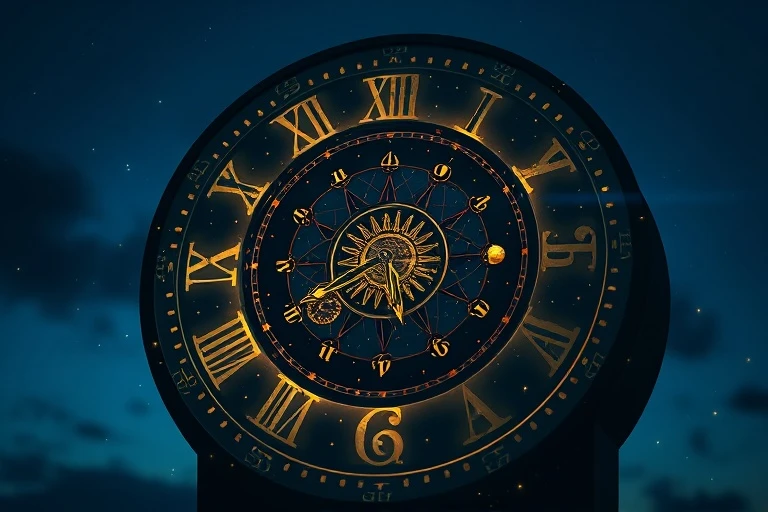
An ancient celestial clock, depicting the intricate dance of planetary hours and their symbolic influence on daily life.
At its core, planetary hours involve dividing each day and night into twelve equal segments, with each segment assigned to one of the seven classical planets: Sun, Moon, Mars, Mercury, Jupiter, Venus, and Saturn. Unlike fixed clock hours, planetary hours vary in length depending on the time of sunrise and sunset, making them a dynamic and localized system. This variability is crucial, as it reflects the ever-changing celestial mechanics and their direct impact on earthly energies. Mastering the calculation and application of these hours can transform how one approaches planning, decision-making, and spiritual work.
Table of Contents
- What Are Planetary Hours?
- Historical Origins and Significance
- Calculating Planetary Hours
- Planetary Correspondences and Their Energies
- Applying Planetary Hours for Manifestation
- Enhancing Rituals with Planetary Hours
- Benefits and Synergistic Practices
- Common Misconceptions and Best Practices
- Integrating Planetary Hours into Daily Life
What Are Planetary Hours?
Planetary hours are a system of timekeeping used in astrology and magic, where each hour of the day and night is governed by one of the seven traditional planets. This system posits that the energy and influence of the ruling planet are strongest during its designated hour, making it an opportune time for activities aligned with that planet's nature. Understanding these energetic windows allows practitioners to synchronize their intentions with the cosmic flow, thereby amplifying the effectiveness of their actions.
Unlike the fixed 60-minute segments of modern clocks, planetary hours are not constant. A "day hour" is calculated by taking the time between sunrise and sunset and dividing it by twelve. Similarly, a "night hour" is determined by dividing the time between sunset and the following sunrise by twelve. This means that day hours are longer in summer and shorter in winter, and vice versa for night hours, reflecting the seasonal changes in daylight. This dynamic nature is a key aspect of their efficacy.
The sequence of planetary rulers follows a specific order, known as the Chaldean order, which is derived from the apparent speed of the planets as observed from Earth: Saturn, Jupiter, Mars, Sun, Venus, Mercury, Moon. This sequence governs the first hour of each day, and then cycles through for the subsequent hours. The planet ruling the first hour of the day also rules the entire day, lending its overarching energy to that specific day of the week.
Historical Origins and Significance
The practice of planetary hours dates back to ancient civilizations, with evidence found in Babylonian, Egyptian, and Hellenistic astrological texts. The system was meticulously developed and refined over centuries, becoming a cornerstone of electional astrology, which focuses on choosing the most auspicious time for initiating actions. Philosophers, alchemists, and magicians throughout history utilized these hours to time their experiments, rituals, and important life events.
In ancient Egypt, the division of the day into hours and the association of deities with specific time periods laid some groundwork for later planetary hour systems. The Greeks and Romans further developed these concepts, linking the days of the week to planetary rulers – a practice that persists in modern language (e.g., Sunday for Sun, Monday for Moon, etc.). This deep historical lineage underscores the enduring belief in the influence of celestial bodies on terrestrial affairs.
During the Renaissance, figures like Marsilio Ficino and Cornelius Agrippa extensively wrote about planetary hours, integrating them into their Neoplatonic and Hermetic philosophies. They believed that by aligning human will with cosmic timing, one could achieve greater harmony and effectiveness in their endeavors. This tradition continued through various esoteric schools, emphasizing the importance of astrological timing for spiritual and practical pursuits. For more on planetary influences, consider exploring topics like Planetary Archetypes: Unlocking Inner Gods & Goddesses.
Calculating Planetary Hours
Calculating planetary hours accurately requires knowing the precise times of sunrise and sunset for your specific location on any given day. While there are numerous online calculators and smartphone apps available today that automate this process, understanding the manual calculation provides deeper insight into the system's mechanics. The basic steps are straightforward, though precision is key.
- Step 1: Determine Sunrise and Sunset Times: Obtain the exact sunrise and sunset times for your location and date. These can be found through weather apps, astronomical websites, or local almanacs.
- Step 2: Calculate Day Length: Subtract the sunrise time from the sunset time. This gives you the total duration of daylight.
- Step 3: Calculate Night Length: Subtract the sunset time from the sunrise time of the following day. This gives you the total duration of nighttime.
- Step 4: Divide by Twelve: Divide the day length by 12 to get the duration of each "day hour." Do the same for the night length to get the duration of each "night hour."
- Step 5: Assign Planetary Rulers: The first hour of the day (starting at sunrise) is ruled by the planet corresponding to the day of the week (e.g., Sun on Sunday, Moon on Monday). Subsequent hours follow the Chaldean order: Saturn, Jupiter, Mars, Sun, Venus, Mercury, Moon. This cycle repeats every seven hours.
For example, if sunrise is at 6:00 AM and sunset is at 6:00 PM (12 hours of daylight), each day hour would be exactly 60 minutes long. If sunrise is at 7:00 AM and sunset at 5:00 PM (10 hours of daylight), each day hour would be 50 minutes long. The same logic applies to night hours. Always ensure your calculations are based on local time, accounting for daylight saving if applicable.
Planetary Correspondences and Their Energies
Each of the seven classical planets is associated with specific energies, qualities, and types of activities. Understanding these correspondences is fundamental to effectively utilizing planetary hours for manifestation and ritual work. By aligning your actions with the ruling planet's energy, you can significantly enhance the likelihood of success.
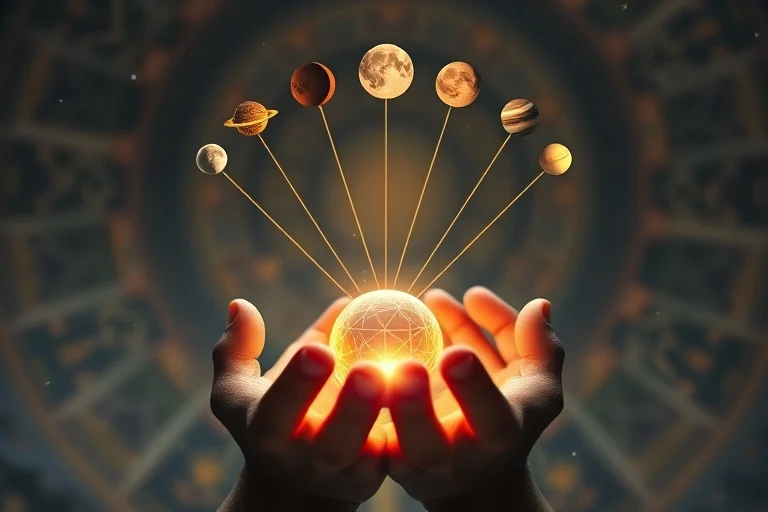
Hands carefully arranging crystals and herbs, channeling subtle energies for manifestation and ritual work.
Here's a breakdown of the planetary energies and their associated activities:
| Planet | Day Ruled | Key Energies & Qualities | Recommended Activities |
|---|---|---|---|
| Sun | Sunday | Vitality, success, leadership, self-expression, confidence, fame, healing, general well-being. | Starting new projects, seeking promotion, public speaking, healing rituals, boosting self-esteem, creative endeavors. |
| Moon | Monday | Intuition, emotions, nurturing, domestic matters, psychic abilities, travel, dreams, fertility, reconciliation. | Meditation, psychic development, home-related tasks, gardening, emotional healing, dream work, travel planning. |
| Mars | Tuesday | Action, courage, strength, passion, conflict, protection, energy, overcoming obstacles, physical activity. | Exercising, competitive activities, protection spells, confronting issues, breaking bad habits, assertiveness training. |
| Mercury | Wednesday | Communication, intellect, learning, business, writing, negotiation, travel, technology, trickery. | Studying, writing, signing contracts, networking, sending important emails, travel, intellectual pursuits. |
| Jupiter | Thursday | Expansion, abundance, wisdom, luck, prosperity, higher learning, spirituality, growth, generosity. | Financial investments, seeking opportunities, spiritual development, legal matters, teaching, charitable acts. |
| Venus | Friday | Love, beauty, harmony, relationships, pleasure, art, luxury, reconciliation, creativity. | Dating, artistic endeavors, self-care, social events, buying beautiful things, reconciliation, love spells. |
| Saturn | Saturday | Discipline, structure, boundaries, karma, wisdom, endings, introspection, long-term planning, limitations. | Deep contemplation, meditation, setting boundaries, organizing, shadow work, ending projects, dealing with difficult tasks. |
These correspondences provide a roadmap for intentional living. By understanding the ruling planet of each hour, you can choose to engage in activities that naturally resonate with that energy, thereby increasing their efficacy. For instance, a job interview scheduled during a Mercury hour might go more smoothly due to enhanced communication, while a romantic date during a Venus hour could foster deeper connection.
Applying Planetary Hours for Manifestation
Manifestation, the practice of bringing desires into reality through focused intention, can be significantly amplified by aligning with planetary hours. Each hour provides a specific energetic current that can be harnessed to support different types of manifestations. The key is to match your intention with the planet's influence, creating a powerful synergy between your will and cosmic forces.
- Sun Hours: Ideal for manifesting personal success, recognition, vitality, and leadership roles. Focus on affirmations related to confidence, health, and achieving your highest potential.
- Moon Hours: Best for manifesting emotional well-being, intuition, domestic harmony, and safe travels. Use this time for journaling, visualizing your ideal home, or connecting with your inner self.
- Mars Hours: Powerful for manifesting courage, protection, and overcoming obstacles. This is the time to visualize yourself conquering challenges, setting boundaries, or boosting your physical energy.
- Mercury Hours: Excellent for manifesting clear communication, successful negotiations, learning, and business deals. Write important emails, plan intellectual projects, or practice articulate self-expression.
- Jupiter Hours: Prime for manifesting abundance, prosperity, growth, and good fortune. Engage in financial planning, visualize wealth flowing to you, or express gratitude for current blessings.
- Venus Hours: Perfect for manifesting love, beauty, harmonious relationships, and artistic inspiration. Focus on attracting a partner, improving existing relationships, or engaging in creative pursuits.
- Saturn Hours: Suited for manifesting discipline, structure, long-term goals, and releasing limitations. Use this time for strategic planning, deep introspection, or working on foundational aspects of your life.
When manifesting, it's not just about the "what" but also the "when." By consciously choosing the appropriate planetary hour, you are essentially telling the universe that you are serious about your desires and are willing to work with its natural rhythms. This intentional timing adds an extra layer of potency to your manifestation practices, helping to clear resistance and accelerate results.
Enhancing Rituals with Planetary Hours
Rituals, whether simple or elaborate, are acts of intentional symbolism designed to bring about a desired change. The effectiveness of a ritual can be profoundly enhanced by performing it during the corresponding planetary hour. This alignment ensures that the cosmic energies are naturally supportive of the ritual's purpose, adding power and focus to your magical or spiritual work. From simple daily affirmations to complex ceremonial magic, timing is everything.
Abstract light patterns, dynamically flowing and intertwining, represent the rhythmic and energetic influence of cosmic timing.
- Sun Hour Rituals: Perform rituals for success, promotion, healing, or gaining confidence. Light gold candles, use solar symbols, and focus on personal power.
- Moon Hour Rituals: Ideal for psychic development, dream work, emotional healing, or fertility rituals. Use silver candles, moon water, and focus on intuition and nurturing.
- Mars Hour Rituals: Conduct rituals for protection, courage, breaking hexes, or increasing physical strength. Light red candles, use sharp objects symbolically, and focus on assertive action.
- Mercury Hour Rituals: Best for communication spells, learning rituals, business negotiations, or technology-related magic. Use blue or yellow candles, write intentions, and focus on clarity.
- Jupiter Hour Rituals: Potent for prosperity, abundance, luck, and spiritual growth rituals. Light purple or blue candles, use money drawing herbs, and focus on expansion.
- Venus Hour Rituals: Perfect for love spells, beauty enchantments, reconciliation rituals, or artistic inspiration. Light pink or green candles, use rose petals, and focus on harmony.
- Saturn Hour Rituals: Suited for banishing, binding, grounding, introspection, or long-term discipline rituals. Light black or dark blue candles, use protective herbs, and focus on structure and endings.
Beyond specific planetary influences, consider the overarching energy of the day. For example, a love ritual performed during a Venus hour on a Friday (also ruled by Venus) would have double the Venusian energy, potentially yielding more powerful results. This layered approach to timing can significantly deepen the impact of your ritual work, connecting you more profoundly to the cosmic tapestry.
Benefits and Synergistic Practices
Incorporating planetary hours into your daily routine offers a multitude of benefits beyond just enhancing manifestation and rituals. It fosters a deeper connection to natural rhythms, cultivates mindfulness, and provides a structured approach to personal development. By becoming attuned to these subtle energies, you can navigate your day with greater intention and flow.
One primary benefit is increased efficiency. When you perform tasks or initiate projects during their most favorable planetary hour, you are working with the energetic current rather than against it. This can lead to less resistance, smoother progress, and more favorable outcomes. It's akin to sailing with the wind rather than against it, making your journey significantly easier and more productive.
Planetary hours can also be synergistically combined with other esoteric practices. For example, when performing Chakra Healing, you might focus on the Solar Plexus during a Sun hour for confidence, or the Heart Chakra during a Venus hour for love. Similarly, when working with crystals, you can charge specific stones during their corresponding planetary hours to amplify their properties. This multi-layered approach creates a more potent and holistic practice.
Common Misconceptions and Best Practices
Despite its ancient origins, planetary hours are often misunderstood. Addressing common misconceptions and adopting best practices can help practitioners avoid pitfalls and maximize the system's potential. It's important to approach this practice with an open mind, but also with a foundation of accurate information.
- Misconception 1: Planetary hours are fixed 60-minute blocks. As discussed, this is incorrect. They are dynamic and vary with sunrise/sunset. Always calculate for your specific location and date.
- Misconception 2: You must perform rituals exactly at the start of an hour. While the beginning of an hour is potent, the entire duration of the hour carries the planet's energy. Focus on completing your activity within the hour.
- Misconception 3: Bad things will happen if you act during "unfavorable" hours. While some hours are less ideal for certain activities (e.g., Saturn for starting new ventures), they are not inherently "bad." They simply lend themselves better to different types of work, such as introspection or planning.
- Best Practice 1: Use reliable calculation tools. While manual calculation is informative, apps and websites designed for planetary hours are highly accurate and convenient for daily use.
- Best Practice 2: Start small. Don't try to time every single activity initially. Begin by timing one or two important tasks or rituals each day to build familiarity and confidence.
- Best Practice 3: Keep a journal. Document your experiences when working with planetary hours. Note the activity, the hour, and the outcome. This helps you understand how these energies manifest in your own life.
Remember that planetary hours are a tool, not a rigid dogma. They are meant to empower you by providing a framework for intentional timing, not to restrict your actions. Flexibility and intuition play a significant role in their effective application.
Integrating Planetary Hours into Daily Life
Integrating the art of planetary hours into your daily life doesn't require a complete overhaul of your schedule. Instead, it's about making conscious choices and subtle adjustments that align with the prevailing cosmic energies. Even small shifts can yield noticeable improvements in efficiency, focus, and the overall success of your endeavors.
Start by identifying recurring tasks or intentions in your daily routine. For example, if you have a regular writing practice, try to schedule it during a Mercury hour. If you plan to work out, aim for a Mars hour. For self-care or creative pursuits, a Venus hour would be ideal. Over time, these conscious alignments will become second nature, creating a more harmonious and productive rhythm to your day.
Consider using a planner or a digital calendar to mark out the planetary hours for your location. This visual aid can help you quickly identify opportune moments for specific activities. Don't be discouraged if you can't always align perfectly; the intention to work with these energies is often as powerful as the perfect timing itself. The goal is to cultivate a deeper awareness of the ebb and flow of cosmic influences, allowing you to dance more gracefully with the universe.
Fuente: Contenido híbrido asistido por IAs y supervisión editorial humana.


Comments
Post a Comment