
Profections Lord Year Mastering Hellenistic Predictive Astrology
Hellenistic astrology, a profound system originating in the Mediterranean world, offers sophisticated predictive techniques to understand the unfolding of one's life. Among its most potent methods are Annual Profections and the identification of the Lord of the Year. These tools provide astrologers with a precise framework for forecasting significant themes, events, and areas of focus for any given year, moving beyond generic horoscopes to deliver deeply personalized insights. Mastering these techniques allows for a nuanced understanding of life's cyclical nature, revealing periods of growth, challenge, and opportunity.
Table of Contents
- Introduction to Profections and Lord of the Year
- Historical Roots of Hellenistic Astrology
- Unraveling Annual Profections: The Core Mechanism
- Identifying the Lord of the Year: The Annual Ruler
- Interpreting the Lord of the Year: Natal and Transiting Conditions
- Practical Application: Annual Forecasting
- Advanced Considerations in Profections
- Challenges and Nuances in Predictive Astrology
- Conclusion: Mastering Annual Cycles
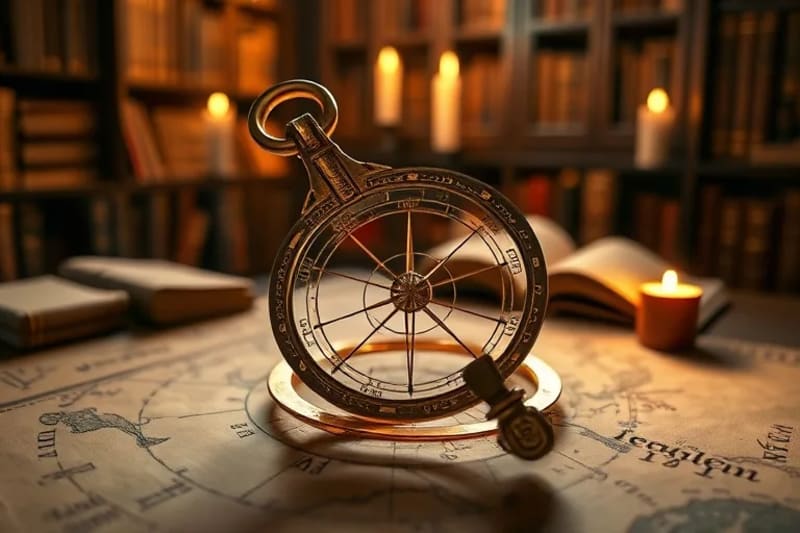
An intricate astrolabe, a tool of ancient astronomers, rests upon a celestial chart, symbolizing the profound wisdom and precision of Hellenistic predictive astrology.
Introduction to Profections and Lord of the Year
In the vast tapestry of astrological prediction, Hellenistic techniques stand out for their systematic approach and depth. Annual Profections offer a method to activate specific houses and their planetary rulers in a natal chart, indicating the primary areas of life that will come into focus during a particular year. This activation is not random; it follows a precise, cyclical movement through the zodiacal houses, starting from the Ascendant at birth and advancing one house per year.
The concept of the Lord of the Year is intrinsically linked to profections. Once a house is profected, its planetary ruler becomes the "Lord of the Year," acting as the primary significator for the themes and events of that period. This planetary ruler's condition—its natal placement, aspects, and current transits—provides crucial information about the nature of the year ahead. Understanding this dynamic interplay is fundamental for anyone seeking to master Hellenistic predictive astrology.
Historical Roots of Hellenistic Astrology
Hellenistic astrology emerged in the Hellenistic period (roughly 3rd century BCE to 7th century CE), a vibrant era of cultural exchange following the conquests of Alexander the Great. It synthesized Babylonian astronomical observations with Egyptian astrological traditions and Greek philosophical thought. This period saw the formalization of many astrological concepts still used today, including the zodiac, planetary rulerships, aspects, and house systems. Profections, alongside techniques like Zodiacal Releasing and planetary periods, formed the bedrock of predictive practice in this era.
Ancient astrologers like Vettius Valens, Dorotheus of Sidon, and Ptolemy extensively documented these methods. Their works provide invaluable insights into the original applications and interpretations of profections. The revival of Hellenistic astrology in modern times has brought these powerful techniques back into prominence, offering a richer, more deterministic, yet ultimately empowering, view of astrological influence compared to some modern approaches.
Unraveling Annual Profections: The Core Mechanism
Annual Profections are a time-lord technique, meaning they designate specific planets as "lords" over certain periods. The mechanism is straightforward yet profound. At birth (age 0), the Ascendant is the starting point. For each subsequent year of life, the profected point moves one house forward in zodiacal order. For instance, at age 1, the 2nd house is profected; at age 2, the 3rd house, and so on. This cycle repeats every 12 years.
The house that is profected for a given year highlights the primary themes and concerns for that year. If the 7th house is profected, relationships, partnerships, and open enemies might be central. If the 10th house is profected, career, public image, and reputation come to the forefront. This simple movement provides an immediate lens through which to view the year's potential focus. For a deeper dive into planetary influences, consider exploring Saturn Astrology: Lessons, Discipline, Growth, as Saturn's role in profections can be particularly impactful.
A digital painting depicting an intricate cosmic clockwork, symbolizing the precise and interconnected mechanisms of astrological predictive techniques.
Beyond annual profections, Hellenistic astrology also utilized monthly and daily profections, which follow the same principle but on a shorter timescale. Monthly profections move one house per month, while daily profections move one house per day. These finer divisions allow for extremely detailed timing of events, though annual profections remain the primary framework for broad yearly themes.
It is crucial to use Whole Sign Houses for profections, as this system aligns with the original Hellenistic practice and ensures that each sign entirely occupies one house. This consistency is vital for accurately identifying the ruler of the profected house, which is the next critical step in this predictive method. The 12-year cycle of profections also resonates with the 12-Year Chinese Zodiac Cycle, highlighting a universal recognition of cyclical time.
Identifying the Lord of the Year: The Annual Ruler
Once the profected house for the year is determined, the next step is to identify its planetary ruler. This planet becomes the "Lord of the Year" (LoY). For example, if the 5th house is profected and it falls in Leo, the Sun would be the Lord of the Year. If it falls in Scorpio, Mars would be the Lord of the Year. This planet then takes on immense significance for the entire year, coloring all experiences and events.
The condition of the Lord of the Year is paramount. Astrologers assess its natal dignity (domicile, exaltation, detriment, fall), its aspects to other natal planets, and its placement by house. A well-dignified and well-aspected Lord of the Year generally indicates a more favorable and productive year concerning the themes of the profected house. Conversely, a debilitated or heavily afflicted Lord of the Year might suggest challenges or difficulties.
Consider the following factors when evaluating the Lord of the Year:
- Natal Dignity: Is the LoY in its domicile, exaltation, fall, or detriment? This speaks to its inherent strength or weakness.
- Natal House Placement: Which natal house does the LoY occupy? This house's themes will also be activated and influence the year.
- Natal Aspects: What aspects does the LoY make to other natal planets? These connections reveal how different life areas will interact.
- Sect: Is the LoY of the same sect as the chart (diurnal chart, diurnal planet; nocturnal chart, nocturnal planet)? Planets in sect tend to operate more beneficently.
- Planetary Joys: Does the LoY reside in its "joyful" house (e.g., Mercury in the 1st, Venus in the 5th)? This can enhance its positive expression.
Interpreting the Lord of the Year: Natal and Transiting Conditions
The interpretation of the Lord of the Year is a multi-layered process. It's not enough to simply identify the planet; its entire astrological context must be considered. The natal condition of the LoY provides the baseline potential and inherent qualities it brings to the year. For instance, if Venus is the LoY and natally placed in the 8th house in detriment, themes of financial partnerships or intimacy might be prominent but also challenging.
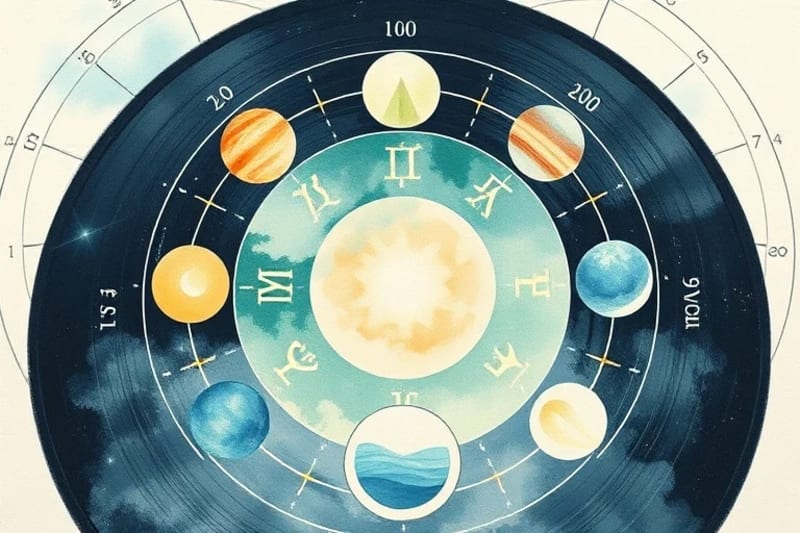
A serene watercolor illustration visually representing the interconnected cycles of annual profections, with delicate planetary symbols guiding the flow.
Crucially, the transiting condition of the Lord of the Year throughout the profected year also plays a significant role. Where is the LoY by transit? What aspects is it making to natal planets? When the transiting LoY makes significant aspects to the natal LoY or other important natal points (like the Ascendant, MC, or luminaries), these periods often mark peak events or intensified experiences related to the year's themes. This integration of natal potential with transiting activation is what makes profections so dynamic.
Furthermore, the house that the Lord of the Year rules natally also becomes highly activated. If Mars is the LoY for a year, and natally Mars rules your 3rd house (communication, siblings) and 8th house (shared resources, transformation), then themes related to these houses will also be prominent, intertwining with the themes of the profected house. This creates a complex web of interconnected significations that a skilled astrologer can unravel.
Practical Application: Annual Forecasting
To apply profections effectively, an astrologer typically follows these steps:
- Calculate the Profected House: Determine the age of the individual and count forward from the Ascendant in Whole Sign Houses.
- Identify the Lord of the Year: Find the planetary ruler of the sign on the cusp of the profected house.
- Analyze the Natal LoY: Evaluate its dignity, house placement, aspects, and sect in the birth chart.
- Analyze the Natal Houses Ruled by LoY: Note which other houses the LoY rules natally.
- Integrate Transits: Observe the transits of the LoY and other major planets (especially Saturn and Jupiter) to the natal chart, paying close attention to aspects to the natal LoY and the profected house.
- Synthesize: Combine all these factors to form a comprehensive narrative for the year.
For example, if someone is in a 7th house profection year (relationships, marriage, open enemies) and Venus is the Lord of the Year, a look at natal Venus would be crucial. If natal Venus is in the 10th house (career, public image) and well-aspected, the year might bring significant relationship developments tied to career or public recognition. If transiting Jupiter conjuncts natal Venus during this year, it could signify a major positive turning point, such as marriage or a beneficial partnership. This method provides a clear focus for Astrology Manifestation: Planetary Transits for Goals, aligning intentions with cosmic timing.
Advanced Considerations in Profections
Beyond the basic framework, several advanced techniques can enrich the interpretation of profections:
- Triplicity Lords: In Hellenistic astrology, each sign has three planetary rulers (triplicity lords) depending on the sect of the chart (day or night). The triplicity lord of the sign of the profected house can offer additional insights, especially the first triplicity lord.
- Planetary Joys: The concept of planetary joys (each planet having a specific house where it thrives) can significantly impact the LoY's expression. If the LoY is in its joy, its benefic qualities are enhanced.
- Receptions: Mutual reception or reception by exaltation between the LoY and other planets can indicate cooperation and ease, even if the planets are otherwise challenged.
- Zodiacal Releasing: This advanced time-lord technique, often used in conjunction with profections, helps to delineate periods of peak activity and stress, providing a complementary layer of timing.
Integrating these layers requires practice and a deep understanding of Hellenistic principles. However, the rewards are substantial, leading to highly precise and actionable astrological forecasts.
Challenges and Nuances in Predictive Astrology
While powerful, mastering profections and the Lord of the Year technique comes with its challenges. One common pitfall is over-simplification. The LoY is not the only factor at play; it interacts with ongoing transits, secondary progressions, and other time-lord techniques. A holistic view is always necessary.
Another nuance lies in understanding planetary symbolism. For example, Mars as a Lord of the Year in a 1st house profection could signify increased energy and initiative, but also potential conflict or physical exertion, depending on its natal condition and transits. The astrologer must discern the specific manifestation based on the individual's chart and life context. This detailed analysis is similar to understanding the intricate traits of specific zodiac signs, such as Pisces Decans: Mystical Traits and Spiritual Journey, where subtle variations create unique expressions.
Finally, the role of free will always remains. Predictive astrology does not dictate fate but illuminates tendencies and energetic currents. Understanding these currents empowers individuals to make conscious choices, navigate challenges more effectively, and seize opportunities as they arise. It is a tool for self-awareness and strategic living, not a rigid script.
Conclusion: Mastering Annual Cycles
Annual Profections and the Lord of the Year technique are indispensable tools in the Hellenistic astrologer's repertoire. They offer a structured, reliable method for understanding the annual unfolding of life's themes, providing clarity and foresight. By meticulously analyzing the profected house, the natal and transiting conditions of the Lord of the Year, and integrating advanced considerations, practitioners can unlock profound insights into the year ahead.
Mastering these techniques requires dedication, study, and practice, but the ability to forecast with such precision is incredibly rewarding. It allows both astrologers and their clients to navigate life's cycles with greater awareness, purpose, and strategic intent, transforming potential challenges into opportunities for growth and self-mastery.
Explore More Astrological Insights
Source: Hybrid content assisted by AI and human editorial supervision.


Comments
Post a Comment