
Cosmic Dream Language: Algorithmic Interpretation Symbolism
Dreams have fascinated humanity since time immemorial, serving as a mysterious conduit between the conscious and subconscious mind. Across cultures and epochs, these nocturnal narratives have been revered as messages from the divine, insights into the future, or profound reflections of our inner world. The quest to decipher their esoteric symbols and hidden meanings continues to drive both ancient traditions and cutting-edge scientific inquiry.
In an era where data and algorithms permeate every aspect of our lives, the interpretation of dreams is undergoing a transformative shift. We are moving beyond purely intuitive or psychoanalytic approaches to explore how computational methods can illuminate the complex patterns and underlying structures of our dreamscapes. This article delves into the cosmic language of dreams, examining its historical roots, psychological underpinnings, and the burgeoning field of algorithmic interpretation that promises to unlock deeper, more personalized insights.
- The Ancient Roots of Dream Interpretation
- Modern Psychology and the Subconscious Realm
- Algorithmic Approaches to Dream Analysis
- Decoding Universal Symbols and Archetypes
- The Neuroscience of Dreaming: Beyond the Mystical
- Practical Application: Leveraging Dream Insights
- Future of Dream Interpretation: AI and Consciousness
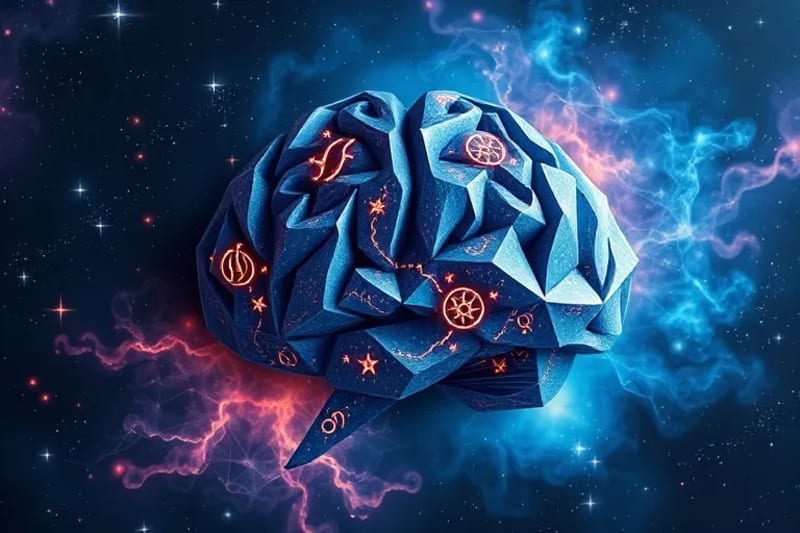
A cosmic nebula intertwines with neural patterns and ancient symbols, illustrating the profound connection between universal energies, human consciousness, and the intricate architecture of our dreams.
The Ancient Roots of Dream Interpretation
From ancient Mesopotamia to classical Greece, dreams were considered divine communications or prophetic visions. The Egyptians meticulously recorded their dreams on papyrus, believing them to be messages from the gods or deceased ancestors. Dream interpreters, often priests or shamans, held significant societal power, guiding rulers and common folk alike based on their nocturnal experiences.
In ancient Greece, temples dedicated to Asclepius, the god of healing, practiced "dream incubation," where seekers would sleep within sacred precincts hoping for divine dreams that revealed remedies for their ailments. Artemidorus of Daldis, in his monumental work "Oneirocritica," compiled a comprehensive guide to dream symbolism, emphasizing the personal context of the dreamer. This historical reverence underscores a universal human impulse to find meaning and guidance within the enigmatic world of dreams.
Across various cultures, the interpretation of dreams was often intertwined with astrological observations and the understanding of planetary influences. For instance, certain planetary hours were believed to be more conducive to prophetic dreams, influencing the quality and clarity of the visions received. This holistic view recognized dreams as part of a larger cosmic tapestry, reflecting both inner states and external celestial dynamics.
Modern Psychology and the Subconscious Realm
The advent of modern psychology brought a more systematic, albeit still interpretive, approach to dreams. Sigmund Freud, the father of psychoanalysis, famously posited that dreams are "the royal road to the unconscious." He believed dreams served as wish fulfillment, with latent content (hidden meaning) disguised by manifest content (the dream as remembered) to bypass the ego's censorship.
Carl Jung, a student of Freud, expanded on this, introducing the concept of the collective unconscious and archetypes. Jung argued that dreams not only reflect personal experiences but also tap into universal symbols and patterns shared by all humanity. For Jung, dreams were not merely wish fulfillments but rather compensatory mechanisms, guiding individuals towards psychological wholeness and individuation.
Contemporary psychological perspectives often integrate elements of both Freudian and Jungian thought, alongside cognitive and neurobiological models. Dreams are now seen as crucial for emotional regulation, memory consolidation, and problem-solving. They provide a unique window into our deepest anxieties, desires, and unresolved conflicts, offering a rich source of self-understanding.
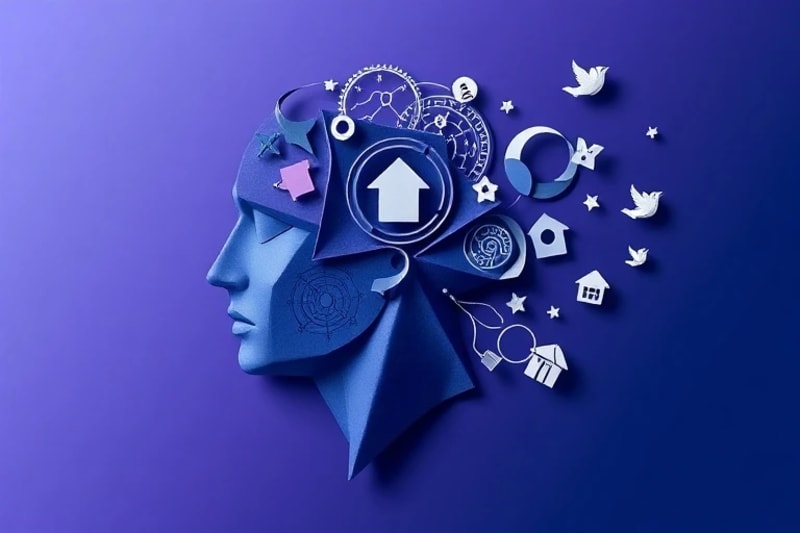
Abstract vector art depicts data flowing from a human head, morphing into symbolic dream imagery, illustrating the computational approach to subconscious interpretation.
Algorithmic Approaches to Dream Analysis
The rise of artificial intelligence and machine learning has opened new frontiers in dream interpretation. Algorithmic approaches aim to move beyond subjective human interpretation by identifying patterns, correlations, and semantic relationships within vast datasets of dream reports. This involves several key steps:
- Data Collection: Gathering extensive dream journals, narratives, and associated personal contexts from individuals.
- Natural Language Processing (NLP): Utilizing NLP techniques to extract key entities, actions, emotions, and themes from dream narratives. This includes identifying recurring symbols, character interactions, and emotional tones.
- Pattern Recognition: Employing machine learning algorithms to detect statistical regularities and relationships between dream elements and the dreamer's waking life experiences, psychological states, or even physiological data.
- Contextual Analysis: Integrating personal data (e.g., daily events, mood logs, health data) to provide a more nuanced and personalized interpretation, moving beyond generic symbol dictionaries.
While still in its nascent stages, algorithmic dream analysis holds immense promise for providing objective, data-driven insights. It can help identify subtle connections that might be missed by human interpreters, offering a more comprehensive understanding of the dream's message. This technology could even be used to analyze collective dream patterns, revealing broader societal anxieties or aspirations, similar to how automatic writing can channel collective unconscious messages.
Decoding Universal Symbols and Archetypes
Central to dream interpretation is the understanding of symbolism. While some symbols are highly personal, many resonate with universal meanings, often rooted in Jungian archetypes or cross-cultural myths. Algorithmic systems can be trained on vast textual corpora to recognize these universal symbols and their common interpretations, while also learning to adapt to individual variations.
The interpretation of dreams is the royal road to a knowledge of the unconscious activities of the mind.
— Sigmund Freud, The Interpretation of Dreams
Consider the symbol of "water." In many cultures, water represents emotions, the unconscious, or purification. A calm lake might signify emotional tranquility, while a turbulent ocean could indicate inner turmoil. An algorithm can process these associations, cross-reference them with the dreamer's recent emotional state, and provide a more refined interpretation. The challenge lies in building systems that can differentiate between the universal and the idiosyncratic aspects of dream symbolism.
Archetypes, such as the Shadow, the Anima/Animus, or the Hero, manifest in dreams through various figures and scenarios. An algorithmic system, with sufficient training data, could potentially identify the presence and interaction of these archetypal energies within a dream narrative, offering insights into the dreamer's journey of individuation or their relationships, much like how astrological charts might reveal patterns in partnerships.
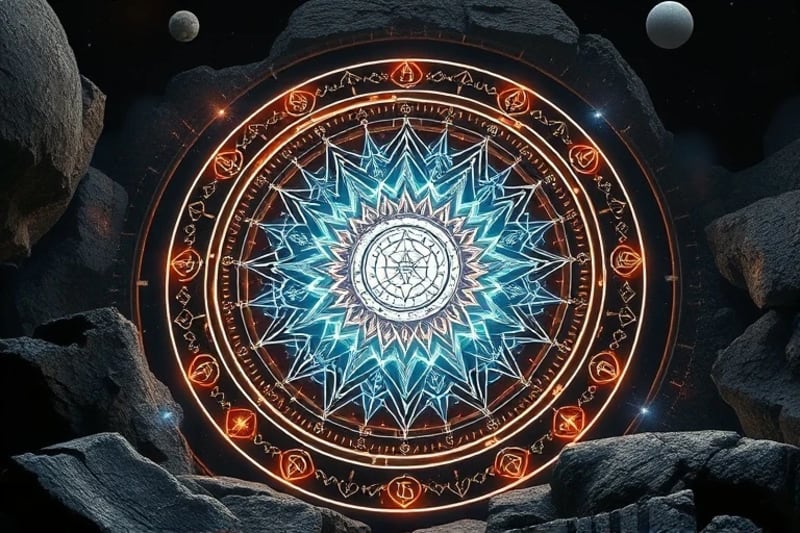
A 3D rendered futuristic interface, showcasing complex algorithms, seamlessly merges with ancient stone tablets bearing esoteric symbols, symbolizing the convergence of ancestral knowledge and cutting-edge AI in dream analysis.
The Neuroscience of Dreaming: Beyond the Mystical
While psychological and symbolic interpretations offer profound meaning, neuroscience provides the physiological backdrop for dreaming. Research into brain activity during REM sleep (Rapid Eye Movement), where most vivid dreams occur, reveals complex neural processes. Studies show activation in areas associated with emotion (amygdala), memory (hippocampus), and visual processing, while logical reasoning areas (prefrontal cortex) are less active, explaining the often bizarre and illogical nature of dreams.
The Activation-Synthesis Hypothesis, proposed by Hobson and McCarley, suggests that dreams are the brain's attempt to make sense of random neural firings during sleep. While this theory initially downplayed psychological meaning, later versions acknowledge that the "synthesis" process is influenced by our memories, emotions, and experiences, thereby reintroducing the potential for meaning.
Advanced neuroimaging techniques are beginning to map the brain activity corresponding to specific dream content. This could one day lead to "dream reading" technologies, where algorithms interpret neural signals directly, offering an even more objective and detailed account of our nocturnal experiences. Such advancements promise to bridge the gap between the subjective experience of dreaming and its objective neurological underpinnings.
Practical Application: Leveraging Dream Insights
The practical benefits of understanding our dreams are manifold. Dream interpretation can be a powerful tool for self-discovery, emotional healing, and personal growth. By bringing unconscious conflicts and desires into conscious awareness, individuals can address underlying issues, improve relationships, and make more informed decisions in their waking lives.
For therapists, dream analysis remains a valuable technique, offering insights into a client's inner world that might not be accessible through conscious discourse. Algorithmic tools could augment this process, providing therapists with data-driven insights and pattern identification, enhancing the efficacy of treatment.
Beyond therapy, dream insights can foster creativity, inspire artistic expression, and even aid in problem-solving. Many scientists and artists have reported breakthroughs occurring during or immediately after dreams. By actively engaging with our dream content, whether through traditional methods or advanced algorithms, we can tap into a wellspring of intuition and innovative thought.
Future of Dream Interpretation: AI and Consciousness
The future of dream interpretation lies at the intersection of psychology, neuroscience, and artificial intelligence. Imagine a personalized AI companion that learns your unique dream language over time, offering real-time interpretations and insights. Such a system could integrate biometric data, daily activities, and even social media interactions to provide a truly holistic analysis of your dream life.
Ethical considerations, however, will be paramount. Privacy of dream data, the potential for misinterpretation, and the impact on our understanding of consciousness itself will require careful navigation. As we delve deeper into the algorithmic decoding of dreams, we must ensure that these powerful tools serve to enhance human understanding and well-being, rather than diminish the rich, subjective experience of dreaming.
Ultimately, the cosmic language of dreams, whether interpreted through ancient wisdom or advanced algorithms, remains a profound testament to the complexity and depth of the human mind. It invites us to explore the hidden dimensions of our existence, offering pathways to self-knowledge and connection with the greater cosmic narrative.
Explore More Cosmic Insights
Source: Hybrid content assisted by AI and human editorial supervision.


Comments
Post a Comment