
Guided Meditation Emotional Well-being Moon Phases
Guided meditation offers a powerful pathway to emotional well-being, providing a structured approach to mindfulness and inner peace. When this practice is harmonized with the ancient wisdom of lunar cycles, its potential for self-discovery and emotional balance amplifies significantly. The moon, with its ever-changing phases, has long been revered across cultures as a symbol of transformation, intuition, and emotional tides.
Understanding and intentionally aligning our meditative practices with these cosmic rhythms can help us tap into deeper emotional reserves, release what no longer serves us, and manifest new intentions with greater clarity. This article explores the profound connection between guided meditation and the moon phases, offering practical insights and techniques to integrate these powerful forces into your daily life for enhanced emotional well-being.
Table of Contents
- Understanding Guided Meditation for Emotional Health
- The Lunar Cycle and its Energetic Influence
- Meditation for the New Moon: Setting Intentions
- Meditation for the Waxing Moon: Cultivating Growth
- Meditation for the Full Moon: Releasing and Celebrating
- Meditation for the Waning Moon: Introspection and Letting Go
- The Synergy of Science and Spirituality in Lunar Meditation
- Practical Tips for Integrating Lunar Meditations
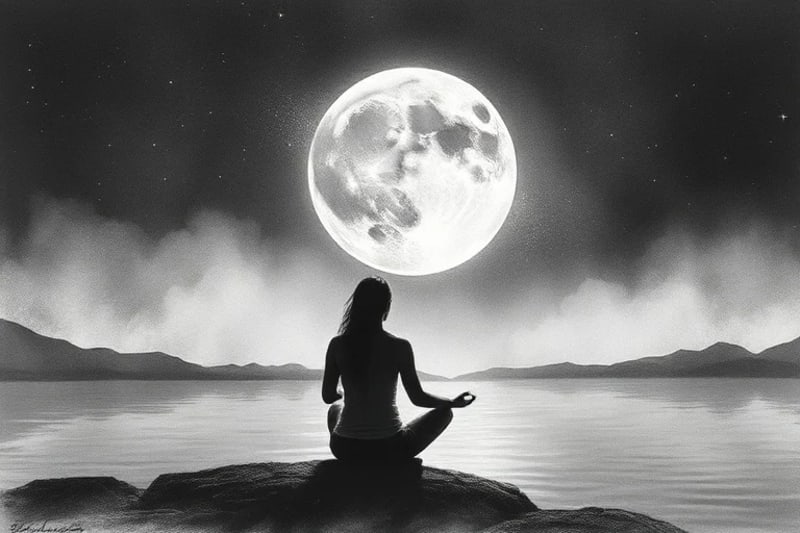 A serene figure meditating under the radiant glow of a full moon, symbolizing the deep connection between inner tranquility and celestial cycles.
Fuente visual sujeta a disponibilidad del ecosistema: Wikimedia Commons bajo licencia CC BY-SA 4.0 o renderizado conceptual IA.
A serene figure meditating under the radiant glow of a full moon, symbolizing the deep connection between inner tranquility and celestial cycles.
Fuente visual sujeta a disponibilidad del ecosistema: Wikimedia Commons bajo licencia CC BY-SA 4.0 o renderizado conceptual IA.
Understanding Guided Meditation for Emotional Health
Guided meditation involves following verbal instructions—either from a teacher, an audio recording, or a script—to direct one's focus and achieve a state of relaxation and mindfulness. This practice is increasingly recognized for its profound benefits on emotional well-being, offering tools to manage stress, reduce anxiety, and cultivate a more positive outlook on life.
Scientific studies have shown that regular meditation can lead to changes in brain structure, particularly in areas associated with emotion regulation, self-awareness, and memory. It helps individuals develop a greater capacity to observe their thoughts and feelings without judgment, fostering emotional resilience and reducing reactivity to challenging situations. For more on how psychological archetypes influence our inner world, consider exploring resources on Psycho Astrology Jungian Archetypes Natal Chart.
The structured nature of guided meditation makes it accessible to beginners, providing a gentle entry point into mindfulness. By focusing on breath, bodily sensations, or specific visualizations, practitioners learn to quiet the incessant chatter of the mind and connect with their inner selves. This connection is crucial for understanding and processing emotions in a healthy way.
The Lunar Cycle and its Energetic Influence
The moon's cycle, approximately 29.5 days long, is divided into eight distinct phases, each carrying a unique energetic signature. These phases are not merely astronomical events; they are believed to influence earthly tides, biological rhythms, and human emotions. Ancient traditions and modern spiritual practices often leverage these energies for personal growth and manifestation.
From the introspective New Moon to the illuminating Full Moon, each phase offers an opportune moment for specific types of meditation and intention-setting. Understanding these energies allows us to synchronize our internal world with the external cosmic dance, creating a powerful synergy for emotional and spiritual development. Similarly, understanding other cosmic influences, like those discussed in Chinese Lunar Calendar: Feng Shui, Personal Timing Applications, can further deepen this connection.
| Moon Phase | Key Energy/Focus | Emotional Significance |
|---|---|---|
| New Moon | New beginnings, planting seeds, intention setting | Introspection, fresh starts, quiet reflection |
| Waxing Crescent | Emergence, initial action, building momentum | Hope, motivation, gentle growth |
| First Quarter | Challenge, commitment, overcoming obstacles | Determination, courage, problem-solving |
| Waxing Gibbous | Refinement, preparation, fine-tuning | Anticipation, adjustment, patience |
| Full Moon | Culmination, illumination, release, gratitude | Emotional intensity, clarity, celebration, letting go |
| Waning Gibbous | Gratitude, sharing, introspection, evaluation | Reflection, wisdom, sharing insights |
| Last Quarter | Release, forgiveness, cleansing, re-evaluation | Processing, surrender, emotional detox |
| Waning Crescent | Rest, surrender, quiet preparation for new cycle | Peace, acceptance, deep rest, trust |
Meditation for the New Moon: Setting Intentions
The New Moon, often invisible in the night sky, symbolizes a fresh start, a blank canvas for new intentions and desires. This is an ideal time for introspective meditation focused on what you wish to cultivate in the coming month. Guided meditations during this phase often involve visualization of goals and planting metaphorical seeds for future growth.
Guided Meditation Practice for New Moon:
- Find a quiet space and sit comfortably. Close your eyes and focus on your breath.
- Visualize a dark, fertile soil beneath you, ready to receive new seeds.
- Bring to mind one or two intentions you wish to manifest. See them clearly, feel them deeply.
- Imagine planting these intentions as seeds into the fertile ground, knowing they will grow with the moon's light.
- Affirm your intentions silently or aloud.
- End with gratitude for the opportunity to begin anew.
Meditation for the Waxing Moon: Cultivating Growth
As the moon grows from a slender crescent to a full orb, its waxing energy supports growth, action, and development. This phase is perfect for meditations that help you nurture your intentions, overcome challenges, and build momentum towards your goals. Focus on cultivating positive habits and strengthening your resolve.
 An abstract representation of emotional flow and harmony, integrating subtle lunar symbolism to reflect inner balance.
Guided Meditation Practice for Waxing Moon:
- Begin with deep breathing, grounding yourself in the present moment.
- Recall the intentions you set during the New Moon.
- Visualize these intentions as young plants, slowly growing and reaching towards the light.
- Focus on any obstacles you might face and imagine yourself gracefully overcoming them, drawing strength from the moon's increasing light.
- Affirm your commitment to your growth and progress.
Meditation for the Full Moon: Releasing and Celebrating
The Full Moon is a time of culmination, illumination, and heightened energy. It's when intentions set during the New Moon come to fruition, or when aspects of ourselves that need release become most apparent. Guided meditations during this phase often focus on gratitude for what has manifested and the powerful act of letting go of what no longer serves your highest good. This can be a potent time for shadow work, integrating aspects of the self that have been suppressed, as explored in Shadow Work: Integrating Your Darker Self.
Guided Meditation Practice for Full Moon:
- Sit under the direct light of the Full Moon if possible, or visualize its bright glow.
- Reflect on your journey since the New Moon. Acknowledge your achievements and express gratitude.
- Identify any emotions, beliefs, or patterns that are holding you back. Visualize them as leaves falling from a tree, carried away by a gentle breeze.
- Imagine yourself cleansed and renewed by the moon's light, ready to release all burdens.
- Conclude with a feeling of lightness and liberation.
Meditation for the Waning Moon: Introspection and Letting Go
As the moon diminishes in light, it invites us into a period of introspection, release, and preparation for the next cycle. The Waning Moon phases are ideal for meditations focused on self-reflection, forgiveness, and decluttering both physical and emotional spaces. This is a time to process experiences, integrate lessons learned, and prepare for renewal.
 An intricate cosmic mechanism, symbolizing the precise and interconnected cycles that influence both the universe and our emotional landscape.
Guided Meditation Practice for Waning Moon:
- Lie down or sit comfortably, allowing your body to relax deeply.
- Reflect on any emotional baggage or unresolved issues from the past month.
- Imagine a gentle stream flowing through you, washing away any negativity, tension, or stagnant energy.
- Practice forgiveness—for yourself and others—allowing compassion to fill your heart.
- Embrace the feeling of release and make space for what is to come.
The Synergy of Science and Spirituality in Lunar Meditation
While the direct scientific correlation between moon phases and individual human emotions is still a subject of ongoing research, the psychological benefits of aligning personal practices with natural cycles are well-documented. Establishing routines and rituals, especially those connected to nature, can provide a sense of stability, purpose, and connection.
From a scientific perspective, meditation itself has quantifiable positive effects on brain function, stress reduction, and emotional regulation. When combined with the symbolic power of the moon, these practices gain an added layer of meaning and intention, which can enhance their effectiveness. This synergy bridges the gap between ancient wisdom and modern understanding, offering a holistic approach to well-being.
Practical Tips for Integrating Lunar Meditations
To effectively integrate guided meditation with moon phases into your routine, consistency and mindful awareness are key. Start by tracking the moon phases using a lunar calendar or an astrology app. This will help you anticipate the energetic shifts and prepare your meditations accordingly.
Consider creating a dedicated space for your practice, perhaps with elements that resonate with the moon's energy, such as crystals, candles, or soft lighting. Remember that flexibility is also important; if you miss a day, simply resume your practice without judgment. The goal is to cultivate a supportive relationship with both your inner self and the cosmic rhythms.
Incorporating journaling alongside your meditations can also be incredibly beneficial. Document your intentions, reflections, and emotional experiences during each phase. This practice allows you to observe patterns, track your growth, and deepen your understanding of how lunar energies influence your personal journey. For those interested in deeper astrological insights, exploring topics like Astrology Houses: Deep Dive into Life's Arenas can provide further context.
Ultimately, aligning your guided meditation for emotional well-being with moon phases is a journey of self-discovery and empowerment. It invites you to live in greater harmony with the natural world, fostering a profound sense of peace and emotional resilience.
Key Takeaways for Lunar Meditation
- New Moon: Ideal for setting fresh intentions and visualizing new beginnings.
- Waxing Moon: Focus on nurturing growth, taking action, and overcoming challenges.
- Full Moon: A powerful time for releasing what no longer serves and expressing gratitude.
- Waning Moon: Best for introspection, forgiveness, and preparing for renewal.
- Consistency: Regular practice amplifies the benefits of lunar alignment.
- Journaling: Track your emotional journey and insights throughout the lunar cycle.
Explore Further: Related Topics
Deepen your understanding of self and the cosmos with these related articles:
Source: Hybrid content assisted by AI and human editorial supervision.


Comments
Post a Comment