
Astro-Herbalism: Crafting Custom Natal Tinctures Planetary Rulerships
Astro-herbalism is an ancient practice that harmonizes the celestial influences of astrology with the healing properties of botanical medicine. This intricate system posits that each planet, zodiac sign, and astrological house corresponds to specific herbs, body parts, and health conditions. By understanding an individual's unique natal chart, practitioners can craft personalized herbal remedies, such as tinctures, designed to balance energetic imbalances and support overall well-being.
This holistic approach moves beyond generic remedies, offering a deeply individualized path to health that considers the cosmic blueprint of a person's birth. The synergy between celestial movements and earthly flora has been observed and documented across various cultures for millennia, forming a rich tapestry of knowledge that continues to evolve today. Modern astro-herbalism seeks to revive and adapt these timeless principles for contemporary application.
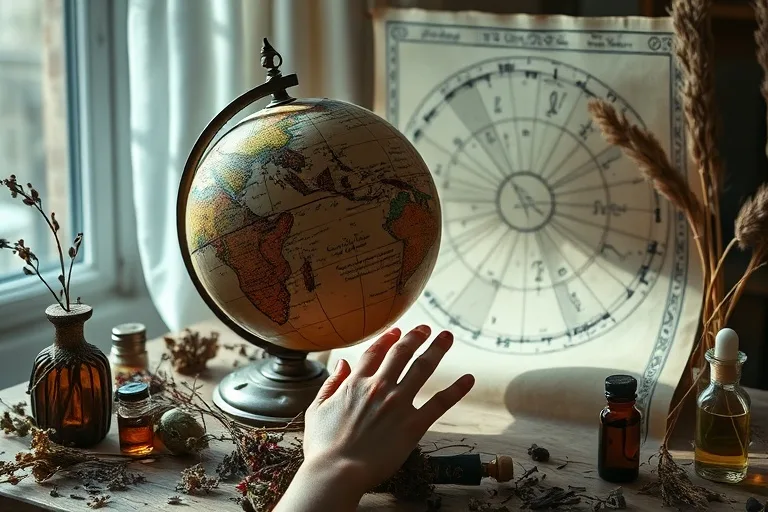
An antique celestial globe surrounded by an array of dried herbs and glass tincture bottles, bathed in ethereal light, symbolizing the ancient wisdom of astro-herbalism.
Table of Contents
- The Foundations of Astro-Herbalism
- Understanding Your Natal Chart for Herbal Insights
- Key Planetary-Herbal Correspondences
- Crafting Your Custom Tinctures
- Integrating Astro-Herbalism into Daily Life
- Safety and Professional Guidance
- Conclusion: The Future of Personalized Herbal Wellness
The Foundations of Astro-Herbalism
Astro-herbalism is rooted in the principle of "as above, so below," suggesting a profound connection between celestial patterns and terrestrial life. This philosophy, central to hermetic traditions, posits that the microcosm (humanity) mirrors the macrocosm (the cosmos). Therefore, planetary positions at the time of birth can reveal inherent strengths, weaknesses, and energetic predispositions that can be addressed through specific herbal allies.
Historically, civilizations from ancient Mesopotamia to Egypt, Greece, and China integrated astrological principles into their medical practices. Physicians like Hippocrates and later figures such as Nicholas Culpeper extensively documented the links between planets, signs, and herbs. Culpeper's seminal work, The English Physician (1652), remains a cornerstone for many modern astro-herbalists, detailing how to diagnose and treat ailments based on astrological influences.
Planetary Rulerships: Celestial Guides to Herbal Allies
Each planet in astrology is associated with particular energies, functions, and even physical parts of the body. These associations form the basis for selecting appropriate herbs. For instance, the Sun, representing vitality and the heart, is linked to herbs that invigorate and support cardiovascular health. The Moon, governing emotions and fluids, corresponds to calming and hydrating plants.
Understanding these planetary archetypes is crucial for the astro-herbalist. A planet's condition in the natal chart – its sign, house placement, and aspects to other planets – indicates where a person might experience energetic excesses or deficiencies. Herbs ruled by that planet can then be used to bring balance, either by strengthening a weak planetary influence or calming an overactive one.
Zodiacal Rulerships: Signs and Their Botanical Kin
Beyond planetary rulerships, each of the twelve zodiac signs also governs specific body parts and predispositions. For example, Aries rules the head, Taurus the neck and throat, and Gemini the lungs and nervous system. Herbs associated with these signs can offer targeted support to these areas.
While planetary rulerships often take precedence in selecting primary herbs, zodiacal associations provide additional layers of nuance. An herb ruled by a planet that is strong in a particular zodiac sign in your chart might be especially potent for you. This layered approach ensures a highly personalized and effective herbal protocol.
Understanding Your Natal Chart for Herbal Insights
Your natal chart is a snapshot of the heavens at the exact moment of your birth, revealing your unique energetic blueprint. To effectively practice astro-herbalism, a foundational understanding of your chart is essential. This involves identifying the positions of the Sun, Moon, and planets, as well as the Ascendant and the houses they occupy.
Sun, Moon, and Ascendant: Core Energetic Signatures
These three pillars of the natal chart offer profound insights into your core being and general constitution. The Sun represents your vital life force, ego, and overall health. Its sign and house placement indicate areas of strength and potential vulnerability. Herbs ruled by your Sun sign can enhance vitality and address core imbalances.
The Moon governs your emotional body, subconscious patterns, and physical well-being related to fluids, digestion, and nurturing. A challenging Moon placement might suggest emotional sensitivity or digestive issues, for which lunar herbs can provide soothing support. The Ascendant (rising sign) dictates your physical body, outward persona, and how you interact with the world. Herbs associated with your Ascendant sign can support the physical constitution and address superficial symptoms.
Planets in Signs and Houses: Specific Health Predispositions
Each planet's placement in a specific zodiac sign and astrological house further refines the herbal prescription. For example, if Mars (ruling energy, inflammation) is in a challenging sign or house, one might be prone to inflammatory conditions. Martian herbs, such as nettle or cayenne, could be used to either stimulate or calm this energy, depending on the specific manifestation.
The houses represent different areas of life, including health. The 6th house, for instance, is traditionally associated with daily routines, health, and illness. Planets residing here, or the sign on its cusp, offer clues about potential health challenges and the types of herbs that would be most beneficial for maintaining balance in these areas.
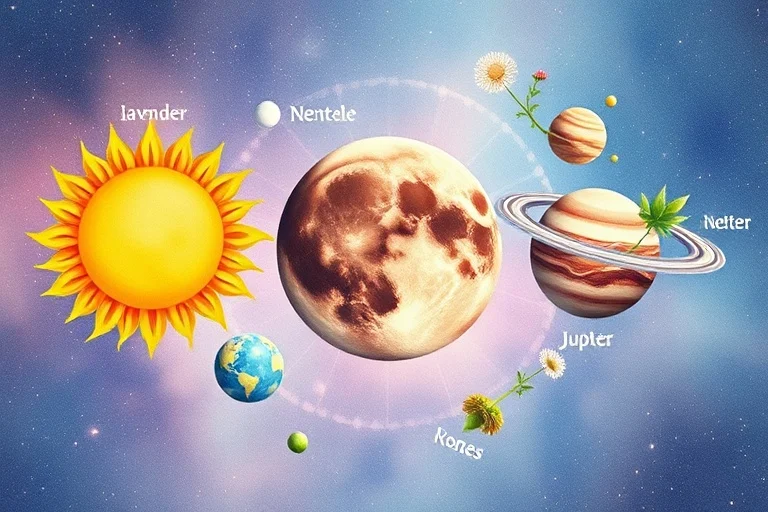
A vibrant watercolor illustration depicting the solar system, with each planet subtly linked to its corresponding healing herb.
Aspects: Challenges, Strengths, and Herbal Support
Aspects are the angular relationships between planets in your natal chart, indicating how different energies interact. Harmonious aspects (trines, sextiles) suggest ease and natural flow, while challenging aspects (squares, oppositions) point to areas of tension, growth, or potential imbalance. These aspects are critical for a nuanced herbal approach.
For instance, a square between Mars and Saturn might indicate issues with chronic inflammation or structural rigidity. Here, herbs that support both Martian (anti-inflammatory) and Saturnian (strengthening, grounding) energies would be considered. The goal is to use herbs not just to treat symptoms, but to address the underlying energetic dynamics revealed by the astrological aspects.
Key Planetary-Herbal Correspondences
The following table provides a general overview of common planetary rulerships and their associated herbs. It's important to remember that these are simplified examples, and a comprehensive astro-herbal consultation would involve a much deeper analysis of specific species, preparations, and individual chart nuances.
| Planet | Associated Body Parts/Functions | Common Herbal Allies | Energetic Qualities |
|---|---|---|---|
| Sun | Heart, spine, vitality, general health | Rosemary, Calendula, St. John's Wort, Hawthorn | Invigorating, uplifting, heart-strengthening |
| Moon | Stomach, breasts, bodily fluids, emotions | Chamomile, Lemon Balm, Passionflower, Mugwort | Calming, soothing, fluid-balancing, dream-enhancing |
| Mercury | Nervous system, lungs, hands, communication | Lavender, Peppermint, Valerian, Skullcap | Nerve-calming, cognitive-enhancing, respiratory support |
| Venus | Kidneys, throat, skin, beauty, pleasure | Rose, Damiana, Lady's Mantle, Marshmallow | Beautifying, harmonizing, soothing, aphrodisiac |
| Mars | Muscles, blood, adrenal glands, energy, inflammation | Nettle, Garlic, Cayenne, Ginger, Dandelion Root | Stimulating, warming, anti-inflammatory, detoxifying |
| Jupiter | Liver, hips, thighs, growth, abundance | Dandelion, Burdock, Milk Thistle, Sage | Detoxifying, liver-supporting, expansive, protective |
| Saturn | Bones, teeth, skin, structure, discipline | Comfrey, Horsetail, Solomon's Seal, Oat Straw | Strengthening, grounding, structural support, longevity |
| Uranus | Nervous system, ankles, sudden changes, innovation | Kava Kava, Skullcap, California Poppy | Relaxing, anti-spasmodic, nerve-calming, insight-enhancing |
| Neptune | Pineal gland, lymphatic system, dreams, spirituality | Mugwort, Blue Lotus, Reishi, Damiana | Dream-enhancing, spiritual opening, immune support |
| Pluto | Reproductive organs, elimination, transformation, regeneration | Reishi, Ashwagandha, Chaga, Wormwood | Deep healing, adaptogenic, transformative, detoxifying |
Crafting Your Custom Tinctures
Tinctures are concentrated liquid herbal extracts, typically made by soaking herbs in alcohol (or sometimes glycerin or vinegar). This method effectively extracts the medicinal compounds from the plant, preserving them for an extended period. Crafting your own custom tinctures based on your natal chart is a powerful way to engage with astro-herbalism.
What is a Tincture? The Art of Extraction
A tincture is essentially a potent herbal infusion. The alcohol acts as a solvent, drawing out the active constituents from the plant material. This allows for a highly bioavailable form of herbal medicine that is easy to store and administer. The concentration of a tincture can vary, but generally, a ratio of 1:3 or 1:5 (herb to solvent) is common for fresh herbs, and 1:5 or 1:10 for dried herbs.
The choice of solvent is important; high-proof alcohol (like vodka or grain alcohol) is most effective for extracting a broad spectrum of compounds. For those avoiding alcohol, vegetable glycerin or apple cider vinegar can be used, though their extractive power might be less comprehensive for certain herbs. The duration of maceration also plays a role in the tincture's potency.
Choosing Your Herbs: A Natal Chart-Guided Selection
This is where your natal chart becomes your personal guide. Start by identifying any planets in challenging aspects or signs that might indicate areas needing support. For example, if you have a debilitated Moon, you might choose calming lunar herbs like Chamomile or Lemon Balm to support emotional balance and digestion.
Consider the overall themes of your chart. Is there a strong emphasis on a particular element (fire, earth, air, water) that needs balancing? Are there specific health concerns that align with planetary or zodiacal rulerships? You might also consider herbs ruled by your Sun, Moon, or Ascendant to generally strengthen your core constitution. For example, if you have a strong Jupiter, you might benefit from liver-supporting herbs like Dandelion, even if you don't have explicit liver issues, to enhance your natural expansive and detoxifying tendencies. For a deeper dive into integrating astrological energies, exploring concepts like Chakra-Astrology Integration can provide additional layers of insight.
The Process: A Step-by-Step Guide to Tincture Making
Crafting a tincture is a simple yet rewarding process. Here’s a basic overview:
- Gather Your Materials: Fresh or dried herbs, high-proof alcohol (e.g., 80-100 proof vodka), glass jars with tight-fitting lids, labels, and a fine-mesh strainer or cheesecloth.
- Prepare Your Herbs: If using fresh herbs, chop them finely. If dried, they can be used as is, or lightly crushed.
- Fill the Jar: For fresh herbs, fill the jar about two-thirds full. For dried herbs, fill it about halfway. The goal is to ensure the herbs are fully submerged.
- Add the Solvent: Pour alcohol over the herbs, ensuring they are completely covered by at least an inch of liquid. Stir gently to release any air bubbles.
- Macerate: Seal the jar tightly and store it in a cool, dark place for 2-6 weeks. Shake the jar daily or every few days to ensure proper extraction.
- Strain: After the maceration period, strain the liquid through a fine-mesh strainer lined with cheesecloth. Squeeze out all the liquid from the herbs.
- Bottle and Label: Pour the strained tincture into dark glass dropper bottles. Label clearly with the herb(s) used, the date of creation, and the planetary association.
Ethical Sourcing and Sustainability
As with any herbal practice, ethical sourcing is paramount. Always ensure your herbs are sustainably harvested or organically grown. If wildcrafting, do so responsibly, taking only what you need and leaving plenty for the plant to regenerate. Supporting local organic farmers or reputable herbal suppliers is an excellent way to ensure quality and sustainability.
Understanding the ecological impact of your choices aligns with the holistic principles of astro-herbalism, recognizing the interconnectedness of all life. A healthy planet supports healthy plants, which in turn support healthy individuals.
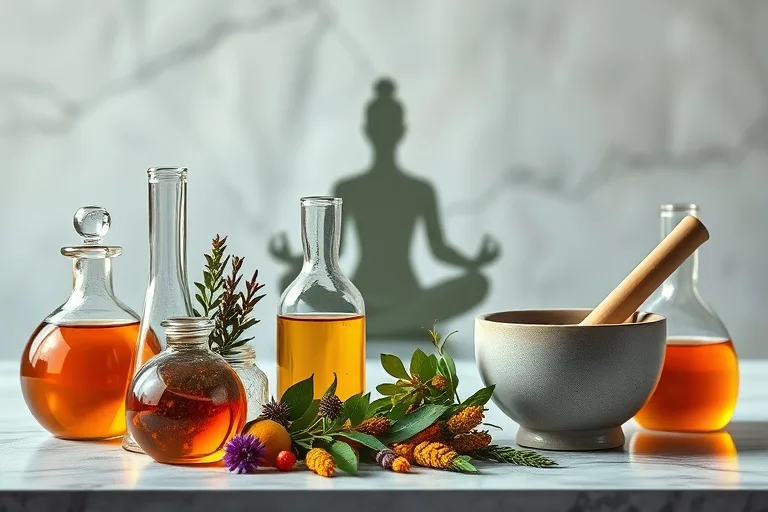
A modern 3D render of a minimalist laboratory, showcasing clear glass vessels, fresh herbs, and amber tinctures, emphasizing the precise craft of herbal extraction.
Integrating Astro-Herbalism into Daily Life
Beyond crafting tinctures, astro-herbalism encourages a deeper, more mindful relationship with nature and your own body. Integrating this practice into daily life can enhance its benefits and foster a greater sense of self-awareness and connection.
Mindful Consumption and Ritual
Taking your custom tincture can become a daily ritual. Before consuming, take a moment to connect with the intention behind the remedy. Reflect on the planetary energies you are inviting in or balancing. This mindful approach can amplify the tincture's effects, transforming a simple act into a powerful moment of self-care and energetic alignment.
Consider the timing of your doses. For example, if you are using a solar herb for vitality, taking it during the day, especially around noon, might align with its energetic peak. Lunar herbs for calming might be more effective in the evening. This conscious timing further integrates astrological principles into your herbal practice.
Observing Planetary Cycles and Transits
Astro-herbalism isn't static; it evolves with the ongoing dance of the planets. Observing current planetary transits can offer additional insights into your daily needs. A challenging transit to a natal planet might indicate a temporary need for herbs associated with that planet to help navigate the energetic shifts. For instance, a difficult Saturn transit might call for grounding, strengthening Saturnian herbs to help cope with increased pressure or responsibility.
Conversely, a harmonious transit might be an excellent time to reinforce positive planetary energies with their corresponding herbs. This dynamic approach allows for continuous adaptation and fine-tuning of your herbal regimen, making it a living, breathing practice that evolves with you. The study of Planetary Dignities can deepen this understanding.
Safety and Professional Guidance
While astro-herbalism offers a powerful path to personalized wellness, it is crucial to approach it with caution and respect. Herbal medicine, though natural, is potent and can interact with medications or have contraindications for certain health conditions. Self-diagnosis and self-treatment, especially for serious conditions, are not recommended.
Always consult with a qualified healthcare professional, such as a medical doctor, licensed herbalist, or naturopath, before starting any new herbal regimen, particularly if you are pregnant, nursing, or taking prescription medications. An experienced astro-herbalist can provide personalized guidance, ensuring the safe and effective use of herbs based on your unique astrological and physiological profile.
Furthermore, ensure you are using high-quality, ethically sourced herbs. Adulterated or contaminated herbs can be ineffective or even harmful. Education and responsible practice are the cornerstones of effective and safe astro-herbalism.
Conclusion: The Future of Personalized Herbal Wellness
Astro-herbalism represents a profound synthesis of ancient wisdom and personalized wellness. By meticulously aligning herbal remedies with the intricate patterns of an individual's natal chart, it offers a path to healing that is deeply resonant and uniquely tailored. This practice moves beyond symptomatic relief, aiming to address the energetic roots of imbalances by honoring the cosmic influences that shape our physical and emotional landscapes.
As interest in holistic and individualized health solutions continues to grow, astro-herbalism stands out as a sophisticated and deeply intuitive approach. It invites us to reconnect with the rhythms of nature and the cosmos, fostering a greater understanding of ourselves and our place within the universe. By crafting custom tinctures based on planetary rulerships, we not only create potent remedies but also engage in a sacred act of self-discovery and empowerment, aligning our inner world with the celestial dance above.
Fuente: Contenido híbrido asistido por IAs y supervisión editorial humana.


Comments
Post a Comment