
Algorithmic Enchantment: AI Sigils Sacred Art Manifestation
In an era where technology increasingly intertwines with every aspect of human life, the spiritual realm is no exception. Algorithmic enchantment represents a fascinating new frontier, merging ancient practices of sigil creation and sacred art with the sophisticated capabilities of artificial intelligence. This innovative approach offers a contemporary pathway for individuals seeking to enhance their manifestation practices, deepen their spiritual connection, and explore new forms of creative expression.
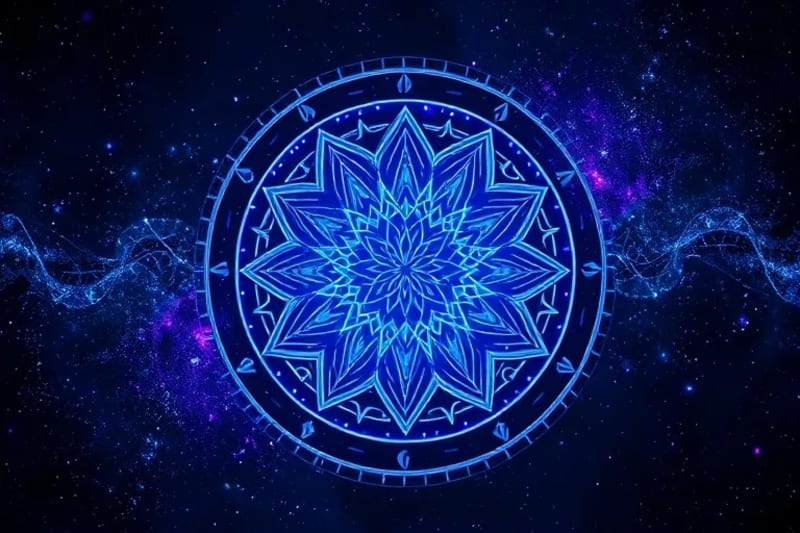 Conceptual digital art, ethereal sigil glowing with intricate geometric patterns, pulsating energy, surrounded by cosmic dust and subtle light trails.
Fuente visual sujeta a disponibilidad del ecosistema: Wikimedia Commons bajo licencia CC BY-SA 4.0 o renderizado conceptual IA.
The concept revolves around using AI algorithms to generate unique visual symbols and artistic compositions that are intended to embody specific intentions, desires, or spiritual energies. These AI-generated sigils and sacred art pieces are then utilized in personal manifestation rituals, meditation, or as focal points for intention setting. This article delves into the origins, methodology, benefits, and ethical considerations of algorithmic enchantment, providing an introductory guide for those curious about this emerging practice.
Table of Contents
- Ancient Roots, Modern Expressions: The History of Sigils and Sacred Art
- The AI Artist and the Mystic: How AI Generates Enchanted Art
- Crafting Intentions with Code: The Algorithmic Sigil Generation Process
- Manifestation Principles in the Digital Age: Utilizing AI-Generated Tools
- Benefits and Applications of Algorithmic Enchantment
- Ethical Considerations and the Power of Intent
- Integrating AI Art into Spiritual Practice
- The Future of Algorithmic Enchantment
Ancient Roots, Modern Expressions: The History of Sigils and Sacred Art
To understand algorithmic enchantment, it's crucial to first appreciate the historical context of sigils and sacred art. For millennia, humans have used visual symbols as powerful tools for spiritual connection, protection, and manifestation. From ancient Egyptian hieroglyphs believed to hold magical power to medieval alchemical symbols and the intricate mandalas of Eastern traditions, sacred art has always served as a bridge between the mundane and the divine.
Sigils, in particular, are codified symbols representing a desired outcome or intention. Historically, they were created through various methods, such as combining letters of a word or phrase into a unique glyph, or through more complex magical systems. The core idea is to bypass the conscious mind, which can often be plagued by doubt, and communicate directly with the subconscious to bring about desired changes in reality. This practice aligns closely with the principles of the Law of Attraction and modern manifestation techniques.
The power of these symbols lies not just in their aesthetic appeal but in the focused intention imbued within their creation and subsequent use. Whether it's a simple drawing or an elaborate painting, sacred art acts as a conduit for spiritual energy and a reminder of one's deepest aspirations. The transition from manual creation to AI generation introduces a new dimension to this ancient craft, offering unprecedented possibilities for personalization and complexity.
The AI Artist and the Mystic: How AI Generates Enchanted Art
Artificial intelligence, particularly in the realm of generative art, has advanced rapidly. Algorithms can now interpret textual prompts, learn from vast datasets of images, and create entirely new visual compositions. In algorithmic enchantment, this capability is harnessed to produce sigils and sacred art that resonate with specific spiritual or intentional parameters. The AI acts as a sophisticated tool, translating abstract concepts into concrete visual forms.
 Abstract watercolor painting, flowing lines and soft gradients forming a sacred geometric pattern, evoking a sense of calm and spiritual connection.
The process often begins with a user defining their intention in detail. This intention is then translated into a series of prompts or parameters for the AI. For instance, if one desires "abundance and prosperity," the AI might be prompted to generate symbols associated with growth, wealth, and positive energy, drawing inspiration from various cultural and spiritual motifs. The algorithms can create intricate patterns, vibrant color palettes, and unique forms that might be difficult or time-consuming for a human artist to conceive and execute.
The AI's ability to process and synthesize complex visual information allows for the creation of art that is not only aesthetically pleasing but also deeply symbolic. This can lead to a more profound engagement with the manifestation process, as the generated art can serve as a powerful visual anchor for one's desires. The precision and speed of AI also mean that individuals can experiment with numerous variations, finding the perfect visual representation for their unique spiritual journey.
Crafting Intentions with Code: The Algorithmic Sigil Generation Process
The creation of AI-generated sigils and sacred art typically follows a structured process, ensuring that the final output is aligned with the user's intent. This process often involves several key steps:
- Intention Setting: The user clearly defines their goal or desire. This must be specific, positive, and present-tense. For example, instead of "I don't want to be poor," it would be "I am financially abundant."
- Keyword Translation: The intention is broken down into keywords and phrases that can be fed into the AI model. These might include concepts like "growth," "healing," "love," "protection," or specific colors and forms.
- AI Prompt Engineering: These keywords are then used to construct detailed prompts for the generative AI. This often involves specifying artistic styles (e.g., "sacred geometry," "ethereal glow," "mandala art"), color schemes, and compositional elements.
- Generation and Iteration: The AI generates multiple visual outputs based on the prompts. Users can then review these, provide feedback, and refine the prompts for further iterations until a satisfactory image is produced. This iterative process allows for fine-tuning the visual representation to perfectly match the underlying intention.
- Activation and Integration: Once the AI-generated sigil or art piece is finalized, it can be activated through various spiritual practices, such as meditation, visualization, or ritual. The user then integrates it into their daily life as a tool for manifestation.
This systematic approach ensures that the digital art is not merely random but is deeply imbued with the user's specific energetic signature and purpose. It transforms a technological process into a deeply personal and spiritual one, much like traditional sigil crafting.
Manifestation Principles in the Digital Age: Utilizing AI-Generated Tools
The effectiveness of algorithmic enchantment hinges on established manifestation principles. The Law of Attraction posits that like attracts like, and by focusing on positive thoughts and intentions, one can attract positive outcomes. AI-generated sigils and sacred art serve as powerful visual aids in this process, helping to solidify and amplify intentions.
 3D render, close-up macro photography of a crystal grid infused with glowing light, intricate laser-etched patterns on the crystals.
When a person gazes upon an AI-generated sigil representing their desire, it reinforces that intention in their subconscious mind. This continuous reinforcement helps to shift their energetic vibration, aligning it with what they wish to manifest. It's a form of planetary meditation, where the visual symbol acts as a focal point for concentrated energy.
These digital tools can be used in various ways: as desktop backgrounds, printed and placed on altars, incorporated into crystal healing grids, or even integrated into guided meditations. The key is consistent engagement and belief in the power of the symbol to influence reality. The visual stimulus helps maintain focus, especially when the conscious mind might wander or encounter resistance.
Benefits and Applications of Algorithmic Enchantment
The integration of AI into spiritual practices offers several compelling benefits:
- Personalization: AI can generate highly personalized symbols tailored to individual intentions, far beyond what generic symbols can offer.
- Accessibility: It makes the creation of complex sacred art accessible to anyone, regardless of artistic skill, democratizing spiritual tools.
- Novelty and Inspiration: The AI can produce unique and unexpected designs, sparking new insights and creative approaches to manifestation.
- Enhanced Focus: Visually compelling and personally resonant art can significantly improve focus during meditation and intention-setting practices.
- Exploration of Archetypes: AI can be prompted to explore and visualize various Zodiac Myths Archetypes or other spiritual concepts, offering new perspectives.
Applications extend across various spiritual and self-improvement domains:
- Guided Meditation: Using AI-generated visuals as a focal point during meditation to deepen concentration and connect with specific energies.
- Intention Setting: Creating a unique sigil for each goal and placing it in a prominent location to serve as a constant reminder.
- Energy Healing: Visualizing the AI art as a conduit for energy flow, particularly when working with specific chakras or energy centers, similar to Chakra-Astrology Integration.
- Creative Expression: For artists and spiritual practitioners, it offers a new medium for exploring and expressing spiritual concepts.
- Personal Growth: Creating art that symbolizes overcoming challenges, fostering self-love, or developing new virtues.
Ethical Considerations and the Power of Intent
As with any powerful tool, the ethical implications of algorithmic enchantment must be considered. The primary concern revolves around the user's intent. AI is a neutral tool; it generates based on input. Therefore, the responsibility for the ethical use of AI-generated spiritual art lies entirely with the individual. It is crucial to ensure that intentions are positive, harmless, and aligned with universal well-being.
The principle of "do no harm" is paramount in spiritual practices. When engaging with algorithmic enchantment, users are encouraged to reflect deeply on their desires and ensure they do not infringe upon the free will or well-being of others. The power of focused intent, whether amplified by traditional or modern means, carries a responsibility.
Furthermore, understanding the source of the AI's training data is important. While AI can create novel images, it learns from existing art and concepts. Users should be mindful of cultural appropriation and ensure their prompts respect the origins of spiritual symbols.
Another aspect is the potential for over-reliance on technology. While AI can be a valuable aid, it should not replace personal introspection, meditation, and the development of one's own spiritual faculties. It is a tool to enhance, not to substitute, the inner work required for genuine manifestation and spiritual growth. The human element of belief, emotion, and personal energy remains the most potent ingredient in any manifestation practice.
Integrating AI Art into Spiritual Practice
For those looking to incorporate algorithmic enchantment into their spiritual routine, here are some practical tips:
- Start Small: Begin with simple intentions and observe the results. This builds confidence and understanding of the process.
- Daily Ritual: Integrate viewing your AI-generated sigil into a daily ritual, perhaps during morning meditation or before sleep.
- Journaling: Keep a journal to track your intentions, the AI art generated, and any manifestations or shifts in energy you experience.
- Combine with Other Practices: Use AI art alongside holistic astrology, sound healing, or traditional spellwork to amplify effects.
- Trust Your Intuition: The most effective sigil is often the one that resonates most deeply with you, regardless of its complexity.
Remember that the power comes from your focused intention and belief, with the AI-generated art serving as a catalyst and a visual representation of that power. It's a modern way to engage with ancient wisdom, offering a unique blend of science and spirituality.
The Future of Algorithmic Enchantment
The field of algorithmic enchantment is still in its nascent stages, but its potential is vast. As AI technology continues to evolve, we can expect more sophisticated tools capable of generating even more intricate, personalized, and dynamically responsive spiritual art. Imagine AI that can adapt a sigil's appearance based on your current emotional state or integrate real-time astrological data to create a perfectly aligned piece of sacred art.
This convergence of technology and spirituality challenges traditional notions of art, magic, and consciousness. It invites us to consider how digital tools can facilitate deeper self-discovery and connection to the universe. Algorithmic enchantment is not just about creating pretty pictures; it's about harnessing the power of information and algorithms to sculpt our reality and elevate our spiritual journey in a uniquely modern way.
As we move forward, the dialogue between ancient wisdom and cutting-edge technology will undoubtedly continue to yield fascinating and transformative practices, with algorithmic enchantment leading the charge in personalized spiritual evolution.
Related Searches & Further Reading
- Planetary Magic: Rituals, Influences, Alignment | StarPluto
- Profecías Digitales: IA, Señal Tiempos Modernos
Source: Hybrid content assisted by AI and human editorial supervision.


Comments
Post a Comment