
Planetary Dignities: Electional Astrology & Synastry Insights
Advanced Planetary Dignities: Beyond Rulerships in Electional Astrology & Synastry
Planetary dignities form the bedrock of traditional astrological interpretation, offering nuanced insights into a planet's strength, effectiveness, and comfort within a specific zodiacal sign or house. While basic concepts like rulership and exaltation are widely understood, advanced dignities extend this framework, providing a far more intricate lens through which to analyze natal charts, predict outcomes in electional astrology, and understand interpersonal dynamics in synastry. This exploration delves into these deeper layers, moving beyond the superficial to uncover the profound influence of a planet's essential and accidental strengths and weaknesses.
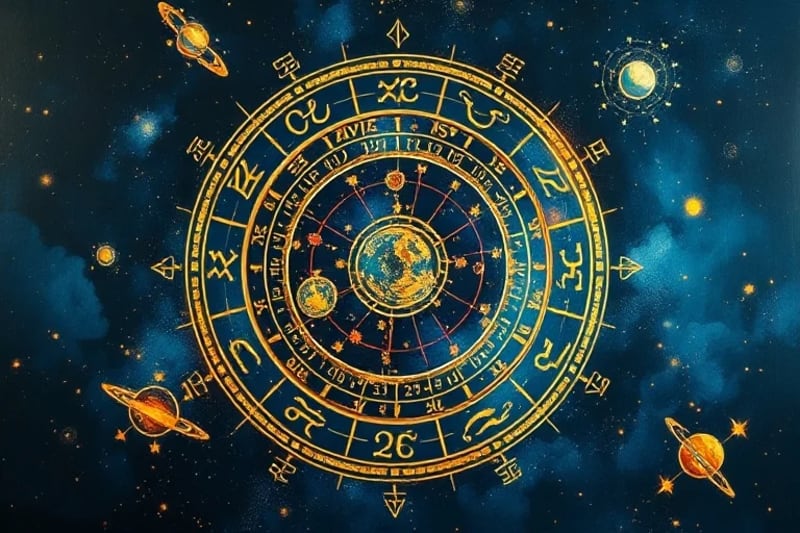 Conceptual renderings of celestial mechanics, ancient astrological symbols, and energetic patterns that illuminate the intricate dance of planetary dignities in the cosmic tapestry.
Fuente visual sujeta a disponibilidad del ecosistema: Wikimedia Commons bajo licencia CC BY-SA 4.0 o renderizado conceptual IA.
Understanding these advanced dignities is crucial for any serious astrologer, as they unlock a layer of precision that can dramatically refine interpretations. A planet may be in its domicile (rulership), granting it significant power, but its overall effectiveness can be further enhanced or diminished by its position in triplicity, term, face, and various accidental dignities. These subtle distinctions allow for a more holistic and accurate assessment of planetary influence.
Table of Contents
- Revisiting Essential Dignities: The Foundation
- Debilities and Peregrine States: When Planets Struggle
- Accidental Dignities: Contextual Strengths
- Application in Electional Astrology: Timing is Everything
- Synastry Dynamics: Interplanetary Relationships
- Modern Interpretations and Esoteric Symbolism
- Conclusion: Mastering the Cosmic Language
Revisiting Essential Dignities: The Foundation
Essential dignities describe a planet's inherent strength or weakness based on its zodiacal position. These are the "home advantages" or "disadvantages" a planet possesses, influencing how freely and effectively it can express its nature. While rulership (domicile) and exaltation are the most well-known, triplicity, term, and face offer additional layers of detail.
- Rulership (Domicile): A planet in its ruling sign is like a king in his own kingdom, operating with full authority and comfort. For example, Mars rules Aries and Scorpio, feeling strong and authentic in these signs.
- Exaltation: Here, a planet is in a sign where it is highly honored and celebrated, even if it's not its home. It performs exceptionally well, like a guest of honor. The Sun is exalted in Aries, for instance.
- Triplicity: This dignity divides the zodiac into four elements (fire, earth, air, water), each ruled by a set of three planets (day ruler, night ruler, participating ruler). A planet in its triplicity has moderate strength, like a trusted advisor in a familiar territory.
- Term (Bounds): Each sign is further divided into unequal segments, or "terms," each ruled by a specific planet. A planet in its own term gains a small but significant boost in power, like having a small, secure personal property within a larger domain.
- Face (Decan): The least powerful of the essential dignities, each sign is divided into three 10-degree segments, or "faces," each ruled by a planet. A planet in its own face has minimal essential dignity, providing a slight sense of familiarity but little true authority.
These foundational dignities provide a hierarchical structure, with rulership being the strongest and face the weakest. A planet can simultaneously hold multiple dignities, compounding its strength, or be in a state of debility, which we will explore next. This intricate system allows for a highly nuanced understanding of a planet's inherent qualities, which is critical for accurate chart analysis.
Debilities and Peregrine States: When Planets Struggle
Just as planets can be strong, they can also be in states of debility, where their expression is hindered or compromised. These conditions are equally important for a comprehensive astrological reading.
- Detriment: A planet in its detriment is in the sign opposite its rulership. It's like being in an enemy's territory, where its natural functions are challenged or reversed. Venus, ruling Taurus and Libra, is in detriment in Scorpio and Aries, respectively.
- Fall: A planet in its fall is in the sign opposite its exaltation. Here, it is in a place where it feels disrespected or unable to perform its best, like a guest of honor who has fallen from grace. The Sun, exalted in Aries, is in its fall in Libra.
- Peregrine: A planet is considered peregrine if it holds no essential dignities (rulership, exaltation, triplicity, term, or face) in the sign it occupies. This state is often likened to a traveler without a home or a soldier without a commander. A peregrine planet is not inherently weak or bad, but its actions are less directed, more prone to external influences, and can sometimes be erratic or opportunistic. Its strength will depend heavily on accidental dignities and aspects.
 A collection of antique astrological tools and texts, symbolizing the deep historical roots and intricate calculations involved in understanding planetary influences.
Understanding these debilities helps astrologers identify areas of potential struggle or challenge in a chart. A planet in detriment or fall may represent an area where an individual faces inherent difficulties or where certain energies are expressed in an awkward or counterproductive manner. The peregrine state, while not a debility, signifies a lack of intrinsic support, making the planet's influence highly dependent on its surroundings.
Accidental Dignities: Contextual Strengths
Beyond essential dignities, accidental dignities refer to a planet's strength or weakness based on its position within the chart's houses, its speed, direction, and aspects to other planets. These are "situational advantages" or "disadvantages" that modify how a planet can act, regardless of its essential nature. A planet may be essentially weak but accidentally strong, or vice versa.
- Angularity: Planets in angular houses (1st, 4th, 7th, 10th) are considered very strong and influential, as they are "on display" and directly impact the native's life.
- Succedent Houses: Planets in succedent houses (2nd, 5th, 8th, 11th) have moderate strength, providing support and resources.
- Cadent Houses: Planets in cadent houses (3rd, 6th, 9th, 12th) are generally weaker, often indicating areas of learning, adjustment, or hidden influence.
- Direct Motion: A planet moving direct is stronger and more effective than one in retrograde motion, which can indicate delays or internal processing.
- Speed: A planet moving at its average or faster-than-average speed is considered stronger.
- Aspects: Benefic aspects (trines, sextiles) from other planets can lend strength, while malefic aspects (squares, oppositions) can diminish it.
- Joy: A planet is in its "joy" when it is in a specific house where it is said to operate most comfortably and effectively (e.g., Mercury in the 1st house, Moon in the 3rd).
- Combust/Under the Sun's Beams: Planets too close to the Sun are considered weakened or "burnt up," losing their independent influence.
These accidental dignities paint a dynamic picture of a planet's operational capacity within a specific chart. A planet might be in its detriment (essentially weak) but in an angular house (accidentally strong), leading to a complex expression of its energy – perhaps a challenging energy that is nonetheless prominent and impactful. This interplay is vital for a comprehensive analysis, especially in fields like electional astrology. For a deeper understanding of how cosmic cycles influence personal intentions, consider exploring Celestial Mechanics Manifestation: Aligning Intentions Cosmic Cycles.
Application in Electional Astrology: Timing is Everything
Electional astrology is the art of choosing the most auspicious moment to initiate an event, based on the planetary positions. Here, advanced dignities are not just interpretive tools but critical decision-making factors. The goal is to select a chart where the planets relevant to the endeavor are as strong as possible, both essentially and accidentally.
- Identifying the Lord of the Ascendant: This planet represents the native or the endeavor itself. It must be well-dignified (in rulership, exaltation, triplicity, or term) and accidentally strong (angular, direct, fast, free from combustion or malefic aspects).
- Strengthening the Significator of the Matter: If the election is for a specific purpose (e.g., a business venture, a marriage), the planet signifying that matter (e.g., Jupiter for business, Venus for marriage) must also be robustly dignified.
- Avoiding Debilities: Planets in detriment or fall, or peregrine planets with no accidental support, are generally avoided as significators. Retrograde planets can indicate delays or reversals, making them unsuitable for initiating new ventures.
- Moon's Condition: The Moon's condition is paramount in electional astrology. It should ideally be increasing in light, free from combustion, not in the via combusta (the latter half of Libra and first half of Scorpio), and making benefic aspects, especially to the significator.
For example, if one is electing a time for a new business, Jupiter (significator of wealth, expansion) should be strong. Ideally, Jupiter would be in its domicile (Sagittarius or Pisces) or exaltation (Cancer), in an angular house, direct, and receiving positive aspects. Conversely, if Mars (conflict) or Saturn (delays) were in detriment or fall and afflicted, it would be a poor time to start. This meticulous approach ensures that the chosen moment carries the greatest potential for success. The ethical implications of using such predictive tools are also significant, as discussed in AI Predictive Astrology Ethics: Navigating Collective Trends.
Synastry Dynamics: Interplanetary Relationships
In synastry, the comparison of two natal charts, advanced dignities offer profound insights into the nature of the relationship. They reveal how each individual's planetary energies interact and whether they support, challenge, or neutralize each other. It's not just about aspects between planets, but also the inherent strength of those planets in each person's chart.
 An abstract visual representation of two astrological charts merging, with energetic lines illustrating the complex interplay of planetary influences in synastry.
- Mutual Reception by Dignity: When two planets are in each other's dignities (e.g., Mars in Venus's sign and Venus in Mars's sign), they are said to be in mutual reception. This creates a strong, cooperative bond between the energies of those planets, even if they are not aspecting each other. In synastry, this can indicate a natural understanding or flow in the areas governed by those planets.
- Planets in Each Other's Debilities: If Person A's Venus is in detriment in Person B's chart, and vice versa, it could indicate a challenging dynamic where each person struggles to appreciate or support the other's Venusian (love, values) expression.
- Receiving Planets: A planet that receives another planet into its essential dignity (e.g., Person A's Moon in Cancer, where Person B's Jupiter is placed) is said to "receive" that planet. This signifies a welcoming and supportive interaction, where the receiving planet is happy to host the other's energy. This can greatly soften difficult aspects or enhance harmonious ones.
- Planets in Peregrine: If a key relationship planet (like Venus or Mars) is peregrine in one person's chart, its expression in the relationship might be less stable or more easily swayed by the partner's influences. The partner's well-dignified planets could either provide much-needed direction or overwhelm the peregrine planet.
Advanced dignities in synastry move beyond simple attraction or conflict, revealing the underlying quality of how two individuals' energies blend. They can explain why certain aspects manifest positively or negatively, depending on the inherent strength and reception of the involved planets. This adds a profound layer of psychological and energetic understanding to relationship astrology, complementing the insights gained from analyzing North Node Houses: Karmic Mission, Evolutionary Purpose Birth Chart.
Modern Interpretations and Esoteric Symbolism
While rooted in traditional astrology, the concepts of advanced dignities continue to evolve with modern interpretations. Contemporary astrologers often integrate these classical frameworks with psychological and spiritual insights, viewing dignities not just as indicators of strength, but as symbols of an individual's inherent comfort, confidence, or challenge in expressing specific archetypal energies.
Esoteric symbolism further enriches this understanding. Each dignity can be seen as a specific energetic resonance, a particular frequency at which a planet operates. A planet in rulership resonates with its purest, most unadulterated frequency, while one in detriment may resonate with a distorted or inverted frequency. This symbolic language allows for a deeper, more intuitive grasp of the planetary energies at play, moving beyond rigid rules to a more fluid, energetic understanding.
For example, a peregrine planet might symbolize an individual's journey to find their authentic voice or purpose, lacking predefined support but possessing the freedom to forge their own path. This aligns with the idea of Manifestation Astrology: Intentional Living Guide, where understanding one's inherent planetary strengths and weaknesses can inform conscious creation. The integration of ancient wisdom with modern psychological frameworks offers a richer, more comprehensive approach to astrological counseling and self-discovery.
Conclusion: Mastering the Cosmic Language
Advanced planetary dignities are far more than mere astrological footnotes; they are fundamental keys to unlocking the intricate language of the cosmos. By moving beyond basic rulerships and embracing the full spectrum of essential and accidental dignities, astrologers can achieve unparalleled precision in chart interpretation, electional timing, and synastry analysis. These tools empower practitioners to understand not just what a planet represents, but how effectively it can manifest its influence in a given context.
Mastering this nuanced system requires diligent study and practice, but the rewards are immense. It allows for a deeper appreciation of the subtle forces at play in a natal chart, guiding individuals towards more informed decisions and fostering a profound understanding of their relationships and life path. In an increasingly complex world, the ancient wisdom embedded in advanced planetary dignities offers a timeless compass for navigating the cosmic currents.
Explore Further Insights
Manifestation Astrology: Intentional Living Guide
Bio-Resonance Morphic Fields: Ancestral Trauma Healing
AI Predictive Astrology Ethics: Navigating Collective Trends
North Node Houses: Karmic Mission, Evolutionary Purpose
Chinese Zodiac: Rat Rabbit Compatibility Analysis
Numerology & Name Analysis: Uncovering Your Destiny
Celestial Mechanics Manifestation: Aligning Intentions
Chinese Zodiac Elements: Interplay, Influence
Astral Projection: Out-of-Body Experiences Spiritual Travel
Advanced Dragon Phoenix Compatibility: Beyond Basics
Predictive Horoscopes: Transits, Progressions Explained
Elemental Magic: Harnessing Elements for Manifestation
Techno-Shamanism Virtual Reality Ancient Rituals Healing
5th House Astrology: Creativity, Romance, Children Guide
Chinese Zodiac Financial Luck: Prosperity Strategies Guide
Cyber Threats 2024: Trends, Predictions, Strategies
Vision 2030 AstroFuturo: Astrological Trends Global Impact
Apocryphal Prophecies Esoteric Eschatology: End Times Visions
Source: Hybrid content assisted by AI and human editorial supervision.


Comments
Post a Comment