
Predictive Horoscopes: Transits, Progressions Explained | StarPluto
Predictive horoscopes offer a profound lens through which to understand the unfolding narrative of our lives, drawing insights from the continuous dance of celestial bodies. Far beyond simple daily forecasts, these advanced astrological techniques provide a nuanced framework for anticipating periods of growth, challenge, and transformation. By analyzing the dynamic relationship between the current positions of planets and their placements at the moment of our birth, astrologers can illuminate potential pathways and offer guidance for navigating life's intricate journey.
This introduction delves into two primary methods of predictive astrology: transits and progressions. While both techniques aim to forecast future trends and personal developments, they operate on distinct principles and offer different layers of insight. Understanding their mechanisms and interpretations can empower individuals to make more informed decisions, embrace opportunities, and confront obstacles with greater awareness.
Table of Contents
- What are Predictive Horoscopes?
- Understanding Astrological Transits
- Understanding Astrological Progressions
- Transits vs. Progressions: Key Differences
- How to Use Predictive Horoscopes for Personal Growth
- Ethical Considerations and Responsible Interpretation
What are Predictive Horoscopes?
Predictive horoscopes are a branch of astrology focused on forecasting future events, trends, and psychological shifts in an individual's life. Unlike natal astrology, which analyzes the birth chart as a static blueprint of personality and potential, predictive astrology examines how the ongoing movement of planets (transits) and symbolic advancements of the birth chart (progressions) interact with this natal blueprint. These interactions are believed to trigger specific themes, challenges, and opportunities.
The core idea is that the cosmos continues to influence us beyond our birth moment. As planets move through the zodiac, they form angles, or "aspects," to the planets and points in our natal chart. These aspects are interpreted as energetic activations, prompting us to engage with certain life areas or psychological patterns. Predictive astrology does not dictate fate but rather highlights periods of heightened potential or necessary introspection, offering a roadmap for conscious evolution.

A digital 3D illustration depicting a Tarot Esoteric Geometry: Unlocking Universal Truths Sacred Shapes, symbolizing the intricate and interconnected timing of astrological events in predictive horoscopes.
Understanding Astrological Transits
Astrological transits refer to the current positions of the planets in the sky as they move through the zodiac, forming aspects to the planets and points in an individual's static natal chart. These real-time planetary movements act as external influences, triggering specific themes or events in our lives. Think of transits as the cosmic weather patterns that we experience, which can affect our mood, opportunities, and challenges.
Definition and Mechanism
A transit occurs when a planet moving in the sky forms a specific angular relationship (e.g., conjunction, opposition, square, trine, sextile) with a planet or sensitive point in your birth chart. Each planet carries a unique energetic signature, and when it aspects a natal planet, it activates the themes associated with both the transiting planet and the natal planet, as well as the houses they rule.
For example, if transiting Saturn forms a square to your natal Sun, it might indicate a period of increased responsibility, challenges to your ego, or a need to restructure your life goals. The duration and intensity of a transit depend on the speed of the transiting planet; outer planets (Uranus, Neptune, Pluto) move slowly and create long-lasting, profound shifts, while inner planets (Mercury, Venus, Mars) move quickly, creating more fleeting, day-to-day influences.
Major Transits (Outer Planets)
The transits of the outer planets—Jupiter, Saturn, Uranus, Neptune, and Pluto—are considered the most significant in predictive astrology due to their slow movement and profound impact. These transits often mark major life cycles, periods of significant personal transformation, and collective shifts. Their effects can be felt for months or even years, shaping the foundational aspects of an individual's experience.
- Jupiter Transits: Bring opportunities for growth, expansion, luck, and learning. They highlight areas where we can broaden our horizons, often associated with travel, education, or spiritual development.
- Saturn Transits: Impose structure, discipline, responsibility, and tests. They demand maturity and effort, often revealing areas where we need to build stronger foundations or face limitations.
- Uranus Transits: Usher in sudden changes, breakthroughs, rebellion, and innovation. They challenge the status quo and encourage liberation from restrictive patterns, often leading to unexpected shifts in career or relationships.
- Neptune Transits: Involve dissolution, idealism, spiritual awakening, confusion, and sometimes deception. They can blur boundaries, enhance intuition, or lead to a search for deeper meaning.
- Pluto Transits: Represent deep transformation, power struggles, death and rebirth cycles, and profound psychological shifts. These transits force us to confront our deepest fears and undergo radical change.
Minor Transits (Inner Planets)
The inner planets—Sun, Moon, Mercury, Venus, and Mars—move much faster, creating more frequent and shorter-lived transits. While less profound than outer planet transits, they contribute to the daily ebb and flow of life, influencing our moods, communications, social interactions, and energy levels. These transits often provide the context for how major transits manifest on a day-to-day basis.
- Sun Transits: Highlight areas of focus, self-expression, and vitality. They can bring attention to specific life departments.
- Moon Transits: Influence emotions, instincts, and daily routines. They change every 2-3 days, reflecting our fluctuating inner states.
- Mercury Transits: Affect communication, thinking, learning, and travel. They can bring periods of heightened mental activity or miscommunication.
- Venus Transits: Relate to relationships, love, money, values, and aesthetics. They can bring opportunities for connection or financial adjustments.
- Mars Transits: Stir up energy, action, assertion, and conflict. They can motivate us to pursue goals or confront challenges.
Interpreting Transits
Interpreting transits requires considering several factors: the transiting planet's nature, the natal planet being aspected, the type of aspect (conjunction, square, trine, etc.), and the houses involved. A challenging aspect (square, opposition) might indicate tension or obstacles, while harmonious aspects (trine, sextile) suggest ease and opportunity. The house where the transit occurs indicates the life area affected, such as career, relationships, or home life.

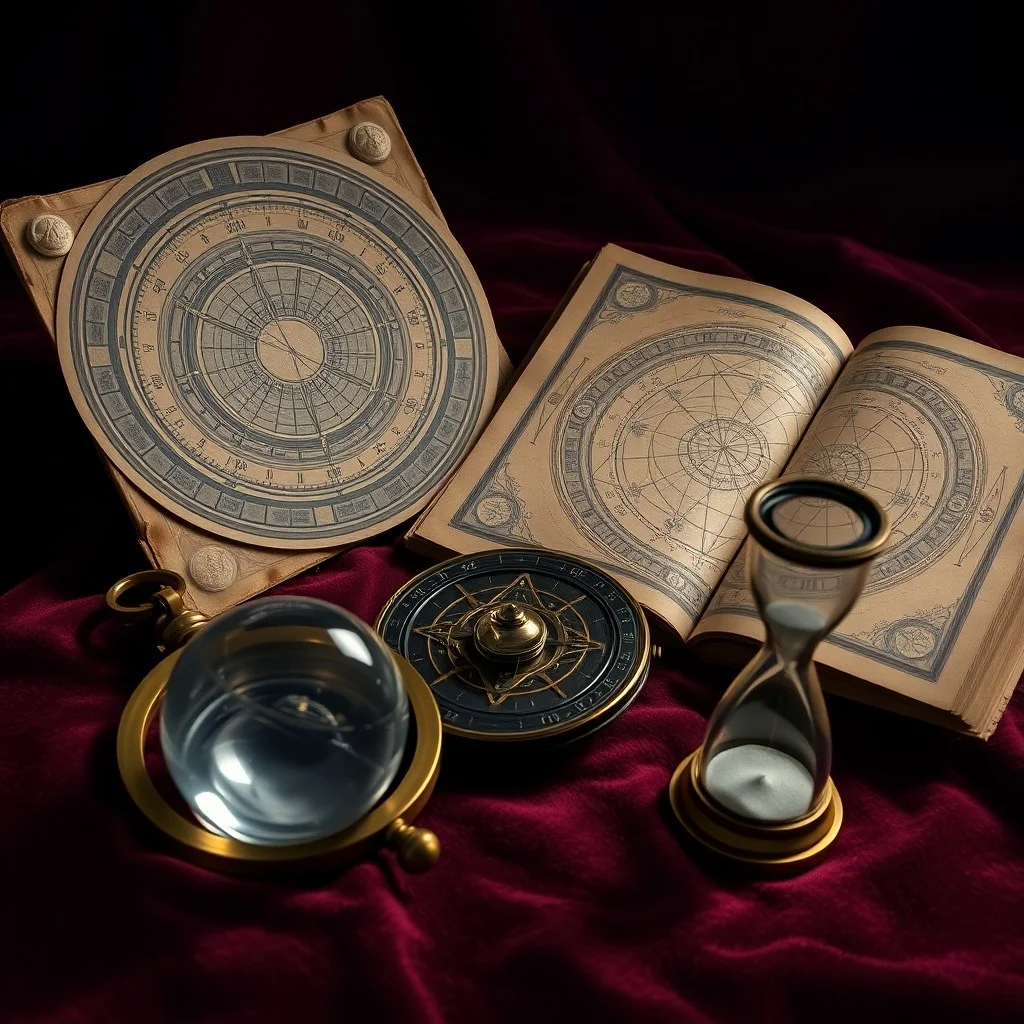
A cinematic still life captures the essence of Tarot Esoteric Geometry: Unlocking Universal Truths Sacred Shapes, with an open vintage book and tools under moonlight, reflecting deep cosmic exploration.
Understanding Astrological Progressions
Astrological progressions are a symbolic method of advancing the natal chart forward in time to reflect an individual's internal psychological and spiritual evolution. Unlike transits, which are external planetary influences, progressions represent the unfolding of the birth chart's potential from within. They operate on the principle of "a day for a year," meaning each day after birth corresponds to one year of life.
Definition and Mechanism (Secondary Progressions)
The most common type of progression is secondary progression. In this method, the planetary positions for each day after birth are calculated as if they represent a year of life. For example, if you are 30 years old, an astrologer would look at the planetary positions 30 days after your birth to understand your current progressed chart. This progressed chart is then compared to your natal chart to identify significant aspects.
Progressions reveal internal growth, shifts in perspective, and the timing of major life stages. They are less about external events and more about our readiness to meet those events, our changing motivations, and our evolving sense of self. Progressions often coincide with significant personal milestones, such as career changes, marriage, or spiritual awakenings.
Progressed Moon
The Progressed Moon is one of the most important elements in predictive astrology because it moves relatively quickly, changing signs approximately every 2.5 years and houses every 2-3 years. Its movement highlights the areas of life where our emotional focus, needs, and experiences are evolving. The sign and house the Progressed Moon occupies indicate where our inner world is currently being stimulated and what emotional lessons we are learning.
- Progressed Moon in a new sign: Often marks a shift in emotional orientation and how we seek comfort and security.
- Progressed Moon in a new house: Directs our emotional energy and daily life focus to the themes of that house.
- Aspects from the Progressed Moon: Can trigger periods of emotional intensity, relationship developments, or shifts in our sense of belonging.
Progressed Sun
The Progressed Sun moves much slower, changing signs approximately every 30 years. It signifies a profound, long-term shift in our core identity, purpose, and self-expression. When the Progressed Sun changes signs, it often marks a major life chapter where our fundamental drives and life direction undergo a significant reorientation. This is a subtle but powerful influence, reflecting deep internal development rather than external events.
Other Progressed Planets
While the Progressed Moon and Sun are key, other planets also progress, albeit even more slowly. The Progressed Ascendant and Midheaven also shift, indicating changes in our self-presentation, life path, and public image. Inner planets like Mercury, Venus, and Mars progress at varying rates, influencing our evolving communication styles, values, and assertiveness. Outer planets move so slowly that they rarely change signs by progression within a lifetime, but their aspects to natal planets can still be significant.
Interpreting Progressions
Interpreting progressions involves comparing the progressed chart to the natal chart, looking for key aspects and changes in sign and house placements. The most potent progressed aspects are typically conjunctions, squares, and oppositions to natal planets, as these signify periods of intense internal growth and potential turning points. Progressions reveal our inner readiness for change and often provide the psychological backdrop against which transiting events unfold.
Abstract conceptual art depicting the Tarot Esoteric Geometry: Unlocking Universal Truths Sacred Shapes, illustrating the subtle yet powerful influences of planetary movements on personal evolution.
Transits vs. Progressions: Key Differences
While both transits and progressions are vital tools in predictive astrology, they offer different perspectives on our life journey. Understanding their distinctions is crucial for a comprehensive astrological analysis. Transits represent external circumstances and events, while progressions symbolize internal development and psychological readiness.
| Feature | Transits | Progressions |
|---|---|---|
| Nature | External, real-time planetary movements. | Internal, symbolic advancement of the natal chart. |
| Focus | Events, opportunities, challenges, external circumstances. | Psychological development, inner growth, evolving identity. |
| Timing | Varies from days (inner planets) to years (outer planets). | Slower, reflecting major life chapters (e.g., Moon ~2.5 years/sign, Sun ~30 years/sign). |
| "Speed" | Planets move at their actual orbital speeds. | Symbolic "day for a year" movement. |
| Impact | Often felt as concrete occurrences or shifts in external reality. | Felt as internal shifts, changes in perspective, or readiness for new experiences. |
| Best for | Understanding current "cosmic weather" and timing of events. | Understanding personal evolution, life stages, and inner development. |
A skilled astrologer will often look at both transits and progressions in conjunction. For instance, a major external event indicated by a powerful transit might be more effectively navigated if the individual's progressed chart shows an internal readiness for such a change. This layered approach provides a more holistic and accurate predictive picture.
How to Use Predictive Horoscopes for Personal Growth
Predictive horoscopes are not about passive fortune-telling; they are tools for self-awareness and conscious living. By understanding the astrological energies at play, you can align your actions with cosmic rhythms, optimize your efforts, and foster personal growth. Here's how to effectively utilize these insights:
- Self-Awareness: Use transits and progressions to understand your evolving emotional needs, mental patterns, and life purpose. Periods of challenge can be reframed as opportunities for growth, while harmonious periods can be maximized for progress.
- Timing Decisions: While not prescriptive, predictive astrology can indicate optimal times for certain actions. For example, a favorable Jupiter transit might suggest a good period for launching a new venture, while a challenging Saturn transit might call for consolidation and careful planning.
- Navigating Challenges: When difficult transits or progressions occur, knowing about them in advance can help you prepare emotionally and mentally. Understanding the nature of the challenge can provide context and reduce feelings of helplessness.
- Embracing Change: Progressions, especially those involving the Sun or Moon, highlight internal shifts. Recognizing these changes can help you embrace new aspects of your identity and adapt to evolving life circumstances with greater ease.
- Personal Development: Predictive astrology can point to areas where you are being called to develop new skills, confront old patterns, or deepen your spiritual understanding. It acts as a cosmic mirror, reflecting your inner journey.
It is important to remember that astrology is a symbolic language, and its interpretations are not deterministic. Free will and conscious choice always play a crucial role. Predictive horoscopes offer guidance, not rigid predictions, empowering you to co-create your future.
Ethical Considerations and Responsible Interpretation
The practice of predictive astrology, like any interpretive discipline, carries ethical responsibilities. It is paramount to approach predictive horoscopes with a balanced perspective, avoiding fatalism and promoting empowerment. A responsible astrologer will always emphasize that planetary influences suggest tendencies and potentials, not unchangeable destinies. The individual's choices, actions, and reactions remain central to their life's unfolding.
- Avoid Fear-Mongering: Astrological interpretations should never instill fear or suggest inevitable doom. Challenging aspects are opportunities for growth, not punishments.
- Promote Free Will: Always reinforce the concept of free will. Predictive astrology offers insights into the "when" and "what kind" of energies, but the "how" to respond is always up to the individual.
- Contextualize: Interpretations should always be contextualized within the individual's entire natal chart and current life circumstances. A single transit or progression does not define an entire period.
- Educational Approach: The goal should be to educate and empower clients to understand their own cycles and make informed decisions, rather than to provide definitive answers.
- Professional Boundaries: Astrologers should maintain professional boundaries and avoid making medical, legal, or financial diagnoses or recommendations. Astrology is a tool for self-understanding, not a substitute for professional advice.
By adhering to these ethical guidelines, predictive astrology can serve as a valuable tool for personal development, offering profound insights into the rhythms of life and empowering individuals to navigate their journey with greater wisdom and purpose. The continuous study of Tarot Esoteric Geometry: Unlocking Universal Truths Sacred Shapes and their influences remains a cornerstone of this ancient wisdom.
Fuente: Contenido híbrido asistido por IAs y supervisión editorial humana.


Comments
Post a Comment