
Cosmic Sociology: Celestial Mechanics, Global Consciousness Trends
Cosmic Sociology emerges as a fascinating interdisciplinary field, bridging the ancient wisdom of astrology with contemporary sociological analysis and the burgeoning understanding of global consciousness. This innovative perspective seeks to unravel the intricate connections between celestial mechanics—the movements and alignments of planets—and their potential influence on large-scale human trends, collective moods, and the very fabric of societal evolution. Far from being a deterministic view, Cosmic Sociology proposes a resonant relationship, where cosmic energies act as subtle catalysts or amplifiers for human potential and collective experience.
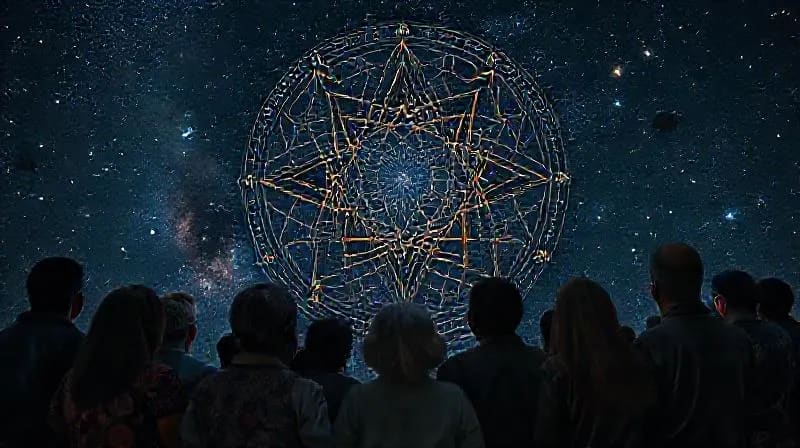 A diverse group of people from different cultures looking up at a starry night sky, with subtle celestial mechanics diagrams overlaid, representing global consciousness and interconnectedness.
Fuente visual sujeta a disponibilidad del ecosistema: Wikimedia Commons bajo licencia CC BY-SA 4.0 o renderizado conceptual IA.
The premise is that just as planetary positions can influence individual psychological states and life events, their broader cycles and configurations might correlate with significant shifts in human civilization. This includes everything from technological revolutions and artistic movements to political upheavals and shifts in collective values. By exploring this nexus, Cosmic Sociology offers a fresh lens through which to understand the rhythms of history and anticipate future global trends.
Table of Contents
- The Foundations of Cosmic Sociology
- Celestial Mechanics: Beyond Gravitational Pull
- Global Consciousness: A Collective Resonance
- Astrological Transits and Societal Cycles
- The Role of Esoteric Symbolism in Collective Understanding
- Integrating Cosmic Insights for Future Trends
The Foundations of Cosmic Sociology
The idea that cosmic phenomena influence earthly events is not new; it dates back to ancient civilizations that meticulously observed the heavens. From the agricultural cycles tied to solar and lunar phases to the belief in planetary deities influencing human destiny, the connection between the cosmos and human life has been a recurring theme across cultures. Cosmic Sociology builds upon these historical observations, seeking to formalize and analyze these correlations using modern interdisciplinary tools.
At its core, this field posits a macrocosm-microcosm relationship, where the patterns and energies of the universe are mirrored in human affairs. It moves beyond individual horoscopes to consider the collective "birth chart" of humanity, or the energetic backdrop against which global events unfold. This perspective suggests that societal structures, cultural paradigms, and even technological advancements might be subtly guided by overarching cosmic blueprints.
Celestial Mechanics: Beyond Gravitational Pull
Celestial mechanics traditionally refers to the study of the motions of celestial bodies under the influence of gravity. However, in Cosmic Sociology, this concept expands to include the subtle energetic and symbolic interactions that planets might exert. This involves understanding planetary cycles, such as planetary ingresses (when a planet moves into a new zodiac sign), retrogrades, and major aspects between planets.
These movements are seen as creating a fluctuating energetic field that can resonate with human collective consciousness. For instance, a challenging planetary alignment might coincide with periods of global tension or crisis, while harmonious configurations could align with eras of peace, innovation, or cultural flourishing. The focus is not on direct causation but on a synchronous relationship, where cosmic patterns reflect or amplify underlying human potentials and challenges.
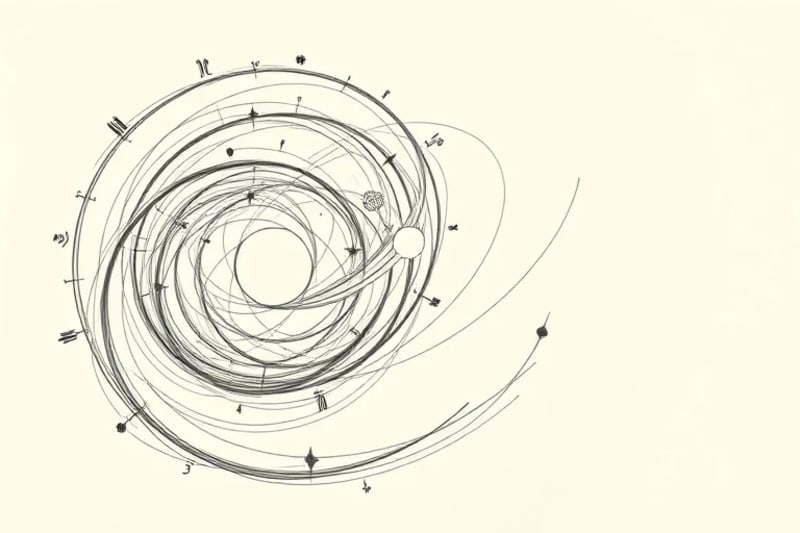 Abstract representation of planetary orbits and gravitational pulls, with interconnected light trails symbolizing global communication networks.
Global Consciousness: A Collective Resonance
Global consciousness refers to the idea that humanity shares a collective awareness or mental field, influenced by and influencing individual minds. This concept, often explored in fields like transpersonal psychology and quantum physics, suggests that shifts in collective thought, emotion, and intention can have tangible effects on the world. Cosmic Sociology posits that celestial mechanics might play a role in shaping the prevailing themes and energies within this global consciousness.
For example, certain planetary configurations might activate archetypal patterns within the collective unconscious, leading to widespread movements for social justice, environmental awareness, or technological advancement. This is not about predicting specific events but understanding the underlying energetic currents that drive collective human behavior. The study of Karmic Nodes Fixed Stars: Galactic Blueprint Soul Growth can offer further insights into how these collective energies manifest.
Astrological Transits and Societal Cycles
Astrological transits, particularly those involving the outer planets (Uranus, Neptune, Pluto), are often associated with generational shifts and major historical turning points. Uranus, for instance, is linked to revolution, innovation, and sudden change; Neptune to idealism, dissolution, and spiritual awakening; and Pluto to transformation, power dynamics, and profound societal restructuring. When these planets form significant aspects to each other or to key points in a "mundane" (world) chart, their energies are believed to become particularly potent.
Historical analysis often reveals compelling correlations. The Uranus-Pluto conjunctions of the 1960s, for example, coincided with widespread social upheaval, counter-cultural movements, and calls for radical change. Similarly, the study of Critical Degrees in Predictive Astrology can offer a deeper understanding of specific moments when these cosmic influences are believed to be most acutely felt, potentially triggering significant life events or societal shifts.
The concept of "mundane astrology" specifically studies the influence of celestial bodies on nations, governments, and global events. It analyzes the charts of countries, political leaders, and significant historical moments to discern patterns and predict potential trends.
This branch of astrology emphasizes the collective rather than the individual, focusing on broader societal narratives and the ebb and flow of historical forces.
The Role of Esoteric Symbolism in Collective Understanding
Astrology is rich in esoteric symbolism, where each planet, sign, and house represents archetypal energies and psychological principles. In Cosmic Sociology, these symbols are not merely abstract concepts but active forces that shape our collective narrative. For instance, the archetype of Mars (action, conflict) or Venus (harmony, values) can manifest on a global scale as periods of war or peace, economic prosperity or recession, or shifts in cultural aesthetics.
Understanding these symbols allows for a deeper interpretation of societal trends, revealing the underlying psychological and energetic drivers behind them. It helps us move beyond superficial analyses to grasp the deeper, often unconscious, motivations that propel collective human action. This symbolic language provides a framework for understanding the cyclical nature of human experience and the recurring themes that emerge across different eras.
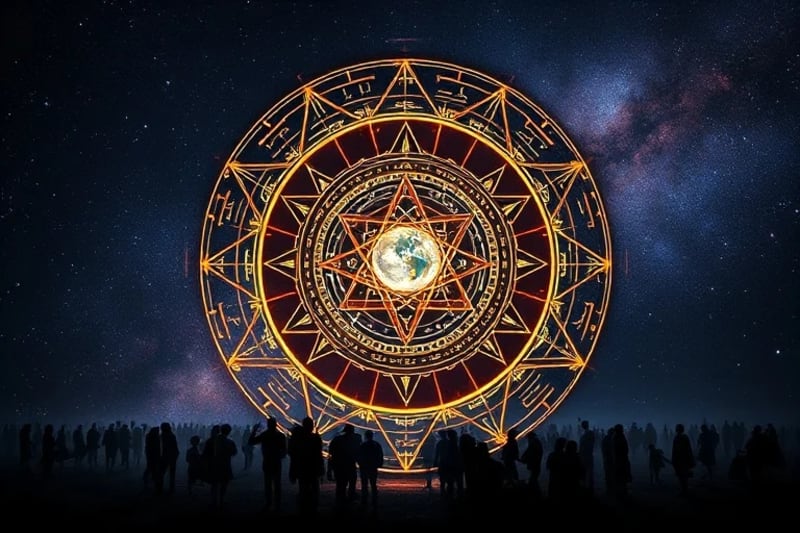 A stylized globe with faint astrological symbols emanating from it, surrounded by diverse human silhouettes illustrating the impact of cosmic forces on collective human behavior.
Integrating Cosmic Insights for Future Trends
The practical application of Cosmic Sociology lies in its potential to offer a more holistic understanding of global trends. By integrating astrological insights with sociological data, researchers and policymakers might gain a unique perspective on emerging challenges and opportunities. This approach encourages a proactive stance, allowing societies to better prepare for periods of intense change or to leverage harmonious cosmic energies for collective growth.
It is crucial to approach this field with an open mind and a commitment to rigorous analysis, avoiding deterministic predictions. Instead, Cosmic Sociology provides a framework for understanding potential energetic currents, encouraging humanity to consciously engage with these influences rather than passively react to them. This can lead to more informed decision-making and a greater sense of collective agency in shaping our future.
Ultimately, Cosmic Sociology invites us to look beyond immediate circumstances and recognize our place within a larger cosmic dance. It suggests that by understanding the rhythms of the universe, we can better understand ourselves and the collective journey of humanity. This evolving field promises to deepen our appreciation for the interconnectedness of all things, from the smallest human interaction to the grandest celestial ballet.
Explore More Cosmic Connections
Source: Hybrid content assisted by AI and human editorial supervision.


Comments
Post a Comment