
Scrying Art: Unveiling Future Insights Reflective Surfaces
The art of scrying, an ancient practice of divination, involves gazing into a reflective surface or object to perceive visions or insights. From polished black mirrors to crystal balls and even natural bodies of water, scrying has been a cornerstone of esoteric traditions across cultures for millennia. It is not merely about predicting the future, but rather about tapping into the subconscious mind and universal energies to gain clarity, understanding, and personal guidance. This practice, often shrouded in mystery, offers a unique pathway to introspection and the exploration of hidden knowledge.
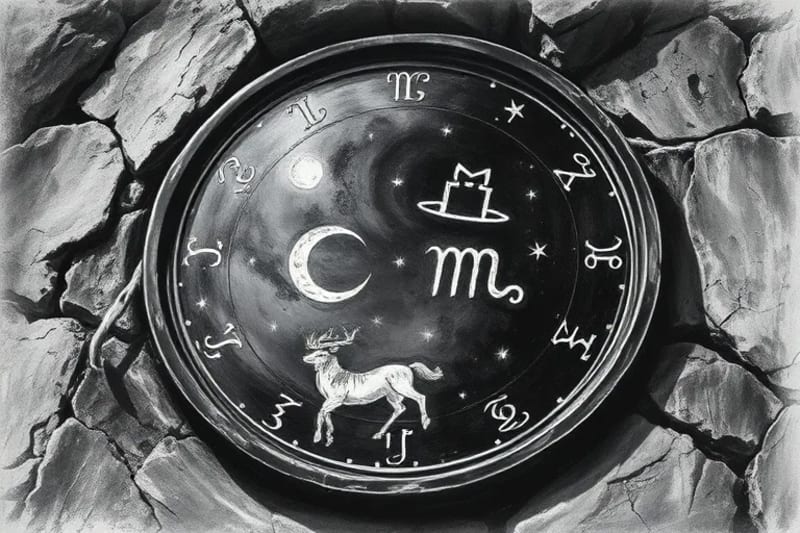 A polished obsidian scrying mirror, reflecting swirling mist and faint, ethereal symbols, framed by ancient, weathered stone under soft, diffused moonlight.
While modern science often categorizes scrying as pseudoscience, its enduring appeal lies in its psychological effects and its capacity to facilitate altered states of consciousness. Practitioners believe that the reflective surface acts as a focal point, helping to quiet the conscious mind and open channels to intuition and deeper wisdom. This article delves into the historical origins, diverse methods, and practical applications of scrying, offering a comprehensive guide for those seeking to explore this fascinating ancient art.
Historical Roots and Cultural Significance
The practice of scrying boasts a rich and varied history, dating back to ancient civilizations. Evidence of scrying has been found in cultures across the globe, suggesting a universal human desire to understand the unknown and gain insight into future events or hidden truths. Ancient Egyptians, for instance, were known to use polished bowls filled with water or oil for divination, believing that the reflections could reveal messages from the gods or spirits. These practices were often performed by priests or priestesses in sacred temples.
In ancient Greece, oracles at sites like Delphi were believed to receive prophecies through various means, including gazing into reflective surfaces. The Celts also practiced hydromancy, a form of water scrying, to gain insights into battles, harvests, and personal fates. Throughout the Middle Ages and Renaissance, scrying continued to be a significant practice, often associated with alchemy and hermetic traditions. Notable figures like John Dee, the court astrologer to Queen Elizabeth I, famously used a scrying mirror and crystal to communicate with what he believed were angelic beings, recording extensive dialogues that influenced esoteric thought.
The cultural significance of scrying extends beyond mere fortune-telling; it often served as a means of spiritual connection, communal guidance, and personal introspection. Many cultures viewed the visions obtained through scrying as divine messages or insights into the collective unconscious. This historical context underscores scrying's role as a powerful tool for understanding human psychology and our perennial quest for meaning beyond the mundane.
Common Scrying Tools and Methods
Scrying can be performed using a variety of tools, each offering a slightly different experience and aesthetic. The choice of tool often depends on personal preference and the specific nature of the inquiry. Here are some of the most common methods:
- Black Mirrors (Speculums): These are typically made from obsidian, polished black glass, or even a dark, concave surface. The blackness absorbs light, reducing distractions and creating a deep, void-like surface that encourages the mind to project images. Obsidian mirrors, in particular, are prized for their natural energetic properties.
- Water Scrying (Hydromancy): One of the oldest forms, hydromancy involves gazing into a bowl of water, a natural pool, or even a still lake. The subtle movements and reflections on the water's surface can trigger visions. Sometimes, ink or dark liquids are added to enhance the reflective quality. This method shares conceptual similarities with ceromancy, which uses wax patterns for divination.
- Crystal Gazing (Crystallomancy): This involves focusing on a crystal ball or a polished crystal. Clear quartz spheres are popular, as their transparency and internal inclusions can appear to shift and form images. The clarity of the crystal is believed to amplify psychic perception.
- Fire Scrying (Pyromancy): Gazing into the flames of a candle, bonfire, or fireplace can induce a trance-like state. The flickering, dancing patterns of fire are dynamic and can be highly suggestive, leading to vivid imagery and intuitive insights.
- Smoke Scrying (Capnomancy): Similar to fire scrying, this method uses the patterns formed by smoke, often from incense or herbs. The ethereal, shifting nature of smoke can create fleeting images and symbols that the scryer interprets.
Each method requires patience, focus, and a willingness to surrender to the subtle perceptions that arise. The key is not to force visions but to allow them to emerge naturally from the reflective medium.
The Science (or Pseudoscience) Behind Scrying
While often viewed through a mystical lens, the phenomena experienced during scrying can be partially explained by psychological and neurological principles. One key concept is pareidolia, the psychological phenomenon where the brain perceives recognizable patterns or images in random or ambiguous stimuli. Just as we might see faces in clouds, a scryer's mind can interpret fleeting shapes in a mirror or water as meaningful symbols.
 A collection of symbolic elements representing interpretation and insight: an open journal with delicate script, a feather quill, a single, glowing eye peering from a swirl of abstract colors, and a compass pointing towards an unknown horizon.
Furthermore, the act of sustained gazing into a reflective surface, especially in a dimly lit environment, can induce altered states of consciousness, similar to those achieved through meditation or hypnagogia. These states reduce the activity of the default mode network in the brain, which is associated with self-referential thought and external awareness, allowing for a more profound connection to the subconscious. The brain's inherent pattern-seeking nature, combined with a relaxed and focused mind, creates fertile ground for intuitive insights to surface.
From a metaphysical perspective, some practitioners believe that scrying allows access to the "Akashic Records" or the collective unconscious, a repository of all universal knowledge and experiences. This aligns with concepts found in Hermetic principles, which emphasize the interconnectedness of all things and the idea that knowledge can be accessed through various symbolic and meditative practices. Regardless of the exact mechanism, the subjective experience of scrying often provides profound personal meaning and psychological benefits.
Preparing for a Scrying Session
Successful scrying is not just about the tool; it's heavily influenced by preparation and mindset. Creating the right environment and mental state is crucial for opening oneself to intuitive perceptions. Here are key steps for preparing a scrying session:
- Choose a Quiet Environment: Select a space where you will not be disturbed. Dim the lights or use natural light that doesn't create harsh reflections. Many prefer to scry at night or in a room with drawn curtains.
- Cleanse Your Space and Tools: Energetically cleanse your scrying tool and the area. This can be done with smudging (burning sage or palo santo), incense, or simply by visualizing purifying light. This practice helps to remove any residual energies that might interfere with your focus.
- Set Your Intention: Before you begin, clearly define what you wish to gain insight into. This could be a specific question, a general area of concern, or simply a desire for clarity. A focused intention helps direct your subconscious and the energies you are working with.
- Relax and Meditate: Spend a few minutes meditating or performing deep breathing exercises to calm your mind and body. Enter a relaxed, receptive state. Avoid scrying when you are stressed, anxious, or overly tired, as this can cloud your perceptions.
- Protection (Optional but Recommended): Some practitioners choose to invoke spiritual protection before scrying, especially if they are sensitive to energies. This can involve visualizing a protective shield or calling upon spirit guides or deities for assistance.
Interpreting Visions and Symbols
The most challenging aspect of scrying is often the interpretation of the visions and symbols that appear. Unlike a direct answer, scrying insights are typically symbolic, metaphorical, and highly personal. It's crucial to approach interpretation with an open mind and avoid literal readings.
When images or sensations arise, observe them without judgment. Do not try to force a meaning immediately. Instead, pay attention to:
- First Impressions: What is your immediate gut feeling or association with the image?
- Personal Symbolism: What does the symbol mean to you personally? A snake might represent transformation to one person, and danger to another. Your personal experiences and cultural background heavily influence how you perceive symbols, much like the diverse interpretations of Chinese Zodiac archetypes.
- Context: How do the symbols relate to your initial intention or question? Are there other symbols present that provide additional context?
- Emotions and Sensations: Did you feel a particular emotion (joy, fear, peace) when the image appeared? Did you experience any physical sensations?
- Journaling: Immediately after a session, record everything you saw, felt, and thought. Drawing the images can also be helpful. Review your notes later, as meanings often become clearer with time and reflection.
It is important to remember that scrying is a dialogue with your subconscious, not a direct broadcast. The insights gained are often meant to guide you towards deeper self-awareness and informed decision-making, rather than providing definitive answers.
Ethical Considerations and Best Practices
As with any divinatory practice, scrying comes with ethical responsibilities and best practices to ensure a safe and beneficial experience. Respect for the practice, oneself, and others is paramount.
 An abstract representation of energetic flow and insight. Interconnected, glowing lines of light form a complex, organic network, emanating from a central, pulsating orb, weaving through a dark, cosmic void.
Firstly, always approach scrying with a clear and positive intention. Avoid using it for malicious purposes, to manipulate others, or to pry into the lives of individuals without their consent. The energy you put into the practice will often be reflected in the insights you receive. Secondly, practice discernment. Not every vision will be profound, and some might simply be reflections of your own anxieties or desires. Learn to differentiate between genuine insight and wishful thinking or fear-based projections.
Self-care is another critical aspect. Scrying can be mentally and emotionally draining, especially for beginners. Limit your sessions to a reasonable duration and frequency. Ensure you are well-rested and in a stable emotional state before engaging in the practice. Ground yourself after each session by eating, drinking water, or spending time in nature to re-establish your connection to the physical world. Remember that scrying is a tool for self-discovery and guidance, not a substitute for personal responsibility or professional advice.
Embrace the journey of learning and experimentation. Like any skill, scrying improves with practice and patience. Be open to the subtle messages and symbolic language of your subconscious, and allow the art of scrying to enrich your path of personal growth and spiritual exploration.
Conclusion
The art of scrying, with its ancient roots and diverse methodologies, continues to captivate and intrigue those seeking deeper understanding. Whether through the dark depths of an obsidian mirror, the shifting patterns of water, or the luminous glow of a crystal, scrying offers a unique pathway to tap into intuition, explore the subconscious mind, and gain insights that may not be accessible through conventional means. It is a practice that demands respect, patience, and a willingness to engage with the symbolic language of the inner world.
By understanding its historical context, preparing meticulously, and interpreting visions with discernment and self-awareness, practitioners can unlock a powerful tool for personal growth and spiritual exploration. Scrying is more than just a divinatory technique; it is an invitation to look beyond the surface, to connect with the subtle energies of existence, and to unveil the profound wisdom that lies within and around us.
Explore More Esoteric Wisdom
- Planetary Dignities Self-Mastery: Natal Chart Strengths
- Financial Astrology: Timing Investments Decisions Cosmic Cycles
- Water Snake Chinese: Traits, Years, Compatibility
- Planets 1st House: Advanced Identity Aspects
- Gemini Zodiac Sign Traits Compatibility Life
- Fixed Stars Galactic Points Karmic Natal Chart Astrology
- Lunar Astrology Chinese New Year Predictions
- Five Elements Chinese Astrology: Wood, Fire, Earth, Metal, Water Explained
- Chinese Zodiac Animals: Mythology & Folklore
- Metal Element Chinese Zodiac: Character, Destiny, Compatibility
- Numerology Beyond Life Path: Personal Year Cycles and Destiny Numbers
Source: Hybrid content assisted by AI and human editorial supervision.


Comments
Post a Comment