
Chinese Zodiac Animals: Mythology & Folklore | StarPluto
The Chinese Zodiac, a fascinating system of astrology and divination, has captivated imaginations for millennia. Far more than just a calendar, it is a rich tapestry woven with ancient myths, profound folklore, and deep cultural significance. Each of the twelve animals—the Rat, Ox, Tiger, Rabbit, Dragon, Snake, Horse, Goat, Monkey, Rooster, Dog, and Pig—carries a unique narrative, embodying specific personality traits and influencing the destiny of those born under its sign.
Understanding the Chinese Zodiac is to journey into the heart of Chinese tradition, where animal characteristics are believed to shape human nature and destiny. This intricate system is not merely about predicting the future but about understanding oneself and others through the lens of timeless stories and symbolic wisdom. From the cunning Rat to the noble Dragon, each creature contributes to a vibrant cultural heritage that continues to thrive today.
A stunning digital illustration depicting the twelve Chinese zodiac animals circling a central yin-yang, symbolizing cosmic harmony and the cycle of time.
This article delves into the captivating mythology and folklore surrounding each of these revered animals, exploring their origins, the legendary Great Race, and the enduring impact they have on Chinese culture and beyond. Prepare to uncover the wisdom embedded in these ancient tales and gain a deeper appreciation for the profound symbolism of the Chinese Zodiac.
Table of Contents
- The Great Race: Genesis of the Zodiac Order
- The Rat: Cleverness and Resourcefulness
- The Ox: Diligence and Steadfastness
- The Tiger: Bravery and Power
- The Rabbit: Gentleness and Fortune
- The Dragon: Majesty and Authority
- The Snake: Wisdom and Enigma
- The Horse: Spirit and Freedom
- The Goat (Sheep/Ram): Compassion and Creativity
- The Monkey: Intelligence and Playfulness
- The Rooster: Punctuality and Confidence
- The Dog: Loyalty and Honesty
- The Pig: Generosity and Contentment
- Beyond the Animals: Cultural Impact and Modern Interpretations
- Conclusion: A Tapestry of Myth and Meaning
The Great Race: Genesis of the Zodiac Order
The most famous origin myth for the Chinese Zodiac is the story of the Great Race, often attributed to the Jade Emperor. According to legend, the Emperor decided to designate twelve animals to represent the years, and their order would be determined by who arrived first at his heavenly banquet after crossing a mighty river. This race became the defining moment for the zodiac's sequence, revealing the unique characteristics of each animal.
The tale begins with the Rat, known for its intelligence and cunning. Unable to swim well, the Rat convinced the strong and diligent Ox to carry it across the river. Just as they reached the shore, the Rat slyly jumped off the Ox's head, landing first and securing its place as the first animal of the zodiac. This act cemented the Rat's reputation for cleverness, often at the expense of others, yet highlighting its survival instincts.

A vintage-style photograph capturing ancient scrolls and carved animal figurines, symbolizing the mythical Great Race that established the Chinese Zodiac order.
Following the Ox, the powerful Tiger arrived third, exhausted but determined. The Rabbit, known for its agility, hopped across the river by leaping on stones and a floating log. The majestic Dragon, despite its ability to fly, paused to help villagers and blow wind to assist the Rabbit, arriving fifth. The Snake, often seen as mysterious, hitched a ride on the Horse's hoof, startling it at the last moment to claim its sixth position.
The Goat, Monkey, and Rooster collaborated to cross on a raft, with the Goat arriving eighth, the Monkey ninth, and the Rooster tenth. The loyal Dog, despite being an excellent swimmer, was distracted by playing in the water and arrived eleventh. Finally, the honest and good-natured Pig, after stopping for a snack and a nap, arrived last, completing the twelve-year cycle. This narrative not only explains the order but also imbues each animal with distinct personality traits that are still associated with their signs today.
The Rat: Cleverness and Resourcefulness
The Rat is the first animal in the Chinese Zodiac, symbolizing intelligence, quick wit, and resourcefulness. In folklore, the Rat is often depicted as a survivor, capable of adapting to any situation. Its association with wealth and prosperity stems from its ability to gather and store provisions, signifying abundance.
People born under the sign of the Rat are often seen as charming, ambitious, and highly adaptable. They possess a keen sense of observation and are excellent problem-solvers. However, their cunning nature can sometimes lead to being perceived as opportunistic or secretive. The Rat's mythology emphasizes its ability to overcome obstacles through intellect rather than brute force.
The Ox: Diligence and Steadfastness
The Ox, second in the zodiac, represents diligence, strength, and reliability. This animal is revered for its hard work and perseverance, essential qualities in agrarian societies. The Ox's steadfast nature is highlighted in the Great Race, where it patiently carried the Rat across the river, unaware of the impending trick.
Individuals born in the Year of the Ox are typically honest, patient, and determined. They are known for their strong work ethic and their ability to endure challenges. While sometimes seen as stubborn or conservative, their unwavering commitment and dependable character make them highly respected. The Ox embodies the virtues of stability and unwavering effort.
The Tiger: Bravery and Power
The Tiger, third in the cycle, is a symbol of bravery, power, and enthusiasm. In Chinese mythology, the Tiger is considered the king of all beasts, representing strength, exorcism of evil, and protection. Its stripes are often said to resemble the Chinese character for "king" (王).
Those born under the Tiger sign are often charismatic, courageous, and adventurous. They are natural leaders, full of vitality and a zest for life. However, their impulsive nature can sometimes lead to recklessness or stubbornness. The Tiger's folklore emphasizes its role as a guardian and a powerful force against negative influences.
The Rabbit: Gentleness and Fortune
The Rabbit, fourth in the zodiac, symbolizes gentleness, elegance, and good fortune. In Chinese folklore, the Jade Rabbit is a prominent figure on the moon, often depicted pounding the elixir of immortality. This association imbues the Rabbit with qualities of purity, peace, and longevity.
People born in the Year of the Rabbit are typically kind, compassionate, and artistic. They are known for their diplomacy and their desire for harmony. While sometimes perceived as timid or overly cautious, their gentle nature and refined taste make them beloved. The Rabbit's mythology highlights its connection to celestial realms and auspicious blessings.
The Dragon: Majesty and Authority
The Dragon, fifth and the only mythical creature in the zodiac, is perhaps the most revered animal in Chinese culture. It symbolizes majesty, power, prosperity, and good luck. Dragons are associated with water, rain, and floods, controlling the elements and bringing bountiful harvests. Emperors historically claimed descent from dragons, solidifying their status as symbols of imperial authority.
Individuals born under the Dragon sign are often charismatic, ambitious, and natural-born leaders. They are known for their intelligence, courage, and passion. While sometimes seen as arrogant or demanding, their powerful presence and inspiring nature command respect. The Dragon's rich folklore portrays it as a benevolent yet formidable force, a bringer of blessings and a protector of the realm.

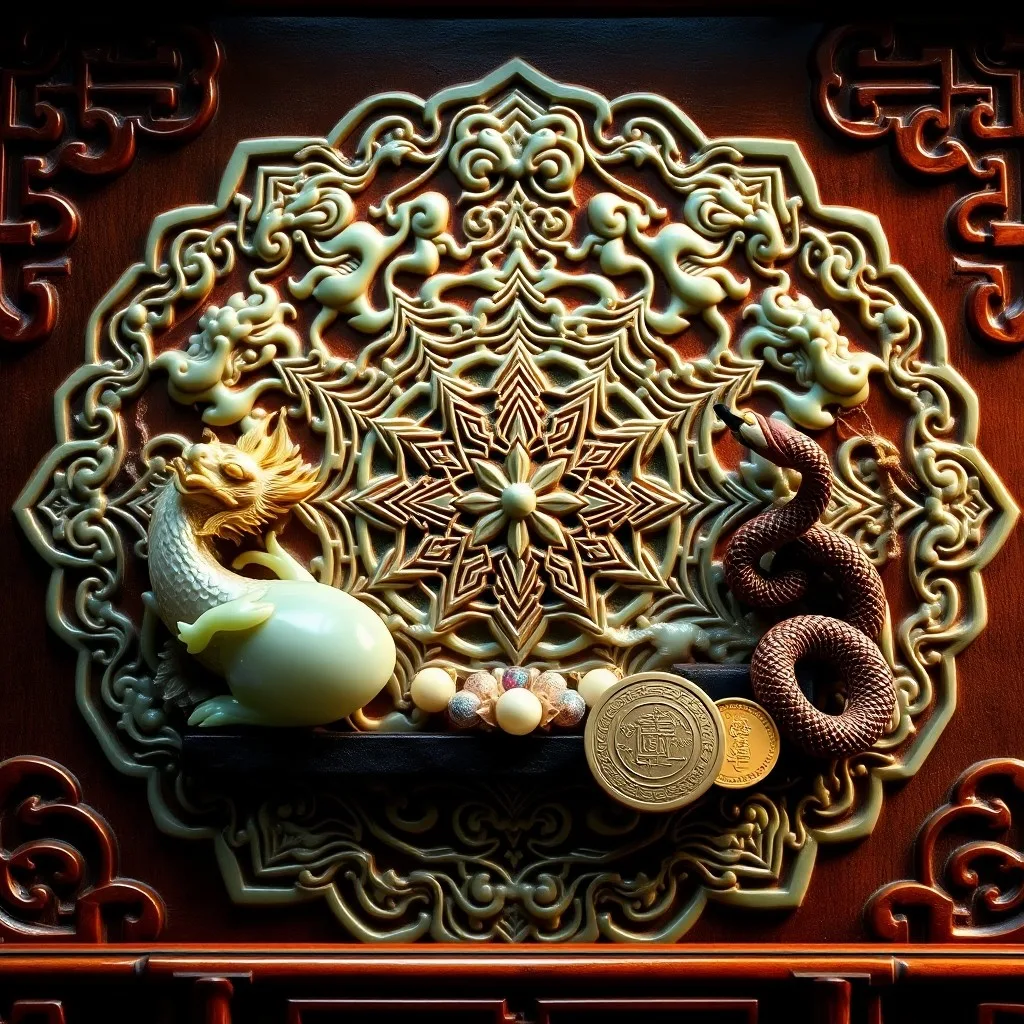
A conceptual artwork featuring a jade dragon statue rising from mist, surrounded by ancient coins and a silk tapestry, symbolizing power and prosperity.
The Snake: Wisdom and Enigma
The Snake, sixth in the zodiac, represents wisdom, enigma, and intuition. Often associated with mystery and transformation, the Snake is seen as a creature of deep thought and keen insight. In some folklore, snakes are guardians of treasures and secrets, possessing ancient knowledge.
People born in the Year of the Snake are typically intelligent, philosophical, and perceptive. They are known for their calm demeanor and their ability to observe situations deeply before acting. While sometimes perceived as secretive or calculating, their profound wisdom and elegant nature are highly valued. The Snake's mythology highlights its connection to hidden truths and spiritual understanding.
The Horse: Spirit and Freedom
The Horse, seventh in the cycle, symbolizes spirit, freedom, and unyielding energy. Revered for its speed, grace, and endurance, the Horse has played a crucial role in Chinese history, representing travel, communication, and military prowess. It embodies the spirit of adventure and progress.
Individuals born under the Horse sign are often energetic, independent, and enthusiastic. They are known for their love of freedom, their active lifestyle, and their sociable nature. While sometimes seen as impatient or restless, their optimism and passionate spirit are infectious. The Horse's folklore emphasizes its role in journeys and its representation of unfettered ambition.
The Goat (Sheep/Ram): Compassion and Creativity
The Goat (also referred to as Sheep or Ram), eighth in the zodiac, represents compassion, creativity, and gentleness. This animal is associated with peace, harmony, and a nurturing spirit. In Chinese culture, goats are often seen as symbols of good luck and prosperity, particularly in agricultural contexts.
People born in the Year of the Goat are typically kind-hearted, artistic, and empathetic. They are known for their calm demeanor and their appreciation for beauty. While sometimes perceived as indecisive or overly sensitive, their gentle nature and generous spirit make them cherished companions. The Goat's mythology highlights its connection to tranquility and artistic expression.
The Monkey: Intelligence and Playfulness
The Monkey, ninth in the zodiac, symbolizes intelligence, playfulness, and curiosity. Known for its quick wit and mischievous nature, the Monkey is a popular figure in Chinese literature, most famously as Sun Wukong, the Monkey King, a hero of immense power and cunning. This association imbues the Monkey with qualities of ingenuity and adaptability.
Individuals born under the Monkey sign are often clever, innovative, and enthusiastic. They are known for their sharp minds, their ability to solve complex problems, and their entertaining personality. While sometimes seen as restless or cunning, their intelligence and charm are undeniable. The Monkey's folklore celebrates its boundless energy and its capacity for both mischief and heroism.
The Rooster: Punctuality and Confidence
The Rooster, tenth in the zodiac, represents punctuality, confidence, and honesty. Known for its crowing at dawn, signaling the start of a new day, the Rooster is a symbol of awakening and diligence. It is also associated with protection against evil spirits and bad luck.
People born in the Year of the Rooster are typically observant, hardworking, and courageous. They are known for their straightforwardness, their attention to detail, and their confident demeanor. While sometimes perceived as boastful or critical, their honesty and strong sense of responsibility are highly valued. The Rooster's mythology emphasizes its role in bringing light and order.
The Dog: Loyalty and Honesty
The Dog, eleventh in the zodiac, symbolizes loyalty, honesty, and faithfulness. As humanity's oldest companion, the Dog is revered for its unwavering devotion and protective instincts. In Chinese folklore, dogs are often seen as auspicious creatures, bringing good fortune and guarding homes.
Individuals born under the Dog sign are often sincere, responsible, and trustworthy. They are known for their strong sense of justice, their protective nature, and their deep loyalty to friends and family. While sometimes seen as pessimistic or stubborn, their integrity and kindness make them cherished companions. The Dog's mythology reinforces its role as a steadfast protector and a symbol of true companionship.
The Pig: Generosity and Contentment
The Pig, twelfth and last in the zodiac, represents generosity, contentment, and honesty. Often associated with good fortune and prosperity, the Pig is seen as a symbol of abundance and a comfortable life. Its good-natured character is highlighted in the Great Race, where it arrived last due to its leisurely pace.
People born in the Year of the Pig are typically compassionate, honest, and easygoing. They are known for their generosity, their love of life's pleasures, and their sincere nature. While sometimes perceived as naive or overly indulgent, their kindness and genuine warmth make them beloved by many. The Pig's folklore emphasizes its association with happiness and material well-being.
Beyond the Animals: Cultural Impact and Modern Interpretations
The influence of the Chinese Zodiac extends far beyond individual personality traits. It is deeply embedded in Chinese culture, affecting everything from marriage compatibility and career choices to naming conventions and festival celebrations. Each New Year brings a focus on the new zodiac animal, with predictions and traditions centered around its characteristics and elemental influences.
The zodiac animals are not just static symbols; they interact with the Five Elements (Wood, Fire, Earth, Metal, Water), creating a 60-year cycle that adds further layers of complexity and nuance to each sign. For example, a Wood Dragon is believed to have different characteristics than a Fire Dragon, reflecting the elemental influence on the animal's core traits. This intricate system offers a comprehensive framework for understanding cycles of time and human experience.
In modern times, the Chinese Zodiac continues to be a popular topic globally, attracting interest from those seeking self-understanding or a deeper connection to Eastern traditions. Its stories are shared, its symbols are celebrated, and its wisdom is applied in various contexts, from pop culture to personal development. The enduring appeal of these animal myths lies in their ability to provide relatable archetypes and insights into the human condition, transcending cultural boundaries.
The zodiac also plays a significant role in determining auspicious dates for major life events, such as weddings, business openings, and even travel. Compatibility readings between different zodiac signs are a common practice, guiding individuals in their relationships and helping them understand potential harmonies and challenges. This practical application demonstrates the zodiac's continued relevance in daily life, offering guidance and perspective.
Conclusion: A Tapestry of Myth and Meaning
The Chinese Zodiac animals are more than just a calendar system; they are custodians of ancient wisdom, embodying a rich tapestry of mythology and folklore. From the clever Rat to the generous Pig, each animal tells a story of human nature, destiny, and the intricate dance of life. These tales, passed down through generations, offer profound insights into personality traits, relationships, and the cyclical nature of time.
By exploring the origins of the Great Race and delving into the individual characteristics of each creature, we gain a deeper appreciation for the cultural depth and symbolic power of the Chinese Zodiac. It remains a vibrant and relevant system, continuing to fascinate and guide individuals in their quest for self-discovery and understanding of the world around them. Its legacy is a testament to the enduring power of myth to shape and enrich human experience.
Fuente: Contenido híbrido asistido por IAs y supervisión editorial humana.


Comments
Post a Comment