
Ceromancy Ancient Wax Divination Unveiling Hidden Truths
Ceromancy, the ancient art of divination using molten wax, offers a unique window into the subconscious and the unseen. This practice, rooted in various cultures across millennia, involves dripping melted wax into cold water and interpreting the shapes and patterns that form. Far from being a mere superstition, ceromancy is a profound method for self-reflection, seeking guidance, and unveiling hidden truths that may lie beyond our immediate perception.
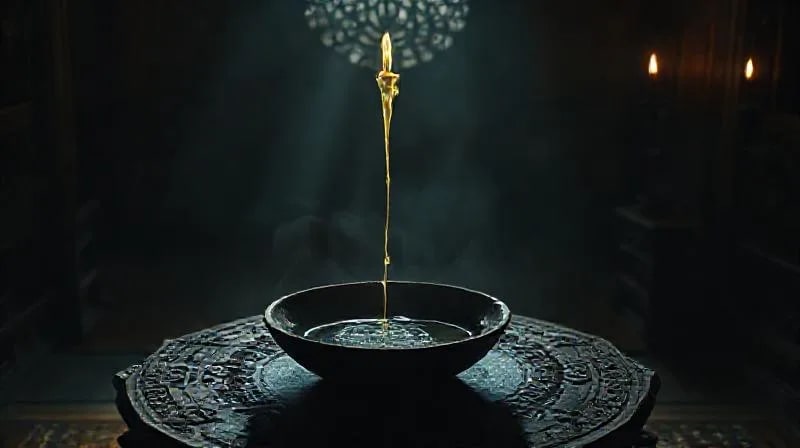
An ancient ritual of ceromancy, where molten wax reveals symbolic shapes in water.
In a world increasingly driven by logic and tangible evidence, practices like ceromancy invite us to reconnect with intuition and symbolic language. This guide will delve into the rich history of ceromancy, explore its practical application, provide insights into interpreting its mysterious formations, and discuss its relevance in contemporary spiritual and self-discovery journeys. Whether you are a seasoned practitioner of esoteric arts or a curious newcomer, understanding ceromancy can unlock new perspectives on your path.
Table of Contents
- What is Ceromancy?
- Historical Roots and Evolution
- The Ritual: How Ceromancy is Performed
- Interpreting the Wax Shapes and Patterns
- Symbolism in Ceromancy: A Lexicon
- Modern Applications and Ethical Considerations
- Connecting Ceromancy to Other Divination Practices
What is Ceromancy?
Ceromancy, derived from the Greek words "kero" (wax) and "manteia" (divination), is a form of hydromancy that specifically uses wax. The core principle involves heating wax until it becomes liquid, then carefully pouring or dripping it into a container of cold water. The sudden temperature change causes the wax to solidify rapidly, forming unique and often intricate shapes. These solidified wax formations are then interpreted to gain insights into questions, future events, or hidden aspects of a situation or individual.
The practice hinges on the belief that the universe communicates through symbols and that the random yet structured patterns formed by the wax are not truly random. Instead, they are seen as manifestations of subconscious thoughts, energetic influences, or divine messages. Practitioners often approach ceromancy with a specific question or intention in mind, believing that the wax will reflect answers or guidance related to their query. It is a highly intuitive practice, relying heavily on the interpreter's ability to connect with the symbolic language of the shapes.
Historical Roots and Evolution
The origins of ceromancy can be traced back to ancient civilizations, where various forms of divination using natural elements were common. While specific historical records detailing "ceromancy" by name are scarce from antiquity, the use of wax in rituals and for symbolic purposes is well-documented. Ancient Egyptians, Greeks, and Romans utilized wax in religious ceremonies, for sealing important documents, and in crafting effigies, suggesting a deep cultural understanding of its malleable and transformative properties.
In medieval Europe, ceromancy gained more explicit recognition, often practiced in conjunction with other forms of magic and folk traditions. It was particularly popular in Eastern European countries, where it was used to diagnose illnesses, predict marriage prospects, or reveal the identity of thieves. The practice often intertwined with local folklore and spiritual beliefs, adapting its interpretations to specific cultural contexts. For instance, in some Slavic traditions, ceromancy was part of New Year's Eve rituals to foresee the coming year's fortunes.
Over centuries, ceromancy evolved, with different cultures developing their own unique methods and symbolic lexicons. While its popularity waned in some regions due to the rise of organized religion and scientific rationalism, it persisted in esoteric circles and folk magic traditions. Today, ceromancy is experiencing a resurgence as people seek alternative methods for self-discovery and spiritual guidance, appreciating its tactile nature and the direct, visual feedback it provides.
The Ritual: How Ceromancy is Performed
Performing ceromancy is a simple yet profound ritual that requires focus, intention, and a quiet environment. The key is to create a sacred space where you can connect with your inner self and the energies around you. Here’s a step-by-step guide:
- Preparation: Gather your materials. You will need a candle (beeswax or paraffin, preferably unscented), a heat-safe container for melting wax (a metal spoon or small ladle works well), a bowl of cold water (preferably distilled or spring water), and a quiet space where you won't be disturbed. Some practitioners also like to have a notebook for recording observations.
- Setting Intentions: Before you begin, take a few moments to clear your mind. Formulate a clear question or intention. This could be about a decision you need to make, a relationship, a career path, or simply seeking general guidance. The clearer your intention, the more focused the message from the wax is likely to be.
- Melting the Wax: Light your candle. Carefully collect some wax from the burning candle into your melting spoon or ladle. Heat the spoon over the candle flame until the wax is completely liquid. Be mindful not to overheat or burn the wax.
- Dripping the Wax: Hold the spoon with the molten wax steadily over the center of your bowl of cold water. In one smooth, deliberate motion, pour or drip the wax into the water. Allow it to solidify naturally. Some traditions suggest pouring all the wax at once, while others prefer dripping it slowly to create multiple smaller shapes.
- Observation: Once the wax has solidified, carefully remove it from the water. Observe the shapes from all angles. Look at the primary forms, the smaller details, the textures, and how light interacts with them. What do you see? What do the shapes remind you of? This is where intuition plays a crucial role.
- Interpretation: Begin to interpret the shapes based on your question and common symbolic meanings. Record your observations and initial feelings in your notebook. Sometimes, the meaning isn't immediately clear and may reveal itself over time.
Interpreting the Wax Shapes and Patterns
The art of interpreting wax shapes is deeply personal and intuitive. While there are common symbolic meanings, the most accurate interpretations often come from your own subconscious connections. Here are some guidelines to help you decipher the messages:
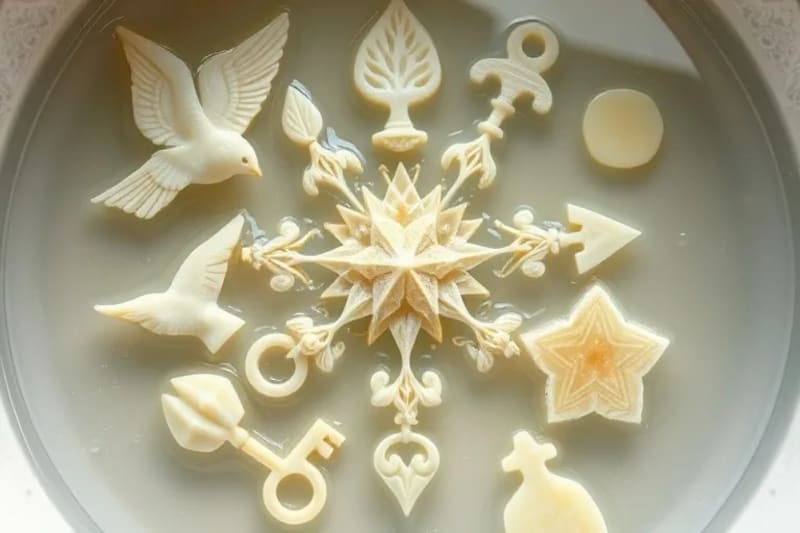
A collection of wax formations, each holding potential symbolic meaning for interpretation.
- First Impressions: What is the very first thing you see? Your initial impression is often the most telling. Don't overthink it; trust your gut feeling.
- Overall Form: Is the shape large and singular, or are there many small pieces? Is it smooth or jagged? Does it have clear outlines or is it amorphous? A large, solid shape might indicate a strong, clear message, while fragmented pieces could suggest confusion or multiple influences.
- Symbolic Recognition: Do the shapes resemble familiar objects, animals, letters, or numbers? For example, a heart shape is often associated with love, while a tree might symbolize growth or stability. Consider universal symbols as well as personal ones.
- Context of Your Question: Always relate the interpretation back to your initial question or intention. How does the shape provide an answer or insight into what you asked?
- Movement and Direction: Does the shape suggest movement? Is it pointing in a particular direction? Upward movement might signify progress, while downward could suggest grounding or decline.
- Light and Shadow: How does light play on the wax? Are there areas of depth or flatness? These can sometimes indicate hidden aspects or clarity.
- Intuitive Connection: This is perhaps the most important aspect. Allow your intuition to guide you. What feelings or thoughts arise when you look at the wax? Sometimes, the message is more about an emotional response than a literal interpretation. This is similar to how we interpret dreams; often, the emotional resonance is key to unlocking subconscious messages. For more on this, explore resources like a Psycho-Astrology Archetypal Psychology Jungian Shadow Natal Chart Wholeness.
Symbolism in Ceromancy: A Lexicon
While personal intuition is paramount, a general lexicon of symbols can provide a useful starting point for interpretation. Remember that these are guidelines, not strict rules.
| Wax Shape | Common Interpretation |
|---|---|
| Heart | Love, affection, emotional matters, relationships, compassion. |
| Ring | Commitment, marriage, partnership, cycles, eternity. |
| Tree/Branch | Growth, stability, family, roots, connection to nature, wisdom. |
| Bird | Freedom, news, messages, travel, spiritual elevation, hope. |
| Key | Unlocking secrets, new opportunities, solutions, knowledge. |
| Star | Hope, guidance, destiny, inspiration, good fortune. |
| Cross | Spirituality, sacrifice, crossroads, protection, burden. |
| Moon | Intuition, emotions, cycles, feminine energy, mystery. |
| Sun | Vitality, success, clarity, masculine energy, new beginnings. |
| Mountain | Challenges, obstacles, ambition, achievement, stability. |
| Snake | Transformation, healing, wisdom, temptation, hidden dangers. |
| Human Figure | A specific person, self, relationships, human connection. |
Remember that the context of your question will heavily influence the meaning of any symbol. A key might mean a new job opportunity if you asked about career, or a solution to a relationship problem if you asked about love. The beauty of ceromancy lies in its flexibility and the personal resonance it creates.
Modern Applications and Ethical Considerations
In contemporary times, ceromancy is not just a historical curiosity but a living practice. It is often used as a tool for self-reflection, meditation, and decision-making. People turn to ceromancy to gain clarity on personal issues, explore their subconscious, or connect with their spiritual side. It can be a powerful complement to journaling or other introspective practices, providing a visual anchor for abstract thoughts and feelings. The process of setting an intention and observing the wax can be a meditative act in itself, fostering mindfulness.

A symbolic representation of hidden truths emerging from the depths through divination.
Ethical considerations are crucial in any divination practice, including ceromancy. It is important to approach it with respect, both for the practice itself and for the insights it may offer. Avoid using ceromancy to manipulate others, cause harm, or pry into matters that are not yours to explore. Always ensure your intentions are pure and focused on personal growth, understanding, or positive outcomes. Remember that divination offers guidance, not absolute predictions; free will always plays a role in how we act upon insights received.
Moreover, it's essential to maintain a healthy perspective. Ceromancy should be seen as a tool for self-exploration and spiritual connection, not as a definitive answer to all life's problems. It empowers individuals to tap into their intuition and make informed decisions, rather than dictating their path. This aligns with the principles of self-discovery found in practices like Tarot Quantum Mechanics Intersecting Divination Reality, which also emphasize personal insight.
Connecting Ceromancy to Other Divination Practices
Ceromancy shares common ground with many other forms of divination, particularly those that rely on visual interpretation and symbolic language. It is a form of hydromancy (divination by water) and pyromancy (divination by fire, through the candle flame). Its interpretive nature is similar to tasseography (tea leaf reading) or crystallomancy (scrying with crystals), where practitioners interpret patterns and images to gain insight.
The focus on intention and personal symbolism in ceromancy also resonates with practices like Advanced Planetary Dignities Beyond Rulerships Synastry Electional Astrology, where personal symbols are created and imbued with specific meanings. Both practices emphasize the power of focused intent and the creation of tangible representations of inner desires or questions. Furthermore, the journey of self-discovery and understanding hidden aspects of oneself through ceromancy can be a valuable component of deeper spiritual work, such as the Spirit Guides Shadow Work Deep Inner Healing Guide, which encourages confronting and integrating subconscious elements.
By understanding ceromancy, one can appreciate the broader tapestry of divination methods and how they all serve the universal human desire to understand the unknown, gain guidance, and connect with deeper truths. It offers a tangible, visual, and deeply personal way to explore the mysteries of life and the self.
Source: Hybrid content assisted by AI and human editorial supervision.


Comments
Post a Comment