
Lunar Astrology Chinese New Year Predictions | StarPluto
The Chinese New Year, also known as the Lunar New Year or Spring Festival, is one of the most significant and widely celebrated holidays in the world. Its predictions are deeply rooted in a complex system of lunar astrology, which combines the cycles of the moon, the twelve animal zodiacs, and the five elements. Unlike Western astrology, which is primarily based on the solar calendar and birth dates, Chinese astrology relies heavily on the lunar calendar, offering a unique perspective on annual energies and individual destinies.
Understanding the interplay of these celestial and elemental forces is crucial to deciphering the annual forecasts that guide millions. This comprehensive guide delves into the intricate mechanisms of lunar astrology within the context of Chinese New Year predictions, providing a deeper dive into its components and how they influence the year ahead. We will explore the foundational principles, from the lunar calendar's structure to the specific influences of each zodiac animal and element, offering insights into both general trends and personalized interpretations.
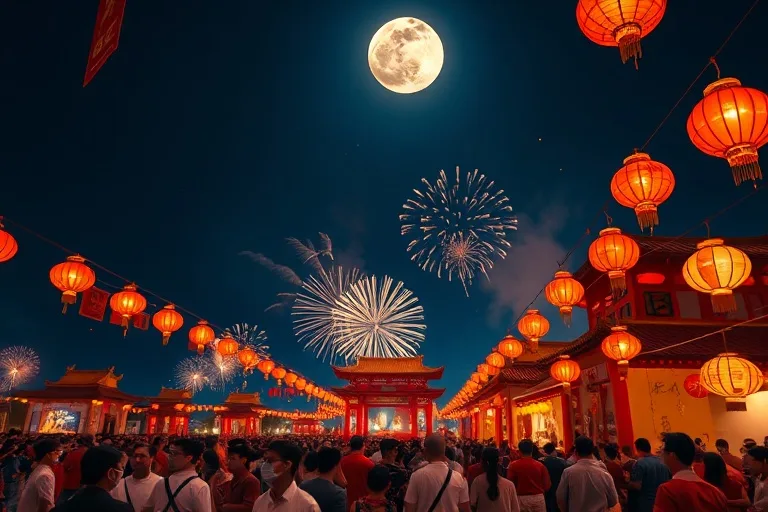
A vibrant celebration of the Chinese New Year, illuminated by traditional lanterns and fireworks, with a prominent full moon overseeing the joyful festivities.
The practice of predicting fortunes and guiding actions based on the lunar calendar has been an integral part of Chinese culture for millennia. It's not merely about foretelling the future but about understanding the energetic currents of the year and aligning oneself with them for optimal well-being and success. This approach emphasizes harmony, balance, and proactive adaptation to cosmic influences, making lunar astrology a practical tool for personal and collective growth.
By exploring the nuances of this ancient system, individuals can gain valuable perspectives on potential challenges and opportunities. This knowledge empowers them to make informed decisions, cultivate positive relationships, and navigate their professional and personal lives with greater wisdom. The following sections will break down the core elements of this fascinating astrological tradition, offering a clear and educational pathway to its deeper understanding.
Table of Contents
- Understanding the Lunar Calendar in Chinese Astrology
- The Twelve Animal Zodiacs: Annual Rulers and Influences
- The Five Elements Cycle: Shaping Destiny Each Year
- Lunar Phases and Their Astrological Significance
- Annual Predictions: General Trends vs. Personal Readings
- Integrating Lunar Astrology for a Harmonious Year
Understanding the Lunar Calendar in Chinese Astrology
The Chinese calendar is lunisolar, meaning it incorporates both lunar and solar cycles. While the solar aspect determines the agricultural seasons, the lunar component dictates the timing of festivals, including the Chinese New Year. The New Year typically falls on the second new moon after the winter solstice, usually between January 21st and February 20th, marking the beginning of a new astrological year.
Each month in the Chinese calendar begins with the new moon, and a full lunar cycle takes approximately 29.5 days. To synchronize with the solar year and prevent seasonal drift, an intercalary or "leap" month is added approximately every three years. This intricate system ensures that the Chinese New Year consistently aligns with the onset of spring, symbolizing renewal and new beginnings.
The lunar calendar's influence extends beyond just timing; it imbues each year with specific energetic qualities. The animal zodiac and element associated with a particular year are determined by this calendar, setting the overarching theme and potential challenges or blessings for everyone. This annual energetic shift is what forms the basis of all Chinese New Year predictions, affecting global trends and individual experiences.
For instance, a year ruled by a specific animal and element will carry the inherent traits of that combination. Understanding these foundational principles allows for a more nuanced interpretation of the year's astrological forecasts. It moves beyond simple fortune-telling, encouraging a deeper engagement with the cyclical nature of time and energy.
The Twelve Animal Zodiacs: Annual Rulers and Influences
Central to Chinese lunar astrology are the twelve animal zodiacs, each ruling an entire year in a repeating 12-year cycle. These animals are Rat, Ox, Tiger, Rabbit, Dragon, Snake, Horse, Goat (or Sheep/Ram), Monkey, Rooster, Dog, and Pig. Legend has it that these animals were chosen by the Jade Emperor in a great race, and their order reflects their finish.
Each animal possesses unique characteristics, strengths, and weaknesses, which are believed to influence the personality of individuals born in that year. More importantly for New Year predictions, the ruling animal of the current year imparts its dominant traits and energies to the collective experience. For example, a Dragon year might bring dynamic changes and ambition, while a Rabbit year could emphasize peace and introspection.
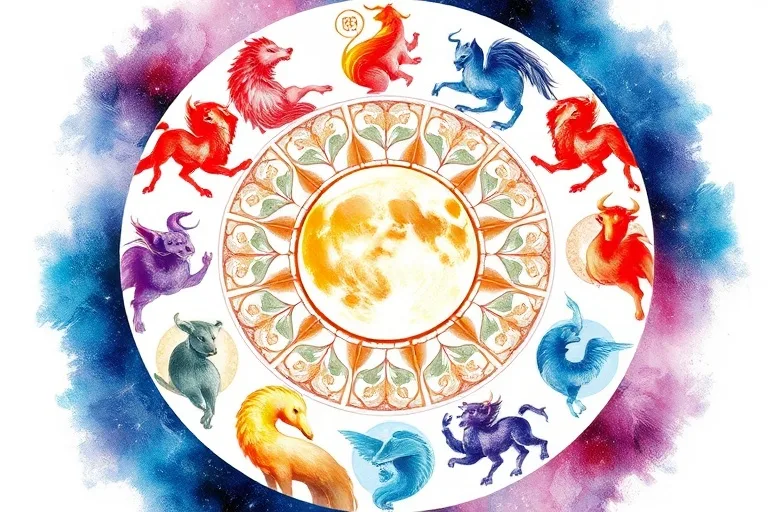
An artistic representation of the twelve Chinese zodiac animals, symbolizing their annual influence and interconnectedness.
When a person's birth zodiac year aligns with the current ruling year, it's known as their "Ben Ming Nian" (本命年). This year is often considered a period of challenges and potential misfortune, as one is believed to be "offending the Grand Duke Jupiter" (Tai Sui). During their Ben Ming Nian, individuals are advised to be cautious, wear red for protection, and perform specific rituals to appease the Tai Sui.
The interaction between the current year's animal and an individual's birth animal is a key factor in personalized predictions. Some animal combinations are harmonious, suggesting a smoother year, while others may indicate clashes or difficulties. This complex interplay forms the basis of compatibility readings and annual forecasts for each zodiac sign.
The Five Elements Cycle: Shaping Destiny Each Year
Complementing the animal zodiacs are the Five Elements: Wood, Fire, Earth, Metal, and Water. These elements cycle through a 10-year period, meaning that each animal zodiac year is further qualified by one of these elements. This creates a 60-year cycle (12 animals x 5 elements), ensuring that each specific animal-element combination occurs only once every six decades.
The elements profoundly influence the characteristics of the ruling animal. For example, a Wood Dragon year will have different energetic qualities than a Fire Dragon year. Wood is associated with growth, creativity, and flexibility; Fire with passion, dynamism, and innovation; Earth with stability, practicality, and nurturing; Metal with discipline, precision, and strength; and Water with intuition, adaptability, and emotional depth.
- Wood: Growth, expansion, creativity, compassion, flexibility.
- Fire: Passion, energy, leadership, innovation, impulsiveness.
- Earth: Stability, practicality, nurturing, reliability, stubbornness.
- Metal: Discipline, precision, strength, integrity, rigidity.
- Water: Intuition, adaptability, communication, wisdom, introspection.
The interaction between these elements is also crucial. There are two primary cycles: the Generative (Sheng) Cycle and the Destructive (Ke) Cycle. The Generative Cycle describes how elements support each other (e.g., Wood feeds Fire, Fire creates Earth), while the Destructive Cycle illustrates how elements control or overcome each other (e.g., Wood controls Earth, Earth controls Water). These cycles are vital in understanding the harmonious or challenging aspects of a given year.
Predictors analyze the year's ruling element in conjunction with the ruling animal and an individual's birth chart (which also includes their own elemental makeup) to provide detailed forecasts. This elemental layer adds significant depth and nuance to the annual predictions, allowing for a more precise understanding of the year's energetic landscape.
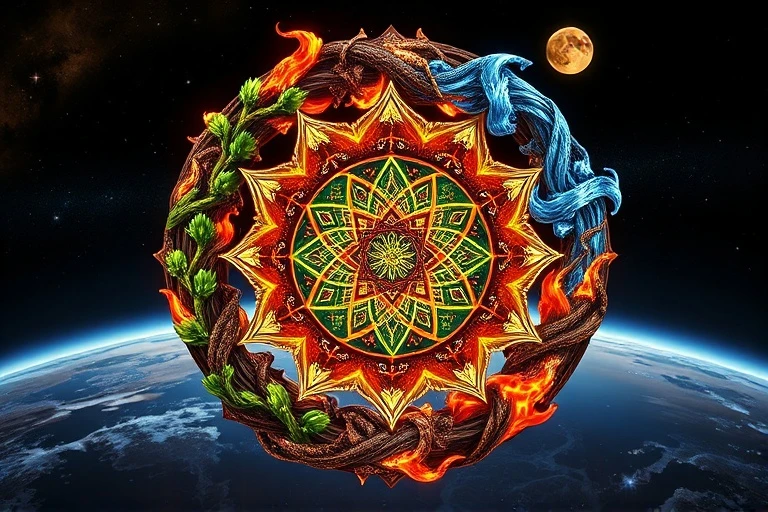
A dynamic 3D render illustrating the cyclical flow and interaction of the Five Elements, set against a cosmic background.
Lunar Phases and Their Astrological Significance
While the Chinese New Year itself is timed by the new moon, the ongoing phases of the moon throughout the year continue to hold significant astrological weight. The moon, in Chinese cosmology, is often associated with Yin energy, emotions, intuition, and the subconscious. Its waxing and waning cycles are believed to influence human moods, energy levels, and the unfolding of events.
Each lunar phase carries a distinct energetic signature:
- New Moon: Represents new beginnings, setting intentions, fresh starts, and introspection. It's a time for planning and planting seeds for future endeavors.
- Waxing Crescent/Gibbous: A period of growth, building momentum, and taking action towards goals. Energy levels increase, and opportunities may arise.
- Full Moon: A peak of energy, illumination, and culmination. It's a time for manifestation, celebration, and releasing what no longer serves. Emotions can be heightened.
- Waning Gibbous/Crescent: A period of release, reflection, and winding down. It's ideal for reviewing progress, letting go of attachments, and preparing for the next cycle.
In Chinese astrology, specific dates within the lunar calendar, such as the Mid-Autumn Festival (Full Moon in the 8th lunar month), are celebrated for their cultural and energetic significance. These festivals are not just holidays but moments for spiritual reflection, family gathering, and aligning with the moon's potent energies. The moon's position relative to specific constellations (similar to Western planetary aspects) can also influence daily or weekly predictions, adding another layer of detail to the annual forecast.
Understanding these lunar rhythms allows individuals to optimize their activities, making the most of auspicious periods and exercising caution during less favorable ones. It's a practical application of celestial wisdom to daily life, fostering a deeper connection to natural cycles.
Annual Predictions: General Trends vs. Personal Readings
Chinese New Year predictions typically come in two forms: general trends for the year and personalized readings. General trends provide an overview of the collective energy and likely major themes for everyone, based on the ruling animal and element of the year. These might include economic forecasts, social developments, or general advice on health and relationships.
For example, a year of the Metal Ox might suggest a period of hard work, discipline, and stability, with potential for significant but slow progress. A Fire Monkey year, conversely, could indicate innovation, quick changes, and a need for adaptability. These general predictions serve as a broad roadmap for the year ahead, offering a context for individual experiences.
Personalized readings, however, delve much deeper. They take into account an individual's birth year, month, day, and even hour, which correspond to specific animal and elemental combinations. This creates a unique "BaZi" (Eight Characters) or Four Pillars of Destiny chart. By comparing this personal chart with the annual energies, astrologers can provide highly specific insights into an individual's fortune.
Key aspects considered in personalized readings include:
- Compatibility: How one's birth animal interacts with the year's animal (harmonious, clashing, neutral).
- Elemental Balance: Whether the year's element supports or challenges the elements in one's BaZi chart.
- Life Pillars: The influence of the annual energy on different aspects of life (career, wealth, relationships, health) as represented by the four pillars.
- Tai Sui Influence: Specific advice for those in their Ben Ming Nian or those whose animal clashes with the Tai Sui.
This intricate analysis allows for tailored advice on how to best navigate the year, mitigate potential challenges, and seize opportunities. It transforms generic forecasts into actionable guidance, emphasizing the proactive role of the individual in shaping their destiny.
Integrating Lunar Astrology for a Harmonious Year
The ultimate goal of engaging with lunar astrology and Chinese New Year predictions is to foster harmony and well-being. It's not about fatalism but about understanding the energetic landscape and making conscious choices. Integrating these insights into daily life can lead to more fulfilling experiences and greater resilience in the face of adversity.
Practical applications of lunar astrology include:
- Strategic Planning: Timing important events like business launches, weddings, or travel according to auspicious lunar phases and elemental interactions.
- Personal Development: Focusing on developing qualities aligned with the year's ruling animal and element, or working on areas that may be challenged.
- Environmental Harmony: Applying Feng Shui principles, which are deeply intertwined with elemental theory, to optimize living and working spaces.
- Health and Wellness: Adjusting diet, exercise, and lifestyle choices to support one's elemental balance and the year's dominant energies.
- Relationship Nurturing: Understanding compatibility dynamics to foster stronger connections and navigate potential conflicts with greater empathy.
Many traditions associated with the Chinese New Year, such as cleaning the house, decorating with red, and sharing specific foods, are themselves rooted in astrological and elemental principles designed to attract good fortune and ward off negative energies. These practices reinforce the cultural significance of aligning with the year's cosmic flow.
By embracing the wisdom of lunar astrology, individuals can cultivate a deeper awareness of themselves and their environment. This ancient system offers a powerful framework for self-discovery and a guide for navigating the ever-changing currents of life with grace and foresight. It encourages a holistic approach to living, where personal actions are harmonized with the greater cosmic rhythm, leading to a more prosperous and balanced year.
Fuente: Contenido híbrido asistido por IAs y supervisión editorial humana.


Comments
Post a Comment