
Psychomagia Rituals: Unblocking Karmic Transformation
Psychomagia Rituals: Unblocking Karmic Transformation Through Symbolic Actions
Psychomagia, a unique therapeutic and artistic approach developed by Chilean-French filmmaker, playwright, and spiritual guru Alejandro Jodorowsky, offers a compelling path to personal transformation. This practice transcends conventional psychology by proposing that many of our psychological and emotional blockages, often perceived as "karmic" patterns, can be addressed and resolved through symbolic acts. These acts are designed to speak directly to the unconscious mind, bypassing rational filters and initiating profound internal shifts.
The essence of Psychomagia lies in its belief that the unconscious does not distinguish between symbolic and real actions. Therefore, by performing a carefully crafted symbolic ritual, an individual can "trick" their unconscious into believing that a deep-seated problem has been resolved, thereby unblocking stagnant energy and fostering healing. This approach is particularly potent for those seeking to break free from repetitive negative patterns, inherited traumas, or self-sabotaging behaviors that seem to defy conventional solutions.
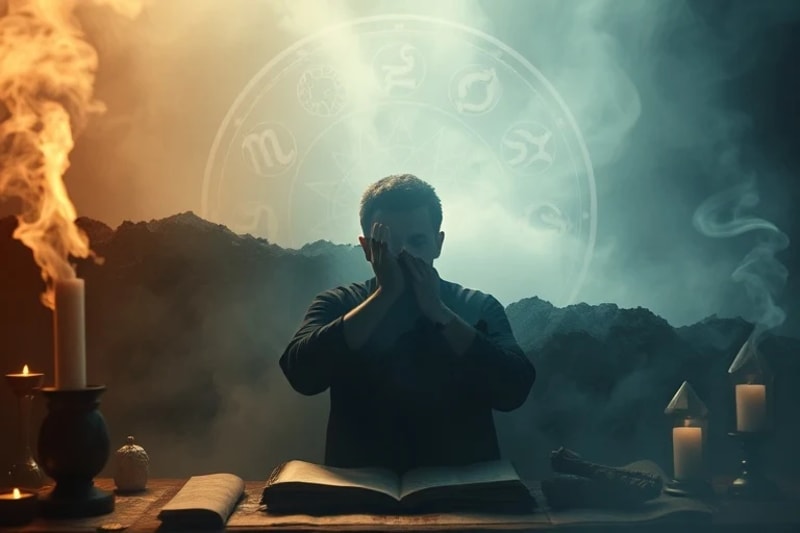
A practitioner engages in a psychomagic act, harnessing the power of esoteric symbolism for personal unblocking and karmic transformation.
Fuente visual sujeta a disponibilidad del ecosistema: Wikimedia Commons bajo licencia CC BY-SA 4.0 o renderizado conceptual IA.Table of Contents
- Historical Roots and Theoretical Framework
- Core Principles of Psychomagia
- How Psychomagia Rituals Work
- Designing the Psychomagic Act
- Psychomagia and Karmic Transformation
- The Role of Esoteric Symbolism
- Benefits and Ethical Considerations
- Integration and Modern Relevance
Historical Roots and Theoretical Framework
Jodorowsky's Psychomagia draws from a rich tapestry of influences, including shamanism, surrealism, psychoanalysis, and his extensive work in theater and tarot. He observed that many ancient cultures utilized ritual and symbolic acts to heal individuals and communities, believing that these practices could mend the soul and restore balance. Surrealism, with its emphasis on the unconscious and dream logic, provided a framework for understanding how non-rational actions could hold profound meaning.
From psychoanalysis, particularly the work of Carl Jung, Jodorowsky adopted the concept of the collective unconscious and archetypes, recognizing that certain symbols hold universal resonance. However, he diverged from traditional therapy by asserting that intellectual understanding alone is often insufficient for deep transformation. Instead, he proposed that direct, physical engagement with symbolic acts could bypass the intellect and directly impact the subconscious, leading to a more visceral and lasting change. This approach resonates with the idea of spiritual cleanse rituals, which also aim to clear negative energy through ceremonial actions.
Jodorowsky also integrated his understanding of the family tree and psychogenealogy, believing that many psychological issues are inherited or stem from unresolved traumas within the family lineage. Psychomagic acts are often designed to address these ancestral burdens, allowing individuals to symbolically break free from patterns that have been passed down through generations. This intergenerational healing aspect adds another layer of depth to the practice, connecting personal struggles to broader familial and historical contexts.
Core Principles of Psychomagia
At its heart, Psychomagia operates on several fundamental principles that distinguish it from other therapeutic modalities. Understanding these principles is key to appreciating the power and potential of this transformative practice.
- The Power of Symbolic Acts: The central tenet is that the unconscious mind responds to symbols as if they were reality. A symbolic act, no matter how unusual, can therefore create a profound psychological shift.
- Communication with the Unconscious: Psychomagia aims to communicate directly with the deepest layers of the psyche. It bypasses the rational mind, which often creates resistance, and speaks the language of dreams, myths, and archetypes.
- Karmic Unblocking and Transformation: The goal is to identify and unblock psychological or emotional "knots" that prevent an individual from living fully. These blockages are often seen as karmic patterns, whether personal or inherited, that manifest as repetitive struggles or limitations.
- Personalized Rituals: Each psychomagic act is highly personal and tailored to the individual's specific issue, history, and symbolic language. There are no generic rituals; each is a unique creation.
- The Act as a Catalyst: The act itself is not the end but the beginning of a transformation. It is a catalyst that sets in motion a process of healing and reorientation within the individual's psyche.
These principles highlight Psychomagia's holistic approach, recognizing the interconnectedness of mind, body, and spirit. It seeks to heal not just symptoms, but the underlying energetic and symbolic roots of suffering, often through methods that might seem unconventional to Western thought.
How Psychomagia Rituals Work
The process of engaging in Psychomagia typically involves several stages, often guided by a practitioner who has studied Jodorowsky's methods. While the specifics of each act vary widely, the general framework remains consistent.

Conceptual still-life representing the complexity of psychological blockages and the subtle process of their unraveling through symbolic intervention.
The first step involves a deep exploration of the individual's life, dreams, fears, and family history. This diagnostic phase can utilize tools like tarot readings, dream analysis, and the construction of a psychogenealogical tree (an expanded family tree that includes emotional patterns and significant life events). The goal is to pinpoint the exact nature of the blockage and its origins, which might stem from childhood trauma, ancestral curses, or societal conditioning.
Once the core issue is identified, the practitioner, often in collaboration with the individual, designs a specific psychomagic act. This act is not meant to be logical or rational; in fact, its power often lies in its absurdity or symbolic intensity. It must be something the individual would not normally do, something that challenges their comfort zone and speaks directly to the unconscious problem. For instance, if someone feels unable to express their voice, an act might involve screaming at the top of a mountain or singing a self-composed song in a public square. This can be seen as a way of healing wounds by confronting them symbolically.
The execution of the act is crucial. It must be performed with full intention, belief, and without judgment. The individual is encouraged to fully immerse themselves in the experience, allowing the symbolic reality to take hold. This is not a mere performance but a sacred ritual aimed at internal transformation. The act is often performed in secret or with a select few witnesses, emphasizing its personal and profound nature.
Following the act, there is a period of integration. The effects of Psychomagia are not always immediate or overtly dramatic. Often, the change manifests subtly over time, as new perspectives emerge, old patterns lose their grip, and the individual feels a sense of liberation or clarity. This integration phase is where the unconscious gradually aligns with the new symbolic reality created by the act.
Designing the Psychomagic Act
The design of a psychomagic act is an art form in itself, requiring intuition, creativity, and a deep understanding of the individual's unique psychological landscape. Jodorowsky emphasizes that the act must be poetic, beautiful, and sometimes even shocking, to truly penetrate the unconscious defenses. It should involve elements that are personally significant to the individual, even if their conscious mind doesn't immediately grasp the connection.
Key considerations in designing an act include:
- The Problem's Manifestation: How does the problem show up in the person's life? Is it a fear, a dependency, a creative block, or a relationship issue? The act should directly address this manifestation.
- The Desired Outcome: What is the individual hoping to achieve? Freedom, courage, love, creativity? The act should symbolically enact this desired state.
- Personal Symbolism: What objects, colors, animals, or actions hold personal meaning for the individual? These elements are woven into the act to make it deeply resonant.
- The "Shock" Factor: Often, the most effective acts are those that are slightly uncomfortable, absurd, or socially transgressive (within ethical bounds). This "shock" helps to break through ingrained patterns and create a memorable, impactful experience.
- The Element of Sacrifice: Sometimes, an act requires a symbolic sacrifice – giving something up, destroying an object, or enduring a minor hardship. This reinforces the commitment to change and the seriousness of the transformation.
For example, for someone struggling with creative blocks, an act might involve painting a canvas with their own blood (symbolizing life force and sacrifice), then burying it and planting a tree over it, symbolizing new growth. For someone feeling trapped by a past relationship, they might be asked to dress in their wedding attire, symbolically divorce themselves from the past, and then burn the clothes in a safe, ceremonial manner. Each act is a miniature play, with the individual as both actor and audience, performing for their own unconscious.
Psychomagia and Karmic Transformation
The concept of "karmic transformation" within Psychomagia refers to the idea of resolving deep-seated patterns that seem to follow an individual throughout their life, often feeling like an inescapable destiny. These patterns are not necessarily about good or bad deeds in past lives, but rather about psychological and energetic imprints that create repetitive challenges. Jodorowsky often links these karmic patterns to the psychogenealogical tree, suggesting that unresolved issues from ancestors can manifest as "karmic debts" or limitations in current generations.
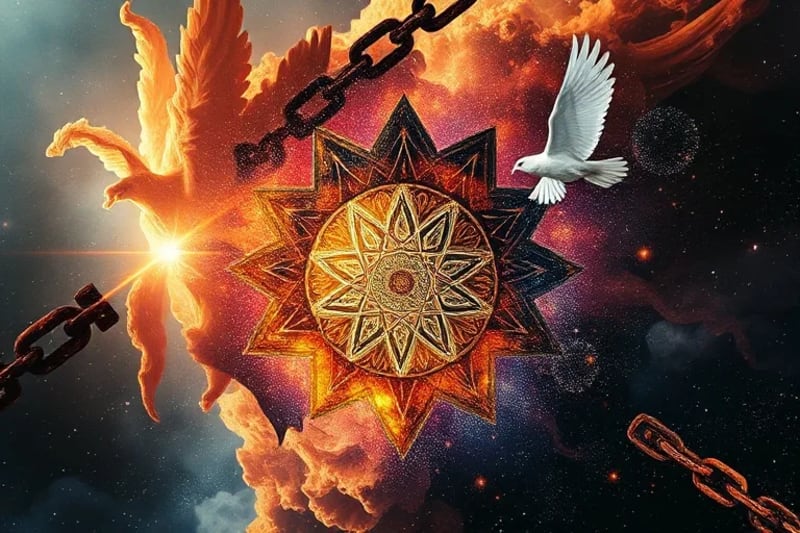
An abstract conceptualization of karmic release, depicting the dissolution of old structures into new, vibrant energies, symbolizing profound spiritual and psychological liberation.
Psychomagic acts aim to interrupt these karmic cycles by providing the unconscious with a new, definitive narrative. If an individual carries the "karma" of poverty from their ancestors, an act might involve symbolically "earning" and "spending" a vast sum of money, then giving it away, thereby breaking the cycle of scarcity and fear. The act doesn't change external reality instantly, but it fundamentally alters the internal relationship to the problem, allowing for new possibilities to emerge in the individual's life.
This process is not about avoiding responsibility, but about freeing oneself from unconscious burdens. By performing an act that symbolically resolves a karmic issue, the individual reclaims agency and opens themselves to new paths. It's a powerful way to rewrite one's personal mythology and move beyond perceived limitations, fostering a sense of liberation and empowerment. This transformative aspect aligns with practices focused on Astro-Economics: Predicting Financial Markets Planetary Cycles and fostering abundance.
The Role of Esoteric Symbolism
Esoteric symbolism is the very language of Psychomagia. Jodorowsky, deeply immersed in mystical traditions, understands that symbols are not mere representations but living entities that carry profound meaning and power. They bridge the gap between the conscious and unconscious, the mundane and the sacred. In Psychomagia, every element of an act – the objects used, the colors, the location, the time of day, the actions performed – is chosen for its symbolic resonance.
For example, water might symbolize purification or emotion, fire could represent destruction and rebirth, and earth might signify grounding or creation. Animals, plants, and even specific numbers can carry archetypal meanings that amplify the act's impact. The practitioner's role is to intuitively select symbols that will resonate most deeply with the individual's unconscious and the specific blockage being addressed. This careful selection ensures that the act speaks directly to the individual's inner world, making the transformation more potent.
The use of esoteric symbolism also connects Psychomagia to a long lineage of spiritual and magical practices that recognize the power of ritual to influence reality. By engaging with these symbols, individuals tap into a collective unconscious, accessing universal truths and archetypal energies that facilitate healing. This makes Psychomagia not just a psychological tool, but a spiritual practice that acknowledges the deeper, hidden dimensions of human experience. The understanding of such symbolism is crucial in many esoteric fields, including Mesoamerican Astrology AI Oracles Bridging Ancient Modern and other mystical traditions.
Benefits and Ethical Considerations
Psychomagia offers several potential benefits for individuals seeking deep personal change. It can provide a powerful sense of agency and empowerment, allowing individuals to actively participate in their own healing process. Many report feeling a profound release of emotional burden, a breaking of old patterns, and a renewed sense of purpose and creativity. It can be particularly effective for those who have found traditional therapy insufficient for their specific issues, or for those who feel a strong connection to symbolic and spiritual approaches.
However, it is crucial to approach Psychomagia with careful consideration and awareness. Jodorowsky himself emphasizes that these acts are not to be taken lightly and should ideally be guided by an experienced practitioner. Without proper guidance, there is a risk of misinterpreting the unconscious message, performing acts that are not truly aligned with the individual's needs, or even causing psychological distress if not integrated properly. It is not a substitute for professional medical or psychological treatment, especially for severe mental health conditions.
As with any powerful therapeutic tool, the ethical application of Psychomagia demands respect, integrity, and a deep understanding of human psychology and spiritual principles. The practitioner must ensure the safety and well-being of the individual, always prioritizing their healing journey above all else.
The core principle remains that the act must be performed with genuine intent and a clear understanding of its symbolic purpose, avoiding superficiality or mere performance.
The practice also raises questions about its scientific validation. As a highly subjective and experiential modality, Psychomagia does not lend itself easily to empirical study in the same way as evidence-based therapies. Its efficacy is often measured by personal transformation and subjective experience rather than quantifiable outcomes. This does not diminish its value for those who resonate with its approach, but it highlights the need for individuals to exercise discernment and personal responsibility.
Integration and Modern Relevance
In an increasingly complex world, many individuals seek alternative paths to healing and self-discovery. Psychomagia offers a compelling option for those who feel disconnected from their inner selves or trapped by invisible forces. Its emphasis on symbolic action, personal mythology, and unconscious communication resonates deeply with contemporary interests in spirituality, self-help, and holistic well-being. It provides a framework for understanding and addressing issues that often elude purely rational analysis.
The practice encourages individuals to become active participants in their own healing, rather than passive recipients of therapy. By engaging in these powerful symbolic acts, people can reclaim their creative power and reshape their personal narratives. This active engagement can lead to a more profound and lasting sense of transformation, fostering resilience and a deeper connection to one's authentic self. Psychomagia, therefore, remains a relevant and potent tool for unblocking karmic patterns and facilitating profound personal evolution in the modern era.
Ultimately, Psychomagia is an invitation to explore the hidden dimensions of the self, to confront and transform the shadows that hold us back, and to embrace a life of greater freedom and authenticity. It is a testament to the enduring power of symbolism and ritual in the human quest for meaning and healing.
Explore More Esoteric Insights
- Spiritual Cleanse Rituals
- Lunar Astrology Emotional Well-being
- 4th House Astrology
- Chiron in Astrology
- Electional Astrology
- Horary Astrology
- Harmonic Astrology
- Chinese Zodiac Legend
- Astro-Economics: Predicting Financial Markets Planetary Cycles
- Solar Return Chart
- Astrology Artists Creative Expression
- Mesoamerican Astrology AI Oracles Bridging Ancient Modern
- Five Elements Chinese Astrology
- Energy Shielding
- Mars Astrology Drive Passion Conflict
Source: Hybrid content assisted by AI and human editorial supervision.


Comments
Post a Comment