
Aromatherapy Chakra Balance: Essential Oils Guide | StarPluto
Aromatherapy, the practice of using natural plant extracts for therapeutic benefit, has been revered for centuries across various cultures for its profound impact on physical and emotional well-being. When combined with the ancient wisdom of the chakra system, it offers a powerful pathway to energetic balance and holistic health. This comprehensive guide explores how specific essential oils can be utilized to cleanse, activate, and harmonize each of the seven primary chakras, fostering a deeper connection to your inner self and the world around you.
Table of Contents
- Understanding Chakras and Aromatherapy
- The Root Chakra (Muladhara): Grounding and Security
- The Sacral Chakra (Svadhisthana): Creativity and Emotion
- The Solar Plexus Chakra (Manipura): Power and Confidence
- The Heart Chakra (Anahata): Love and Compassion
- The Throat Chakra (Vishuddha): Communication and Truth
- The Third Eye Chakra (Ajna): Intuition and Wisdom
- The Crown Chakra (Sahasrara): Spirituality and Connection
- General Application Methods for Chakra Aromatherapy
- Safety Precautions and Best Practices
- Conclusion: Harmonizing Your Energetic Self
The synergy between aromatherapy and chakra healing stems from the understanding that both systems address the subtle energies within and around us. Essential oils, with their unique vibrational frequencies and chemical compositions, can interact with our energetic centers, helping to release blockages, stimulate flow, and restore equilibrium. This practice is not a substitute for professional medical advice but serves as a complementary tool for self-care and spiritual growth.

Aromatherapy harnesses the vibrational frequencies of essential oils to support the energetic balance of the body's chakra system, promoting holistic well-being.
Understanding Chakras and Aromatherapy
Chakras are spinning wheels of energy located along the spine, from its base to the crown of the head. Each of these seven primary chakras governs specific psychological, emotional, and physical functions, influencing our overall health and vitality. When a chakra is balanced, energy flows freely, contributing to a sense of well-being and harmony.
Conversely, blockages or imbalances in a chakra can manifest as physical ailments, emotional disturbances, or mental fog. Aromatherapy provides a gentle yet potent method to address these imbalances. The aromatic compounds in essential oils interact with the limbic system in the brain, influencing emotions, memory, and motivation, while their energetic properties are believed to resonate with specific chakras.
This ancient practice leverages the concentrated life force of plants, offering a natural way to support our energetic body. By understanding the unique properties of various essential oils and their corresponding chakras, individuals can create personalized blends and rituals to foster greater balance and alignment. The following sections delve into each chakra, providing insights into its function and the essential oils best suited for its harmonization.
The Root Chakra (Muladhara): Grounding and Security
Located at the base of the spine, the Root Chakra, or Muladhara, is associated with our sense of stability, security, and connection to the Earth. Its color is red, and it governs our basic needs for survival, including food, shelter, and safety. A balanced Root Chakra fosters feelings of groundedness, trust, and resilience, allowing us to feel secure in our existence.
When the Root Chakra is imbalanced, individuals may experience anxiety, fear, insecurity, or a feeling of being ungrounded. Physical manifestations can include issues with the lower back, legs, feet, or adrenal glands. Essential oils known for their grounding and stabilizing properties are ideal for supporting this chakra, helping to re-establish a sense of safety and belonging.
Recommended Essential Oils for the Root Chakra:
- Vetiver: Deeply grounding and calming, vetiver helps to stabilize emotions and foster a sense of security.
- Cedarwood: Known for its woody, earthy aroma, cedarwood promotes feelings of strength and protection.
- Patchouli: Earthy and musky, patchouli helps to ground the spirit and connect to physical reality.
- Myrrh: Traditionally used for spiritual grounding, myrrh offers a sense of peace and stability.
The Sacral Chakra (Svadhisthana): Creativity and Emotion
The Sacral Chakra, or Svadhisthana, is situated just below the navel and is associated with creativity, passion, sexuality, and emotional fluidity. Its vibrant orange color reflects its connection to pleasure, joy, and the ability to embrace change. A healthy Sacral Chakra allows for the free expression of emotions and a natural flow of creative energy.
An imbalance in this chakra can lead to emotional instability, creative blocks, issues with intimacy, or a lack of zest for life. Physical symptoms might include reproductive problems, urinary issues, or lower abdominal discomfort. Essential oils that inspire joy, creativity, and emotional balance are particularly beneficial for the Sacral Chakra.
Recommended Essential Oils for the Sacral Chakra:
- Sandalwood: Promotes emotional openness, sensuality, and spiritual connection.
- Ylang Ylang: Known for its euphoric and aphrodisiac qualities, it encourages joy and emotional release.
- Sweet Orange: Uplifting and cheerful, orange oil stimulates creativity and a positive outlook.
- Jasmine: A powerful mood enhancer, jasmine fosters feelings of love, passion, and confidence.
The Solar Plexus Chakra (Manipura): Power and Confidence
The Solar Plexus Chakra, or Manipura, located in the upper abdomen, is the center of our personal power, self-esteem, and willpower. Its color is yellow, symbolizing energy, intellect, and transformation. A balanced Solar Plexus Chakra empowers us to assert ourselves, make decisions, and feel confident in our abilities, driving us towards our goals.
When this chakra is out of balance, individuals may struggle with low self-esteem, indecisiveness, a need for control, or feelings of victimhood. Physical issues can manifest as digestive problems, fatigue, or liver imbalances. Essential oils that invigorate, clarify, and boost confidence are excellent choices for supporting the Solar Plexus Chakra.
Recommended Essential Oils for the Solar Plexus Chakra:
- Lemon: Uplifting and purifying, lemon oil enhances focus and promotes a positive mindset.
- Ginger: Warming and stimulating, ginger boosts courage and personal power.
- Peppermint: Invigorating and clarifying, peppermint aids in mental clarity and decision-making.
- Rosemary: Known for its stimulating properties, rosemary enhances memory and confidence.

The Heart Chakra, represented by a green lotus, thrives with essential oils like rose and geranium, fostering love and emotional healing.
The Heart Chakra (Anahata): Love and Compassion
The Heart Chakra, or Anahata, located at the center of the chest, is the bridge between our lower and upper chakras, connecting our physical and spiritual selves. Its color is green, symbolizing growth, healing, and harmony, and it is the center of love, compassion, empathy, and forgiveness. A balanced Heart Chakra allows us to give and receive love freely, fostering deep connections.
When the Heart Chakra is out of balance, individuals may experience feelings of loneliness, jealousy, resentment, or an inability to trust. Physical symptoms can manifest as heart conditions, lung problems, or immune system deficiencies. Essential oils that promote emotional healing, love, and connection are invaluable for nurturing this vital energy center.
Recommended Essential Oils for the Heart Chakra:
- Rose: The quintessential oil of love, rose promotes unconditional love, compassion, and emotional healing.
- Geranium: Balances emotions, reduces stress, and opens the heart to connection.
- Bergamot: Uplifting and calming, bergamot helps release self-judgment and encourages self-acceptance.
- Neroli: Soothes anxiety, promotes peace, and fosters feelings of joy and love.
The Throat Chakra (Vishuddha): Communication and Truth
The Throat Chakra, or Vishuddha, located in the throat area, is the center of communication, self-expression, and truth. Its color is blue, representing clarity, honesty, and open expression. A balanced Throat Chakra allows us to articulate our thoughts and feelings clearly, listen effectively, and speak our truth with integrity and confidence.
An imbalance in this chakra can lead to difficulty expressing oneself, fear of public speaking, excessive shyness, or gossiping. Physical symptoms may include sore throats, thyroid issues, neck stiffness, or vocal problems. Essential oils that promote clarity, calm, and confident expression are highly beneficial for the Throat Chakra.
Recommended Essential Oils for the Throat Chakra:
- Eucalyptus: Clears the mind and respiratory passages, promoting clear communication.
- Peppermint: Invigorates and clarifies, aiding in honest and direct expression.
- Lavender: Calming and soothing, lavender helps to reduce anxiety around speaking and promotes peaceful communication.
- Frankincense: Deeply spiritual, frankincense encourages truthful expression and connection to inner wisdom.
The Third Eye Chakra (Ajna): Intuition and Wisdom
The Third Eye Chakra, or Ajna, situated between the eyebrows, is the center of intuition, insight, and inner wisdom. Its color is indigo, representing deep perception and spiritual understanding. A balanced Third Eye Chakra enhances our ability to see beyond the obvious, trust our intuition, and access higher knowledge, guiding us on our life path.
When this chakra is imbalanced, individuals may experience confusion, lack of direction, poor judgment, or an inability to connect with their inner guidance. Physical symptoms can include headaches, eye strain, or sinus issues. Essential oils that promote mental clarity, spiritual insight, and intuitive awareness are excellent for stimulating the Third Eye Chakra.
Recommended Essential Oils for the Third Eye Chakra:
- Frankincense: Deepens meditation, enhances spiritual connection, and promotes clarity of vision.
- Sandalwood: Calming and meditative, sandalwood aids in inner reflection and intuitive development.
- Clary Sage: Known for its ability to promote vivid dreams and enhance intuition.
- Juniper Berry: Cleansing and purifying, juniper berry helps to clear mental fog and promote clear insight.
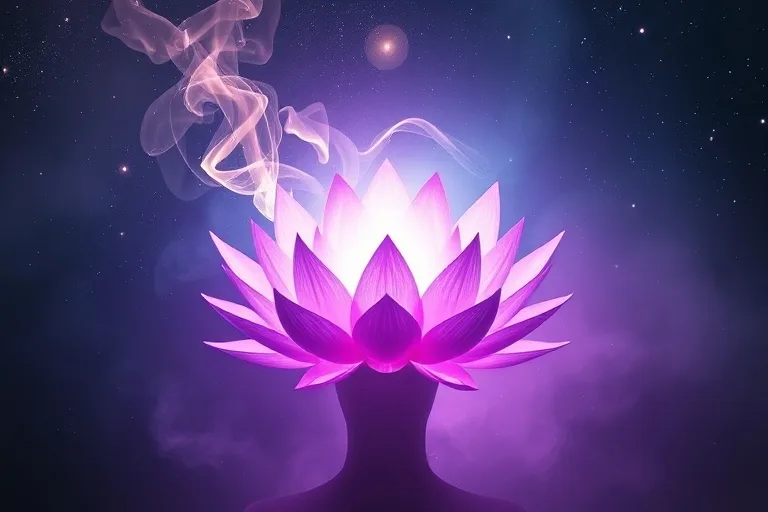
The Crown Chakra, depicted as a violet lotus, is enhanced by frankincense and sandalwood, facilitating spiritual connection and enlightenment.
The Crown Chakra (Sahasrara): Spirituality and Connection
The Crown Chakra, or Sahasrara, located at the very top of the head, is our connection to universal consciousness, spirituality, and divine wisdom. Its color is violet or white, representing purity, enlightenment, and transcendence. A balanced Crown Chakra fosters a deep sense of peace, unity, and an understanding of our interconnectedness with all life.
When this chakra is imbalanced, individuals may feel disconnected, alienated, or lack purpose. They might experience cynicism, spiritual skepticism, or a sense of existential dread. Physical manifestations can include neurological disorders, chronic fatigue, or sensitivity to light and sound. Essential oils that promote spiritual awareness, meditation, and a sense of unity are ideal for opening and balancing the Crown Chakra.
Recommended Essential Oils for the Crown Chakra:
- Lavender: Calming and spiritually uplifting, lavender aids in meditation and promotes inner peace.
- Frankincense: Revered for its ability to deepen spiritual practice and connect to higher consciousness.
- Sandalwood: Promotes tranquility, mental clarity, and a sense of sacredness.
- Myrrh: Traditionally used for anointing and spiritual purification, myrrh fosters a sense of devotion and connection.
General Application Methods for Chakra Aromatherapy
Integrating essential oils into your chakra balancing practice can be done through various methods. Always dilute essential oils with a carrier oil (like jojoba, almond, or coconut oil) before applying them topically to prevent skin irritation. A general dilution ratio is 2-3 drops of essential oil per teaspoon of carrier oil.
Here are some effective application methods:
- Topical Application: Apply diluted essential oils directly to the skin over the corresponding chakra location. Gently massage in a clockwise direction to stimulate energy flow. For example, apply grounding oils to the tailbone for the Root Chakra or heart-opening oils to the chest for the Heart Chakra.
- Diffusion: Use an essential oil diffuser to disperse the aroma into your space. This method is excellent for creating a supportive atmosphere during meditation, yoga, or daily activities. Diffuse oils associated with the chakra you wish to balance for 15-30 minutes.
- Aromatic Bath: Add 5-10 drops of essential oil (pre-mixed with a dispersant like Epsom salts or a carrier oil) to a warm bath. Soaking in the aromatic water allows for both topical absorption and inhalation, creating a deeply relaxing and balancing experience.
- Inhalation: Inhale essential oils directly from the bottle, from a cotton ball, or by placing a drop on your palms, rubbing them together, and cupping them over your nose. This method provides immediate access to the limbic system, influencing emotions and mental states.
- Chakra Roll-Ons/Mists: Create personalized roll-on bottles or mists by diluting essential oils in a carrier oil or distilled water. These are convenient for on-the-go application and can be used throughout the day to maintain energetic balance.
Safety Precautions and Best Practices
While essential oils offer numerous benefits, it is crucial to use them safely and responsibly. Always purchase high-quality, pure essential oils from reputable sources to ensure their therapeutic efficacy and avoid adulterated products. Adherence to proper dilution guidelines is paramount, especially for topical application.
Consider the following safety precautions:
- Patch Test: Before applying a new essential oil to a large area of skin, perform a patch test on a small, inconspicuous area to check for any adverse reactions.
- Avoid Sensitive Areas: Do not apply essential oils to eyes, inner ears, or other sensitive areas. If contact occurs, rinse with a carrier oil, not water.
- Pregnancy and Children: Consult a healthcare professional or a certified aromatherapist before using essential oils during pregnancy, while breastfeeding, or on young children. Some oils are contraindicated.
- Medical Conditions: If you have any medical conditions or are taking medications, consult your doctor before incorporating essential oils into your routine, as some oils may interact with certain drugs.
- Internal Use: Avoid internal consumption of essential oils unless under the direct guidance of a qualified and experienced professional.
- Storage: Store essential oils in dark glass bottles, away from direct sunlight and heat, to preserve their potency and shelf life.
Always listen to your body and discontinue use if you experience any discomfort or irritation. The goal is to create a harmonious experience that supports your well-being, not to create additional stress or adverse effects.
Conclusion: Harmonizing Your Energetic Self
Aromatherapy for chakra balancing offers a beautiful and accessible way to engage with your energetic body, promoting profound healing and self-discovery. By consciously selecting and applying essential oils that resonate with each chakra, you can support your emotional, mental, and physical health, fostering a greater sense of peace and alignment. This practice encourages a holistic approach to wellness, recognizing the intricate connection between our subtle energy system and our overall vitality.
Embrace the power of nature's essences to unlock your inner potential and cultivate a life of vibrant energetic balance. Whether through daily diffusion, topical application, or meditative practices, the journey of chakra aromatherapy invites you to explore the depths of your being and awaken your inherent capacity for harmony. Remember that consistency and intention are key to experiencing the full benefits of this ancient healing art.
Fuente: Contenido híbrido asistido por IAs y supervisión editorial humana.


Comments
Post a Comment