
Jungian Archetypes Chinese Zodiac Bridging Ancient Wisdom
The human psyche is a vast and intricate landscape, often explored through diverse lenses across cultures and epochs. In the West, Carl Jung's analytical psychology introduced the profound concept of archetypes—universal, archaic patterns and images that derive from the collective unconscious and are the psychic counterpart to instinct. Simultaneously, in the East, the Chinese Zodiac has for millennia provided a rich framework for understanding personality, destiny, and interpersonal dynamics through the cyclical influence of twelve animal signs. This deep dive aims to bridge these two powerful systems, exploring how Jungian archetypes manifest within the characteristics of each Chinese Zodiac animal, offering a unique pathway for self-discovery and holistic psychological insight.
 A conceptual mandala illustrating the intricate interplay between the ancient wisdom of the Chinese Zodiac and the profound insights of Jungian archetypes, symbolizing a unified path to self-discovery.
This exploration is not merely an academic exercise; it is a practical tool for individuals seeking a deeper understanding of their innate predispositions, behavioral patterns, and life's purpose. By recognizing the archetypal energies at play within their Chinese Zodiac sign, individuals can unlock suppressed potentials, integrate shadow aspects, and cultivate a more authentic and fulfilling existence. We delve into the theoretical underpinnings of both systems before meticulously mapping their intersections, revealing a tapestry of human experience that transcends cultural boundaries.
Table of Contents
- Understanding Jungian Archetypes: The Universal Language of the Psyche
- The Twelve Chinese Zodiac Animals: A Framework of Personality
- Bridging the Gap: Archetypal Expressions in the Chinese Zodiac
- Archetypal Manifestations Across Zodiac Animals: A Detailed Analysis
- Practical Application: Self-Discovery and Personal Growth
- Integrating Archetypes for Holistic Understanding
Understanding Jungian Archetypes: The Universal Language of the Psyche
Carl Jung, a Swiss psychiatrist and the founder of analytical psychology, proposed that beyond our personal unconscious, there exists a collective unconscious—a reservoir of experiences and images shared by all humanity. This collective unconscious is populated by archetypes, which are not inherited ideas themselves, but rather predispositions to respond to the world in certain ways. They are primordial patterns of thought, behavior, and emotion, expressed through symbols, myths, dreams, and cultural narratives across all civilizations.
Key archetypes that frequently appear in Jungian theory include:
- The Persona: The mask we present to the world, adapting to social norms and expectations.
- The Shadow: The repressed, unconscious aspects of ourselves, both positive and negative, often considered our "dark side."
- The Anima/Animus: The unconscious feminine qualities in men (Anima) and masculine qualities in women (Animus), representing the contrasexual soul image.
- The Self: The archetype of wholeness and the regulating center of the psyche, representing the totality of the personality.
- The Hero: Embodies courage, strength, and the journey of overcoming obstacles.
- The Sage (Wise Old Man/Woman): Represents wisdom, guidance, and spiritual insight.
- The Innocent: Symbolizes purity, optimism, and a desire for safety.
- The Explorer: Driven by a need for freedom, discovery, and authenticity.
- The Creator: Expresses innovation, artistry, and the desire to build something lasting.
- The Ruler: Seeks control, order, and leadership.
- The Magician: Represents transformation, knowledge, and the ability to make dreams a reality.
- The Lover: Driven by intimacy, passion, and connection.
- The Caregiver: Motivated by compassion, service, and protecting others.
- The Rebel: Challenges the status quo, seeks revolution, and desires liberation.
- The Jester/Trickster: Embodies humor, playfulness, and the disruption of norms.
These archetypes are not static roles but dynamic energies that influence our thoughts, feelings, and behaviors, shaping our life narratives and our quest for individuation—the process of integrating the conscious and unconscious to achieve psychological wholeness.
The Twelve Chinese Zodiac Animals: A Framework of Personality
The Chinese Zodiac, or Sheng Xiao, is a repeating cycle of 12 years, with each year represented by an animal and its reputed attributes. Originating from ancient Chinese astronomy and astrology, this system is deeply embedded in Chinese culture, influencing everything from personality analysis to compatibility assessments and fortune-telling. The animals are Rat, Ox, Tiger, Rabbit, Dragon, Snake, Horse, Goat (or Sheep), Monkey, Rooster, Dog, and Pig (or Boar).
Beyond the animal symbolism, the Chinese Zodiac is also influenced by the Five Elements (Wood, Fire, Earth, Metal, Water) and Yin/Yang principles, which add further layers of complexity and nuance to each sign. For example, a Wood Dragon will exhibit different characteristics than a Metal Dragon. Each animal is associated with specific personality traits, strengths, weaknesses, and life paths, offering a detailed blueprint of an individual's inherent nature. This system provides a unique perspective on individual differences and collective human experiences, much like Western astrology. For a deeper understanding of these elemental influences, explore Chinese Zodiac Element Compatibility: Beyond Animal Pairings.
Bridging the Gap: Archetypal Expressions in the Chinese Zodiac
The convergence of Jungian archetypes and the Chinese Zodiac offers a powerful synthesis. While Jung's archetypes describe universal patterns of the human psyche, the Chinese Zodiac provides specific cultural and symbolic containers for these patterns. Each zodiac animal, with its distinct personality traits and behavioral tendencies, can be seen as embodying a particular archetypal energy or a complex interplay of several archetypes. This mapping allows for a richer, more nuanced understanding of both systems.
 A visual representation of stylized Chinese Zodiac animals, each subtly infused with elements reflecting their dominant Jungian archetypal energies.
For instance, the Dragon, often associated with power, ambition, and charisma, clearly resonates with the Ruler and Magician archetypes. The Rabbit, known for its gentleness and sensitivity, might embody the Innocent and Lover. By identifying these connections, we can move beyond superficial personality descriptions and delve into the deeper, unconscious motivations and universal patterns that drive individuals born under each sign. This interdisciplinary approach enriches self-understanding, providing a framework for personal development that integrates ancient wisdom with modern psychological insights.
Archetypal Manifestations Across Zodiac Animals: A Detailed Analysis
Let's explore the primary archetypal associations for each Chinese Zodiac animal:
| Zodiac Animal | Primary Archetypes | Key Characteristics & Archetypal Expression |
|---|---|---|
| Rat | Trickster, Explorer, Collector | Intelligent, resourceful, charming, and quick-witted. The Trickster aspect manifests in their cleverness and ability to navigate complex situations, sometimes with a mischievous edge. As an Explorer, they are curious and seek out new opportunities. Their tendency to accumulate wealth or knowledge aligns with the Collector. |
| Ox | Builder, Caregiver, Ruler (in a foundational sense) | Diligent, dependable, strong, and determined. The Builder is evident in their methodical approach to work and life, creating stable foundations. Their loyalty and protective nature towards family and friends resonate with the Caregiver. Their quiet strength and leadership by example can be seen as a grounded form of the Ruler. |
| Tiger | Hero, Rebel, Warrior | Brave, confident, charismatic, and unpredictable. The Hero archetype drives their courage and desire for adventure and justice. Their independent spirit and tendency to challenge authority align with the Rebel. The Warrior aspect is seen in their fierce protectiveness and competitive nature. |
| Rabbit | Innocent, Lover, Artist | Gentle, compassionate, sensitive, and refined. The Innocent is reflected in their desire for peace and harmony. Their capacity for deep affection and appreciation for beauty connects to the Lover. Their aesthetic sense and creativity often manifest as the Artist. |
| Dragon | Ruler, Magician, Creator | Charismatic, powerful, ambitious, and inspiring. The Ruler archetype is prominent in their natural leadership and desire for influence. Their ability to manifest grand visions and inspire others aligns with the Magician. Their innovative spirit and drive to leave a legacy embody the Creator. |
| Snake | Sage, Magician, Shadow (in its mysterious aspect) | Intelligent, intuitive, mysterious, and philosophical. The Sage archetype is evident in their deep wisdom and contemplative nature. Their ability to understand hidden truths and transform situations aligns with the Magician. The mysterious, sometimes enigmatic quality can touch upon the Shadow, representing hidden depths and secrets. |
| Horse | Explorer, Hero, Rebel | Energetic, independent, adventurous, and freedom-loving. The Explorer drives their need for travel and new experiences. Their spirited nature and pursuit of personal freedom resonate with the Hero's journey. A tendency to resist confinement or routine can link to the Rebel. |
| Goat (Sheep) | Caregiver, Innocent, Artist | Gentle, compassionate, creative, and peace-loving. The Caregiver is strong in their nurturing and empathetic nature. Their sensitive and sometimes vulnerable side reflects the Innocent. Their artistic talents and appreciation for beauty align with the Artist. |
| Monkey | Trickster, Magician, Explorer | Intelligent, witty, curious, and playful. The Trickster is evident in their cleverness, humor, and sometimes mischievous nature. Their ability to solve problems creatively and adapt quickly connects to the Magician. Their insatiable curiosity and desire for novelty align with the Explorer. |
| Rooster | Hero (in a self-sacrificing way), Ruler (of their domain), Performer | Confident, hardworking, observant, and proud. Their dedication to duty and protection of loved ones can be a form of the Hero. Their desire for order and attention to detail make them a ruler of their immediate environment. Their need to be noticed and admired aligns with the Performer. |
| Dog | Caregiver, Innocent, Warrior (for justice) | Loyal, honest, protective, and just. The Caregiver is strong in their devotion and empathy. Their straightforwardness and idealism can reflect the Innocent. Their strong sense of justice and willingness to fight for what's right embodies the Warrior. |
| Pig (Boar) | Lover, Caregiver, Innocent | Honest, kind, generous, and optimistic. The Lover is evident in their capacity for deep affection and enjoyment of life's pleasures. Their nurturing and supportive nature aligns with the Caregiver. Their trusting and sometimes naive outlook reflects the Innocent. |
Practical Application: Self-Discovery and Personal Growth
Understanding the archetypal energies within your Chinese Zodiac sign offers profound avenues for self-discovery and personal growth. This knowledge moves beyond mere personality descriptions, providing a deeper psychological framework for understanding your core motivations and potential challenges. Here’s how you can apply this integrated wisdom:
- Identify Dominant Archetypes: Reflect on which archetypes most strongly resonate with your life experiences and innate tendencies. How do they manifest in your career, relationships, and personal pursuits?
- Embrace Strengths: Leverage the positive aspects of your dominant archetypes. For example, if you are a Dragon (Ruler/Magician), embrace your leadership qualities and capacity for transformation.
- Integrate Shadow Aspects: Each archetype has a shadow side. The Ruler can become tyrannical, the Caregiver can become a martyr, and the Trickster can become manipulative. Recognizing these potential pitfalls allows for conscious integration and healthier expression.
- Balance Archetypal Energies: While certain archetypes may be dominant, a healthy psyche requires access to a range of archetypal energies. If you find yourself overly identified with one, explore how to cultivate others that might be underdeveloped.
- Understand Relationships: Applying this framework to others can enhance empathy and understanding. Recognizing the archetypal patterns in friends, family, and colleagues can improve communication and resolve conflicts.
- Navigate Life Transitions: Different life stages may call upon different archetypal energies. Understanding this can help you consciously tap into the necessary resources during periods of change or challenge.
This journey of self-exploration is continuous, much like the cyclical nature of the zodiac itself. It invites a deeper engagement with your inner world, fostering authenticity and psychological wholeness. For those interested in further exploring how ancient systems map to personal destinies, delving into concepts like Decans in Astrology: Deeper Layers of Your Sun Sign can provide additional insights into the intricate layers of personality.
Integrating Archetypes for Holistic Understanding
The synthesis of Jungian archetypes and the Chinese Zodiac provides a robust framework for holistic self-understanding. It allows individuals to see themselves not just as a collection of traits, but as participants in universal human dramas, driven by timeless psychological patterns. This integrated perspective enriches our personal narratives, connecting us to a larger collective human experience.
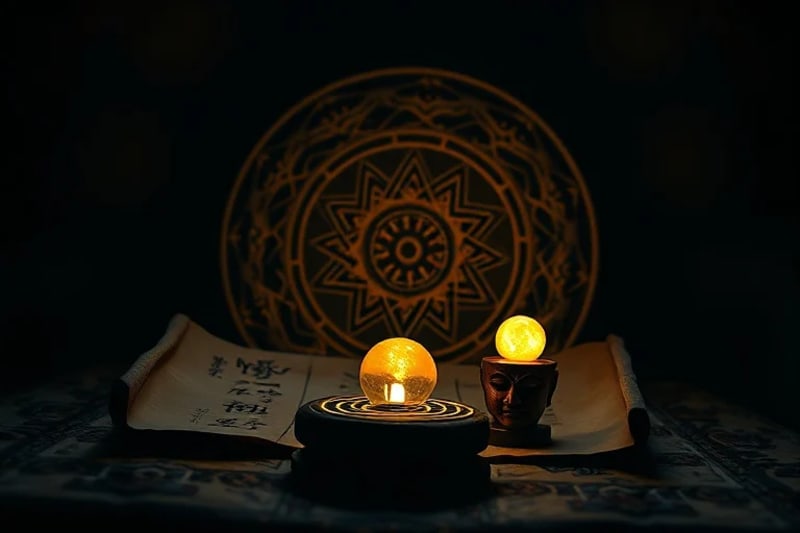 A surreal still-life composition featuring an ancient scroll and symbolic artifacts, representing the profound and mysterious depths of the collective unconscious.
By understanding the archetypal forces at play within our Chinese Zodiac sign, we gain clarity on our strengths, weaknesses, and potential life paths. This knowledge empowers us to make more conscious choices, align with our authentic selves, and navigate the complexities of life with greater wisdom and intention. It encourages a journey of individuation, where the conscious and unconscious are integrated, leading to a more complete and balanced self. This journey of integrating ancient wisdom with modern psychological understanding is a testament to the enduring human quest for meaning, echoing principles found in other profound systems like Hermetic Kabbalah: Tree Life Spiritual Attainment.
In an increasingly complex world, where the boundaries between the physical and digital blur, understanding these foundational psychological structures becomes even more critical. The exploration of consciousness, whether through ancient wisdom or modern technological lenses, remains a central human endeavor. This intersection of ancient psychological frameworks with contemporary thought can even find parallels in discussions surrounding Digital Metaphysics: Consciousness AI VR Extended Realities, highlighting the timeless nature of self-exploration.
Conclusion: A Unified Path to Self-Awareness
The deep dive into Jungian archetypes within the Chinese Zodiac reveals a fascinating and powerful framework for self-discovery. It demonstrates how seemingly disparate systems of thought can converge to offer a richer, more profound understanding of the human psyche. By recognizing the universal patterns (archetypes) that manifest through specific cultural expressions (Zodiac animals), we gain invaluable tools for personal growth, shadow integration, and the pursuit of psychological wholeness.
This integrated approach encourages individuals to embark on a journey of introspection, connecting with the primal energies that shape their existence. It is a testament to the enduring human quest for meaning and self-awareness, bridging ancient wisdom with modern psychological insight to illuminate the path toward a more authentic and fulfilled life.
Related Searches & Further Reading
Explore more insights:
- Medical Astrology: Diagnosing Healing Birth Chart Insights
- Intercepted Signs Natal: Unveiling Suppressed Potentials
- Spirit Guides: Connecting Celestial Team Guidance
- Sigil Magic: Personal Empowerment, Inner Strength Activation
- Serafines Querubines: Distinciones y Similitudes Angelología
- Geometría Sagrada Kármica: Activando Portales Estelares, Sanación Linajes
Source: Hybrid content assisted by AI and human editorial supervision.


Comments
Post a Comment