
Psycho-Astrology Jungian Natal Chart Self-Discovery
Psycho-astrology represents a fascinating and profound convergence of two seemingly disparate fields: Jungian psychology and astrological natal chart analysis. This interdisciplinary approach offers a unique framework for deep self-discovery, personal growth, and understanding the intricate patterns that shape human experience. Far from being a mere predictive tool, psycho-astrology delves into the symbolic language of the cosmos to illuminate the inner workings of the psyche, providing insights into our innate potentials, challenges, and life's purpose.
At its core, psycho-astrology posits that the natal chart, a snapshot of the heavens at the moment of our birth, serves as a symbolic map of the individual psyche. Carl Jung's analytical psychology, with its emphasis on archetypes, the collective unconscious, and the process of individuation, provides a robust theoretical lens through which to interpret these astrological symbols. This integration allows for a richer, more nuanced understanding of personality, motivations, and the journey towards wholeness.
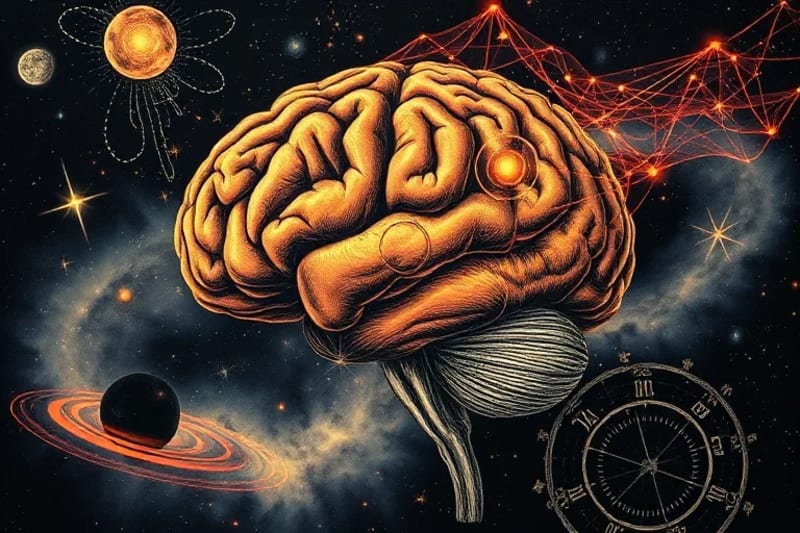
Conceptual image blending a detailed human brain with a celestial map, interconnected by subtle energetic lines and glowing astrological symbols, symbolizing the bridge between inner psyche and cosmic influence.
Fuente visual sujeta a disponibilidad del ecosistema: Wikimedia Commons bajo licencia CC BY-SA 4.0 o renderizado conceptual IA.
The Foundations: Jungian Psychology and Its Relevance
Carl Jung, a pioneering Swiss psychiatrist, developed a school of thought known as analytical psychology. Central to his work is the concept of the collective unconscious, a universal, inherited reservoir of experiences and patterns that exist beyond individual consciousness. This collective unconscious is populated by archetypes, which are primordial images and patterns of thought that manifest in myths, dreams, and cultural symbols across all human societies.
Key Jungian archetypes include the Hero, the Sage, the Innocent, the Shadow, and the Anima/Animus. These archetypes are not fixed entities but dynamic forces that influence our behavior, perceptions, and life choices. Understanding them allows individuals to recognize universal patterns within their personal narratives, fostering a sense of connection and meaning. The process of individuation, for Jung, is the lifelong psychological journey of integrating these unconscious elements into conscious awareness, leading to a more complete and authentic self.
Other vital Jungian concepts include the Persona, the social mask we present to the world, and the Shadow, the repressed aspects of our personality that we deem unacceptable. Integrating the Shadow is crucial for psychological maturity, as it holds immense energy and potential that, when acknowledged, can be harnessed for growth. Psycho-astrology leverages these concepts to interpret the symbolic language of the natal chart, finding archetypal expressions within planetary placements and aspects.
The Astrological Map: Decoding the Natal Chart
The natal chart is a geocentric diagram representing the positions of the planets, Sun, and Moon at the precise moment and location of an individual's birth. It is divided into twelve zodiac signs and twelve houses, all interconnected by various angles known as aspects. Each component of the natal chart holds symbolic significance:
- Planets: Represent fundamental psychological drives and functions (e.g., Mars for action, Venus for values, Mercury for communication).
- Zodiac Signs: Describe the "how" or the mode of expression for these planetary energies (e.g., Aries Mars acts impulsively, Libra Mars acts diplomatically).
- Houses: Indicate the "where" or the specific life areas where these energies manifest (e.g., 1st House for self-identity, 7th House for relationships). A deeper understanding of these life spheres can be found in our guide Understanding the Twelve Houses: A Comprehensive Guide to Life's Spheres.
- Aspects: Are the angular relationships between planets, revealing the dynamic interplay and integration (or tension) between different psychological functions.
Interpreting a natal chart involves synthesizing these elements to paint a comprehensive picture of an individual's inherent psychological landscape. It's not about predestination, but about understanding predispositions and potentials. For example, a planet in retrograde motion, as discussed in Retrograde Planets: Navigating Their Influence, can symbolize an internalized or re-evaluated function, adding another layer of psychological depth.

Symbolic still life depicting various Jungian archetypes, such as the Sage's book, the Jester's mask, and the Hero's shield, arranged to evoke the collective unconscious.
Bridging the Gap: Jungian Archetypes in the Natal Chart
The true power of psycho-astrology lies in its ability to map Jungian archetypes onto the natal chart. Each planet, sign, and house can be seen as an expression of an archetypal pattern. For instance:
- The Sun: Often correlates with the Jungian Self, representing our core identity and the drive towards individuation. Its sign and house placement describe how this Self seeks to express itself in the world.
- The Moon: Relates to the Great Mother archetype, our emotional nature, security needs, and unconscious habits.
- Mars: Embodies the Warrior or Hero archetype, signifying our assertiveness, courage, and how we pursue our desires.
- Venus: Connects to the Lover or Aphrodite archetype, revealing our values, aesthetic sense, and capacity for connection.
- Saturn: Often linked to the Father or Senex archetype, representing authority, structure, discipline, and where we face our greatest lessons and fears.
Challenging aspects (squares, oppositions) in the natal chart can symbolize the Shadow. These are areas where unconscious conflicts or repressed potentials reside. By consciously working with these aspects, individuals can integrate their Shadow, transforming perceived weaknesses into sources of strength. For example, a challenging aspect involving Mars might indicate repressed anger or an inability to assert oneself, which, when brought to consciousness, can lead to healthy self-expression.
The astrological concept of planetary hours also aligns with the idea of synchronicity, a Jungian concept where meaningful coincidences occur without causal connection. Understanding the planetary hours, as explored in Planetary Hours: Astrological Alignment & Success, can help individuals align their actions with cosmic rhythms, enhancing the potential for successful outcomes and reinforcing the interconnectedness of inner and outer worlds.
Deep Self-Discovery Through Integration
The integration of Jungian psychology and natal chart analysis offers a powerful pathway to profound self-discovery. It moves beyond superficial personality descriptions, delving into the dynamic interplay of conscious and unconscious forces. Here’s how this synthesis facilitates self-discovery:
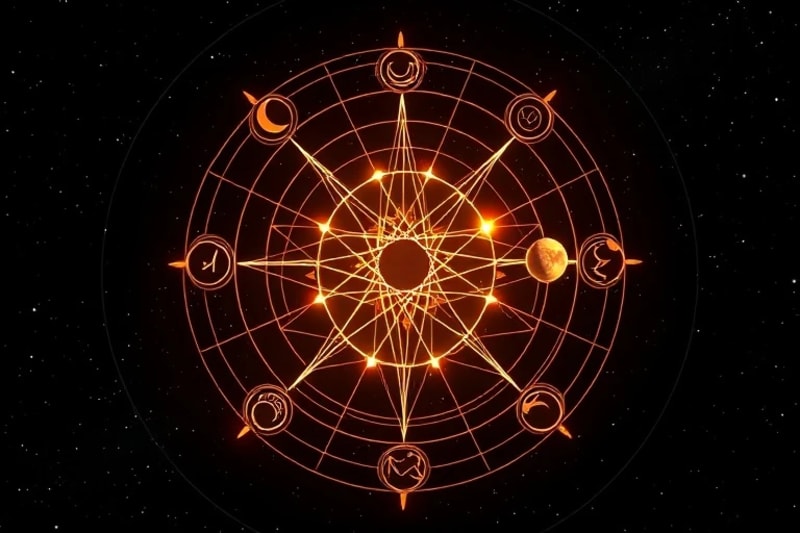
Abstract 3D render of a natal chart's core components, with stylized, glowing planetary symbols interconnected by luminous lines, representing the intricate structure of cosmic energies.
Understanding Innate Potentials and Challenges
By identifying the archetypal energies expressed through planetary placements, individuals can gain clarity on their inherent strengths and areas requiring development. For example, a strong Jupiter in a fire sign might indicate a natural inclination towards expansive leadership (Hero/Sage archetype), while a challenging aspect to Mercury could highlight difficulties in communication that need conscious integration.
Illuminating Unconscious Patterns
The natal chart acts as a symbolic representation of the unconscious. Through its interpretation, repressed memories, fears, and desires (the Shadow) can be brought to light. This awareness is the first step towards healing and integration, preventing these unconscious forces from dictating behavior from the shadows. Understanding these deeper patterns can also be enhanced by exploring concepts like the Clair-Senses Psychic Intuition Perception Guide Development, which helps individuals tune into subtle energetic information.
Navigating the Individuation Process
The entire natal chart can be viewed as a blueprint for the individuation process. As individuals mature, they are called to integrate various archetypal energies and resolve internal conflicts symbolized by their chart. Transits and progressions (the movement of planets after birth) often coincide with significant life events and psychological shifts, providing opportunities for growth and the conscious actualization of one's unique potential. This journey is about becoming who you truly are, beyond societal expectations and conditioned responses.
Enhancing Relationship Dynamics
Psycho-astrology also offers profound insights into interpersonal relationships. By comparing natal charts (synastry), one can understand the archetypal dynamics at play between individuals, revealing areas of harmony, tension, and mutual growth. This understanding fosters empathy and provides tools for navigating relational challenges, transforming them into opportunities for deeper connection. For instance, analyzing Advanced Synastry Intercepted Houses: Relationship Blockages Decoded can shed light on hidden dynamics.
Practical Applications and Benefits
The practical applications of psycho-astrology extend beyond mere self-understanding, offering tangible benefits for personal development and well-being:
| Benefit | Description |
|---|---|
| Enhanced Self-Awareness | Gain deeper insights into motivations, fears, and desires, fostering a more authentic sense of self. |
| Personal Growth | Identify areas for development and consciously work towards integrating challenging aspects of the psyche. |
| Improved Decision-Making | Align choices with one's true nature and purpose, leading to more fulfilling outcomes. |
| Greater Empathy | Understand the psychological patterns of others, leading to more compassionate and effective relationships. |
| Meaning and Purpose | Connect personal experiences to universal archetypal narratives, finding deeper meaning in life's journey. |
While psycho-astrology offers a powerful lens for self-exploration, it is important to approach it with an open yet discerning mind. It is a symbolic language, not a rigid set of predictions. The goal is not to be defined by one's chart, but to use it as a tool for conscious evolution and empowerment. It encourages individuals to become active participants in their psychological development, rather than passive recipients of fate.
Conclusion: The Journey Towards Wholeness
Psycho-astrology, by integrating the profound insights of Jungian psychology with the symbolic richness of the natal chart, provides an unparalleled framework for deep self-discovery. It invites individuals to embark on a journey of individuation, understanding their archetypal patterns, integrating their Shadow, and ultimately, realizing their fullest potential. This approach transforms astrology from a predictive art into a therapeutic and transformative practice, guiding us towards greater self-awareness, personal growth, and a more meaningful existence.
By exploring the cosmic blueprint of our birth, we gain not only a clearer picture of who we are but also a roadmap for who we are becoming. It is a testament to the enduring human quest for understanding the self in relation to the vast, interconnected universe.
Explore Further: Related Insights
- Elemental Grimoire: Advanced Western Esoteric Magic - Delve into the magical aspects that complement psychological depth.
- Sacred Geometry Daily Life: Manifesting Harmony - Discover how ancient patterns influence our reality and inner balance.
- Advanced Planetary Dignities Beyond Rulerships Synastry Electional Astrology - Explore the creation of personal symbols for self-actualization.
- Horóscopo Carta Natal: Componentes Esenciales Interpretación - A foundational guide to understanding the elements of a birth chart.
- Magia Nudos Amuletos Talismanes Personales: Guía Completa - Explore tools for personal empowerment and protection.
Source: Hybrid content assisted by AI and human editorial supervision.


Comments
Post a Comment