
Planetary Dignities Electional Astrology Rulerships Beyond
In the intricate science of astrology, understanding planetary dignities extends far beyond merely knowing a planet's ruling sign. It delves into the nuanced ways celestial bodies express their energy, influencing events and individuals with varying degrees of strength and ease. For practitioners of electional astrology, mastering these dignities is paramount, as it provides the critical framework for selecting the most auspicious moments for any undertaking, from launching a business to getting married.
This advanced exploration will dissect the layers of essential and accidental dignities, revealing how they inform a planet's capacity to act effectively within a given chart. By moving beyond a superficial understanding of rulerships, we unlock a deeper predictive and prescriptive power, enabling more precise and impactful astrological timing.
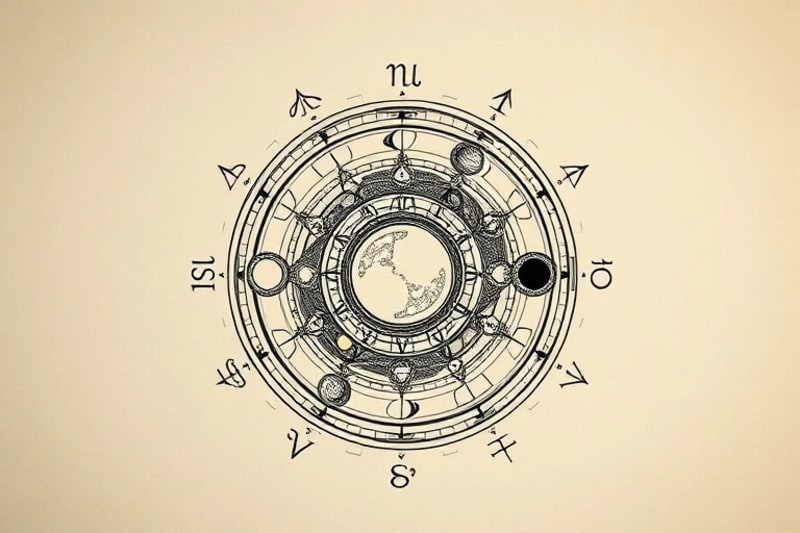 Precursors intellectuales, diagramas fundamentales y representaciones conceptuales que forjaron la visión de los astrólogos sobre las dignidades planetarias.
Fuente visual sujeta a disponibilidad del ecosistema: Wikimedia Commons bajo licencia CC BY-SA 4.0 o renderizado conceptual IA.
Table of Contents
- The Foundation: Essential Dignities
- Beyond Essence: Accidental Dignities
- Dignities in Electional Astrology
- Practical Application and Interpretation
- Modern Perspectives and Advanced Considerations
- Conclusion: The Art of Astrological Timing
The Foundation: Essential Dignities
Essential dignities describe a planet's intrinsic strength and comfort based on its zodiacal placement. These are fundamental to understanding how a planet can manifest its influence, indicating whether it operates with ease, power, or significant struggle. The primary essential dignities include rulership, exaltation, detriment, and fall, each carrying distinct implications for a planet's expression.
A planet in its rulership (or domicile) is akin to being at home, where it is most comfortable and powerful. It can express its nature fully and effectively, having complete command over its significations. For example, Mars in Aries or Scorpio is in its rulership, allowing it to act with uninhibited drive and assertiveness.
Exaltation signifies a position where a planet is honored and functions exceptionally well, often with great visibility and impact, even if it's not "home." It's like a guest of honor at a banquet. The Sun in Aries, for instance, is exalted, shining brightly with pioneering spirit and leadership. This position grants a planet a unique kind of strength, often leading to prominent or celebrated outcomes.
Conversely, a planet in its detriment is in the sign opposite its rulership. Here, it is uncomfortable and struggles to express its nature effectively, often leading to challenges or a weakened influence. Venus in Aries or Scorpio, for example, is in detriment, finding it difficult to express harmony and diplomacy in these assertive signs. This placement often indicates a lack of ease or natural flow in the planet's operations.
The most challenging essential dignity is the fall, where a planet is in the sign opposite its exaltation. This is considered its weakest position, where it operates with significant difficulty and may even undermine its own significations. The Moon in Scorpio is in its fall, struggling with emotional security and comfort in this intense and secretive sign. Understanding these core dignities is the first step in a sophisticated chart analysis, including the identification of chart patterns that reveal deeper life themes.
Beyond these primary four, traditional astrology also considers minor essential dignities, such as triplicity, terms (or bounds), and faces (or decans). While less potent than rulership or exaltation, these provide additional layers of nuance, contributing to a planet's overall essential strength. A planet may be weak by primary dignity but gain some support from a minor dignity, slightly mitigating its challenges.
- Triplicity: Governed by element (fire, earth, air, water), indicating how a planet operates within a specific elemental context.
- Terms/Bounds: Specific degrees within a sign where a planet gains minor strength, often related to specific planetary rulers for those degrees.
- Faces/Decans: Each sign is divided into three 10-degree sections, each ruled by a different planet, offering a very subtle layer of influence.
A planet that holds no essential dignity (neither rulership, exaltation, triplicity, term, nor face) is considered peregrine. A peregrine planet is like a wanderer without a home or a clear purpose, often acting erratically or being subject to the influence of other stronger planets. This state can make a planet's actions unpredictable or less effective, depending on its accidental dignities.
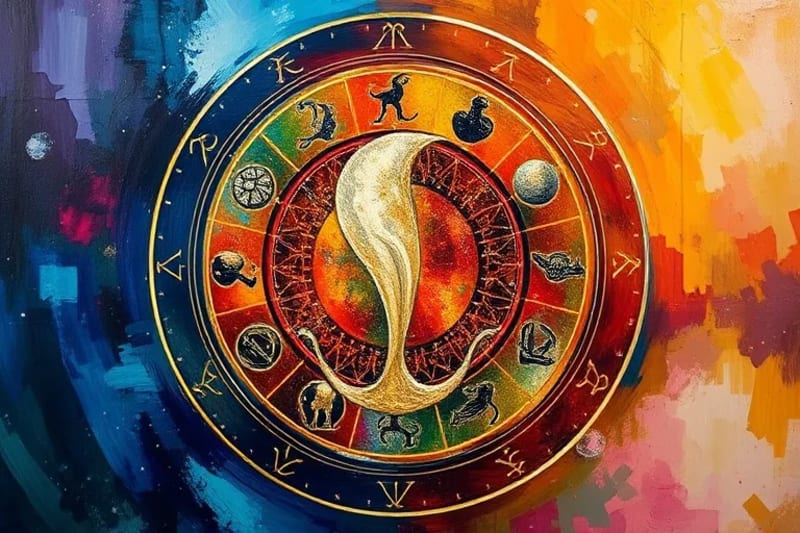 An abstract visual representation of a birth chart, illustrating the interplay of planetary positions and their inherent strengths or weaknesses within the zodiacal framework.
Beyond Essence: Accidental Dignities
While essential dignities describe a planet's inherent nature and capacity, accidental dignities refer to its strength and ability to act based on its placement within the astrological houses and its relationships with other planets. These dignities are "accidental" because they are not intrinsic to the planet's zodiacal position but rather depend on its specific circumstances within a chart. They determine how effectively a planet can deliver on its essential promise.
The most significant accidental dignities relate to house placement. Planets in angular houses (1st, 4th, 7th, 10th) are generally considered strong and active, as these houses represent cardinal points of action and visibility. A planet in the 10th house, for example, is highly visible and impactful in matters of career and public reputation, regardless of its essential dignity. Similarly, the 1st house placement gives a planet a strong influence on the native's personality and life direction.
Planets in succedent houses (2nd, 5th, 8th, 11th) are moderately strong, providing stability and resources. These houses are about accumulation and sustenance. For instance, a planet in the 2nd house might indicate a stable financial situation, while one in the 11th house could signify strong social connections or future hopes. These placements offer a more sustained, less immediate impact than angular houses.
Conversely, planets in cadent houses (3rd, 6th, 9th, 12th) are generally considered weaker or less effective in their action. These houses are often associated with learning, service, and withdrawal. A planet in the 12th house, for example, might operate behind the scenes or deal with hidden matters, making its influence less direct or overt. The 6th house in astrology, a cadent house, is particularly associated with health, work, and daily routines, where planetary influences might manifest as ongoing conditions rather than sudden events.
Other accidental dignities include a planet's speed (direct vs. retrograde), its closeness to the Sun (combustion vs. cazimi), and its aspects to other planets. A planet moving swiftly and directly is generally stronger than one that is retrograde. A planet within 17 minutes of arc from the Sun (cazimi) is considered greatly empowered, while one within 8.5 degrees but not cazimi (combust) is significantly weakened, its light obscured by the Sun's glare.
Aspects to benefics (Jupiter and Venus) or malefics (Mars and Saturn) also contribute to accidental dignity. Conjunctions, trines, and sextiles to benefics can enhance a planet's ability to act positively, while squares and oppositions to malefics can impede it. The overall strength derived from both essential and accidental dignities provides a comprehensive picture of a planet's capacity to manifest its influence in a natal or electional chart.
Understanding the interplay between essential and accidental dignities is crucial. A planet may be essentially strong (e.g., in rulership) but accidentally weak (e.g., in the 12th house and retrograde), indicating a powerful inner drive that struggles to find outward expression. Conversely, an essentially weak planet (e.g., in fall) might be accidentally strong (e.g., in the 10th house and making positive aspects), suggesting that despite inherent challenges, it can achieve significant public recognition or success through effort and external support. This intricate balance is what makes astrological interpretation a profound art.
Dignities in Electional Astrology
Electional astrology is the art of choosing the most favorable moment to initiate an event, ensuring its success and desired outcome. The meticulous application of planetary dignities is the cornerstone of this practice. The goal is to select a chart where the significators of the event are powerfully placed by both essential and accidental dignities, while malefics are weakened or well-contained.
When electing a chart, the first step is to identify the primary significators for the event. For example, for a marriage, Venus and the Moon are key significators for the couple, while the 7th house and its ruler represent the partnership itself. For a business launch, Mercury (communication, commerce), Jupiter (growth, expansion), and the 10th house ruler (public image, success) are vital. The ruler of the Ascendant (the rising sign) is always crucial, as it represents the native or the core of the undertaking itself.
 A conceptual rendering of a celestial body influencing its environment, symbolizing the subtle yet profound impact of planetary dignities on events and individual destinies.
The ideal electional chart will feature the primary significators in their rulership or exaltation, making them essentially strong. This ensures they have the intrinsic power to bring about the desired results. Furthermore, these significators should be placed in angular or succedent houses, granting them accidental strength and the ability to act effectively and visibly. Avoiding placements in cadent houses, especially the 6th, 8th, or 12th, is critical, as these can introduce hidden obstacles, losses, or self-undoing.
Consideration of the Moon is especially important in electional astrology, as it represents the unfolding of the event. A strong Moon, free from malefic aspects and in a favorable sign (e.g., Taurus, Cancer, Pisces), is highly desirable. Its phase and speed are also factors: a waxing Moon is generally preferred for growth and initiation, while a waning Moon might be chosen for conclusions or release.
Malefics (Mars and Saturn) should ideally be placed in their detriment or fall, or in cadent houses where their harmful influence is diminished. If they must be in stronger positions, they should ideally be making positive aspects to the significators or be otherwise "bound" or "refraned" from causing harm. For instance, Saturn in its rulership in Capricorn or Aquarius can be constructive, but if it aspects a significator negatively, it can bring delays or hardship. Understanding the nuances of Tarot Quantum Mechanics Intersecting Divination Reality is key to mitigating potential challenges.
One must also pay attention to the aspects between the significators. Harmonious aspects (trines, sextiles) support the event, while challenging aspects (squares, oppositions) can introduce friction or obstacles. The absence of combustion for key planets and a strong, well-placed Jupiter (the Greater Benefic) and Venus (the Lesser Benefic) are highly sought after in any electional chart. The ascendant ruler should ideally be in good dignity and making a favorable aspect to the significator of the matter.
Practical Application and Interpretation
Applying planetary dignities in practice requires a systematic approach and a deep understanding of their combined effects. It's not enough to simply identify a planet's essential dignity; one must weigh it against its accidental dignities and its role within the overall chart structure. This holistic view allows for a more accurate and actionable interpretation.
Let's consider an example: Mars in Capricorn. Mars is exalted in Capricorn, giving it immense essential strength for disciplined action, ambition, and endurance. If this Mars is also in the 10th house (an angular house), it gains significant accidental dignity, indicating a powerful drive for career success and public achievement. Such a placement would be highly favorable for initiating a long-term project or a career move, as it suggests effective, sustained effort leading to tangible results.
Conversely, consider Jupiter in Gemini. Jupiter is in its detriment in Gemini, struggling to express its expansive, philosophical nature through Gemini's mutable, intellectual, and sometimes superficial lens. If this Jupiter is also in the 12th house (a cadent house) and retrograde, its accidental dignities are further weakened. This placement might indicate challenges in finding meaning, a tendency towards overthinking without clear direction, or hidden philosophical struggles. For an electional chart, this would be a poor placement for initiating anything requiring growth, luck, or broad expansion.
Tables are invaluable tools for quickly assessing planetary dignities. Here's a simplified overview of essential dignities for the traditional planets:
| Planet | Rulership | Exaltation | Detriment | Fall |
|---|---|---|---|---|
| Sun | Leo | Aries | Aquarius | Libra |
| Moon | Cancer | Taurus | Capricorn | Scorpio |
| Mercury | Gemini, Virgo | Virgo | Sagittarius, Pisces | Pisces |
| Venus | Taurus, Libra | Pisces | Aries, Scorpio | Virgo |
| Mars | Aries, Scorpio | Capricorn | Libra, Taurus | Cancer |
| Jupiter | Sagittarius, Pisces | Cancer | Gemini, Virgo | Capricorn |
| Saturn | Capricorn, Aquarius | Libra | Cancer, Leo | Aries |
When evaluating a chart, whether natal or electional, it's crucial to synthesize all these factors. A planet's essential dignity tells you its potential, while its accidental dignity tells you its ability to express that potential in the world. A strong planet in a challenging house might represent a powerful individual facing significant external obstacles, while a weak planet in a strong house might be a less capable individual who finds themselves in a position of influence. For a deeper dive into specific placements, exploring concepts like the Imum Coeli in astrology can provide insights into one's roots and private self, further enriching the overall chart interpretation.
Modern Perspectives and Advanced Considerations
While traditional astrology primarily focuses on the seven classical planets, modern astrology incorporates Uranus, Neptune, and Pluto. Assigning dignities to these outer planets is a subject of ongoing debate among astrologers. Some assign rulerships based on modern discoveries and correlations (e.g., Uranus rules Aquarius, Neptune rules Pisces, Pluto rules Scorpio), while others maintain that their influence is more generational and less about personal agency, thus not fitting neatly into the traditional dignity system.
For electional astrology, the traditional dignities remain the most reliable framework due to their proven historical efficacy. However, modern astrologers might consider the aspects of outer planets to significators as additional layers of influence, particularly for events with broad societal implications or those involving themes of revolution (Uranus), spirituality (Neptune), or profound transformation (Pluto).
Another advanced concept is the dispositor chain. This involves tracing the rulerships of planets back to their ultimate ruler. For instance, if Mars is in Gemini, it is ruled by Mercury. If Mercury is in Leo, it is ruled by the Sun. If the Sun is in Aries, it is ruled by Mars. This creates a chain that can reveal the underlying motivations and power dynamics within a chart. A planet that rules itself (e.g., Mars in Aries) is a powerful final dispositor, indicating self-sufficiency and strong willpower. This can be particularly insightful when analyzing complex natal charts or electional charts with many interconnected elements.
The concept of a Astrología Kármica Numerología Vibracional: Códigos Alma Abundancia, or a concentration of energy in one sign or house, can also interact with dignities. A stellium of planets in a sign where one of them is in rulership or exaltation can amplify its power significantly, creating a dominant theme in the chart. Conversely, a stellium in signs of detriment or fall could indicate a major area of challenge or weakness that requires considerable effort to overcome.
Ultimately, mastering planetary dignities is not about rigid adherence to rules but about developing an intuitive understanding of how planetary energies interact with the zodiac and the houses. It's about recognizing the subtle dance between a planet's inherent nature and its environmental circumstances, allowing for a more profound and personalized interpretation. This nuanced approach empowers astrologers to make more informed decisions, whether for personal guidance or for selecting the optimal moment for significant life events.
Conclusion: The Art of Astrological Timing
Planetary dignities are the bedrock of sophisticated astrological analysis, particularly in the realm of electional astrology. They provide a comprehensive system for evaluating a planet's strength, comfort, and capacity to act, moving far beyond the simplistic identification of ruling signs. By meticulously assessing both essential and accidental dignities, astrologers can unlock a deeper layer of insight into how celestial forces manifest in our lives and in the unfolding of events.
From the intrinsic power of a planet in its domicile to the circumstantial advantages of an angular house placement, every detail contributes to the overall energetic profile of a moment. For those seeking to harness cosmic timing, the mastery of these dignities is not merely an academic exercise but a practical art that can significantly enhance the probability of success and alignment with one's highest intentions. It is through this profound understanding that astrology truly transforms from a descriptive tool into a powerful predictive and prescriptive science.
The wisdom of the ancients, codified in the system of planetary dignities, offers a timeless guide to navigating the currents of fate. It teaches us that while we cannot always choose the circumstances of our birth, we can, with careful astrological election, choose the most opportune moments to act, thereby shaping our future with greater intention and success.
This intricate system underscores the interconnectedness of the cosmos and our earthly endeavors, providing a framework for understanding the ebb and flow of planetary influence on all matters of life.
As we continue to explore the vastness of astrological knowledge, the principles of planetary dignities remain a constant, illuminating the path toward more informed decisions and a deeper appreciation for the celestial mechanics that govern our world. Whether analyzing a natal chart or electing a propitious moment, the nuanced understanding of dignities empowers us to engage with destiny not as passive observers, but as active co-creators.
Related Searches
- Chinese Zodiac Challenging Compatibilities: Growth Through Conflict
- Water Snake: Traits, Destiny, Chinese Horoscope
- Esoteric Symbolism AI Art Digital Consciousness Decoding
- Virgo Zodiac Sign: Traits, Compatibility, Practicality & Health
- Rabbit Chinese Zodiac: Elemental Traits Explained
- Numerology Planetary Rulerships: Birth Chart Meaning
- Pisces Zodiac Sign: Spiritual Awakening, Creative Expression
- Earth Horse Zodiac: Stability, Practicality, Loyalty Explained
- Astrology Healers Empathy Service Natal Chart
- Manifesting Abundance Esoteric Secrets Wealth Attraction
- Chiron Astrology Wounded Healer Journey Healing Path
Source: Hybrid content assisted by AI and human editorial supervision.


Comments
Post a Comment