
Celestial Mechanics Global Consciousness Cosmic Sociology
Cosmic Sociology emerges as a fascinating interdisciplinary field, seeking to bridge the seemingly disparate realms of celestial mechanics and global consciousness. This innovative approach explores the profound, albeit often subtle, influences that planetary movements and cosmic phenomena might exert on collective human behavior, societal trends, and the very fabric of our shared awareness. Far from being a mere speculative endeavor, Cosmic Sociology endeavors to understand the intricate dance between the macrocosm and the microcosm, suggesting that our collective human experience is not isolated but deeply interwoven with the rhythms of the universe.
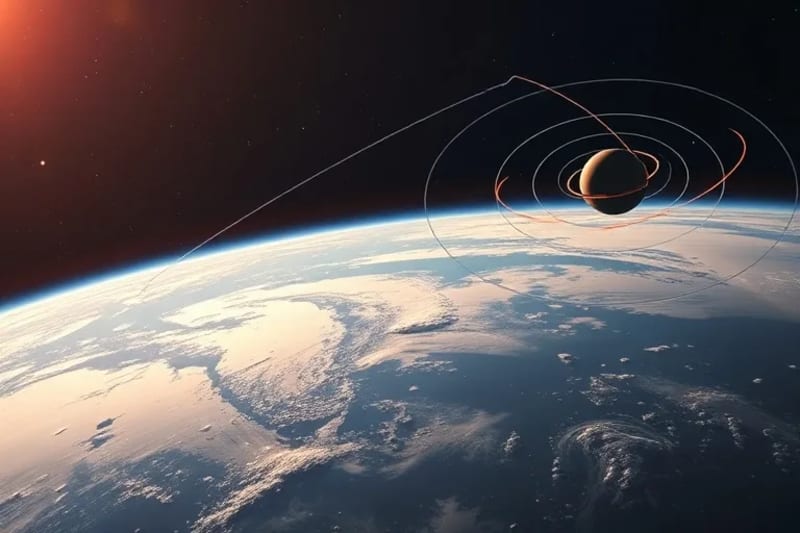 Precursors intellectuales, diagramas fundamentales y representaciones conceptuales que forjaron la visión de Cosmic Sociology sobre la interconexión universal.
Fuente visual sujeta a disponibilidad del ecosistema: Wikimedia Commons bajo licencia CC BY-SA 4.0 o renderizado conceptual IA.
This exploration moves beyond traditional astrological interpretations, aiming for a more systematic and sociological understanding of how cosmic energies might manifest in collective human psychology, cultural shifts, and even historical events. By examining the principles of celestial mechanics—the study of the motions of celestial bodies—alongside the complex dynamics of global consciousness, we can begin to uncover potential correlations and mechanisms that shape our world in ways we are only beginning to comprehend.
The concept challenges conventional wisdom, inviting us to consider a broader framework for interpreting human history and future trajectories. It suggests that just as individuals might experience personal shifts aligned with planetary transits, so too might entire societies or even humanity as a whole undergo collective transformations influenced by larger cosmic cycles. This article will delve into the core tenets of Cosmic Sociology, exploring its theoretical underpinnings, historical context, and potential implications for understanding our place in the universe.
Table of Contents
- The Foundations of Celestial Mechanics
- Global Consciousness: A Sociological Perspective
- Historical Perspectives on Cosmic Influence
- Astrological Principles in Cosmic Sociology
- The Concept of Resonance and Synchronicity
- Empirical Challenges and Modern Research
- Practical Applications and Future Implications
The Foundations of Celestial Mechanics
Celestial mechanics is a branch of astronomy that deals with the motions of celestial objects, such as planets, moons, asteroids, and comets. It applies the principles of physics, particularly Newton's laws of motion and universal gravitation, to predict and explain the trajectories and interactions of these bodies. Understanding these fundamental laws is crucial for Cosmic Sociology, as they describe the precise, predictable rhythms that govern our solar system and beyond.
Key concepts within celestial mechanics include orbital periods, gravitational forces, and planetary alignments. Each planet follows a distinct path around the Sun, and their relative positions are constantly changing. These movements create unique energetic configurations, which, from a cosmic sociological perspective, are believed to create a dynamic energetic field that could subtly influence Earth and its inhabitants. The precision with which these movements can be calculated allows for the mapping of potential cosmic influences over vast stretches of time.
The gravitational pull of celestial bodies, especially the Moon and the Sun, is well-known for its impact on Earth's tides. Extending this principle, Cosmic Sociology posits that other, more subtle energetic interactions might also occur, affecting not just physical phenomena but also the collective human psyche. These interactions are not necessarily direct physical forces but could operate through less understood mechanisms, such as resonance or subtle energy fields.
Global Consciousness: A Sociological Perspective
Global consciousness refers to the idea that human consciousness is not merely an individual phenomenon but also possesses a collective, interconnected dimension. From a sociological standpoint, it manifests as shared beliefs, cultural narratives, collective moods, and synchronized responses to major global events. This concept suggests that there is an underlying unity to human experience, a collective mind that can be influenced and can influence the world.
 A visual representation of the collective human psyche, subtly influenced by the intricate patterns of the cosmos.
Sociologists have long studied collective behavior, social movements, and cultural diffusion, all of which touch upon aspects of global consciousness. However, Cosmic Sociology expands this view by proposing that external, non-terrestrial factors, specifically celestial mechanics, might play a role in shaping these collective phenomena. For instance, periods of heightened social unrest or global innovation might correlate with specific planetary configurations.
The development of global communication technologies has arguably amplified the interconnectedness of human consciousness, making the concept of a "global mind" more tangible. Information, emotions, and ideas can now spread across the planet almost instantaneously, creating rapid shifts in collective sentiment. This enhanced connectivity might also make global consciousness more susceptible to subtle cosmic influences, as the collective field becomes more coherent and responsive. Understanding this societal interconnectedness is also key for Natal Chart Self-Discovery: Deeper Insights, as individual charts reflect the larger cosmic blueprint.
Historical Perspectives on Cosmic Influence
Throughout history, various cultures have observed and documented the perceived influence of celestial bodies on human affairs. Ancient civilizations, from the Babylonians and Egyptians to the Mayans and Chinese, developed sophisticated systems of astrology and cosmology that linked planetary movements to earthly events, agricultural cycles, and even the rise and fall of empires. These early forms of "cosmic sociology" were often intertwined with religious and philosophical beliefs.
The concept of the "music of the spheres" in ancient Greece, for example, posited that the movements of celestial bodies produced a harmonious, inaudible sound that influenced the order of the cosmos and, by extension, human existence. While these historical perspectives were often mystical, they laid the groundwork for the idea that there is a profound connection between the heavens and human life. Many philosophical traditions, including those explored in 9th House Astrology: Philosophy, Travel, and Higher Learning, have deeply considered humanity's relationship with the cosmos.
During the Renaissance, figures like Johannes Kepler, while primarily an astronomer, also explored astrological correlations, believing that planetary positions held significance for earthly events. Even though modern science largely separated astronomy from astrology, the historical persistence of these beliefs suggests a deep-seated human intuition about cosmic interconnectedness. Cosmic Sociology seeks to re-examine these historical intuitions through a contemporary, interdisciplinary lens, looking for patterns and correlations that might have been overlooked by purely reductionist scientific approaches.
Astrological Principles in Cosmic Sociology
While traditional astrology focuses on individual birth charts and personal destinies, Cosmic Sociology adapts certain astrological principles to a collective scale. It examines how major planetary transits, aspects, and cycles might correlate with significant global events, shifts in public sentiment, or widespread cultural movements. For example, the conjunctions of outer planets like Jupiter, Saturn, Uranus, Neptune, and Pluto are often associated with profound societal changes and historical turning points.
In this framework, planetary configurations are not seen as deterministic causes but rather as symbolic indicators or energetic triggers that align with collective human psychological states. A challenging planetary aspect might correspond to periods of global tension, economic instability, or social upheaval, while harmonious aspects might coincide with times of peace, innovation, or collective progress. The key is to observe patterns and correlations rather than direct causation.
 An abstract visualization of the intricate dance between human consciousness and the grand cosmic design.
The concept of "mundane astrology," which studies the astrology of nations and world events, provides a direct lineage for Cosmic Sociology. However, Cosmic Sociology aims to integrate this with a more rigorous sociological and psychological understanding of collective phenomena, moving beyond mere prediction to explore the underlying mechanisms of influence. It considers how cosmic rhythms might guide Astrology Entrepreneurs Business Cycles: Cosmic Rhythms Guide, suggesting a broader impact on economic and social trends.
The Concept of Resonance and Synchronicity
Central to Cosmic Sociology is the idea of resonance and synchronicity. Resonance suggests that certain cosmic frequencies or energetic patterns might "vibrate" at a similar frequency to collective human consciousness, thereby influencing it. This is not a direct physical push or pull but rather a subtle alignment, much like how one tuning fork can cause another to vibrate without physical contact.
Synchronicity, a concept popularized by Carl Jung, refers to meaningful coincidences that lack a causal link but are deeply interconnected on a symbolic or energetic level. In Cosmic Sociology, synchronous events—where significant planetary alignments coincide with major global shifts—are seen as evidence of this deeper interconnectedness. These are not random occurrences but rather manifestations of an underlying cosmic order that influences both the heavens and human affairs.
The concept of non-local connections, explored in fields like quantum physics, also offers a potential framework for understanding how cosmic influences might operate without direct physical transmission. Phenomena like Tarot Quantum Mechanics Intersecting Divination Reality suggest that elements can be interconnected in ways that defy classical understanding, providing a metaphor for how planetary patterns might resonate with global consciousness.
Empirical Challenges and Modern Research
Cosmic Sociology faces significant empirical challenges due to the subtle and complex nature of the proposed influences. Traditional scientific methodology often struggles to measure non-physical energies or establish direct causal links for phenomena that operate on a symbolic or resonant level. Critics often point to the lack of reproducible, statistically significant evidence in controlled environments.
However, emerging fields like noetics, consciousness studies, and complex systems theory are beginning to offer new tools and perspectives. Researchers are exploring correlations between geomagnetic activity (influenced by solar flares and planetary positions) and human behavior, as well as the potential for collective consciousness to influence random number generators. While these studies are nascent, they represent a move towards empirically investigating the subtle interactions between the cosmos and consciousness.
The Global Consciousness Project, for instance, has collected data for decades, attempting to detect subtle effects of major global events on a network of random number generators. While its findings remain controversial and subject to debate, such initiatives highlight the ongoing scientific curiosity about the nature of collective consciousness and its potential interactions with the wider universe. The development of more sophisticated data analysis techniques and interdisciplinary collaborations may eventually provide clearer insights into these complex relationships.
Practical Applications and Future Implications
If the principles of Cosmic Sociology gain further validation, the implications could be profound. Understanding the cyclical nature of cosmic influences on global consciousness could allow for a more informed approach to societal planning, policy-making, and even conflict resolution. Recognizing periods of potential collective stress or opportunity, for example, could enable proactive strategies to mitigate negative outcomes or maximize positive ones.
For individuals, an awareness of these larger cosmic rhythms could foster a deeper sense of connection to the universe and a more nuanced understanding of collective human experiences. It might encourage a shift from purely anthropocentric views to a more integrated, cosmic perspective on human existence. This expanded awareness aligns with the principles of Hermetic Principles Manifestation: Unlocking Divine Laws, which emphasize the interconnectedness of all things.
Furthermore, Cosmic Sociology could inspire new forms of interdisciplinary research, bringing together astronomers, sociologists, psychologists, and consciousness researchers. This collaborative approach could lead to novel discoveries about the fundamental nature of reality, consciousness, and our place within the vast cosmic tapestry. The future of this field lies in its ability to integrate diverse knowledge systems and develop methodologies capable of exploring these subtle yet potentially powerful influences.
In conclusion, Cosmic Sociology represents an ambitious attempt to synthesize scientific understanding of celestial mechanics with a sociological exploration of global consciousness. While still in its nascent stages, it offers a compelling framework for understanding how the grand movements of the cosmos might subtly shape our collective human journey. By embracing an open-minded yet rigorous approach, we can continue to explore the profound mysteries of our universe and its intimate connection to who we are as a collective.
The journey into Cosmic Sociology is one of expanding horizons, challenging conventional boundaries, and seeking deeper meaning in the intricate relationship between the heavens and humanity. It invites us to look up at the stars not just with wonder, but with a renewed sense of connection to the forces that might be subtly guiding our collective evolution.
Related Searches
- Planetary Declinations Astrology: Parallels Contra-Parallels | StarPluto
- Pallas Athena Astrology: Wisdom, Strategy, Intellect | StarPluto
- Synastry Family Dynamics: Relational Patterns Explained | StarPluto
- Saturn Return: Navigating Major Life Milestones | StarPluto
- Oracle Decks: Choosing & Interpreting Your Personal Guide | StarPluto
- Lunar Mansions Urban Geomancy: Aligning City Dwellings | StarPluto
- Planetary Crystal Therapy: Crafting Gem Elixirs for Energetic Balance | StarPluto
- Daily Horoscope Guide: Interpret Your Astrological Forecast | StarPluto
- Astral Projection: Techniques, Experiences, Out-of-Body Travel | StarPluto
- Love Horoscope: Astrological Insights for Relationships | StarPluto
Source: Hybrid content assisted by AI and human editorial supervision.


Comments
Post a Comment