
Natal Chart Self-Discovery: Deeper Insights | StarPluto
The natal chart, often referred to as a birth chart, is a celestial snapshot captured at the precise moment and location of an individual's birth. It serves as a foundational tool in astrology, offering a complex map of planetary positions, zodiac signs, and houses. Far from being a mere fortune-telling device, it is increasingly recognized as a profound instrument for self-discovery and personal growth, providing insights into one's innate strengths, challenges, and life path.
Understanding your natal chart goes beyond knowing your sun sign. It involves delving into the intricate interplay of all celestial bodies and their placements, revealing a nuanced psychological and spiritual profile. This comprehensive guide aims to explore the natal chart not just as a static interpretation but as a dynamic blueprint for continuous self-exploration and deeper understanding of one's unique cosmic identity.
Table of Contents
- What Exactly is a Natal Chart?
- Key Components of Your Cosmic Blueprint
- Beyond Basic Interpretations: Unlocking Deeper Meanings
- Practical Applications for Self-Discovery and Growth
- Limitations and Ethical Considerations
- Conclusion: Your Chart as a Living Guide
What Exactly is a Natal Chart?
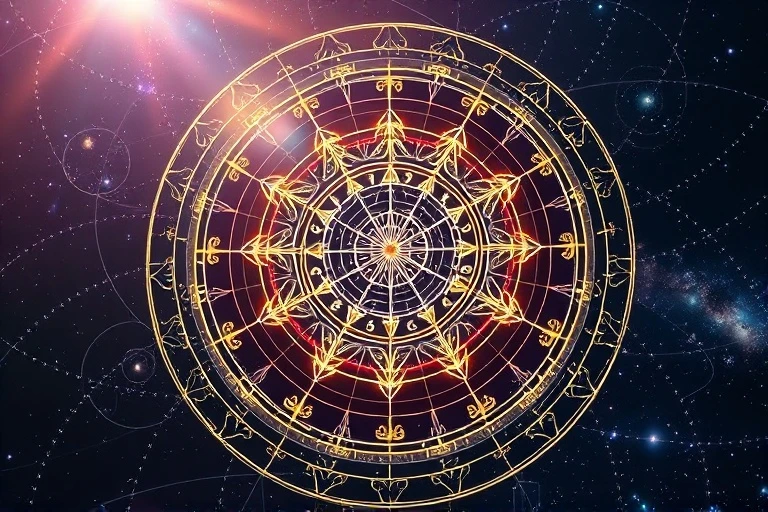
A natal chart is a personalized astrological diagram that maps the positions of the Sun, Moon, planets, and other celestial points at the precise moment of an individual's birth. This unique cosmic fingerprint is calculated based on the birth date, exact time, and geographical location. Each element within the chart holds symbolic meaning, reflecting various facets of personality, potential, and life experiences.
Astrologers use complex mathematical calculations to construct these charts, often relying on ephemerides (tables of planetary positions) and house systems. The resulting circular diagram is divided into twelve sections, known as houses, and features various astrological symbols representing planets, signs, and aspects. This intricate arrangement provides a rich tapestry of information, far surpassing the generalities of a sun sign horoscope.
The significance of an accurate birth time cannot be overstated. Even a few minutes' difference can alter the Ascendant (Rising Sign) and the house cusps, fundamentally changing the chart's interpretation. This precision underscores the highly individualized nature of natal chart analysis, making it a powerful tool for understanding one's unique psychological makeup and destiny.
Key Components of Your Cosmic Blueprint
To truly harness the power of your natal chart for self-discovery, it is essential to understand its fundamental components. These elements work in concert, creating a complex and dynamic narrative of your inner world and outer experiences. Each component adds a layer of depth to the overall interpretation, revealing different aspects of your personality and life journey.
The primary building blocks include the planets, zodiac signs, and houses, interconnected by various aspects. Understanding these individually and in relation to one another is the first step towards a profound self-analysis. This foundational knowledge allows for a more nuanced and personal interpretation, moving beyond superficial readings.
- Planets: Represent fundamental drives, functions, and psychological needs. Each planet corresponds to a specific aspect of human experience. For example, the Sun represents ego and core identity, while the Moon signifies emotions and instincts.
- Zodiac Signs: Describe the "how" or the style in which planetary energies are expressed. There are twelve signs, each associated with specific traits, qualities, and archetypes. A planet in a particular sign will manifest its energy through the lens of that sign.
- Houses: Indicate the "where" or the areas of life where planetary and sign energies play out. The twelve houses govern different life departments, such as relationships, career, family, and self-expression.
- Aspects: Are the angular relationships between planets in the chart, revealing how these energies interact. Conjunctions, oppositions, squares, trines, and sextiles describe harmonious or challenging dynamics within the psyche.
- Ascendant (Rising Sign): The zodiac sign rising on the eastern horizon at the moment of birth. It represents your outward personality, how others perceive you, and your initial approach to life.
- Midheaven (MC): The cusp of the 10th house, symbolizing your career, public image, and life's ultimate direction.
Beyond Basic Interpretations: Unlocking Deeper Meanings
Moving beyond the superficial, a deeper dive into your natal chart involves synthesizing these components into a cohesive narrative. It's not enough to know your Sun is in Leo; understanding what Mercury in Virgo in the 3rd house trine Jupiter in Capricorn in the 7th house means for your communication style and relationships is where the real insights lie. This level of interpretation requires careful consideration of all interactions.
Advanced astrological analysis often includes examining planetary dignities, retrograde planets, and minor aspects. These elements add layers of complexity and nuance, painting a more complete picture of an individual's psychological landscape. For instance, a retrograde planet suggests an internalized or re-evaluated expression of its energy, leading to unique developmental paths.
Furthermore, exploring the elemental and modal balances within the chart can reveal inherent predispositions. A predominance of fire signs might indicate a passionate and impulsive nature, while a strong earth presence suggests practicality and stability. These balances help in understanding one's energetic constitution and how it impacts daily life and decision-making.
Planetary Dignities and Debilities
Planetary dignities describe how well a planet functions in a particular zodiac sign. A planet in its domicile or exaltation is considered strong and operates with ease, expressing its energies constructively. Conversely, a planet in its detriment or fall is said to be in a weaker position, indicating areas where its energy might be challenged or require more conscious effort to integrate effectively.
| Dignity/Debility | Description | Example (Planet in Sign) |
|---|---|---|
| Domicile (Rulership) | Planet is in the sign it rules, expressing its energy naturally and powerfully. | Mars in Aries |
| Exaltation | Planet is in a sign where it feels comfortable and is highly honored, expressing its energy with great strength and positive impact. | Sun in Aries |
| Detriment | Planet is in the opposite sign of its domicile, finding it challenging to express its energy directly. | Mars in Libra |
| Fall | Planet is in the opposite sign of its exaltation, feeling weakened or struggling to operate effectively. | Sun in Libra |
Retrograde Planets
When a planet is retrograde in a natal chart, it appears to move backward from Earth's perspective. Astrologically, this often indicates that the energies of that planet are internalized, re-evaluated, or expressed in a non-conventional way. Individuals with retrograde planets may experience delays, introspection, or a unique approach to the themes associated with that planet.
- Mercury Retrograde: Suggests an introspective mind, perhaps a unique way of communicating or learning, often processing information internally before expressing it.
- Venus Retrograde: Points to a re-evaluation of values, relationships, and self-worth. Individuals may have unconventional tastes or a deep, private understanding of love.
- Mars Retrograde: Implies a need to re-direct or re-examine one's drive, assertiveness, and anger. Actions might be more considered or delayed.
Minor Aspects and Chart Patterns
While major aspects (conjunction, opposition, square, trine, sextile) are widely known, minor aspects like quincunx (inconjunct), semi-sextile, and quintile offer subtle yet significant insights. These aspects can highlight areas of adjustment, hidden talents, or unique creative expressions. Recognizing these finer details can unlock deeper layers of self-understanding.
Furthermore, specific chart patterns, such as Grand Trines, T-Squares, or Yods, represent distinct energetic configurations. A Grand Trine, for example, suggests a natural flow of energy and talent, while a T-Square indicates a dynamic tension that can drive significant personal growth and achievement. Identifying these patterns provides a holistic view of the chart's overall energetic signature.
Practical Applications for Self-Discovery and Growth
The natal chart is not merely a static report; it is a dynamic tool for ongoing self-discovery and personal development. By understanding its deeper interpretations, individuals can consciously work with their inherent energies, transforming challenges into opportunities and maximizing their potential. It provides a roadmap for navigating life's complexities with greater awareness.
One of the most powerful applications is in understanding one's psychological motivations. Why do you react a certain way? What truly drives your desires? The chart can illuminate these questions, offering clarity on deeply ingrained patterns. This self-awareness is the first step towards making conscious choices that align with your authentic self.
- Career and Vocation: The 2nd, 6th, and 10th houses, along with their rulers and planetary placements, offer insights into ideal career paths, work ethic, and financial potential. Understanding these can guide individuals towards fulfilling professional lives.
- Relationships and Compatibility: Venus, Mars, and the 7th house reveal patterns in love, attraction, and partnerships. Comparing charts (synastry) can illuminate dynamics in relationships, fostering empathy and understanding.
- Personal Growth and Healing: Challenging aspects or planetary placements often highlight areas for growth. By acknowledging these "lessons," individuals can embark on targeted self-improvement journeys, transforming perceived weaknesses into strengths.
- Spiritual Path: The 9th and 12th houses, Neptune, and the Nodes of the Moon provide clues about one's spiritual inclinations, karmic lessons, and soul's purpose. This can guide individuals towards practices that resonate with their deepest spiritual needs.
- Timing Life Events (Transits and Progressions): While not part of the natal chart itself, understanding how current planetary movements (transits) and symbolic chart progressions interact with your natal chart can help anticipate periods of change, growth, or challenge, allowing for proactive planning and introspection.

Limitations and Ethical Considerations
While the natal chart is a powerful tool, it is crucial to approach its interpretation with a balanced perspective. Astrology offers insights and probabilities, not deterministic fates. It describes potentials and predispositions, but free will and personal choices always play a significant role in shaping one's life. The chart is a guide, not a dictator of destiny.
Ethical astrological practice emphasizes empowerment rather than prediction. A responsible astrologer will use the chart to highlight strengths, illuminate challenges, and suggest avenues for growth, encouraging clients to take ownership of their lives. It is vital to avoid interpretations that instill fear, dependency, or a sense of helplessness, as this contradicts the very essence of self-discovery.
Furthermore, it is important to remember that the natal chart is a symbolic language. Its interpretations are not literal and require an open mind and a willingness to engage with archetypal meanings. Over-reliance on astrological readings without personal reflection and action can hinder genuine self-development. The chart is a mirror, reflecting what is within, but the work of transformation ultimately lies with the individual.
Conclusion: Your Chart as a Living Guide
Your natal chart is an extraordinary personal document, rich with symbolism and profound insights into your unique being. It is a tool that can guide you through the complexities of life, helping you to understand your core motivations, navigate relationships, and align with your true purpose. By moving beyond basic interpretations and delving into its deeper layers, you unlock a powerful resource for continuous self-discovery and personal evolution.
Embrace your cosmic blueprint not as a fixed definition, but as a living guide that evolves with you. The journey of understanding your natal chart is a journey of understanding yourself – a path towards greater self-awareness, acceptance, and empowerment. It invites you to explore the vast potentials within you, encouraging you to live a life that is authentically aligned with your unique astrological design.
Fuente: Contenido híbrido asistido por IAs y supervisión editorial humana.


Comments
Post a Comment