
Psycho-Astrology Jungian Natal Chart Integration Guide
Psycho-astrology represents a profound convergence of two powerful disciplines: the ancient wisdom of astrology and the depth psychology pioneered by Carl Gustav Jung. This interdisciplinary approach offers a unique lens through which to explore the human psyche, providing a comprehensive framework for self-understanding, personal growth, and the journey toward individuation. By integrating the symbolic language of the natal chart with Jungian concepts such as archetypes, the collective unconscious, and the shadow, individuals can unlock deeper insights into their innate potentials, challenges, and life purpose.
The integration of Jungian psychology with astrological principles is not merely an academic exercise; it is a practical methodology for therapeutic and spiritual development. It posits that the natal chart is not a deterministic blueprint but rather a symbolic map of the psyche, reflecting the archetypal energies at play within an individual's conscious and unconscious realms. This perspective empowers individuals to engage actively with their astrological predispositions, transforming potential challenges into opportunities for profound personal evolution.
Understanding this synergy allows for a more nuanced interpretation of astrological placements, moving beyond simplistic character readings to explore the dynamic interplay of inner forces. It encourages a journey inward, where the celestial patterns mirror the intricate landscape of the soul, inviting introspection and self-discovery.
The natal chart, a snapshot of the heavens at the moment of birth, serves as a symbolic representation of the psyche's structure and its inherent potentials. Each planet, sign, and house within this chart can be interpreted as an archetypal force, expressing itself through specific psychological complexes and behavioral patterns. Jung's work on archetypes provides a rich vocabulary for understanding these astrological symbols, allowing for a more profound and psychologically informed reading of one's cosmic blueprint.
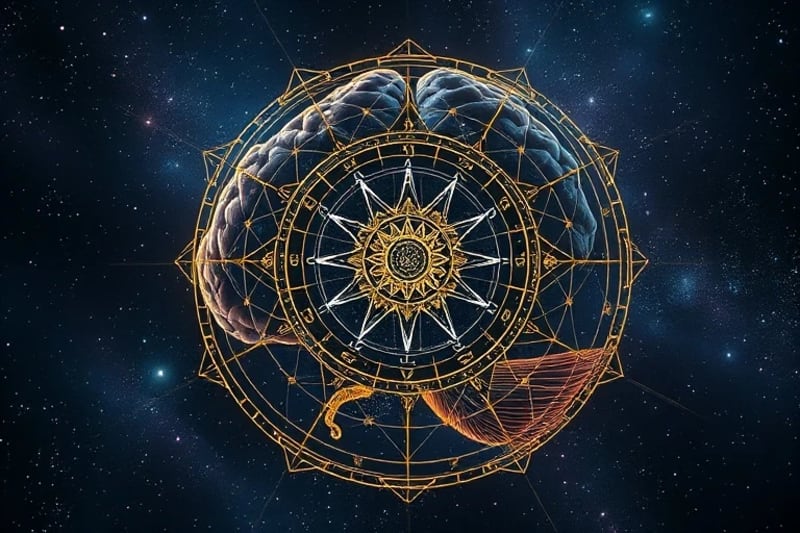
Conceptual representation of the intricate connection between the human psyche and the cosmic architecture of the natal chart.
Fuente visual sujeta a disponibilidad del ecosistema: Wikimedia Commons bajo licencia CC BY-SA 4.0 o renderizado conceptual IA.The core concept of psycho-astrology is the recognition that the outer cosmos reflects the inner human experience. This principle, often summarized by the Hermetic axiom "as above, so below," forms the bedrock of understanding how planetary positions at birth correlate with psychological predispositions. Jung himself was deeply interested in astrology, viewing it as a symbolic system that mirrored the archetypal patterns of the collective unconscious.
Table of Contents
- The Foundation: Jungian Archetypes and Astrological Houses
- Planetary Symbolism as Archetypal Manifestations
- Unveiling the Shadow Through Challenging Aspects
- The Individuation Process and Astrological Transits
- Synchronicity: Cosmic Coincidences and Natal Chart Insights
- Integrating Psycho-Astrology for Holistic Self-Understanding
- Ethical Considerations and the Future of Psycho-Astrology
The Foundation: Jungian Archetypes and Astrological Houses
Jung's concept of archetypes—universal, archaic patterns and images that derive from the collective unconscious and are the psychic counterpart of instinct—finds a natural home within the framework of astrology. Each of the twelve astrological houses, representing different spheres of life, can be seen as a stage where various archetypal energies play out. For instance, the 1st House, governing identity and self-expression, resonates with the Hero or Innocent archetypes, while the 7th House, related to partnerships, aligns with the Lover or Partner archetypes.
Understanding the interplay between these archetypes and the specific planets and signs placed within each house provides a dynamic psychological profile. It moves beyond static interpretations, revealing the underlying motivations and unconscious drives that shape an individual's experiences in different life areas. This depth allows for a more empathetic and comprehensive understanding of one's inherent psychological landscape.
An artistic interpretation of the collective unconscious, where universal symbols and archetypes reside.
The astrological houses, as detailed in texts like "Astrological Houses: Unlocking Life Spheres," delineate specific areas of experience where these archetypal energies are most active. For example, the 10th House, associated with career and public image, might activate the King/Queen or Magician archetypes, depending on the planetary placements. Conversely, the 4th House, linked to home and roots, often reflects the Mother or Nurturer archetypes. By analyzing these placements, psycho-astrology helps individuals identify the dominant archetypal patterns influencing their life path.
Planetary Symbolism as Archetypal Manifestations
Each planet in astrology embodies a distinct archetypal principle. Mars, for instance, represents the Warrior or Hero archetype, symbolizing drive, aggression, and assertion. Venus, conversely, embodies the Lover or Artist, signifying harmony, beauty, and connection. The Sun represents the Self or the King, denoting ego, vitality, and conscious identity. These planetary archetypes are not static; they are dynamic forces that interact with each other and are colored by the zodiac signs they occupy and the houses they rule.
When a planet is placed in a particular sign, its archetypal expression is modified. For example, Mars in Libra might manifest as a "Diplomatic Warrior," seeking justice through negotiation rather than direct confrontation, blending the Warrior archetype with the Lover's desire for balance. This nuanced understanding allows for a deeper psychological exploration of an individual's motivations and behaviors, moving beyond superficial interpretations to the core archetypal drives. The planetary transits, which signify evolving energies, can also be viewed as activations of these archetypes, prompting personal growth and transformation.
Unveiling the Shadow Through Challenging Aspects
One of Jung's most significant contributions was the concept of the "shadow"—the unconscious aspect of the personality that the conscious ego does not identify with. It often contains repressed desires, weaknesses, and instincts. In psycho-astrology, challenging aspects (squares, oppositions, quincunxes) between planets in the natal chart often highlight areas where the shadow is most active. These aspects represent inner conflicts, tensions, and unresolved psychological material that, when ignored, can lead to projection and self-sabotage.
A visual metaphor for self-reflection and the integration of fragmented psychological aspects.
For example, a square between Mars and Pluto might indicate a powerful, yet potentially destructive, struggle with power and control, embodying a repressed "Tyrant" or "Destroyer" archetype. By consciously engaging with these challenging aspects, individuals can integrate their shadow material, transforming destructive patterns into sources of strength and authenticity. This process is crucial for psychological wholeness and is a central tenet of Jungian analysis applied to the natal chart. It's about acknowledging and integrating all parts of the self, even those deemed undesirable.
The Individuation Process and Astrological Transits
Jung defined individuation as the psychological process of integrating the conscious and unconscious, while maintaining their relative autonomy. It is a lifelong journey toward becoming a whole, unique individual. In psycho-astrology, this journey is vividly mapped through astrological transits and progressions. These dynamic movements of planets activate specific points in the natal chart, bringing unconscious material to the surface and prompting periods of significant personal growth and transformation.
For instance, a challenging transit from Saturn to a personal planet might represent a period of confronting limitations, taking responsibility, and integrating the "Wise Elder" or "Disciplinarian" archetypes. Conversely, a Jupiter transit might signify expansion, optimism, and the activation of the "Benefactor" or "Guru" archetypes. These astrological events are not random; they are synchronistic invitations from the cosmos to engage with specific archetypal energies necessary for the individuation process. Understanding these cycles can help individuals navigate periods of crisis and opportunity with greater awareness and purpose.
Synchronicity: Cosmic Coincidences and Natal Chart Insights
Jung's concept of synchronicity—meaningful coincidences that appear to be causally unrelated but are deeply connected on a symbolic level—is central to psycho-astrology. The alignment of planetary positions at birth, and their subsequent movements, can be seen as a grand synchronistic event reflecting the individual's psychological makeup. When an individual experiences a significant life event that aligns perfectly with a major astrological transit, it is often a manifestation of synchronicity, signaling an archetypal activation from the collective unconscious.
For example, a person might suddenly feel compelled to pursue a creative passion (activating the Artist archetype) precisely when Venus is transiting their 5th House of creativity. Such occurrences are not mere chance; they are meaningful messages from the psyche and the cosmos, guiding the individual toward their authentic path. Recognizing these synchronicities can provide profound validation and direction, reinforcing the connection between inner psychological states and outer life events. This understanding can also be leveraged in manifestation techniques, aligning conscious desires with cosmic timing.
Integrating Psycho-Astrology for Holistic Self-Understanding
The practical application of psycho-astrology involves a deep dive into the natal chart, interpreting its symbols through a Jungian lens. This process typically includes:
- Archetypal Identification: Pinpointing the dominant archetypes expressed through planetary placements, signs, and houses. This helps individuals understand their core motivations and unconscious patterns.
- Shadow Integration: Identifying challenging aspects and their corresponding shadow material, and developing strategies for conscious integration. This involves acknowledging repressed traits and transforming them.
- Individuation Mapping: Charting the journey of individuation through transits and progressions, understanding the psychological tasks presented by each phase. This provides a roadmap for personal evolution.
- Dream Analysis and Symbolism: Connecting dream imagery and personal symbols with astrological archetypes, enriching the understanding of unconscious processes.
- Active Imagination: Using active imagination to engage with planetary and archetypal energies, fostering dialogue between the conscious and unconscious.
This holistic approach offers more than just predictions; it provides a framework for active engagement with one's destiny. It empowers individuals to become conscious co-creators of their lives, understanding that while the natal chart reveals potentials, the conscious choice to integrate and evolve is paramount. For those interested in deeper spiritual healing, exploring concepts like "Bio-Resonance Morphic Fields: Ancestral Trauma Healing" can further complement the journey of psychological integration, addressing hereditary patterns that may also be reflected in the natal chart.
Ethical Considerations and the Future of Psycho-Astrology
As with any practice that delves into the depths of the human psyche, ethical considerations are paramount in psycho-astrology. Practitioners must approach clients with respect, empathy, and a commitment to non-judgment. The goal is always to empower the individual, not to impose interpretations or predict deterministic outcomes. The language used should be one of potential and growth, rather than fate or limitation, fostering self-awareness and personal responsibility.
The future of psycho-astrology lies in its continued integration with contemporary psychological research and therapeutic modalities. As our understanding of consciousness and the cosmos evolves, so too will the sophistication of this interdisciplinary field. It offers a promising path for those seeking a deeper, more meaningful connection to their inner world and their place within the grand tapestry of existence. By combining the symbolic richness of astrology with the profound insights of Jungian psychology, psycho-astrology provides a powerful tool for navigating the complexities of the human experience and fostering a more integrated, authentic self.
Related Explorations in Esoteric Wisdom
Dive deeper into the mystical and scientific intersections that shape our understanding of self and cosmos. Explore these curated articles for further enlightenment:
- Vertex Astrology: Fated Encounters, Destiny Points Explained
- Gemini Zodiac Sign Traits Compatibility Life Path
- Biophilic Manifestation: Natures Blueprint Abundance Harmony
- Gemini Decans Deep Dive: Twins' Subtleties Explored
- Lunar Mansions Urban Geomancy City Dwellings Alignment
- Automatic Writing: Advanced Spiritual Guidance Techniques
- Psycho-Astrology Jungian Archetypes Self-Discovery Integration
- Libra Zodiac Sign: Traits, Compatibility, Life Path
- Sonic Alchemy: Harnessing Sound Frequencies Alignment Manifestation
- Spirit Animal Astrology: Natal Chart Totem Guide
- Biohacking Hormonal Personalizado: Genómica Wearables Longevidad
- Geometría Sagrada Códigos Universales Armonía
- Piscis Amor: Romance Idealismo Conexión Espiritual Pareja
- Planetas Casas Astrológicas: Destino y Carta Astral
- San Charbel Makhlouf: Vida, Milagros y Legado
- María Profecías Últimos Tiempos: Rol Fundamental
- Santísima Trinidad: Presencia en Cada Sacramento
Source: Hybrid content assisted by AI and human editorial supervision.


Comments
Post a Comment