
Lunar Mansions Urban Geomancy City Dwellings Alignment
In an increasingly urbanized world, the pursuit of harmony and well-being within our living spaces has become paramount. Ancient wisdom traditions, particularly those concerning celestial observations and earthly energies, offer profound insights into creating environments that support human flourishing. This article delves into the fascinating intersection of Lunar Mansions and Urban Geomancy, exploring how aligning city dwellings with sacred architectural structures can foster a deeper connection to cosmic rhythms and enhance daily life.
The concept of integrating celestial patterns with terrestrial design is not new; it is a thread woven through the fabric of many historical civilizations. From the precise orientation of ancient temples to the layout of entire cities, our ancestors intuitively understood the subtle yet powerful influence of the cosmos on human experience. By revisiting these principles, we can uncover new ways to imbue our modern urban landscapes with a sense of purpose and energetic balance.
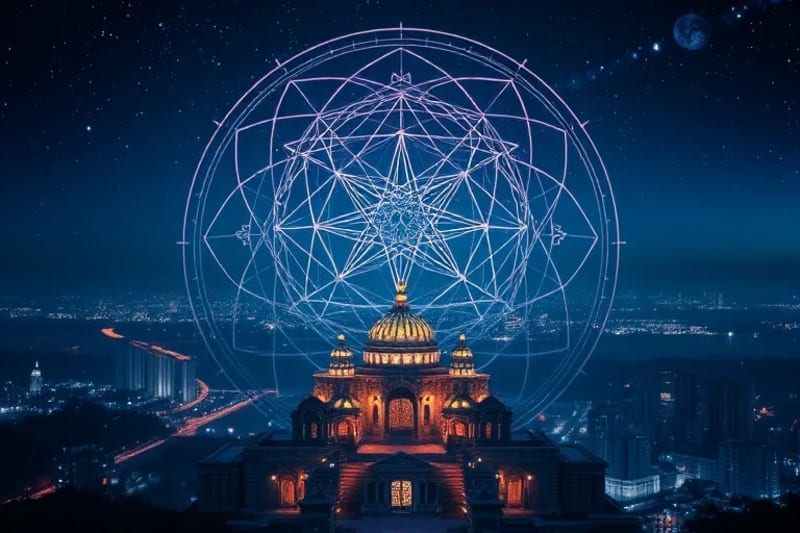 A stylized cityscape at twilight, illustrating the subtle connection between urban structures and celestial patterns, guided by ancient wisdom.
Table of Contents
- Understanding Lunar Mansions: Celestial Rhythms and Terrestrial Impact
- The Essence of Urban Geomancy: Sacred Architecture in Cityscapes
- Historical Intersections: When Celestial Charts Met City Planning
- Integrating Lunar Mansions into Modern Urban Design
- Practical Applications for City Dwellers: Enhancing Well-being
- Challenges and Future Prospects in Urban Alignment
- Case Studies: Ancient Wisdom in Contemporary Urbanism
Understanding Lunar Mansions: Celestial Rhythms and Terrestrial Impact
Lunar Mansions, known by various names across different cultures—such as Nakshatras in Vedic astrology, Manazil al-Qamar in Arabic tradition, and Xiù in Chinese astronomy—represent divisions of the ecliptic or the moon's path through the sky. These divisions, typically 27 or 28, mark the moon's position on successive nights, each associated with specific stars or asterisms. Each mansion carries unique energetic qualities, influences, and symbolic meanings that were historically used for timing events, agricultural practices, and understanding personal destiny.
The concept is rooted in the observation that the moon, with its rapid movement, acts as a celestial clock, modulating the energies of the zodiac. Unlike the slower-moving planets, the moon's daily transit through these mansions creates a dynamic energetic landscape. For instance, a particular lunar mansion might be associated with prosperity, while another might signify challenges or opportunities for spiritual growth. These subtle energies, it was believed, could impact everything from human emotions to the success of an undertaking.
In ancient astrological systems, understanding which lunar mansion the moon occupied at a given moment was crucial. It provided a nuanced layer of interpretation beyond the sun signs or planetary aspects. This intricate system allowed for a more granular understanding of cosmic influences, helping people to make informed decisions about their lives and environment. The influence of these mansions extends beyond individual horoscopes, potentially shaping the energetic signature of locations and structures built under their specific celestial alignment.
The Essence of Urban Geomancy: Sacred Architecture in Cityscapes
Urban Geomancy refers to the art and science of arranging buildings, cities, and spaces in harmony with the natural environment and unseen energetic forces. It encompasses traditions like Feng Shui from China and Vastu Shastra from India, both of which emphasize the flow of vital energy (Qi or Prana) through a space. The goal is to create environments that promote health, wealth, happiness, and spiritual growth for their inhabitants. This involves careful consideration of topography, water bodies, cardinal directions, and even the subtle electromagnetic fields of the Earth.
At its core, geomancy posits that the Earth itself is a living entity with energetic pathways, often referred to as ley lines or dragon veins. Buildings and urban layouts can either enhance or disrupt this natural flow. A well-designed city, from a geomantic perspective, is one that integrates with these natural energies, channeling them beneficially. This often translates into specific orientations of buildings, placement of public spaces, and even the choice of materials, all aimed at fostering a positive energetic resonance.
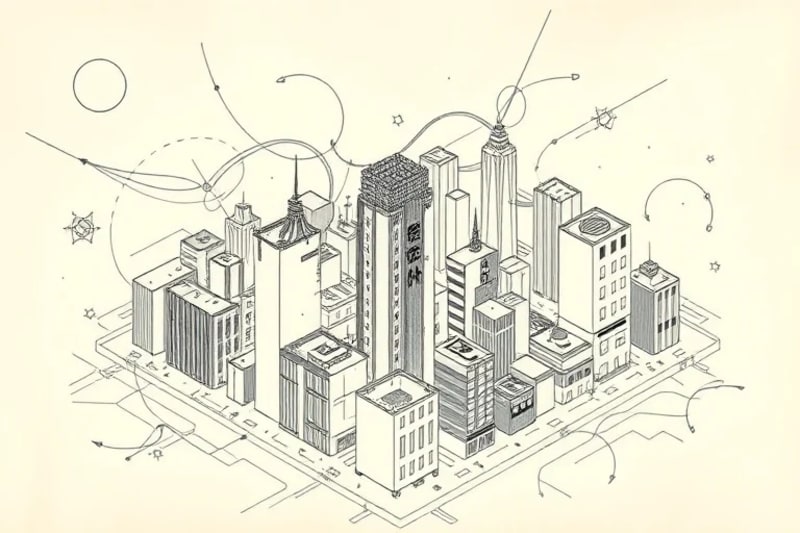 A detailed diagram illustrating the flow of vital energy within an urban block, influenced by subtle celestial patterns.
The principles of urban geomancy extend beyond individual structures to the macro-level planning of entire cities. Ancient capitals were often meticulously planned to reflect cosmic order, with central palaces or temples acting as energetic focal points. This holistic approach ensured that the city itself functioned as a harmonious organism, mirroring the celestial architecture. Understanding these principles can offer insights into creating more balanced and supportive urban environments today. For a deeper dive into how celestial divisions influence life's various domains, one might explore concepts such as those discussed in Houses Astrology Natal Chart: Understanding Life's Twelve Domains.
Historical Intersections: When Celestial Charts Met City Planning
Throughout history, numerous civilizations consciously integrated celestial observations, including the positions of lunar mansions, with their architectural and urban planning. The alignment of structures with solstices, equinoxes, and specific stellar risings was common, reflecting a belief in the sacred geometry of the cosmos. For instance, many ancient temples and monuments, from Stonehenge to the pyramids of Egypt, exhibit precise astronomical alignments, suggesting a profound understanding of celestial mechanics and their terrestrial implications.
In China, the practice of Feng Shui was intrinsically linked to the observation of celestial phenomena, including the lunar calendar and the movement of stars. Imperial cities like Beijing were laid out according to strict geomantic principles, with gates and buildings oriented to harness auspicious energies and protect against negative influences. The Forbidden City, for example, is a masterpiece of geomantic design, aligning with cardinal directions and integrating natural elements to create a powerful and harmonious environment. This intricate connection between celestial patterns and earthly design highlights a holistic worldview where the microcosm reflects the macrocosm.
Similarly, in ancient India, Vastu Shastra guided the construction of homes, temples, and towns, often incorporating astrological considerations. The timing of construction, the orientation of entrances, and the placement of rooms were all determined by planetary positions and lunar phases to ensure maximum energetic benefit. These traditions understood that a dwelling is not merely a physical shelter but an energetic container that interacts with its occupants and the surrounding cosmic forces. Such ancient systems, like the Chinese Zodiac Leadership Styles, often reveal deep-seated beliefs about how cosmic energies influence daily life and individual characteristics.
Integrating Lunar Mansions into Modern Urban Design
While modern urban planning often prioritizes functionality and economic efficiency, there's a growing recognition of the need for more humane and energetically balanced spaces. Integrating the wisdom of lunar mansions and urban geomancy into contemporary design presents a unique opportunity. This doesn't necessarily mean rigid adherence to ancient rules but rather a thoughtful adaptation of principles to modern contexts. For instance, understanding the energetic qualities of a particular lunar mansion could inform the intended function of a building or a neighborhood.
For urban planners, this could involve conducting geomantic surveys of potential development sites to identify existing energy flows and optimal orientations. For architects, it might mean designing buildings that not only look aesthetically pleasing but also facilitate the harmonious movement of energy, considering factors like light, air circulation, and the placement of key features. The goal is to create structures that resonate positively with both the terrestrial environment and the subtle celestial influences, fostering a sense of connection and vitality for residents.
One approach involves using the energetic characteristics of lunar mansions to guide the zoning and purpose of urban areas. For example, a mansion associated with creativity and innovation might be ideal for an arts district or a tech hub, while one linked to healing and tranquility could be designated for parks or wellness centers. This nuanced layering of celestial influence onto urban planning can create cities that are not only functional but also deeply supportive of human potential and well-being. The subtle, unseen connections between celestial bodies and earthly phenomena often resonate with concepts of Quantum Entanglement Esoteric Synchronicity Non-Local Connections, suggesting a deeper, interconnected reality.
Practical Applications for City Dwellers: Enhancing Well-being
Even without undertaking massive urban redesigns, individual city dwellers can apply geomantic and lunar mansion principles to their own living spaces. This involves making conscious choices about home orientation, furniture placement, color schemes, and the introduction of natural elements. The objective is to optimize the flow of energy within the home, creating a sanctuary that supports health, productivity, and emotional balance. Simple adjustments can often yield significant improvements in the overall atmosphere of a dwelling.
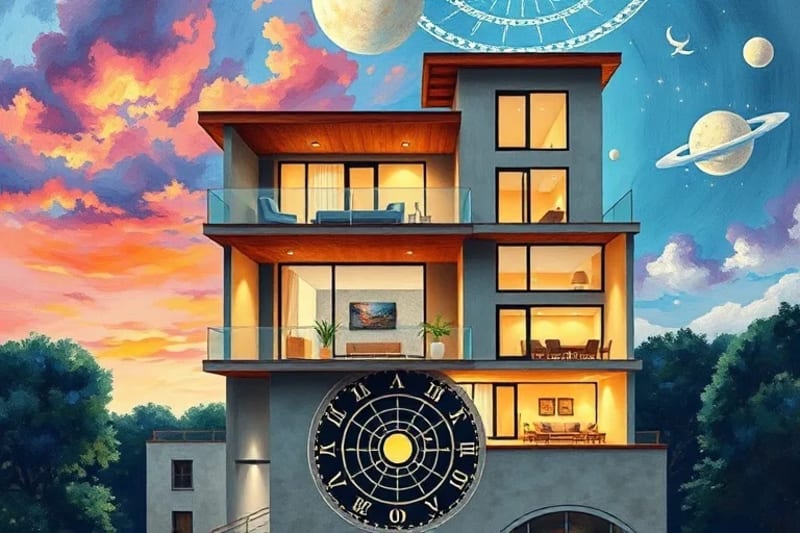 A cross-section of a modern apartment building, showcasing an interior aligned with geomantic principles and subtle celestial influences.
For example, understanding the auspicious directions for sleep or work, based on geomantic charts, can help in arranging bedrooms and home offices. Incorporating elements associated with specific lunar mansions, such as certain colors, plants, or symbols, can further enhance the energetic resonance of a space. The timing of renovations or significant home changes can also be chosen to align with favorable lunar mansion energies, potentially leading to more positive outcomes. These practices empower individuals to actively shape their immediate environment for greater harmony.
Here are some practical tips for urban dwellers:
- Declutter and Organize: Clear pathways for energy to flow freely. A cluttered space can lead to stagnant energy.
- Incorporate Natural Elements: Plants, natural light, and water features (even small ones) can enhance vitality.
- Mindful Placement: Arrange furniture to support good circulation and create inviting zones for different activities.
- Color and Material Choices: Select colors and materials that evoke feelings of peace, energy, or creativity, aligning with personal needs or geomantic recommendations.
- Auspicious Timing: When possible, consider lunar phases or specific lunar mansion energies for important activities like moving or starting new projects in your home.
Challenges and Future Prospects in Urban Alignment
Integrating ancient geomantic and astrological principles into modern urban planning is not without its challenges. The rapid pace of development, economic pressures, and complex regulatory frameworks often make it difficult to prioritize subtle energetic considerations. Furthermore, the scientific validation of concepts like "energy flow" or "celestial influence" remains a subject of ongoing debate, leading to skepticism in some quarters. However, the growing interest in holistic well-being and sustainable urbanism provides a fertile ground for these ideas to gain traction.
One of the main hurdles is the lack of standardized methodologies for applying these ancient systems in a contemporary context. While traditional texts offer rich guidance, translating them into actionable plans for large-scale urban projects requires innovative thinking and interdisciplinary collaboration. Bridging the gap between ancient wisdom and modern scientific understanding is crucial for wider acceptance and implementation. This involves not only academic research but also practical pilot projects that demonstrate tangible benefits.
Looking ahead, the future prospects for urban alignment are promising. As technology advances, tools for analyzing environmental energies and celestial patterns become more sophisticated. Geographical Information Systems (GIS) can be combined with geomantic data to create detailed energetic maps of urban areas. Virtual and augmented reality could allow planners and residents to visualize the energetic impact of different designs before construction begins. This blend of ancient wisdom and cutting-edge technology could pave the way for truly harmonious and regenerative cities, transforming our urban environments into spaces that nurture both body and soul. The transformative power of aligning with cosmic energies can be likened to the profound shifts described in Pluto Astrology Transformation Power Regeneration Chart, emphasizing deep, fundamental change.
Case Studies: Ancient Wisdom in Contemporary Urbanism
While large-scale urban projects fully integrating lunar mansions and geomancy are still emerging, several contemporary examples demonstrate a conscious effort to apply these principles. These range from community-led initiatives to master-planned developments that prioritize ecological and energetic harmony.
Consider the growing trend of "biophilic design," which seeks to connect building occupants more closely to nature. While not explicitly geomantic, it shares the underlying philosophy of creating environments that support human well-being through natural integration. Projects incorporating biophilic principles often see improved occupant health, productivity, and reduced stress, mirroring the outcomes sought by geomancy.
In some Asian cities, particularly in China and Singapore, Feng Shui consultants are routinely engaged in the design of new buildings and even entire districts. Their recommendations influence everything from the orientation of skyscrapers to the placement of water features and green spaces. While these applications primarily focus on Feng Shui, they demonstrate a societal acceptance and practical application of geomantic principles in modern urban development. The success of these projects often lies in their ability to create spaces that feel intuitively "right" and supportive to their inhabitants.
Furthermore, smaller-scale projects, such as eco-villages or intentional communities, often incorporate principles of sacred geometry, permaculture, and energetic alignment in their layouts. These communities aim to create self-sustaining and harmonious living environments that are deeply connected to natural cycles and cosmic rhythms. These examples, though diverse, highlight a universal yearning for spaces that do more than just house us; they seek to nourish our spirits and connect us to something larger than ourselves.
The journey towards aligning city dwellings with sacred architectural structures, guided by lunar mansions and urban geomancy, is a testament to humanity's enduring quest for harmony. By thoughtfully integrating these ancient wisdom traditions with modern innovation, we can envision and build urban environments that truly serve the highest potential of their inhabitants.
Disclaimer: The concepts of Lunar Mansions and Urban Geomancy are rooted in ancient traditions and esoteric beliefs. While presented here for educational and informational purposes, they are not universally recognized scientific disciplines. Readers are encouraged to approach these topics with an open mind and to consult with qualified professionals for any personal or architectural decisions.
This article aims to explore the historical and conceptual frameworks of these practices, offering a perspective on how they might inform contemporary approaches to urban living and well-being. The information provided is intended to broaden understanding and stimulate thought, not to provide definitive scientific or architectural advice.
Related Searches & Further Exploration
Source: Hybrid content assisted by AI and human editorial supervision.


Comments
Post a Comment