
Vertex Astrology: Fated Encounters, Destiny Points Explained | StarPluto
In the intricate tapestry of astrological interpretation, certain points in a birth chart hold a unique significance, hinting at deeper layers of destiny and purpose. Among these, the Vertex stands out as a powerful indicator of fated encounters, pivotal moments, and significant life events that often feel preordained. It is not a planet or an asteroid, but rather a calculated point derived from the intersection of the ecliptic and the prime vertical, carrying a profound karmic weight.
Often referred to as an "electric" or "third-angle" point, the Vertex represents a sensitive area in the astrological chart where the mundane meets the extraordinary. While traditional astrological factors like planets and houses describe our inherent traits and life areas, the Vertex illuminates those external interactions and circumstances that seem to pull us towards our destiny, often through encounters with other people. Understanding its placement can unlock insights into the nature of these encounters and their transformative impact on our lives.
Table of Contents
- Understanding the Vertex: Definition and Calculation
- The Vertex and Anti-Vertex: A Cosmic Axis
- Fated Encounters: Relationships and the Vertex
- Career and Life Path: Vertex in the Houses
- The Vertex in Astrological Aspects
- Interpreting Your Vertex: A Step-by-Step Guide
- Vertex vs. Other Destiny Points (e.g., North Node)
- The Vertex in Synastry: Unraveling Soul Connections
- Practical Applications of Vertex Astrology
Understanding the Vertex: Definition and Calculation
The Vertex is a point in the Western astrological chart that is often overlooked in basic interpretations but holds significant weight for advanced practitioners. It is not a physical body but a mathematical point, similar to the Ascendant or Midheaven, derived from the geometry of the Earth's rotation and its orbit around the Sun. Specifically, the Vertex is located in the western hemisphere of the chart, typically in the 5th, 6th, 7th, or 8th houses, though it can occasionally appear in the 4th or 9th.
Its calculation involves the intersection of two great circles: the ecliptic (the Sun's apparent path through the zodiac) and the prime vertical (a great circle passing through the East and West points of the horizon and the Zenith and Nadir). This intersection point is highly sensitive and is believed to represent moments and connections that feel destined or karmic. It's an area where external events and people seem to "activate" our latent destiny, often bringing about significant shifts or revelations.
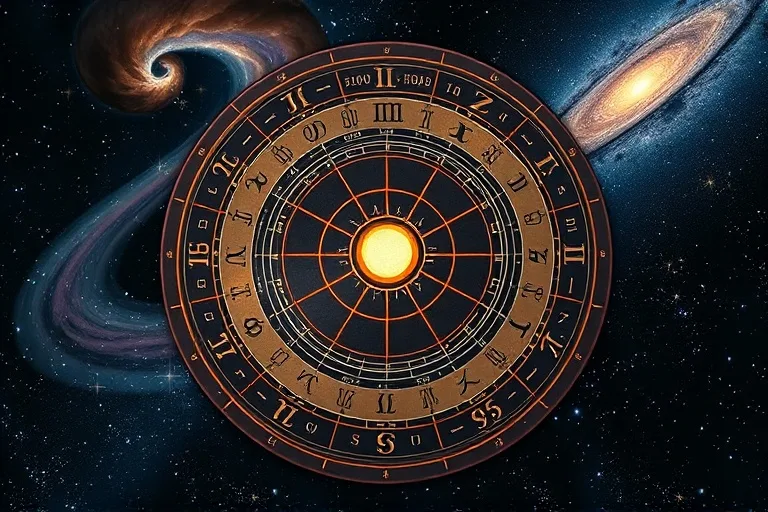
The Vertex is a crucial mathematical point in an astrological chart, indicating fated encounters and destiny.
Astrologers often describe the Vertex as a "fated encounter" point because its activation, particularly through transits or synastry, frequently coincides with meetings or events that have a profound and undeniable impact. These are not necessarily easy or pleasant experiences, but they are almost always transformative, guiding individuals onto a specific path or revealing a crucial piece of their life's puzzle. It's a point of karmic activation, where past life themes or unresolved issues can manifest in the present.
The Vertex and Anti-Vertex: A Cosmic Axis
Just as every point in the astrological chart has an opposing counterpart, the Vertex has its opposite, known as the Anti-Vertex. This axis forms a powerful energetic line across the chart, with the Vertex representing external, fated interactions and the Anti-Vertex symbolizing our internal, conscious responses and choices to these events. The Anti-Vertex is always located exactly 180 degrees opposite the Vertex.
While the Vertex signifies what comes to us from the outside, often unexpectedly, the Anti-Vertex represents our personal agency and how we integrate these fated experiences into our conscious being. For instance, if your Vertex is in the 7th house of relationships, your Anti-Vertex would be in the 1st house of self. This suggests that fated relationships (7th house Vertex) are meant to teach you about yourself and your identity (1st house Anti-Vertex).
- Vertex: Represents external, often unexpected, fated encounters and events. It's where destiny "knocks on your door."
- Anti-Vertex: Represents our internal, conscious response to these fated events. It's how we integrate and grow from these experiences, reflecting our personal choice and will.
- The Axis: Together, they form a dynamic axis that highlights the interplay between destiny and free will.
Understanding both points provides a more holistic view of how destiny unfolds in one's life. The Vertex brings the lesson, and the Anti-Vertex reveals how we are meant to learn and evolve from it. This duality underscores the idea that while certain events may be fated, our reaction and integration of them remain within our control, shaping our ultimate path.
Fated Encounters: Relationships and the Vertex
The Vertex is most famously associated with fated encounters, particularly in the realm of relationships. When a planet in another person's chart conjuncts your Vertex, or vice versa, it often indicates a powerful, undeniable connection that feels like it was "meant to be." These are not always romantic relationships; they can be profound friendships, significant business partnerships, or even encounters with mentors or adversaries who play a crucial role in your life story.
The nature of these fated encounters is often colored by the sign and house placement of your Vertex, as well as any planets aspecting it. For example, a Vertex in Libra might indicate fated encounters related to justice, balance, or significant partnerships, while a Vertex in Aries could point to encounters that ignite personal courage or initiate new beginnings. These meetings often serve as catalysts for personal growth, challenging us to confront aspects of ourselves or our lives that need attention.
An intricate cosmic clockwork symbolizes the precise and often unseen mechanisms of fate and destiny.
It's important to note that "fated" does not always mean "easy" or "long-lasting." A fated encounter might be brief but intensely impactful, serving its purpose to propel you forward or teach a vital lesson. The intensity often associated with Vertex connections stems from their karmic undertones, suggesting that these relationships are part of a larger soul contract or an opportunity to resolve past life dynamics. They are the moments that leave an indelible mark, altering the course of your personal narrative.
Career and Life Path: Vertex in the Houses
The house placement of the Vertex is crucial for understanding the specific areas of life where these fated encounters and destiny points manifest. While it is most commonly found in the 5th through 8th houses, its presence in any house brings a unique flavor to its influence. Each house represents a different sphere of life, and the Vertex's placement highlights where destiny actively intervenes or where significant, unavoidable experiences occur.
- Vertex in 5th House: Fated encounters related to creativity, children, romance, speculation, or self-expression. These connections can ignite passion or lead to significant creative projects.
- Vertex in 6th House: Destiny points tied to work, daily routines, health, service, or pets. Encounters here might involve colleagues, health professionals, or situations that demand practical service.
- Vertex in 7th House: The most common placement for fated relationships, including marriage, partnerships, and open enemies. These connections often feel deeply karmic and transformative.
- Vertex in 8th House: Fated experiences involving shared resources, intimacy, transformation, death, taxes, or occult matters. Encounters here can be intense, leading to profound psychological shifts or financial entanglements.
- Vertex in 9th House: Destiny linked to foreign travel, higher education, philosophy, spirituality, or legal matters. Encounters might involve foreign cultures, gurus, or legal figures.
- Vertex in 4th House: Though less common, a Vertex here can signify fated events related to home, family, roots, or the end of life. These encounters might involve family members or significant changes in living situations.
The house placement also indicates the environment or context in which these fated events are most likely to occur. For instance, a 7th house Vertex strongly emphasizes partnerships, while an 8th house Vertex points to deep, transformative unions or crises. Understanding this context helps to prepare for and navigate the powerful energies the Vertex brings into play.
The Vertex in Astrological Aspects
Like any point in the birth chart, the Vertex forms aspects with planets, asteroids, and other sensitive points, which further refine and color its influence. These aspects reveal the specific energies and themes that are activated during fated encounters. Conjunctions are particularly potent, indicating a direct and powerful intertwining of the planet's energy with the Vertex's destiny-driven nature.
Here's a brief overview of how different planetary aspects to the Vertex can manifest:
- Sun/Moon to Vertex: Fated encounters that profoundly impact your core identity (Sun) or emotional well-being (Moon). These can be life-defining relationships or events.
- Mercury to Vertex: Destiny points related to communication, learning, or intellectual connections. You might meet someone who significantly changes your way of thinking or communicating.
- Venus to Vertex: Fated romantic connections, artistic collaborations, or encounters that bring beauty and harmony, or challenge your values.
- Mars to Vertex: Encounters that ignite passion, conflict, or drive. These can be highly energetic relationships or situations that demand assertive action.
- Jupiter to Vertex: Fated opportunities for growth, expansion, travel, or philosophical insights. Encounters might bring good fortune or broaden your horizons.
- Saturn to Vertex: Karmic encounters that bring lessons, responsibilities, or challenges related to structure and discipline. These relationships often involve significant commitment or tests.
- Uranus to Vertex: Sudden, unexpected, and often liberating encounters that bring radical change or awaken revolutionary ideas.
- Neptune to Vertex: Fated connections that involve spirituality, illusion, compassion, or confusion. These can be deeply soulful but also potentially deceptive relationships. Learn more about Neptune in Astrology.
- Pluto to Vertex: Intense, transformative, and often power-dynamic encounters that lead to profound psychological rebirth or confrontation with hidden truths.
The exact nature of the aspect (conjunction, opposition, square, trine, sextile) further refines the experience, indicating whether the energy flows easily or presents challenges. The Vertex is a point of magnetic attraction, drawing certain energies and individuals into your sphere at precisely the right, or fated, moment.
Interpreting Your Vertex: A Step-by-Step Guide
Interpreting the Vertex in your own birth chart involves a multi-layered approach, considering its sign, house, and aspects. This point typically becomes more active in adulthood, often around the time of significant transits or progressions, making its influence more noticeable as we mature. Here’s a step-by-step guide to understanding your Vertex:
- Locate Your Vertex: First, you need an accurate birth chart. Most online astrology calculators will include the Vertex. It's usually marked with a "Vx" symbol.
- Identify the House: Note the house your Vertex falls into. This indicates the primary life area where fated encounters are likely to occur. For example, a 7th house Vertex points to relationships, while a 6th house Vertex might indicate work-related destiny.
- Determine the Sign: The zodiac sign of your Vertex describes the energetic quality or style of these fated events and interactions. A Vertex in Leo, for instance, might involve dramatic, attention-grabbing encounters, while a Vertex in Capricorn could signify encounters that bring structure or career opportunities.
- Analyze Aspects: Look for any planets that are closely aspecting your Vertex (especially conjunctions, oppositions, squares, and trines). These planets reveal the themes and energies that are strongly tied to your fated experiences. A Venus conjunction, for example, suggests fated romantic or artistic connections.
- Consider Transits and Progressions: Pay attention to when planets transit or progress over your natal Vertex. These periods often coincide with the manifestation of fated events or significant meetings.
By combining these elements, you can gain a comprehensive understanding of how destiny plays out in your life, recognizing the patterns and purposes behind seemingly coincidental events. The Vertex acts as a compass, guiding you toward your karmic path.
Vertex vs. Other Destiny Points (e.g., North Node)
Astrology offers several points that speak to destiny and life purpose, and it's common to confuse the Vertex with other significant markers like the North Node (Rahu) or the Part of Fortune. While all these points relate to our life path, they each offer a distinct perspective.
| Astrological Point | Primary Focus | Nature of Influence |
|---|---|---|
| The Vertex | Fated encounters, pivotal events, destiny points. | External, often unexpected, interactions that feel preordained and transformative. Less about personal choice, more about being "pulled" into situations. |
| North Node | Soul's evolutionary path, karmic lessons, life purpose. | Represents the direction your soul is evolving towards in this lifetime, often requiring conscious effort to move away from past patterns (South Node). More about internal growth and conscious pursuit. Learn about Lunar Nodes. |
| Part of Fortune | Area of natural ease, good fortune, and material well-being. | Indicates where you find joy, success, and prosperity when you align with your true self. More about personal happiness and fulfillment. |
The key distinction lies in the Vertex's emphasis on external, often unavoidable, encounters that shape our path, contrasting with the North Node's focus on our conscious journey towards soul growth. While the North Node is about what we *should* do, the Vertex is about what *happens to us* that guides us there.
The Vertex in Synastry: Unraveling Soul Connections
In synastry, the astrological technique of comparing two birth charts to understand their compatibility and dynamics, the Vertex plays a particularly potent role. When one person's planet makes a strong aspect, especially a conjunction, to another person's Vertex, it's often seen as a hallmark of a soul connection or a relationship with significant karmic ties. These connections can feel incredibly strong, magnetic, and often carry a sense of "déjà vu" or familiarity.

An antique map with a luminous thread symbolizes the unexpected and fated paths of life.
The planet making the aspect reveals the nature of the fated connection. For example, if Person A's Mars conjuncts Person B's Vertex, Person A might act as a catalyst, bringing energy, passion, or even conflict that activates Person B's destiny. If Person A's Venus conjuncts Person B's Vertex, Person A might be seen as a fated romantic partner, bringing love and harmony into Person B's destined path. These connections are often deeply transformative, pushing individuals to grow and evolve in ways they might not have otherwise.
It is important to remember that while Vertex connections suggest a fated meeting, they do not guarantee a smooth or easy relationship. They simply indicate that the relationship is significant and serves a higher purpose in both individuals' lives. The challenges and lessons learned from these connections are often as important as the joys they bring, contributing to the unfolding of one's ultimate destiny.
Practical Applications of Vertex Astrology
Understanding the Vertex isn't just an academic exercise; it has practical applications that can help individuals navigate their lives with greater awareness and purpose. By recognizing the areas where fated encounters are likely to occur, and the themes associated with them, one can be more open to these transformative experiences rather than resisting them.
- Self-Awareness: Knowing your Vertex placement can help you understand why certain people or events have such a profound impact on you, even if they seem random at first. It provides a framework for understanding your personal narrative.
- Relationship Insights: In relationships, especially those with strong Vertex connections, recognizing their fated nature can foster acceptance and a deeper understanding of the lessons they are meant to teach. It can help you appreciate the significance of a connection, even if it's challenging.
- Career Guidance: If your Vertex is strongly linked to career-related houses or planets, it might indicate that your professional path involves specific, fated opportunities or encounters that will shape your trajectory.
- Personal Growth: The Vertex often highlights areas where we are meant to grow through external stimuli. By being open to these "destiny points," we can consciously engage with our evolutionary process.
- Timing Significant Events: Astrologers use transits to the Vertex to pinpoint periods when fated events are more likely to occur, offering insights into potential turning points in life.
The Vertex serves as a powerful reminder that while we have free will, there are also currents of destiny that guide us. By paying attention to this sensitive point in our chart, we can better align with our higher purpose and embrace the transformative power of fated encounters. Exploring your Vertex can be a profound journey into the deeper, karmic dimensions of your birth chart and life story.
Fuente: Contenido híbrido asistido por IAs y supervisión editorial humana.


Comments
Post a Comment