
Cosmic Sociology: Celestial Mechanics Influence Global Consciousness
Cosmic sociology is an emerging interdisciplinary field that investigates the profound and often subtle ways in which celestial mechanics and astronomical phenomena influence human collective behavior, societal structures, and global consciousness. This perspective moves beyond traditional astrological interpretations to explore the scientific and philosophical underpinnings of a potential cosmic-terrestrial connection, examining how planetary cycles, solar activity, and even distant galactic events might resonate with human psychological states and collective actions. It posits that the universe is an interconnected system where macro-level cosmic movements can have micro-level impacts on life on Earth, including the intricate tapestry of human society.
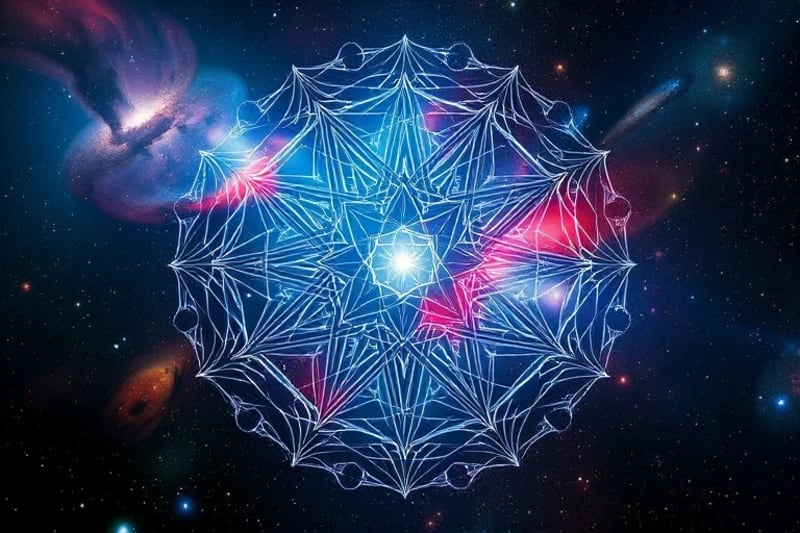
Precursors, conceptual diagrams, and abstract representations illustrating the intricate connection between cosmic phenomena and the collective human mind.
Fuente visual sujeta a disponibilidad del ecosistema: Wikimedia Commons bajo licencia CC BY-SA 4.0 o renderizado conceptual IA.
The concept of cosmic sociology challenges conventional views by suggesting that human societies are not entirely self-contained entities but are rather integral parts of a larger cosmic ecosystem. It seeks to understand the mechanisms through which these celestial influences might manifest, whether through gravitational forces, electromagnetic radiation, subtle energetic fields, or even through archetypal psychological resonance. This exploration requires a synthesis of knowledge from astronomy, physics, sociology, psychology, and philosophy, aiming to bridge the gap between the material universe and the human experience.
Table of Contents
- Historical Roots and Early Observations
- Understanding Celestial Mechanics
- Defining Global Consciousness
- Proposed Mechanisms of Cosmic Influence
- Societal Impact and Observable Trends
- Modern Perspectives and Scientific Challenges
- Future Directions in Cosmic Sociology
- Frequently Asked Questions About Cosmic Sociology
Historical Roots and Early Observations
The idea that celestial bodies influence earthly affairs is as old as civilization itself. Ancient cultures across the globe, from the Babylonians and Egyptians to the Mayans and Chinese, meticulously observed the heavens and developed sophisticated systems to correlate astronomical events with human destiny and societal cycles. These early forms of Mundane Astrology were not merely superstitious beliefs but often represented the most advanced scientific and philosophical thought of their time, integrating celestial observations with agricultural planning, political decisions, and spiritual practices.
For instance, the construction of megalithic structures like Stonehenge or the pyramids of Giza demonstrates an acute awareness of celestial alignments and their perceived significance. These ancient societies believed that the cosmos was a living entity, and humanity was inextricably linked to its rhythms. The concept of a "Great Year" or cosmic cycles, where historical events repeat over vast periods, is a testament to this deep-seated belief in celestial influence on human collective experience. This historical context provides a rich foundation for modern cosmic sociology, suggesting that the intuition of our ancestors may hold clues to understanding these complex relationships.
Understanding Celestial Mechanics
Celestial mechanics is the branch of astronomy that deals with the motions of celestial objects. It applies the principles of physics, particularly Newton's law of universal gravitation, to describe and predict the movements of planets, moons, asteroids, and comets. Key concepts include orbital periods, gravitational interactions, and the precession of equinoxes, all of which contribute to the intricate cosmic dance that defines our solar system and beyond. These movements create predictable cycles and alignments that have been observed for millennia.

Digital art depicting the intricate interplay between the precise mechanisms of the cosmos and the complex pathways of collective human consciousness.
Beyond the solar system, celestial mechanics extends to the dynamics of galaxies and galaxy clusters, involving forces like dark matter and dark energy. While the direct influence of distant galaxies on Earth's immediate environment might seem negligible, the cumulative effect of cosmic radiation and subtle energy fields from the broader universe remains a subject of ongoing scientific inquiry. Understanding these mechanics is crucial for cosmic sociology, as it provides the framework for identifying potential cosmic triggers for societal changes.
The Earth's position within the solar system, its tilt, and its orbital characteristics are fundamental to our planet's climate and life-sustaining conditions. Variations in these parameters, known as Milankovitch cycles, are well-established drivers of long-term climate change, including ice ages. Cosmic sociology extends this principle to suggest that more subtle, short-term celestial variations might also correlate with shifts in human collective mood, creativity, or even conflict. For a deeper understanding of these celestial movements and their interpretations, one might explore Predictive Horoscopes: Transits, Progressions Explained, which delves into how these movements are traditionally interpreted.
Defining Global Consciousness
Global consciousness refers to the idea that the collective thoughts, feelings, and awareness of humanity can form a unified, emergent field. It suggests that human minds are not entirely isolated but are interconnected in ways that transcend individual experience, potentially forming a planetary-scale mind or information network. This concept is often explored in parapsychology, quantum physics, and spiritual traditions, where phenomena like collective synchronicity, shared emotional states during global events, or even the "hundredth monkey effect" are cited as evidence.
While the scientific validation of global consciousness as a measurable phenomenon is still debated, its theoretical implications are profound for cosmic sociology. If humanity shares a collective field of awareness, then this field could potentially be susceptible to external influences, including those originating from celestial mechanics. The idea is that just as individual brains respond to environmental stimuli, the global mind might respond to cosmic stimuli, leading to widespread shifts in human behavior, innovation, or social unrest.
Researchers in fields like the Global Consciousness Project have attempted to detect patterns in random number generators during moments of high global emotional coherence, such as major world events. Although the results are often subtle and open to interpretation, they hint at the possibility of a non-local interconnectedness among human minds. This theoretical framework is essential for cosmic sociology to posit how celestial mechanics could influence humanity on a collective, rather than merely individual, level.
Proposed Mechanisms of Cosmic Influence
The mechanisms through which celestial mechanics might influence global consciousness are speculative but draw from various scientific and philosophical concepts. Several hypotheses have been proposed, ranging from direct physical forces to more subtle, energetic interactions. It is important to note that many of these mechanisms are still subjects of active research and are not yet fully accepted within mainstream science.
- Gravitational Forces: While the gravitational pull of distant planets on Earth is minuscule compared to that of the Moon or Sun, some theories suggest that cumulative or resonant gravitational effects during specific planetary alignments could subtly affect geological processes or even biological systems.
- Electromagnetic Radiation and Solar Activity: The Sun's activity, influenced by planetary alignments, directly impacts Earth's magnetosphere and ionosphere. Solar flares and coronal mass ejections can disrupt communications, power grids, and potentially influence human physiology and mood. Studies have explored correlations between solar cycles and human behavior, including crime rates and economic activity.
- Subtle Energy Fields: This is a more esoteric concept, suggesting that celestial bodies emit or interact with subtle energy fields that are not yet fully understood by conventional physics. These fields could potentially influence biological processes, brainwave patterns, or the collective human psyche.
- Archetypal Resonance: Drawing from Jungian psychology, this mechanism suggests that celestial patterns serve as archetypal symbols that resonate with the collective unconscious of humanity. Planetary configurations might trigger collective psychological states, influencing myths, cultural narratives, and societal trends. This is where concepts like Hermetic Kabbalah: Tree Life Spiritual Attainment and other esoteric symbolisms find their place in interpreting cosmic patterns.
Each of these proposed mechanisms offers a different lens through which to view the cosmic-terrestrial connection. The challenge for cosmic sociology is to develop rigorous methodologies to test these hypotheses and differentiate between correlation and causation. The interdisciplinary nature of the field requires a willingness to explore beyond established paradigms.
Societal Impact and Observable Trends
If cosmic mechanics indeed influence global consciousness, then we might expect to see correlations with various societal impacts and trends. These could manifest as shifts in collective mood, periods of heightened creativity or innovation, increased social unrest, or even broad economic fluctuations. Historically, many cultures have linked specific celestial events to major turning points in history, such as wars, plagues, or periods of enlightenment.

A watercolor painting blending an antique astrolabe with a contemporary city, symbolizing the enduring influence of cosmic patterns on human civilization.
For example, some researchers have attempted to correlate economic cycles with planetary movements, suggesting that certain alignments might coincide with periods of boom or bust. While these correlations are often controversial and lack definitive proof, the sheer volume of historical data and anecdotal evidence warrants further investigation. The study of Chinese Zodiac Economic Trends: Macro-Astrology Markets provides an interesting perspective on how such correlations are explored in different cultural contexts.
Beyond economics, cosmic sociology also looks at periods of collective psychological shifts. Are there times when humanity seems more prone to conflict, or conversely, to cooperation and altruism, that align with specific celestial configurations? The rise and fall of empires, major technological breakthroughs, and significant cultural movements could all be examined through this cosmic lens. The challenge lies in isolating cosmic factors from myriad other socio-economic and political influences.
Modern Perspectives and Scientific Challenges
In the modern era, cosmic sociology faces significant scientific challenges. The primary hurdle is the lack of direct, reproducible evidence that definitively links celestial mechanics to global consciousness. Many proposed mechanisms are difficult to measure with current scientific instruments, and the complexity of human society makes it challenging to isolate cosmic variables from other influences. Critics often point to the risk of confirmation bias and the difficulty of distinguishing genuine patterns from random correlations.
However, advancements in fields like quantum physics, neuroscience, and complex systems theory are opening new avenues for exploration. The concept of entanglement and non-locality in quantum mechanics, for instance, offers theoretical frameworks that could potentially explain subtle, non-physical connections. Neuroscience is beginning to understand the intricate ways in which the brain processes information and interacts with its environment, which might eventually shed light on how cosmic stimuli could be perceived or integrated.
The interdisciplinary nature of cosmic sociology means it must navigate the skepticism of traditional scientific disciplines while maintaining rigorous research standards. It requires a willingness to explore phenomena that lie at the fringes of current understanding, pushing the boundaries of what is considered scientifically plausible. The field must develop new methodologies and analytical tools to detect subtle cosmic signals and their potential impact on collective human behavior, moving beyond anecdotal evidence to empirical data.
Future Directions in Cosmic Sociology
The future of cosmic sociology lies in fostering interdisciplinary collaboration and developing advanced analytical techniques. Researchers will need to combine astronomical data with sociological, psychological, and even biological datasets to identify potential correlations and causal links. This could involve big data analysis, machine learning algorithms, and sophisticated statistical modeling to uncover hidden patterns that are not immediately apparent.
Key areas for future research include:
- Longitudinal Studies: Conducting long-term studies that track societal indicators (e.g., innovation rates, conflict levels, artistic output) against precise astronomical data, looking for statistically significant correlations.
- Biophysical Research: Investigating how subtle electromagnetic or gravitational variations might affect human biology, particularly brain function and hormonal balance, which in turn could influence collective mood and behavior.
- Theoretical Modeling: Developing more sophisticated theoretical models that integrate concepts from physics, complex systems, and consciousness studies to propose testable hypotheses for cosmic influence.
- Cross-Cultural Analysis: Examining historical records and cultural narratives from diverse civilizations to identify recurring patterns of celestial correlation with societal events, providing a broader empirical base.
- Exploration of Unconventional Energy: Research into subtle energy fields and their potential interaction with both celestial bodies and biological systems, pushing the boundaries of current scientific understanding.
Ultimately, cosmic sociology seeks to expand our understanding of humanity's place in the cosmos, moving beyond a purely anthropocentric view to recognize our deep interconnectedness with the universe. By exploring these profound relationships, we may gain new insights into the forces that shape our collective destiny and consciousness. This holistic approach promises to enrich both our scientific understanding and our philosophical perspective on life.
Frequently Asked Questions About Cosmic Sociology
What is the primary goal of cosmic sociology?
The primary goal is to explore how celestial mechanics and astronomical phenomena influence human collective behavior, societal structures, and global consciousness through interdisciplinary research.
How does cosmic sociology differ from traditional astrology?
While both consider celestial influence, cosmic sociology aims for scientific rigor, seeking measurable mechanisms and empirical evidence, rather than relying solely on traditional interpretive frameworks or predictive horoscopes.
What are some proposed mechanisms for cosmic influence?
Proposed mechanisms include subtle gravitational effects, electromagnetic radiation from solar activity impacting Earth's magnetosphere, subtle energy fields, and archetypal resonance with the collective unconscious.
Is global consciousness a scientifically accepted concept?
Global consciousness is a theoretical concept still under scientific debate. Projects like the Global Consciousness Project explore it, but definitive, widely accepted proof remains elusive.
What challenges does cosmic sociology face?
Challenges include the difficulty of isolating cosmic variables from other societal influences, the lack of direct measurable evidence for some proposed mechanisms, and the need for rigorous interdisciplinary methodologies.
Source: Hybrid content assisted by AI and human editorial supervision.


Comments
Post a Comment