
Geomantic Astrology: Aligning Natal Chart with Earth Energies | StarPluto
Geomantic astrology represents a fascinating convergence of two ancient divinatory and interpretive systems: geomancy, the art of divination by means of figures or lines on the ground, and astrology, the study of celestial movements and their influence on terrestrial events and human lives. This unique discipline seeks to align an individual's natal chart—a snapshot of the heavens at their birth—with the Earth's inherent energies, aiming to foster optimal living and a deeper connection to the natural world. By understanding how cosmic influences are anchored and expressed through telluric currents and specific geographical locations, practitioners can harness these insights for enhanced well-being, personal growth, and environmental harmony.
The practice of geomantic astrology delves into the subtle interplay between macrocosm and microcosm, suggesting that just as planetary positions at birth shape our personality and destiny, so too do the energetic patterns of the Earth influence our physical and spiritual existence. This holistic approach moves beyond traditional astrological interpretations by integrating the tangible, localized energies of the Earth, offering a more grounded and actionable framework for self-discovery and environmental interaction. It's a system designed to help individuals not only understand their cosmic blueprint but also to find their most harmonious place within the terrestrial landscape.
Table of Contents
- The Foundations of Geomancy
- The Natal Chart in Geomantic Context
- Earth's Energies and Ley Lines
- Practical Applications for Optimal Living
- Integrating Geomancy with Astrological Transits
- Geomantic Symbols and Interpretations
- Benefits of Geomantic Astrology
- Conclusion: Harmonizing Heaven and Earth
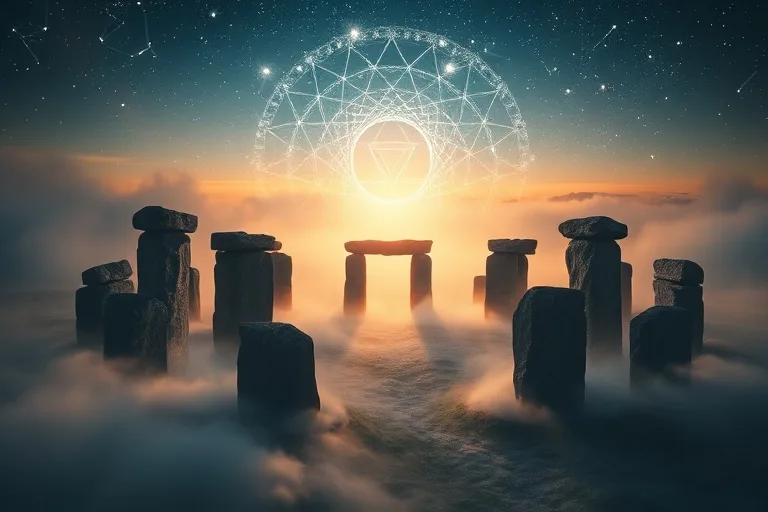
An ethereal dawn illuminates ancient stone circles, illustrating the profound connection between celestial bodies and Earth's subtle energy lines, central to geomantic astrology.
The Foundations of Geomancy
Geomancy, derived from the Greek words "ge" (earth) and "manteia" (divination), is an ancient practice of interpreting markings on the ground or patterns formed by tossed handfuls of earth, sand, or stones. Historically, it was a widespread form of divination across Africa, Europe, and the Middle East, used to answer questions, locate lost items, or determine auspicious times for events. The core of geomancy lies in its sixteen figures, each composed of four lines of single or double points, representing various energetic qualities and archetypal meanings.
These figures are generated through a seemingly random process, often by making a series of dots or lines on a surface, then counting them and reducing them to odd or even numbers. This process creates a "shield chart" or "house chart" that can be read to provide insights into specific questions or situations. Each geomantic figure, such as *Via* (the Way), *Populus* (the People), *Fortuna Major* (Greater Fortune), or *Carcer* (Prison), carries distinct symbolism related to elements, planets, zodiac signs, and human experiences. Understanding these figures is the first step in integrating geomantic principles into astrological analysis.
Unlike many divinatory arts that rely solely on intuition or abstract symbols, geomancy is deeply rooted in the physical world. Its figures are literally drawn from the earth, making it a natural counterpart to the study of Earth's energies. This connection to the tangible ground makes it particularly suitable for exploring how celestial influences manifest in our immediate environment and how we can best interact with our physical surroundings to support our astrological predispositions.
The Natal Chart in Geomantic Context
When integrating geomancy with a natal chart, the primary goal is to identify how an individual's cosmic blueprint resonates with specific terrestrial energies. This involves correlating astrological placements (planets, signs, houses, aspects) with geomantic figures and their associated meanings. For instance, a strong emphasis on a particular element in the natal chart (e.g., Earth signs like Taurus, Virgo, Capricorn) might indicate a stronger affinity for grounding geomantic figures or specific types of Earth energies.
One approach involves assigning geomantic figures to each of the twelve astrological houses, based on the planetary rulers or the zodiac signs on the cusps. This creates a geomantic overlay on the natal chart, revealing how different areas of life (career, relationships, home, health) are influenced by specific Earth energies. For example, if the 4th House (home and roots) aligns with a figure like *Acquisitio* (Gain), it might suggest that the individual's living environment is a source of material or spiritual abundance, or that they thrive in places with strong, positive telluric currents.
Furthermore, planetary positions can be interpreted through a geomantic lens. Mars, representing action and energy, might be linked to figures of movement or conflict, while Venus, symbolizing love and harmony, could resonate with figures of joy or union. This dual interpretation provides a richer, more nuanced understanding of an individual's strengths, challenges, and optimal energetic environments. It helps to bridge the gap between abstract celestial influences and their concrete manifestation on Earth, guiding individuals toward spaces and practices that support their unique energetic signature.
A vibrant watercolor illustrates the dynamic flow of Earth's energies, subtly interwoven with geometric patterns and a connection to cosmic influences.
Earth's Energies and Ley Lines
Central to geomantic astrology is the concept of Earth's subtle energies, often referred to as telluric currents or ley lines. These are invisible pathways or grids of energy believed to flow across the Earth's surface, connecting ancient sites, natural landmarks, and sacred spaces. Proponents suggest that these lines carry vital energy that can influence the health, mood, and spiritual well-being of those living or working upon them. Different cultures have recognized and utilized these energies for millennia, from the alignment of megalithic structures to the principles of Feng Shui.
Ley lines are thought to be particularly potent at their intersections or at specific points along their path, often corresponding to places of historical or spiritual significance. These "power spots" can amplify or concentrate Earth's energies, making them ideal locations for meditation, healing, or spiritual practices. Geomantic astrology helps individuals identify such locations that resonate harmoniously with their natal chart, allowing them to tap into these beneficial energies for personal alignment and growth.
The interaction between personal astrological energies and these telluric currents is dynamic. A person with a strong Saturn in their natal chart, for example, might find grounding and stability in locations associated with strong, stable Earth energies, while someone with a prominent Uranus might thrive in areas where energy lines intersect, fostering innovation and change. Understanding these connections allows for conscious choices about where to live, work, and spend time, optimizing one's environment to support their unique energetic needs. For more on planetary influences, consider exploring Tarot Quantum Mechanics Intersecting Divination Reality.
Practical Applications for Optimal Living
The practical applications of geomantic astrology are diverse, offering tangible ways to enhance daily life. One significant application is in **site selection**. Whether choosing a home, an office, or a place for a spiritual retreat, consulting a geomantic astrologer can help identify locations whose Earth energies align favorably with one's natal chart. This can lead to environments that promote peace, productivity, health, and prosperity, avoiding areas that might drain energy or create disharmony.
Another key area is **garden planning and landscape design**. Just as celestial cycles influence plant growth, so too do Earth's energies. By understanding the geomantic figures associated with one's natal chart and the specific energies of a plot of land, individuals can design gardens that flourish and contribute to their well-being. This might involve placing certain plants in specific areas or orienting pathways to enhance beneficial energy flow. For insights into cosmic cycles, you might find value in cosmic gardening principles.
**Personal energy alignment** is also a vital aspect. Geomantic astrology can guide individuals to specific spots within their existing environment that are most conducive for meditation, creative work, or rest. By spending time in these "power spots," one can naturally balance their energy, reduce stress, and foster a deeper connection to their inner self and the Earth. This can be as simple as identifying the best corner of a room for a reading nook or a specific tree in a garden for contemplation.
Finally, geomantic astrology can contribute to **healing and well-being**. By identifying areas of energetic imbalance in a person's environment that may be exacerbating astrological challenges, adjustments can be made. This could involve repositioning furniture, introducing specific crystals or plants, or performing simple rituals to harmonize the space. The goal is to create an environment that acts as a supportive energetic container, allowing the individual to thrive and overcome challenges more effectively.
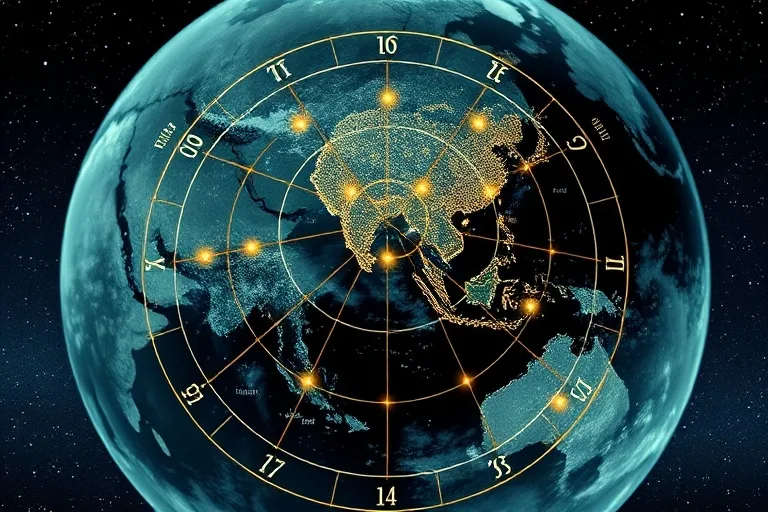
An advanced 3D render displays a holographic natal chart precisely overlaid on a glowing Earth, illustrating the intricate connections between celestial and terrestrial energies.
Integrating Geomancy with Astrological Transits
The dynamic nature of astrological transits, which describe the current movements of planets in relation to one's natal chart, can also be enriched by geomantic insights. While a natal chart reveals one's fixed energetic blueprint, transits indicate periods of change, challenge, and opportunity. When combined with geomancy, these transits can suggest how these cosmic shifts might interact with the specific Earth energies of a person's environment.
For example, a challenging Saturn transit might indicate a period of restriction or hard work. If this transit is occurring in an astrological house that geomantically aligns with a figure like *Carcer* (Prison) in one's current living space, it could suggest that the physical environment itself is contributing to feelings of being stuck or limited. Conversely, a beneficial Jupiter transit might be amplified if it aligns with a geomantic figure like *Laetitia* (Joy) in a particular location, suggesting that seeking out or enhancing such a spot could maximize the positive influence of the transit.
This integration allows for a more proactive approach to navigating astrological cycles. Instead of merely understanding the potential effects of a transit, individuals can actively engage with their environment to mitigate negative influences or enhance positive ones. It provides a framework for creating supportive spaces that resonate with current planetary energies, helping to smooth transitions and maximize periods of growth. Understanding these cycles can be further deepened by exploring .
Geomantic Symbols and Interpretations
The sixteen geomantic figures are the heart of geomantic interpretation. Each figure is a unique pattern of single and double points, corresponding to specific planetary, elemental, and zodiacal associations. These figures are not merely abstract symbols; they represent archetypal energies that manifest in the physical world and human experience. Here's a brief overview of some key figures and their general meanings:
- Via (The Way): Associated with the Moon and Water. Represents beginnings, journeys, flux, and change. Often indicates a path opening up.
- Populus (The People): Also associated with the Moon and Water. Signifies crowds, community, public opinion, and general trends.
- Conjunctio (Conjunction): Associated with Mercury and Air. Represents union, coming together, agreements, and partnerships.
- Carcer (Prison): Associated with Saturn and Earth. Signifies restriction, delay, confinement, and stability (sometimes negative).
- Tristitia (Sadness): Associated with Saturn and Earth. Indicates sorrow, loss, difficulty, and endings.
- Laetitia (Joy): Associated with Jupiter and Air. Represents happiness, success, growth, and expansion.
- Acquisitio (Gain): Associated with Jupiter and Air. Signifies acquisition, profit, increase, and positive outcomes.
- Amissio (Loss): Associated with Venus and Fire. Represents loss, separation, giving away, and sometimes love or pleasure.
- Albus (White): Associated with Mercury and Air. Signifies purity, wisdom, clarity, and good fortune.
- Rubeus (Red): Associated with Mars and Fire. Represents passion, aggression, danger, and intense energy.
- Fortuna Major (Greater Fortune): Associated with the Sun and Fire. Indicates great success, good luck, strength, and positive beginnings.
- Fortuna Minor (Lesser Fortune): Associated with the Sun and Fire. Represents moderate success, minor good luck, and quick, positive outcomes.
- Puella (Girl): Associated with Venus and Water. Signifies beauty, love, pleasure, art, and femininity.
- Puer (Boy): Associated with Mars and Fire. Represents masculinity, courage, aggression, and direct action.
- Caput Draconis (Dragon's Head): Associated with the North Node. Represents beginnings, entry, good fortune, and positive influence.
- Cauda Draconis (Dragon's Tail): Associated with the South Node. Represents endings, exit, bad fortune, and negative influence.
By understanding these figures and their intricate relationships, geomantic astrologers can interpret the subtle messages embedded within the Earth's patterns and connect them to the broader narrative of the natal chart. This allows for a deeper, more intuitive understanding of how celestial energies are grounded and expressed in our immediate physical reality. For further exploration of astrological aspects, consider reading about minor astrological aspects.
Benefits of Geomantic Astrology
Embracing geomantic astrology offers a multitude of benefits, extending beyond mere divination to foster a more integrated and harmonious way of living. One primary advantage is an **enhanced sense of place and belonging**. By understanding how one's personal energies align with specific terrestrial patterns, individuals can cultivate environments that truly support their being, leading to greater comfort, security, and a feeling of being "at home" in the world.
It also provides **improved decision-making**, particularly concerning location-based choices. Whether it's selecting a new residence, choosing a vacation spot, or even deciding where to place a new piece of furniture, geomantic insights can guide individuals toward choices that are energetically optimal. This reduces potential friction with the environment and promotes smoother outcomes in various life endeavors.
Furthermore, geomantic astrology encourages a **deeper connection to nature and the Earth**. By actively engaging with the subtle energies of the land, individuals develop a heightened awareness of their interconnectedness with the natural world. This can lead to increased ecological consciousness, a greater appreciation for sacred spaces, and a more grounded spiritual practice. It transforms the environment from a mere backdrop into an active participant in one's personal journey.
Finally, this practice can lead to **holistic well-being**. By harmonizing personal astrological influences with environmental energies, individuals can experience reduced stress, improved health, and a more balanced emotional state. It offers a unique pathway to self-discovery, allowing one to uncover hidden potentials and navigate life's challenges with greater resilience and grace, all while being supported by the very ground beneath their feet.
Conclusion: Harmonizing Heaven and Earth
Geomantic astrology offers a powerful and comprehensive framework for understanding the intricate relationship between our celestial origins and our terrestrial existence. By meticulously aligning the insights from a natal chart with the subtle, yet profound, energies of the Earth, individuals can unlock a deeper level of self-awareness and environmental harmony. This ancient practice, revitalized for modern living, empowers us to make conscious choices about our surroundings, transforming our living spaces into sanctuaries that resonate with our deepest energetic truths.
From selecting the perfect home to understanding the energetic impact of a garden, geomantic astrology provides practical tools for cultivating optimal living. It reminds us that we are not merely products of cosmic forces but also integral parts of a living, breathing planet, whose energies can either support or hinder our journey. By harmonizing heaven and Earth within our personal sphere, we can achieve a state of profound balance, fostering well-being, growth, and a lasting connection to the universal tapestry of life.
Source: Hybrid content assisted by AIs and human editorial supervision.


Comments
Post a Comment